






@2026 – All Right Reserved. TheDefenseWatch.com
K-4 Missile
Defense Systems Full Specifications
1. General Information
| Name / Designation | K-4 (Kalam-4) |
| Type / Role | Submarine-Launched Ballistic Missile (SLBM), Nuclear Deterrence |
| Country of Origin | India |
| Manufacturer | DRDO |
| Service Entry / Year Introduced | 2024 |
| Operational Status | Limited Deployment / Active |
2. Performance & Range
| Range | ~3,500 km |
| Speed | Hypersonic (ballistic) |
| Ceiling / Altitude Limit | Exo-atmospheric |
| Accuracy (CEP) | <10 meters |
| Warhead Type | Nuclear |
3. Guidance & Targeting
| Guidance System | INS + GPS/NavIC, TERCOM |
| Targeting Mode | Inertial with satellite update |
| Launch Platform Compatibility | Nuclear Submarines (Arihant-class) |
| Seeker Type | Inertial/satellite-augmented |
4. Physical Characteristics
| Length | 12 m |
| Diameter | 1.3 m |
| Wingspan | N/A |
| Launch Weight | ~17 tonnes |
| Propulsion | Two-stage solid rocket motor |
5. Warhead & Payload
| Warhead Weight | Up to 2,500 kg |
| Explosive Type | Nuclear |
| Detonation Mechanism | Strategic nuclear |
| Payload Options | Nuclear warhead |
6. Operational Use & Capabilities
| Operational Range Type | Intermediate |
| Deployment Platform | Sea (Submarine) |
| Target Types | Strategic installations, high-value targets |
| Combat Proven | No (tested successfully) |
| Users / Operators | Indian Navy |
PROS
- Extended 3,500 km range provides strategic reach against distant adversaries.
- High accuracy with CEP under 10 meters for precise targeting.
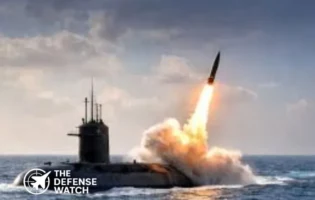
- Submarine launch offers stealthy, survivable second-strike capability.
- Solid-fuel propulsion enables quick reaction times from underwater.
- Maneuverable re-entry vehicle helps counter ballistic missile defenses.
CONS
- Limited to submarine platforms, restricting deployment flexibility.
- Not yet extensively combat-proven in real-world operations.
- High development and maintenance costs for strategic systems.
- Dependent on submarine availability and patrol endurance.
- Range remains intermediate, not intercontinental for global reach.
K-4 Missile: India’s Intermediate-Range Submarine-Launched Ballistic Missile
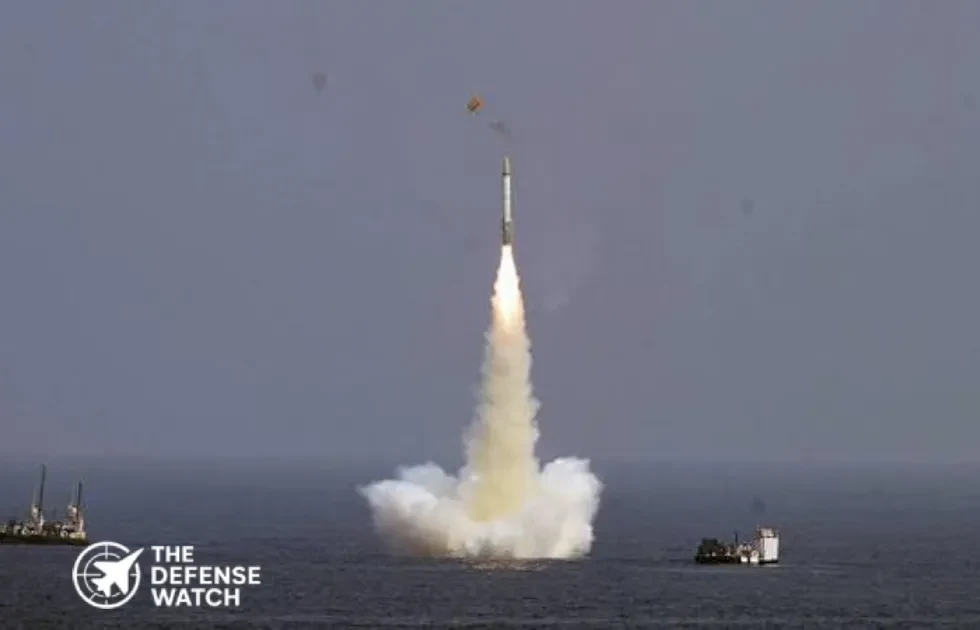
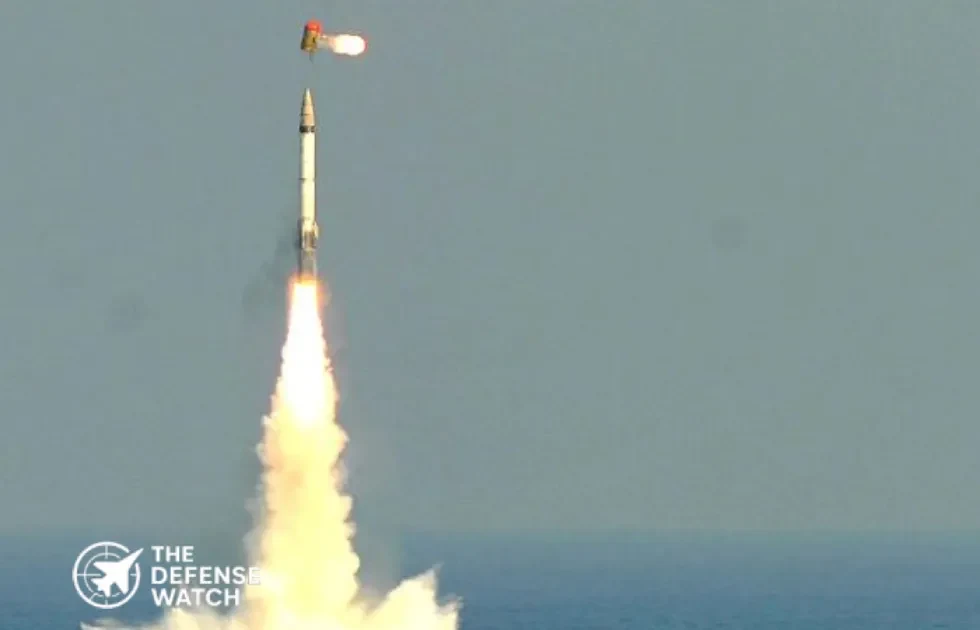
The K-4 missile, also known as Kalam-4, represents a significant advancement in India’s strategic deterrence capabilities. As an intermediate-range submarine-launched ballistic missile (SLBM), it forms a critical component of the country’s nuclear triad, providing a survivable second-strike option from the sea. Developed to enhance the operational flexibility of India’s Arihant-class nuclear submarines, the K-4 addresses limitations of shorter-range predecessors like the K-15 by enabling strikes against distant strategic targets while maintaining the stealth advantages of underwater launch.
Manufacturer
The K-4 was designed and developed by India’s Defence Research and Development Organisation (DRDO) in collaboration with other defense entities. It draws technological heritage from the land-based Agni-III missile program. The missile entered limited operational induction with the Indian Navy in 2024, with successful tests conducted from the INS Arighaat and other Arihant-class submarines.
Speed and Range
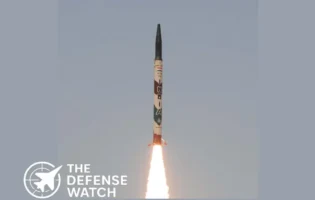
The K-4 achieves hypersonic speeds during its ballistic trajectory, powered by a two-stage solid rocket motor. Its operational range is approximately 3,500 km, allowing it to reach key strategic areas from patrol positions in the Indian Ocean. This range provides substantial standoff capability compared to earlier Indian SLBMs.
Cost/Price
As a strategic military system not available for commercial sale, the K-4 has no public market price. Analyst estimates for per-unit production costs, including amortized R&D, typically range from $10–20 million USD, though exact figures remain classified due to the program’s sensitivity.
The missile measures about 12 meters in length, 1.3 meters in diameter, and weighs roughly 17 tonnes at launch. It can deliver a nuclear warhead of up to 2,000–2,500 kg. Its guidance system combines inertial navigation (INS) with GPS/NavIC satellite updates and TERCOM for terminal accuracy, achieving a circular error probable (CEP) of less than 10 meters. This precision, along with maneuverable re-entry capabilities, enhances its ability to penetrate potential missile defenses.
The K-4 strengthens India’s nuclear posture by ensuring credible deterrence through submarine-based platforms that are difficult to detect and neutralize preemptively. Its solid-fuel design supports rapid launch readiness, contributing to the overall survivability of India’s strategic forces.
Get real time update about this post category directly on your device, subscribe now.
Disclaimer Note
The information provided on TheDefenseWatch.com is for general informational purposes only. While we strive to ensure the accuracy, completeness, and timeliness of our content regarding defense and aerospace products, technologies, and specifications, we cannot guarantee that all information is 100% accurate or up-to-date due to the evolving nature of military technology and classified data.TheDefenseWatch.com does not warrant the reliability, suitability, or availability of the information for any specific purpose. Users are advised to consult official sources, such as manufacturers, government publications, or defense agencies, for precise and verified data before making decisions based on our content.We are not affiliated with any defense manufacturers, governments, or military organizations mentioned. Opinions, reviews, and ratings reflect expert analysis but are subjective and should not be considered endorsements. TheDefenseWatch.com is not responsible for any errors, omissions, or consequences arising from the use of this website’s content.External links are provided for convenience and do not imply endorsement. TheDefenseWatch.com reserves the right to update or modify content without prior notice. By using this website, you agree to our Privacy & Cookies Policy.
New Arrivals
Popular Comparisons
-
 Su-57 Fighter Jet vs J-20 Fighter Jet: Stealth and Air Combat Compared
View Comparison →
Su-57 Fighter Jet vs J-20 Fighter Jet: Stealth and Air Combat Compared
View Comparison → -
Mirage 2000 vs Tejas Mk1A: Legacy Combat Power vs Indigenous Modernization
View Comparison →
-
Rafale Fighter Jet vs F-22 Raptor: Which Air Dominance Fighter Has the Edge?
View Comparison →
-
Tejas Fighter Jet vs. Rafale Fighter Jet: India’s Indigenous Fighter Meets France’s Proven Multirole Combat Aircraft
View Comparison →
-
F-22 Raptor vs. F-35 Joint Strike Fighter: Which Fifth Generation Fighter Has the Edge?
View Comparison →
-
F-35A vs. F-22 Raptor: Which U.S. Stealth Fighter Dominates Modern Air Combat?
View Comparison →
-
AGM-114 Hellfire vs. AGM-179 JAGM: Which U.S. Precision Missile Is Better?
View Comparison →
-
Patriot (PAC-3) vs. THAAD: Complete Missile Defense System Comparison, Capabilities, Range, and Strategic Roles
View Comparison →
-
AIM-120 AMRAAM vs. AIM-9X Sidewinder: Complete Air-to-Air Missile Comparison, Range, Speed, and Combat Roles
View Comparison →
-
BGM-109 Tomahawk vs. AGM-158 JASSM: Which Long Range Precision Strike Missile Offers Greater Strategic Advantage?
View Comparison →
- Australia Declares JASSM-ER and LRASM Operational on F/A-18F Super Hornets

- GCAP Electronics Contract Advances Integrated Sensing And Communications For Sixth Generation Fighter
- Northrop Grumman Expands B-21 Raider Production With New Utah Facility
- Kongsberg Integrates Echodyne Radar With PROTECTOR Stations for Counter-UAS Missio
- Anthropic Says Yemen Weapons Cell Used Claude Code to Develop Missile Guidance Software
- Northrop Grumman Expands Air Defense and Weapons Collaboration Across Central Europe
- Rolls-Royce B-52 Engine Contract Rises To $3.04 Billion
- General Dynamics Secures $184.25 Million NGEAU Contract For Navy Growler Upgrades
- U.S. Space Academy Commission Begins Work As Washington Targets Next-Generation Space Workforce
- U.S. Moves to Close Air-Breathing Hypersonic Missile Gap With China