

Executive Summary:
L3Harris Technologies has received a U.S. Army order worth up to $106 million to deliver additional VAMPIRE counter-unmanned aircraft systems. The procurement reflects the Army’s growing emphasis on rapidly deployable, cost-effective defenses against increasingly widespread drone threats across multiple operational theaters.
L3Harris Wins Major Army Order For VAMPIRE Counter-Drone Systems
L3Harris Technologies has been selected by the U.S. Army to provide additional VAMPIRE counter-unmanned systems under a contract valued at up to $106 million, expanding the service’s ability to defend forces and critical infrastructure against hostile drones. The award was announced by the company on June 10 and forms part of the Army’s broader layered counter-UAS strategy.
The contract comes as the Pentagon continues to accelerate investment in counter-drone technologies following lessons learned from conflicts in Eastern Europe and the Middle East, where low-cost unmanned systems have become a persistent battlefield threat.
According to L3Harris, the VAMPIRE system delivers reconnaissance, target acquisition, and precision strike capabilities against unmanned aerial systems and remotely piloted aircraft. The company says the system has accumulated more than 350,000 operational hours during European combat operations since 2023.
What Is The VAMPIRE System?
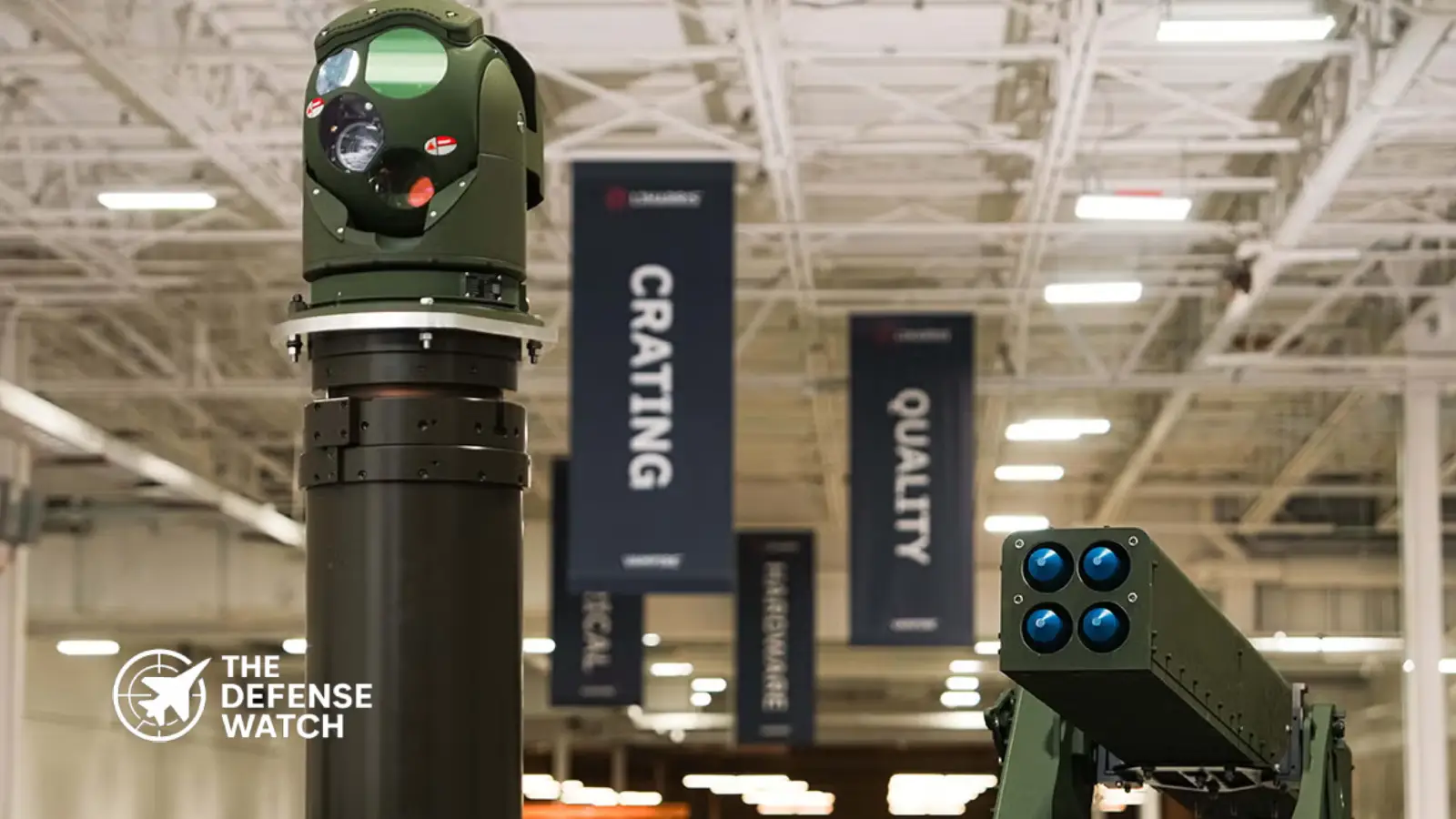
VAMPIRE, short for Vehicle-Agnostic Modular Palletized ISR Rocket Equipment, is designed as a modular counter-UAS solution that can be integrated onto a wide variety of military and security vehicles.
The system combines:
- Electro-optical and infrared targeting sensors
- Laser target designation capability
- Precision-guided rocket launchers
- Mobile vehicle-based deployment architecture
- Rapid installation and fielding capability
The platform is capable of launching laser-guided munitions, including APKWS (Advanced Precision Kill Weapon System) rockets, enabling operators to engage drones at significantly lower cost than traditional surface-to-air missile systems.
Key Characteristics
| Capability | Description |
|---|---|
| Mission | Counter-UAS and precision strike |
| Platform Type | Vehicle-mounted, modular |
| Guidance | Laser-guided engagement |
| Mobility | Rapid deployment on multiple vehicle types |
| Primary Targets | Drones and remotely piloted aircraft |
| Production Location | Huntsville, Alabama |
Why The Army Is Expanding Counter-Drone Procurement
The latest order highlights a major shift in military procurement priorities. Small drones, loitering munitions, and one-way attack UAVs have demonstrated the ability to threaten armored vehicles, logistics hubs, command posts, and air defense systems at relatively low cost.
Traditional air defense interceptors often cost hundreds of thousands or even millions of dollars per shot. By contrast, systems such as VAMPIRE offer a more affordable method of defeating lower-cost aerial threats while preserving higher-end missile inventories for advanced targets.
This cost-exchange challenge has become one of the defining operational problems facing modern armed forces. As drone production expands globally, military planners increasingly require scalable solutions capable of engaging large numbers of targets without exhausting expensive missile stocks.
The Army’s decision to expand VAMPIRE procurement reflects this evolving reality.
Supporting A Layered Air Defense Architecture
The contract is specifically tied to the United States’ layered counter-UAS approach. Rather than relying on a single weapon system, the Army is pursuing a multi-tiered defensive network that combines sensors, electronic warfare, directed energy systems, kinetic interceptors, and mobile short-range air defense assets.
Within that architecture, VAMPIRE occupies an important middle layer.
The system offers a mobile kinetic response option capable of protecting forward operating bases, logistics nodes, airfields, and maneuver units against small and medium-sized drone threats. Recent evaluations during Exercise Balikatan 2026 in the Philippines demonstrated the system’s relevance in contested environments where drone threats are expected to play a significant role.
Its modular design also allows deployment across dispersed operational areas, a growing requirement as U.S. forces adapt to Indo-Pacific operational concepts emphasizing mobility and survivability.
Production Expansion Signals Long-Term Demand
The Army award follows L3Harris‘ decision earlier this year to establish high-volume VAMPIRE production in Huntsville, Alabama. The company stated that the production expansion was driven by increasing demand from the United States and allied nations seeking effective counter-drone capabilities.
The new production line provides:
- Increased manufacturing capacity
- Faster delivery schedules
- Scalable output for future orders
- Integration and testing facilities for multiple vehicle configurations
The investment suggests that L3Harris anticipates sustained demand for counter-UAS systems as militaries continue adapting to lessons emerging from recent conflicts.
Strategic Implications For U.S. Defense Modernization
Beyond the contract value itself, the award underscores a broader transformation occurring across the U.S. military.
Counter-drone capabilities are rapidly becoming as essential as traditional air defense systems. The proliferation of inexpensive unmanned platforms has altered battlefield economics and forced militaries to rethink how they defend personnel, infrastructure, and maneuver formations.
For the Army, systems such as VAMPIRE offer three significant advantages:
- Affordability compared with high-end missile interceptors.
- Mobility for dispersed and expeditionary operations.
- Scalability for deployment across multiple theaters simultaneously.
These characteristics align closely with emerging U.S. operational concepts focused on distributed operations and resilient force posture.
As drone threats continue evolving, the Pentagon is expected to expand investments in both kinetic and non-kinetic counter-UAS capabilities. The latest VAMPIRE order demonstrates that rapidly fielded, combat-proven systems are likely to remain central to that effort.
