(adsbygoogle = window.adsbygoogle || []).push({});Executive Summary:
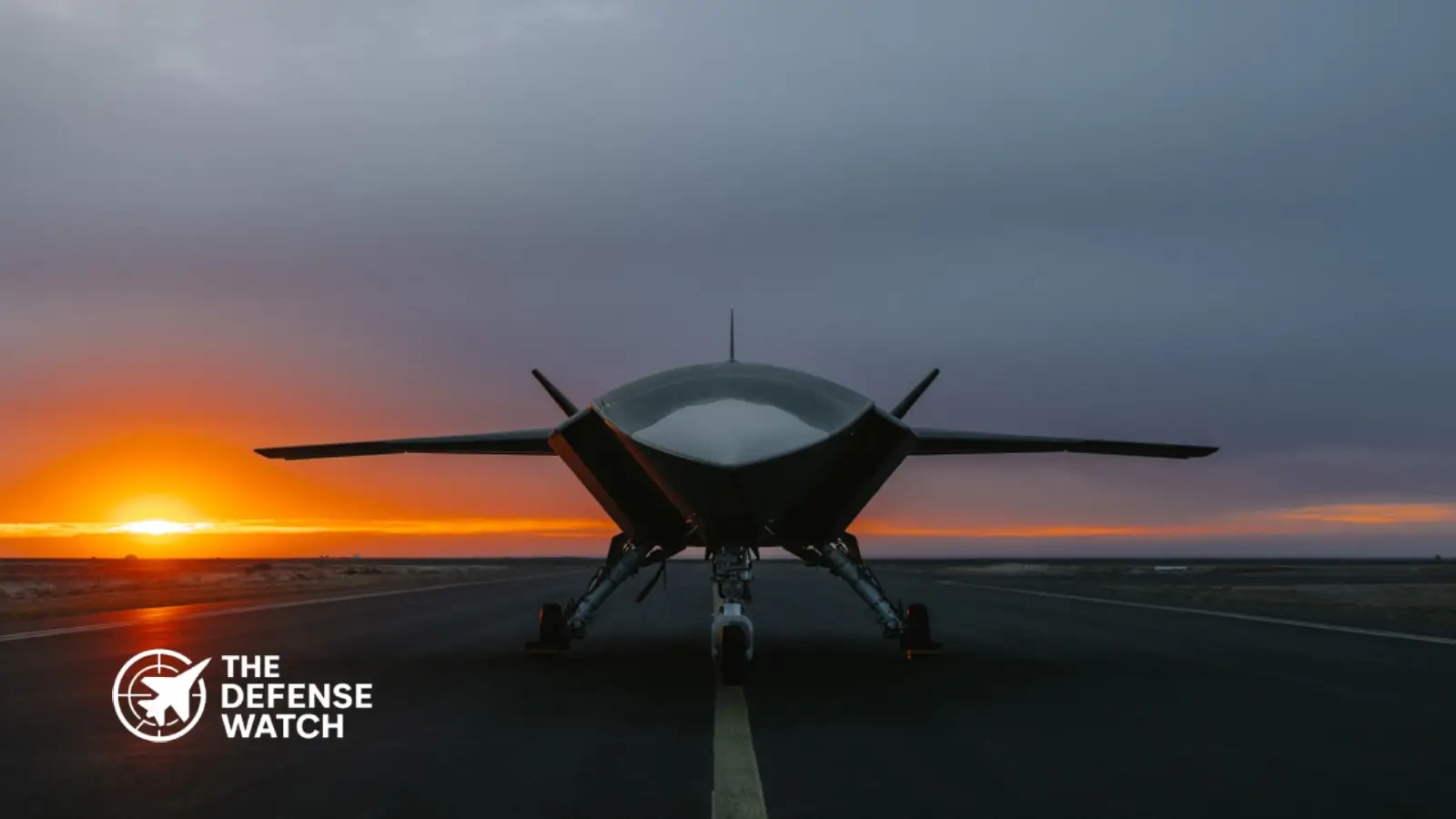
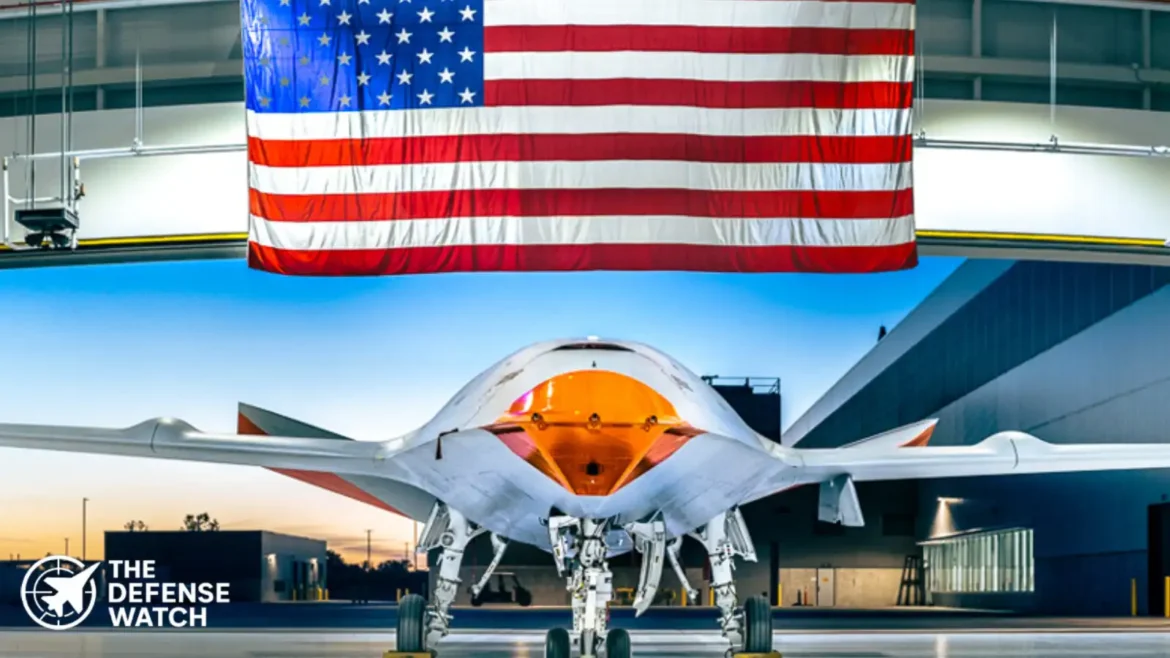
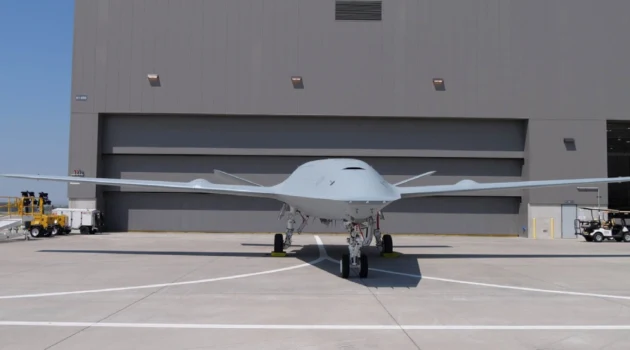
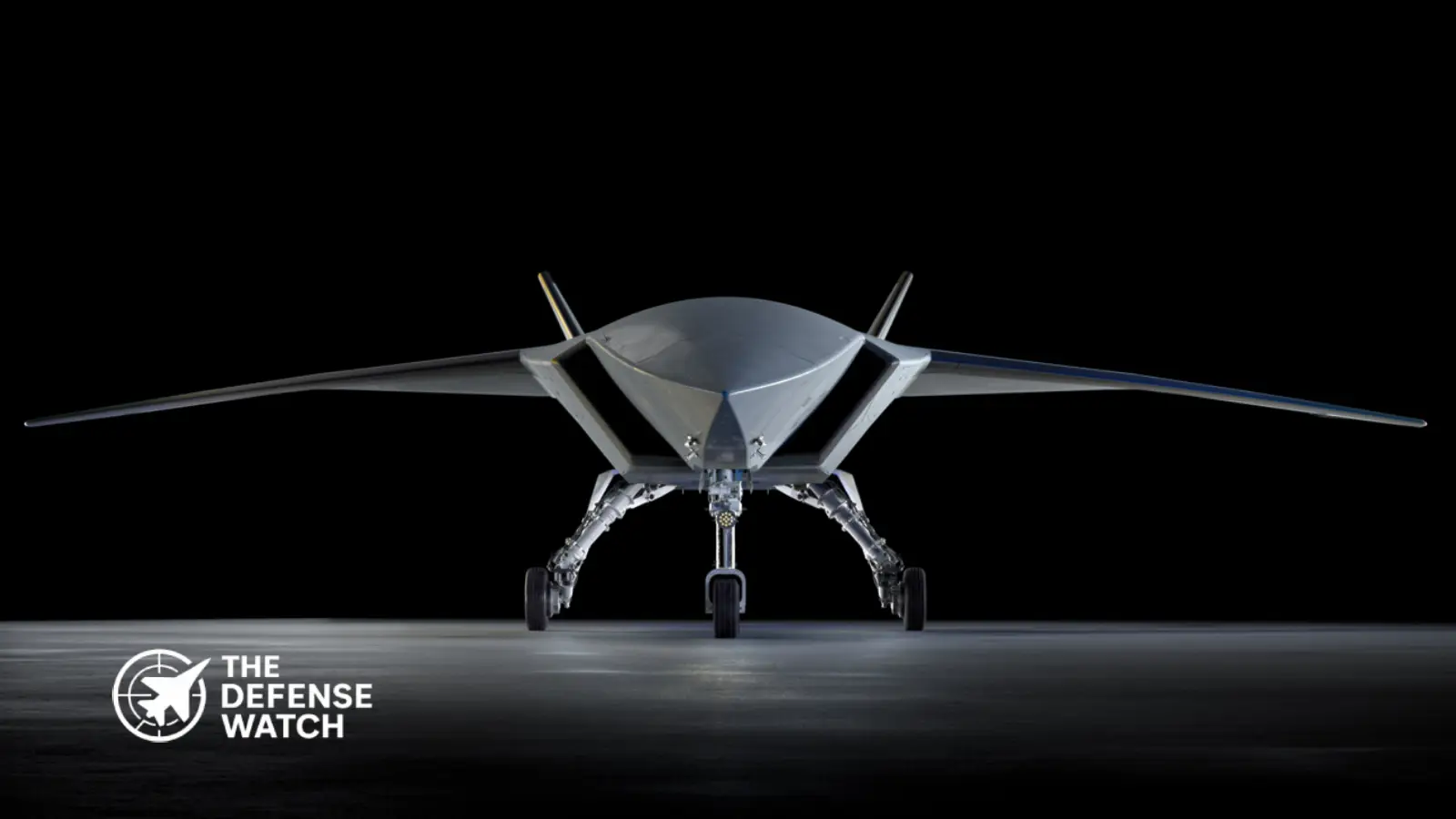
Boeing has unveiled a significantly upgraded MQ-28 Ghost Bat collaborative combat aircraft, adding larger wings, internal weapons stations, and extended operational range.
The enhancements strengthen the platform’s ability to support crewed aircraft, carry additional payloads, and meet growing demand for autonomous combat aircraft among allied air forces.
Boeing MQ-28 Ghost Bat Upgrade Expands Combat Reach
Boeing’s MQ-28 Ghost Bat collaborative combat aircraft has received a major capability upgrade aimed at increasing range, payload capacity, and mission flexibility as global militaries accelerate investment in autonomous air combat systems.
The company unveiled the latest enhancements during the ILA Berlin Air Show 2026, presenting a roadmap that significantly expands the aircraft’s operational capabilities while preserving its role as a force multiplier for crewed fighter aircraft.
Developed in partnership with the Royal Australian Air Force (RAAF), the MQ-28 Ghost Bat is designed to operate alongside manned aircraft, conducting missions that include intelligence gathering, electronic warfare, air combat support, and strike operations.
According to Boeing, the upgraded configuration introduces a wing that is more than 25 percent larger than previous variants, allowing the aircraft to carry an additional 2,000 pounds of fuel, mission payloads, or stores. The increase provides operators greater flexibility to balance endurance and combat loadouts based on mission requirements.
(adsbygoogle = window.adsbygoogle || []).push({});Internal Weapons Bays Add New Combat Capability
One of the most significant additions is the introduction of internal weapons stations.
The upgraded MQ-28 can now be configured to carry up to two AIM-120 AMRAAM air-to-air missiles or four Small Diameter Bombs internally. By carrying weapons inside the airframe rather than on external hardpoints, the aircraft can retain lower observable characteristics while expanding its combat role.
The move reflects a broader trend across next generation unmanned combat aircraft programs, where survivability and weapons integration are becoming increasingly important requirements.
Boeing officials stated that the new capabilities are part of a spiral development approach, enabling future upgrades to be integrated incrementally as operational requirements evolve.
(adsbygoogle = window.adsbygoogle || []).push({});Beyond-Line-of-Sight Operations Expand Mission Flexibility
Another notable enhancement is the addition of beyond-line-of-sight communications capability.
This allows operators to control and coordinate MQ-28 missions over significantly greater distances than earlier configurations, expanding operational flexibility in large theaters such as the Indo-Pacific.
The capability is particularly important for collaborative combat aircraft, which are expected to operate alongside advanced fighters, airborne early warning aircraft, and other networked platforms across dispersed battlespaces.
As air forces increasingly emphasize distributed operations, secure long-range connectivity has become a key requirement for future autonomous systems.
(adsbygoogle = window.adsbygoogle || []).push({});Growing Importance Of Collaborative Combat Aircraft
The latest MQ-28 improvements come as collaborative combat aircraft programs gain momentum across the United States, Australia, Europe, and Asia.
Military planners view autonomous wingmen as a cost-effective way to increase combat mass without procuring large numbers of expensive crewed aircraft. These systems can perform reconnaissance, electronic attack, decoy missions, and strike operations while reducing risk to pilots.
The MQ-28 has emerged as one of the most mature programs in this rapidly evolving sector. Boeing and the RAAF have already completed extensive flight testing, including autonomous teaming demonstrations, operational deployments, and missile firing trials.
The platform has also undergone radar cross-section validation testing to verify its survivability characteristics in contested environments.
(adsbygoogle = window.adsbygoogle || []).push({});From a strategic perspective, the latest upgrades indicate Boeing is positioning the Ghost Bat not only for Australian requirements but also for a growing international market. Germany has shown interest in collaborative combat aircraft concepts, and Boeing recently expanded its industrial partnerships in Europe to support future opportunities.
Why The Upgrade Matters
The significance of the MQ-28 upgrade extends beyond individual performance improvements.
Modern air warfare increasingly depends on a combination of crewed and uncrewed systems operating as an integrated force. Larger payload capacity, longer endurance, internal weapons carriage, and improved connectivity directly enhance the aircraft’s ability to perform that role.
Rather than serving solely as a reconnaissance platform, the upgraded Ghost Bat moves closer to becoming a true combat asset capable of contributing meaningful firepower while supporting manned aircraft in high-threat environments.
As air forces prepare for future conflicts involving advanced air defenses and long-range engagements, collaborative combat aircraft such as the MQ-28 are expected to play an increasingly central role in force structure planning.

(adsbygoogle = window.adsbygoogle || []).push({});Executive Summary:
The U.S. Air Force says it is confident Boeing has resolved a critical flaw affecting the KC-46 Pegasus aerial refueling tanker. The upgraded Remote Vision System 2.0 has completed testing and is expected to enter production aircraft in 2028, a key milestone for one of the Air Force’s most important mobility programs.
US Air Force Confident KC-46 Tanker Fix Is Working
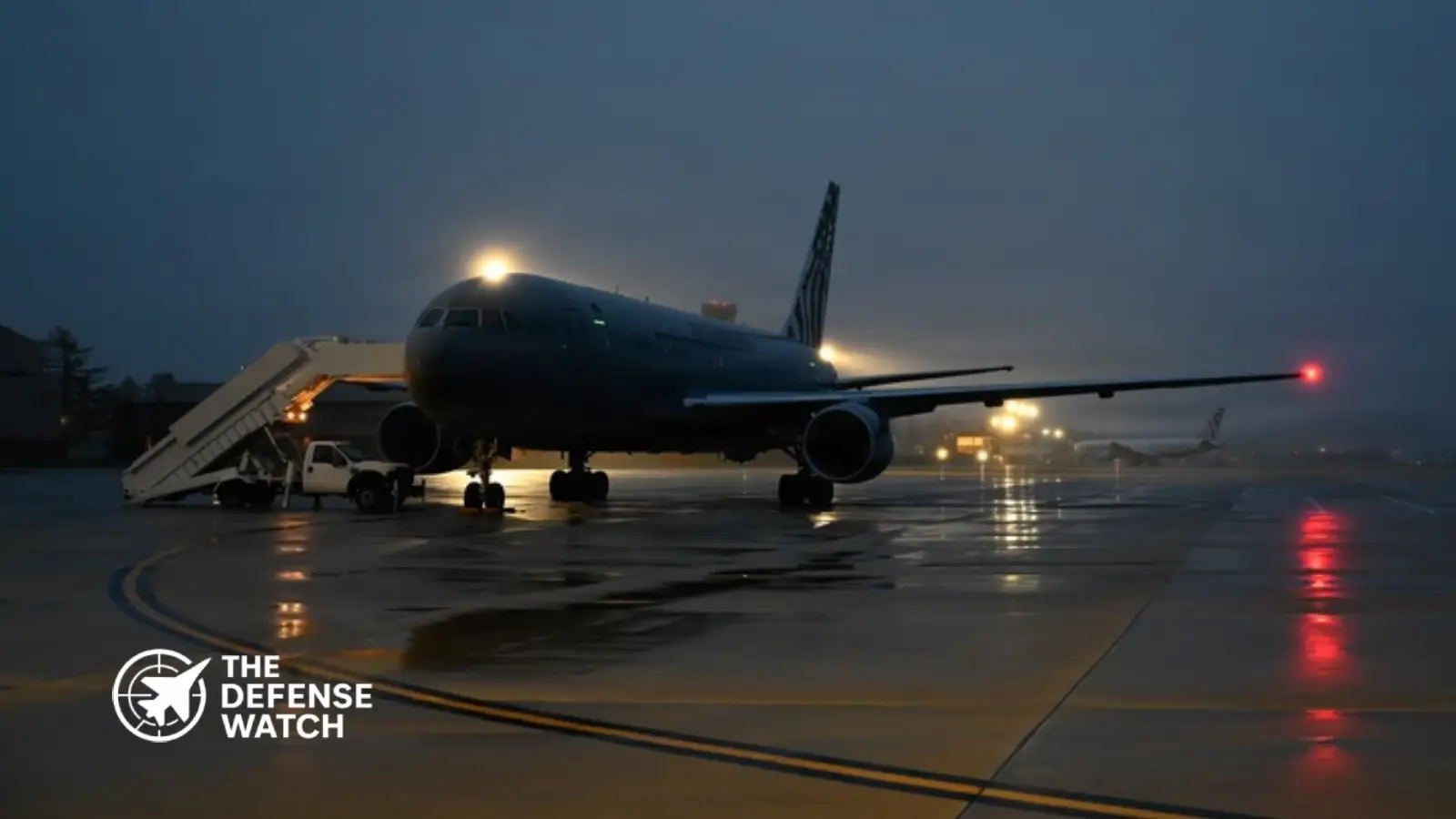
The KC-46 tanker upgrade program reached a significant milestone this week as U.S. Air Force Secretary Troy Meink told lawmakers that the service believes Boeing has successfully fixed the aircraft’s troubled Remote Vision System (RVS), a critical component used during aerial refueling operations.
Speaking before a Senate appropriations subcommittee, Meink said the new Remote Vision System 2.0 has been tested successfully and is expected to begin entering the production line in 2028. The announcement marks one of the strongest endorsements yet from Air Force leadership regarding Boeing’s efforts to address a problem that has plagued the tanker program for years.
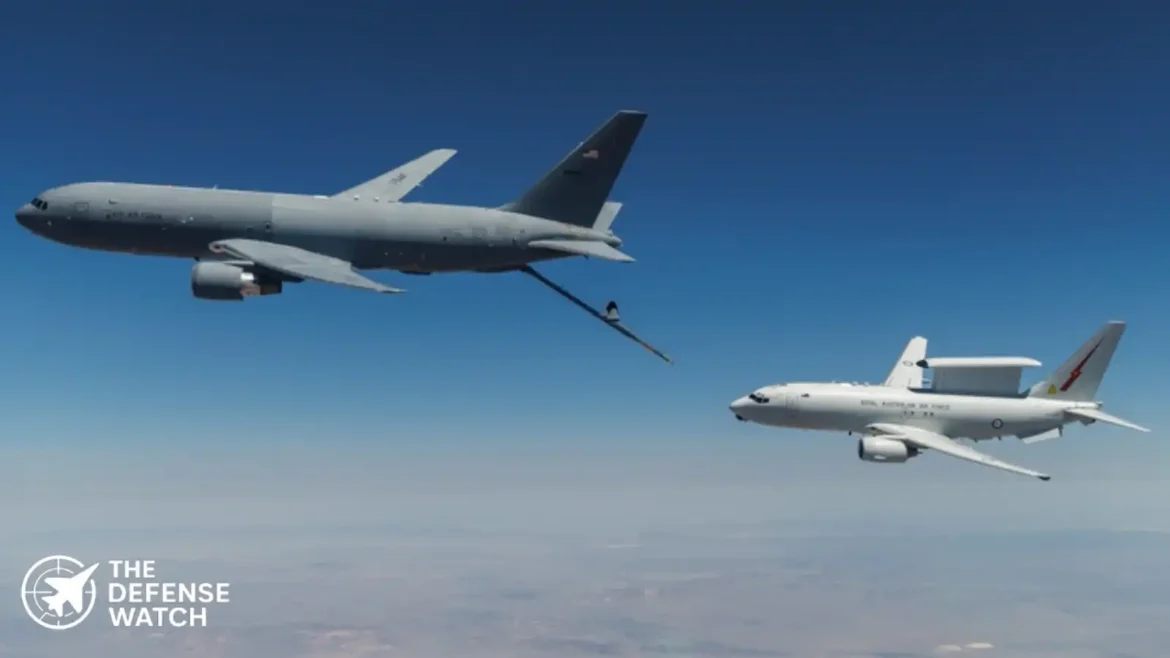
The KC-46 Pegasus relies on the vision system to allow boom operators to remotely guide the aircraft’s refueling boom into receiving aircraft. Deficiencies in image quality and depth perception under certain lighting conditions have limited the system’s effectiveness and delayed full operational capability.
(adsbygoogle = window.adsbygoogle || []).push({});A Decade-Long Challenge For Boeing
The KC-46 program has faced technical and schedule setbacks since its development phase. Beyond the Remote Vision System issues, Boeing and the Air Force have worked through problems involving the refueling boom, fuel systems, and production quality concerns.
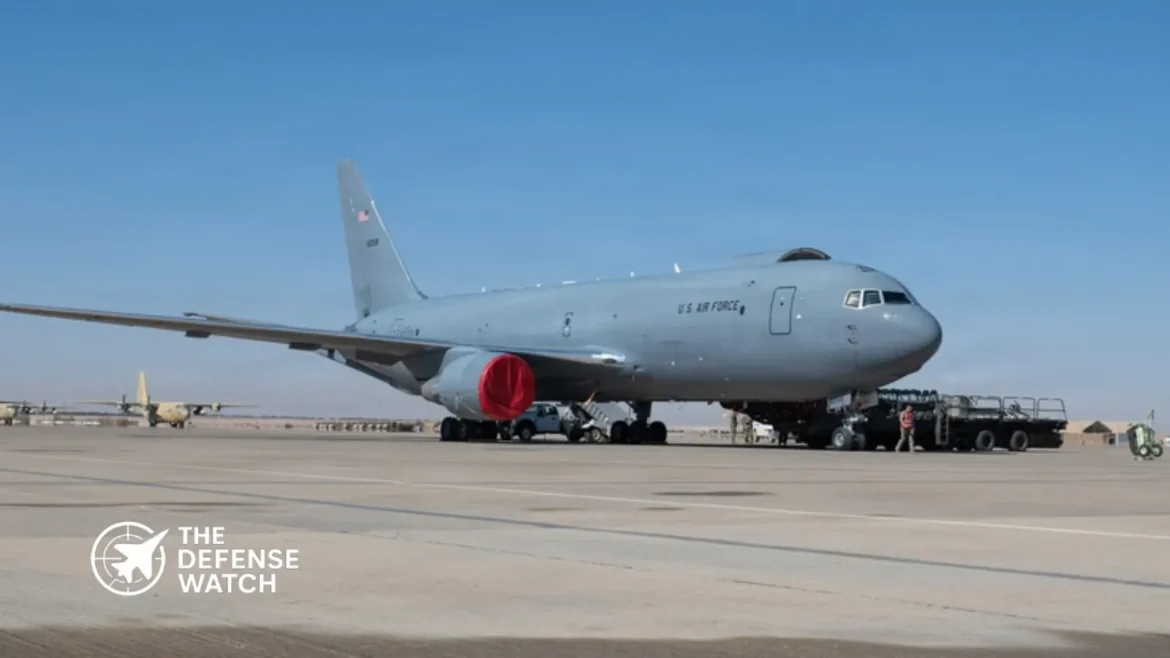
The aircraft, derived from the commercial Boeing 767 platform, was selected to replace portions of the aging KC-135 Stratotanker fleet. While the tanker has entered operational service and supports missions worldwide, unresolved deficiencies have prevented the program from fully meeting all Air Force expectations.
The latest timeline remains well behind original plans. Air Force officials had initially expected the upgraded vision system years earlier, making the anticipated 2028 production integration roughly five years later than first projected.
(adsbygoogle = window.adsbygoogle || []).push({});Why The KC-46 Matters To US Military Operations
Aerial refueling aircraft are among the most strategically important assets in the U.S. military inventory. They extend the range of fighters, bombers, intelligence aircraft, and transport fleets, enabling global power projection and sustained operations across multiple theaters.
The importance of tanker fleets has become increasingly apparent as the Pentagon focuses on long-range operations in the Indo-Pacific and maintains readiness across Europe and the Middle East. Modern air campaigns depend heavily on reliable aerial refueling capabilities to support extended missions far from established bases.
From an operational perspective, resolving the KC-46’s deficiencies is about more than fixing a single aircraft. It is about ensuring the Air Force can field a modern tanker force capable of supporting future high-end conflicts where range, endurance, and rapid deployment are critical factors.
This broader strategic role explains why Air Force leaders continue to invest heavily in the program despite years of technical challenges.
(adsbygoogle = window.adsbygoogle || []).push({});Additional Orders Depend On Successful Fixes
The Air Force has already ordered 188 KC-46 tankers and received more than 100 aircraft. However, future procurement plans remain tied to Boeing’s ability to fully resolve outstanding deficiencies.
Earlier this year, Air Force Vice Chief of Staff Gen. John Lamontagne stated that the service would not move forward with a potential follow-on order for an additional 75 aircraft until key issues are corrected.
That position makes the successful testing of RVS 2.0 particularly important. If the upgraded system performs as expected during further validation and fleet integration, it could remove one of the largest obstacles standing between Boeing and future tanker contracts.
The Air Force and Boeing recently announced a joint readiness improvement plan focused on accelerating upgrades, improving aircraft availability, and speeding installation of the new vision system across the fleet. Officials believe the effort could significantly improve tanker readiness by the end of the decade.
(adsbygoogle = window.adsbygoogle || []).push({});Analysis: A Critical Turning Point For The KC-46
The Air Force’s confidence in the upgraded Remote Vision System represents an important turning point for a program that has often been defined by technical setbacks rather than operational achievements.
While successful testing does not eliminate all remaining challenges, it signals that one of the aircraft’s most persistent deficiencies may finally be nearing resolution. The next phase, integrating the system into production aircraft and retrofitting the existing fleet, will determine whether Boeing can fully restore confidence in the KC-46 program.
Retrofitting aircraft already in service is expected to take several years, meaning the benefits of the upgrade will be realized gradually rather than immediately. Nevertheless, the Air Force’s public endorsement of the fix suggests that program leaders believe the effort is finally moving in the right direction.
For Boeing, which has absorbed more than $7 billion in losses on the fixed-price tanker contract, a successful RVS 2.0 rollout could help stabilize one of its most challenging defense programs and support future tanker production opportunities.

(adsbygoogle = window.adsbygoogle || []).push({});Executive Summary:
Boeing has successfully validated the radar cross-section performance of its MQ-28 Ghost Bat collaborative combat aircraft through a series of radar signature tests announced on June 1, 2026. The milestone provides objective data on the aircraft’s survivability and detection risk, supporting its role as a stealthy autonomous wingman designed to operate alongside advanced crewed fighters in contested environments.
Boeing MQ-28 Ghost Bat Completes Key Stealth Validation Testing
Boeing’s MQ-28 Ghost Bat collaborative combat aircraft has successfully completed a major radar cross-section (RCS) testing campaign, marking an important milestone in the maturation of one of the most advanced autonomous combat aircraft currently under development.
The company announced that the testing validated the aircraft’s low-observable characteristics and generated objective, repeatable data regarding survivability and radar detection risk. The results represent another step toward operational deployment of the MQ-28 as a collaborative combat aircraft capable of supporting crewed fighters during high-threat missions.
The testing comes as air forces across the United States, Australia, and Europe accelerate efforts to field autonomous aircraft that can operate alongside manned platforms as force multipliers.
Why Radar Cross-Section Testing Matters
Radar cross-section testing is one of the most important assessments performed on a stealth aircraft. It measures how much radar energy is reflected back toward an enemy sensor when the aircraft is illuminated by radar signals.
(adsbygoogle = window.adsbygoogle || []).push({});A lower radar signature generally reduces the distance at which an aircraft can be detected, tracked, and engaged by hostile air defense systems.
According to Boeing, the MQ-28 testing was conducted to provide customers with measurable data on survivability and detection risks rather than relying solely on computer modeling or design predictions.
Key Benefits of Low Radar Signature
Capability Operational Benefit Reduced detection range Increases survivability in contested airspace Lower tracking probability Complicates enemy targeting processes Enhanced penetration capability Supports operations near advanced air defenses Improved force protection Reduces risk to crewed aircraft operating nearby While Boeing has not disclosed specific RCS measurements, the company stated that the testing validated the effectiveness of the aircraft’s design, manufacturing approach, and material selection in reducing radar visibility.
Designed for Fighter Teaming Operations
The MQ-28 Ghost Bat was originally developed by Boeing Defence Australia under the Loyal Wingman program in partnership with the Royal Australian Air Force.
(adsbygoogle = window.adsbygoogle || []).push({});Unlike traditional remotely piloted drones, the aircraft is designed to operate as an autonomous teammate for crewed aircraft.
The platform can perform a range of missions, including:
- Intelligence, surveillance, and reconnaissance (ISR)
- Electronic warfare
- Airborne sensing
- Decoy operations
- Strike support
- Force protection missions
The aircraft’s open-architecture design and modular nose section allow operators to rapidly swap mission payloads depending on operational requirements.
Boeing states that the MQ-28 can fly more than 2,000 nautical miles and is designed to complement both current and future combat aircraft.
Recent Program Momentum Accelerates
The radar validation milestone follows several significant achievements for the Ghost Bat program over the past year.
In December 2025, Boeing and the Royal Australian Air Force successfully conducted an autonomous air-to-air missile engagement involving an MQ-28, an E-7A Wedgetail airborne early warning aircraft, and an F/A-18F Super Hornet. The exercise demonstrated the aircraft’s ability to participate in complex cooperative combat operations.
More recently, the MQ-28 completed its first operational flights outside Australia during testing at Point Mugu, California. The deployment demonstrated the aircraft’s ability to operate from allied bases and validated autonomous mission functions in an international environment.
These achievements indicate that the program is moving beyond basic flight testing and into increasingly operationally relevant demonstrations.
Strategic Significance for Collaborative Combat Aircraft
The successful RCS validation carries implications beyond the MQ-28 program itself.
(adsbygoogle = window.adsbygoogle || []).push({});Collaborative Combat Aircraft (CCA) are expected to become a central component of future air warfare concepts. The U.S. Air Force, Australian Defence Force, and several NATO allies are investing heavily in autonomous wingman programs intended to increase combat mass without proportionally increasing personnel requirements.
For these aircraft to operate effectively in high-threat environments, survivability is essential.
A stealthy collaborative combat aircraft can move closer to enemy defenses, collect intelligence, perform electronic warfare missions, or act as a forward sensor while reducing risks to more expensive crewed platforms.
Why This Matters for Future Air Combat
Several trends are driving demand for stealth-capable autonomous aircraft:
- Expansion of integrated air defense systems
- Growth of long-range surface-to-air missile networks
- Increasing aircraft procurement costs
- Demand for greater combat mass
- Requirements for distributed operations across the Indo-Pacific
The MQ-28 addresses many of these challenges by combining autonomy, modularity, and low-observable design into a platform intended to support fourth, fifth, and future sixth-generation aircraft.
Export Potential Continues to Grow
The timing of the radar validation is also significant as Boeing seeks to position the MQ-28 for broader international adoption.
The aircraft has already attracted attention from allied nations evaluating collaborative combat aircraft solutions. Successful RCS validation provides an important data point for prospective operators assessing survivability requirements.
Combined with recent operational demonstrations in the United States and ongoing integration activities with allied air forces, the milestone strengthens the MQ-28’s standing within the rapidly expanding global market for autonomous combat aircraft.
Looking Ahead
The MQ-28 Ghost Bat program has progressed from an experimental loyal wingman concept into one of the most mature collaborative combat aircraft initiatives currently flying.
(adsbygoogle = window.adsbygoogle || []).push({});The successful radar cross-section testing confirms that the platform’s stealth design performs as intended and provides additional evidence of the aircraft’s readiness for increasingly demanding operational evaluations.
As militaries continue pursuing manned-unmanned teaming concepts, low-observable autonomous aircraft such as the MQ-28 are expected to play an increasingly important role in future air combat operations.
Executive Summary:
The U.S. Navy has awarded Boeing an $18.6 million contract modification to continue technical engineering and design agent support for the AN/USQ-82 combat system architecture deployed across American and allied surface combatants. The award underscores the growing importance of integrated naval combat management systems amid expanding Indo-Pacific maritime security requirements.
The The Boeing Company has received an $18,614,280 cost-plus-fixed-fee contract modification from the Naval Sea Systems Command to continue engineering and design-agent support for the AN/USQ-82(V) combat system program. The modification exercises Option Year Three under contract N00024-23-C-4103 and extends Boeing’s support activities through May 2027.
According to the Department of Defense announcement, the contract supports not only the U.S. Navy but also several allied navies through the Foreign Military Sales (FMS) framework, including Canada, Australia, Japan, South Korea, and Germany. The multinational participation reflects the broader strategic role of interoperable naval combat systems among U.S.-aligned maritime forces operating in the Indo-Pacific and NATO theaters.
Deep Technical & Strategic Context Analysis
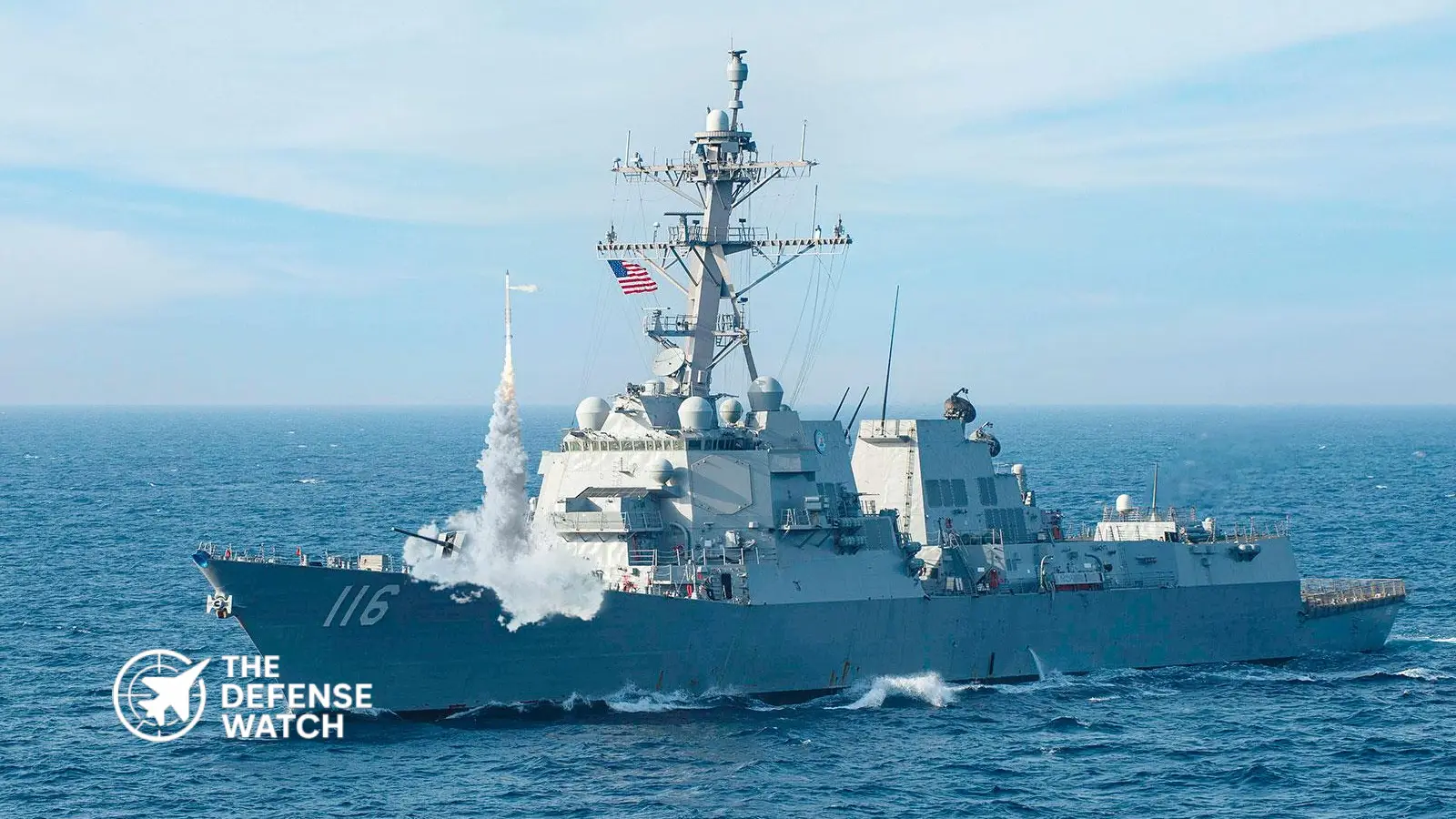
The AN/USQ-82(V) is a core element within modern U.S. Navy surface combat system architecture, serving as a command-and-control and combat direction capability closely associated with Aegis-equipped destroyers and next-generation naval combat integration efforts. While often less publicly visible than missile launchers or radar systems, the AN/USQ-82 family plays a critical role in sensor fusion, tactical data management, and weapon coordination aboard frontline warships.
The system is particularly relevant as the U.S. Navy accelerates distributed maritime operations and integrated air and missile defense concepts against increasingly sophisticated threats from near-peer competitors. Modern naval combat now depends heavily on the rapid processing and dissemination of targeting data from radars, electronic warfare systems, satellites, aircraft, and unmanned platforms. Engineering support contracts such as this ensure the combat system software baseline remains interoperable, cyber resilient, and compatible with evolving missile defense architectures.
The contract’s “cost-plus-fixed-fee” structure is also notable. In defense acquisition, this arrangement is commonly used for technically complex engineering efforts where program requirements may evolve over time. Under this model, the government reimburses allowable contractor costs while paying an additional fixed fee, reducing risk for contractors during ongoing systems integration and sustainment activities. Such contract structures are frequently associated with highly specialized naval combat software engineering and fleet modernization work.
Boeing’s continued role as a program design agent further indicates responsibility for lifecycle engineering support, troubleshooting, integration oversight, and technical configuration management. In practical terms, this means Boeing engineers will help maintain operational readiness across active fleet deployments while supporting future software and combat system upgrades.
Contract Breakdown & Details
Program Scope
The contract modification covers continued:
- AN/USQ-82(V) program design agent support
- Technical engineering services
- Combat system sustainment activities
- Fleet integration and configuration management
- Lifecycle software and systems support
International Participation
The contract combines procurement funding from:
- U.S. Navy: 93%
- Canada: 3%
- Australia: 2%
- Japan: 1%
- South Korea: 1%
Germany also contributes funding through the Foreign Military Sales structure.
Workshare Distribution
Work will be performed across multiple U.S. defense industrial locations:
- Huntington Beach, California: 68%
- Bath, Maine: 12%
- Pascagoula, Mississippi: 9%
- Arlington, Virginia: 6%
- Annapolis Junction, Maryland: 3%
- Tukwila, Washington: 2%
The geographic distribution aligns closely with major U.S. naval shipbuilding, systems integration, and defense engineering hubs.
Funding Breakdown
Key obligated funding sources include:
- Fiscal 2026 Navy Other Procurement: $6.81 million
- Fiscal 2024 Shipbuilding and Conversion Funds: $1.97 million
- Fiscal 2017 Shipbuilding and Conversion Funds: $1.37 million
- Fiscal 2021 Shipbuilding and Conversion Funds: $1.19 million
- Fiscal 2022 Shipbuilding and Conversion Funds: $1.18 million
- Fiscal 2023 Shipbuilding and Conversion Funds: $1.03 million
Additional allocations include:
- Research, Development, Test & Evaluation funds
- Operations and Maintenance funding
- Foreign Military Sales contributions from allied nations
The Navy noted that $356,165 in fiscal 2026 operations and maintenance funding will expire at the end of the current fiscal year.
Strategic Implications
The award arrives as the U.S. Navy and allied maritime forces continue investing heavily in integrated combat systems capable of countering advanced anti-ship missiles, electronic warfare threats, and increasingly contested maritime operating environments.
For allies such as Japan, Australia, and South Korea, participation in AN/USQ-82-related sustainment efforts supports broader interoperability goals with U.S. naval task forces. These interoperability initiatives are becoming increasingly central to Indo-Pacific deterrence planning, especially as regional navies seek tighter integration in ballistic missile defense and distributed fleet operations.
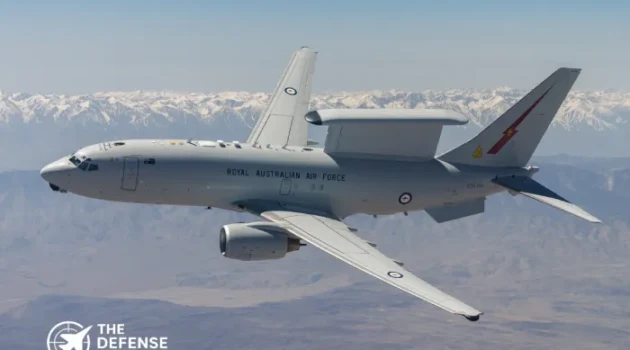
Executive Summary: The U.S. Air Force (USAF) has finalized a $2.4 billion contract amendment with Boeing to procure five additional E-7 Wedgetail aircraft, bringing the total initial fleet to seven. This move secures a critical replacement for the E-3 Sentry, integrating advanced MESA radar technology to maintain air superiority in contested environments.
U.S. Air Force Accelerates E-7 Wedgetail Procurement
The U.S. Air Force has increased its planned acquisition of the E-7 Wedgetail airborne early warning and control (AEW&C) aircraft from an initial prototype-focused effort to a broader operational fleet of seven platforms.
The latest contract amendment, valued at $2.4 billion, builds on an earlier rapid prototyping agreement awarded to Boeing. It signals a transition from experimentation toward fielding a deployable capability designed to replace the aging E-3 Sentry Airborne Warning and Control System (AWACS) fleet.
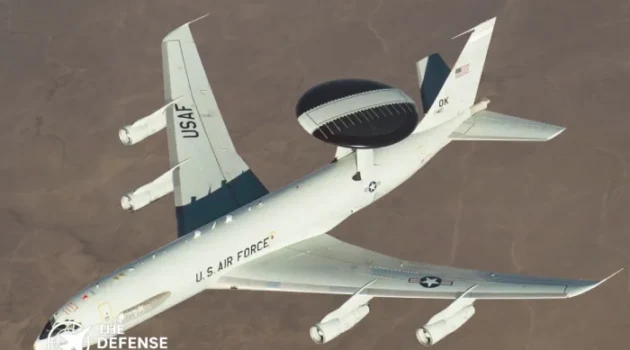
The E-3, first fielded in the late Cold War era, faces rising sustainment costs, declining readiness rates, and increasing vulnerability in modern threat environments.
Why the E-7 Wedgetail Matters for Future Air Warfare
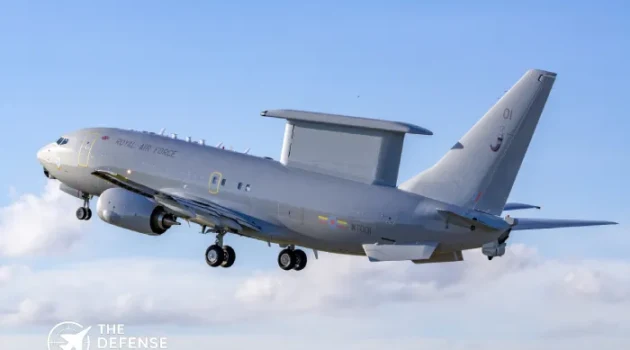
The E-7 Wedgetail is based on the Boeing 737-700 airframe and integrates a modern, multi-role electronically scanned radar system. It is designed to operate effectively in contested environments where legacy AWACS aircraft face survivability challenges.
Key Capability Improvements
- Advanced AESA radar offering 360-degree coverage with improved target tracking
- Enhanced battle management systems for real-time command and control
- Greater reliability and availability compared to legacy E-3 platforms
- Reduced crew workload through automation and digital interfaces
- Improved interoperability with joint and allied forces
The aircraft is already in service with allied air forces, including Australia and the United Kingdom, providing a mature baseline for U.S. adoption.
Comparison: E-7 Wedgetail vs E-3 Sentry AWACS
Platform Range Payload Status Key Technology E-7 Wedgetail ~6,500 km Multi-role AEW&C mission systems In production / expanding AESA MESA radar, digital battle management E-3 Sentry AWACS ~8,000 km Legacy radar and command systems Aging / being retired Mechanically scanned radar Transition from Legacy AWACS to Networked Warfare Node
The E-7 is not simply a replacement aircraft. It represents a shift toward distributed, network-centric warfare, where survivability, data fusion, and real-time decision-making are critical.
Unlike the E-3, which relies on older radar and processing systems, the Wedgetail is built to integrate with:
- Fifth-generation fighters such as the F-35
- Space-based sensors and satellite networks
- Joint all-domain command and control (JADC2) architectures
This enables the aircraft to act as a central node in multi-domain operations, rather than a standalone surveillance platform.
Strategic Context: Countering Peer Threats
The expansion of the E-7 program reflects broader U.S. concerns about near-peer adversaries, particularly in the Indo-Pacific and European theaters.
Modern air defense systems, long-range missiles, and electronic warfare capabilities have increased the risks faced by large, non-stealthy aircraft like the E-3.
Operational Drivers Behind the Decision
- Rising threats from advanced integrated air defense systems (IADS)
- Need for survivable airborne command platforms
- Increased demand for persistent ISR and battle management
- Strengthening interoperability with allied E-7 operators
The Wedgetail’s improved sensor performance and network integration are intended to mitigate these risks while maintaining command and control dominance.
Program Outlook and Next Steps
With the contract expansion now in place, the U.S. Air Force is expected to move forward with:
- Continued system integration and testing
- Initial operational capability timelines in the coming years
- Gradual retirement of the E-3 fleet
The final program of record could expand beyond seven aircraft as operational requirements evolve.
The E-7 Wedgetail is positioned to become a cornerstone of U.S. airborne command and control, bridging current capability gaps while supporting future multi-domain operations.
U.S. Navy MQ-25A Stingray Reaches Major Flight Milestone
The MQ-25A Stingray completed its first flight, marking one of the most important recent steps in U.S. Navy carrier aviation modernization. The Boeing-built unmanned aircraft flew on April 25 from MidAmerica St. Louis Airport, where the company manufactures the platform. The sortie signals that the Navy’s first carrier-based operational drone tanker is moving closer to fleet service.
The MQ-25A Stingray is not just another unmanned aircraft. It is designed to solve a long-running operational problem for the Navy, the heavy use of frontline fighters as airborne tankers.
¦ KEY FACTS AT A GLANCE- The first production-representative U.S. Navy MQ-25A Stingray completed its maiden flight on April 25, 2026.
- The aircraft flew from MidAmerica St. Louis Airport near Boeing’s MQ-25 production site.
- MQ-25A is designed to refuel carrier aircraft including F/A-18E/F Super Hornet and F-35C fighters.
- The Navy plans to acquire 76 MQ-25 aircraft, with initial operational capability targeted for 2027.
- The program could reshape carrier operations by freeing manned fighters from tanker missions.
For years, F/A-18E/F Super Hornets have performed buddy refueling missions that consume airframe life and reduce the number of fighters available for strike or air defense missions. The MQ-25A is intended to take over that task.
Why The MQ-25A Matters
The arrival of the MQ-25A Stingray could significantly extend the combat reach of U.S. aircraft carriers.
Modern threats, particularly long-range anti-ship missiles and dense air defense networks, have pushed carriers to operate farther from hostile coastlines. That distance reduces the striking range of carrier aircraft. By providing organic aerial refueling, the MQ-25A can help restore lost reach for aircraft such as the F-35C Lightning II and F/A-18E/F Super Hornet.
Boeing and Navy officials have previously stated the aircraft is expected to offload around 15,000 pounds of fuel at operationally relevant distances. That makes the system a force multiplier rather than a simple support aircraft.
From Demonstrator To Fleet Asset
Earlier MQ-25 development used the T1 demonstrator, which proved core capabilities including unmanned aerial refueling. This latest aircraft is the first production-representative version, meaning it is much closer to the configuration the fleet will eventually operate.
That distinction matters because it moves the program from technology demonstration into real acquisition and operational testing.
The Navy currently plans to procure 76 MQ-25 aircraft, with initial operational capability expected in 2027.
Strategic Analysis
The MQ-25A Stingray reflects a broader Pentagon shift toward human-machine teaming. Rather than replacing crewed fighters, it supports them, expands their range, and preserves valuable pilot hours.
This is a practical model for unmanned integration. It avoids the political and technical friction of replacing combat aircraft outright while still delivering immediate gains.
If successful, the MQ-25A could open the door for future carrier-based unmanned systems focused on surveillance, strike, and electronic warfare.
What Comes Next
The next major hurdles include deck handling trials, catapult launches, arrested recoveries, and carrier integration testing. Those steps are especially demanding because carrier operations remain among the most complex environments in military aviation.
Still, with first flight complete, the MQ-25A Stingray has crossed a key threshold.
For the U.S. Navy, it may become one of the most consequential carrier aviation programs of the decade.
Enhanced P-8A Poseidon Reaches Operational Milestone
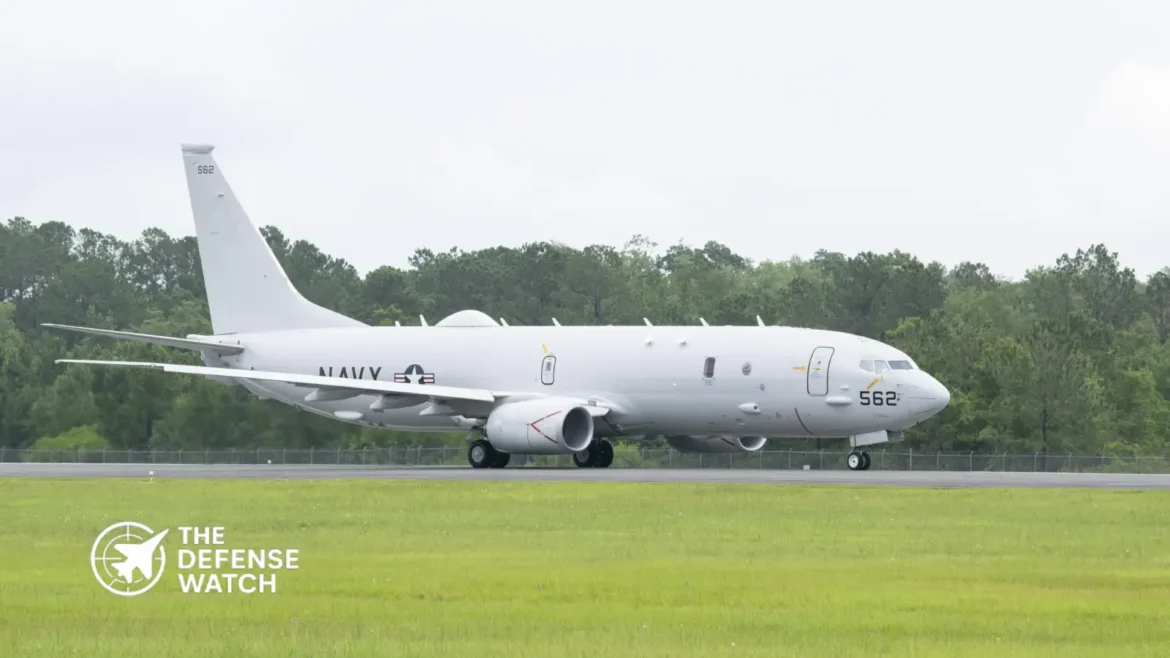
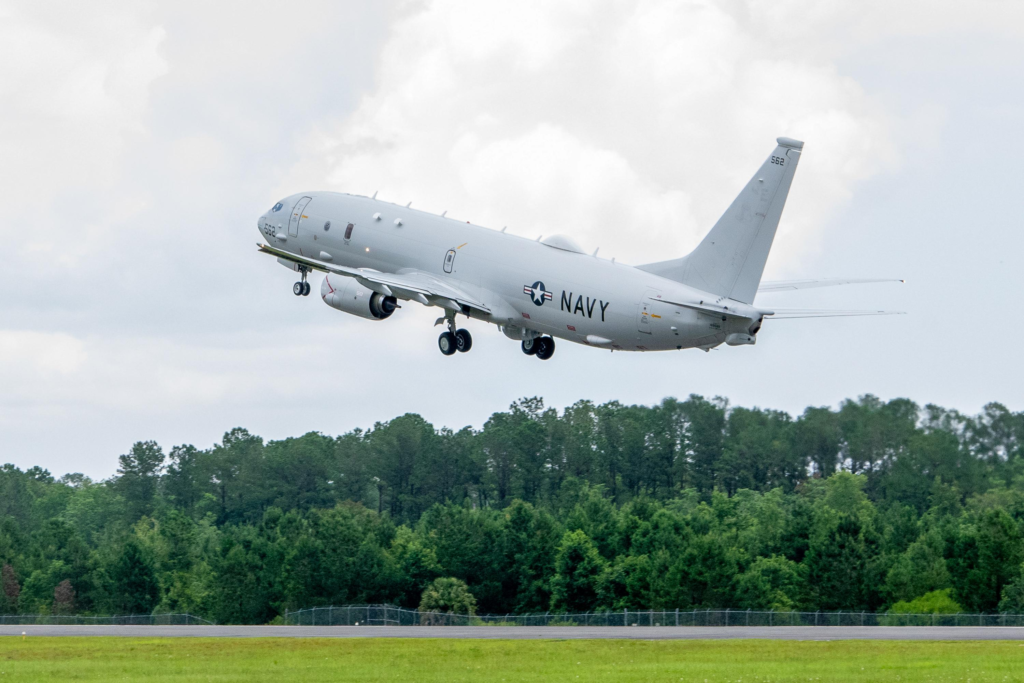
The Enhanced P-8A Poseidon has officially entered operational service after the U.S. Navy declared Initial Operational Capability for the Increment 3 Block 2 configuration, marking a major step in maritime patrol aircraft modernization. According to Naval Air Systems Command, the milestone followed successful initial operational testing supported by Air Test and Evaluation Squadron One and program office PMA-290.
KEY FACTS AT A GLANCE- The U.S. Navy has declared Initial Operational Capability for the upgraded P-8A Poseidon Increment 3 Block 2 aircraft.
- The upgrade adds new avionics, sensors, antennas, radome changes, racks, and internal wiring.
- The Enhanced P-8A Poseidon supports anti-submarine warfare, anti-surface warfare, ISR, and targeting missions.
- The milestone follows operational testing led by Air Test and Evaluation Squadron One.
- The Navy says the modernization keeps the Poseidon relevant for future high-end maritime conflict.
The decision confirms the upgraded aircraft is ready for fleet use and capable of supporting frontline missions. For the U.S. Navy, this matters because the P-8A fleet is central to long-range surveillance, anti-submarine warfare, and maritime strike operations in the Pacific, Atlantic, and Middle East.
What Changed In The New P-8A Poseidon
The Increment 3 Block 2 package introduces substantial improvements across the airframe and mission systems. NAVAIR said the aircraft now includes upgraded racks, new antennas, revised radome structures, added sensors, and refreshed wiring architecture.
While these may sound technical, they directly affect battlefield performance. Better onboard processing and improved sensor integration can shorten detection timelines, improve crew awareness, and support faster targeting decisions.
That is increasingly important in an era where submarines are quieter, surface fleets are more networked, and maritime surveillance zones are expanding.
Why The Upgrade Matters Now
The timing of this declaration is significant. The U.S. military is placing renewed focus on undersea competition, especially in the Indo-Pacific where Chinese submarine activity and long-range naval operations continue to expand. Russia also remains an active submarine operator in the North Atlantic and Arctic.

The Enhanced P-8A Poseidon gives the Navy a faster way to strengthen existing squadrons without waiting for an all-new aircraft platform. Upgrading proven fleets is often cheaper, quicker, and lower risk than launching replacement programs.
That approach mirrors broader Pentagon procurement trends, where survivability, networking, and sensor modernization are often prioritized over entirely new airframes.
Role Of The P-8A In Future Naval Operations
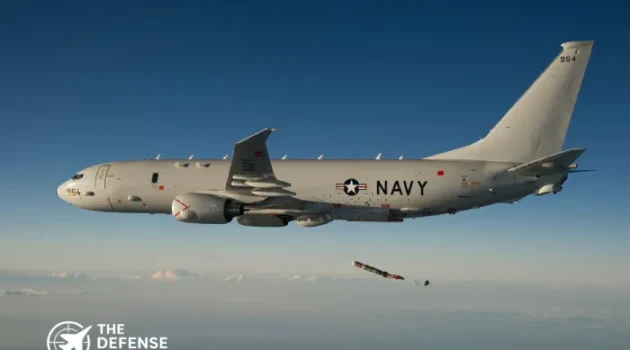
Built by Boeing, the P-8A Poseidon is based on the 737 platform but heavily modified for military missions. It performs anti-submarine warfare, anti-surface warfare, intelligence gathering, and search missions. The aircraft can deploy sonobuoys, carry torpedoes, and integrate with other naval assets such as the MQ-4C Triton unmanned system.
Its range, endurance, and jet speed allow commanders to move surveillance assets rapidly across large ocean areas, a key advantage during crises.
Analysis: A Practical Upgrade With Strategic Value
This is not a flashy next-generation reveal. It is something more useful, operational readiness for an aircraft already trusted by the fleet.
The Navy appears focused on ensuring current forces stay effective through the 2030s rather than accepting capability gaps while waiting for future programs. That makes the Enhanced P-8A Poseidon a practical force multiplier.
With anti-submarine warfare once again a priority mission, the upgraded Poseidon is likely to remain one of the Navy’s most valuable aviation assets.
¦ KEY FACTS AT A GLANCE- The U.S. Air Force will not approve a follow-on contract for 75 KC-46 tankers until Boeing resolves existing deficiencies.
- Key issues include problems with the aircraft’s refueling boom and remote vision system used by boom operators.
- More than 100 KC-46 aircraft have already been delivered under the current procurement program.
- A decision on the next tanker procurement contract is expected in roughly two years.
- The tanker program is central to replacing aging KC-135 aircraft built in the 1950s and 1960s.
USAF Delays New KC-46 Tanker Orders Until Boeing Fixes Ongoing Problems
The KC-46 tanker program faces renewed scrutiny after U.S. Air Force leadership said Boeing must resolve persistent aircraft deficiencies before the service approves another major procurement order. Air Force officials told lawmakers that technical issues with the KC-46 Pegasus, particularly involving the refueling boom and remote vision system, must be fixed before the Pentagon moves forward with a potential purchase of 75 additional tankers. The warning highlights ongoing challenges in one of the Air Force’s most important modernization programs, which aims to replace aging KC-135 aircraft that have supported U.S. global air operations for decades.
The Big Picture
The KC-46 tanker program sits at the center of the U.S. Air Force’s long-term aerial refueling modernization effort.
Aerial refueling aircraft extend the operational range of fighters, bombers, and surveillance aircraft. They allow U.S. forces to project power across global theaters without relying heavily on forward bases. That capability has become increasingly critical as the Pentagon prepares for potential high-end conflicts, particularly in the Indo-Pacific.
The Air Force plans to replace large portions of its aging tanker fleet, including the KC-135 Stratotanker, many of which entered service more than six decades ago. The KC-46 Pegasus, built by Boeing and derived from the commercial 767 platform, represents the first step in that replacement strategy.
However, persistent technical issues have complicated the program and slowed the transition.
What’s Happening
A senior U.S. Air Force official recently told lawmakers that Boeing must resolve ongoing KC-46 tanker problems before the service approves a new order of 75 aircraft.
Speaking during a Senate Armed Services Committee hearing, Air Force Vice Chief of Staff Gen. John Lamontagne said the service is still working through several deficiencies with the contractor.
The Air Force has already ordered 183 KC-46 tankers, and more than 100 aircraft have been delivered so far.
Despite that progress, unresolved issues continue to affect the aircraft’s performance and operational reliability. The most notable problems involve:
- The refueling boom, which transfers fuel to receiving aircraft
- The remote vision system, a camera-based system used by the boom operator to guide refueling
Last year, the Air Force also temporarily paused tanker deliveries after cracks were discovered in several newly built aircraft awaiting delivery.
According to Lamontagne, a decision on a new procurement contract could come within the next two years, assuming the problems are successfully addressed.
Why It Matters
The KC-46 tanker program is one of the most important aviation modernization efforts within the U.S. Air Force.
Aerial refueling capability underpins nearly every U.S. military air operation. Fighters rely on tankers to conduct long-range strike missions. Strategic bombers require refueling to reach targets across continents. Surveillance aircraft depend on tankers to maintain persistent intelligence coverage.
Without reliable tanker aircraft, the operational reach of U.S. airpower would shrink dramatically.
That is why delays in the KC-46 program carry strategic consequences. Every year the new tanker remains constrained by technical issues, the Air Force must rely more heavily on its KC-135 fleet, many of which were built during the Cold War.
The Air Force originally expected the KC-46 to become the backbone of its tanker fleet by the mid-2020s. Continued technical fixes have pushed that timeline further out.
Strategic Implications
The KC-46 program affects the United States’ ability to sustain global air operations across multiple theaters simultaneously.
In the Indo-Pacific, aerial refueling aircraft are essential for operating fighters over vast ocean distances. U.S. bases in the region are limited and vulnerable, which means aircraft often need tanker support to operate effectively.
The same logic applies to NATO operations in Europe and U.S. missions in the Middle East.
Flight records show that KC-46 tankers have already supported U.S. strike operations against Iran, demonstrating the aircraft’s growing operational role despite its development challenges.
However, the Air Force remains cautious about expanding procurement until the platform achieves full reliability.
A delay in the next KC-46 order could slow the retirement of older tanker aircraft and complicate long-term force planning.
Competitor View
Strategic competitors closely watch U.S. tanker modernization programs because aerial refueling directly affects power projection.
China has invested heavily in developing its own tanker fleet, including variants of the Y-20 aerial refueling aircraft, to support long-range fighter operations in the Pacific.
Russia also relies heavily on tanker aircraft to support strategic bomber patrols and long-distance aviation missions.
If the United States experiences prolonged delays in replacing its Cold War-era tankers, competitors may view it as a temporary constraint on U.S. global air operations.
However, the broader scale and experience of the U.S. tanker fleet still far exceeds those of its rivals.
What To Watch Next
Several developments will determine how quickly the KC-46 program stabilizes.
Key milestones include:
- Completion of upgrades to the aircraft’s remote vision system, which improves visibility for boom operators
- Resolution of mechanical issues affecting the refueling boom
- Continued aircraft deliveries planned for 2026
Boeing delivered 14 tankers in 2025 and plans to deliver 19 in 2026 as the company works to stabilize production.
The contractor has also absorbed significant financial losses on the program due to its fixed-price contract structure. Boeing has reported more than $7 billion in losses tied to the KC-46 effort.
Future bids for additional tankers are likely to reflect revised pricing structures.
Capability Gap
The KC-46 program aims to address a major structural gap in U.S. air mobility.
The Air Force still operates hundreds of KC-135 Stratotankers, many built between the late 1950s and early 1960s. While these aircraft have undergone multiple upgrades, their age increases maintenance demands and limits long-term viability.
The Pegasus tanker introduces several modern capabilities:
- Advanced defensive systems
- Greater cargo and medical evacuation capacity
- Digital refueling systems and improved avionics
However, unresolved technical issues have slowed the full realization of those capabilities.
Until the KC-46 reaches full operational maturity, the Air Force must continue balancing modernization goals with the realities of sustaining older aircraft.
The Bottom Line
The U.S. Air Force will move forward with additional KC-46 tankers only after Boeing demonstrates that the aircraft’s long-standing technical issues are fully resolved.
■ KEY FACTS AT A GLANCE- ► Contractor: The Boeing Co., St. Louis, Missouri.
- ► Contract Value: Not to exceed $61,548,900.
- ► Purpose: Replenishment of GBU-57 Massive Ordnance Penetrator weapon system components.
- ► Period of Performance: September 2028 through May 2030.
- ► Contracting Activity: Armament Directorate, Attack Division, Eglin AFB, Florida.
USAF Funds GBU-57 Massive Ordnance Penetrator Replenishment
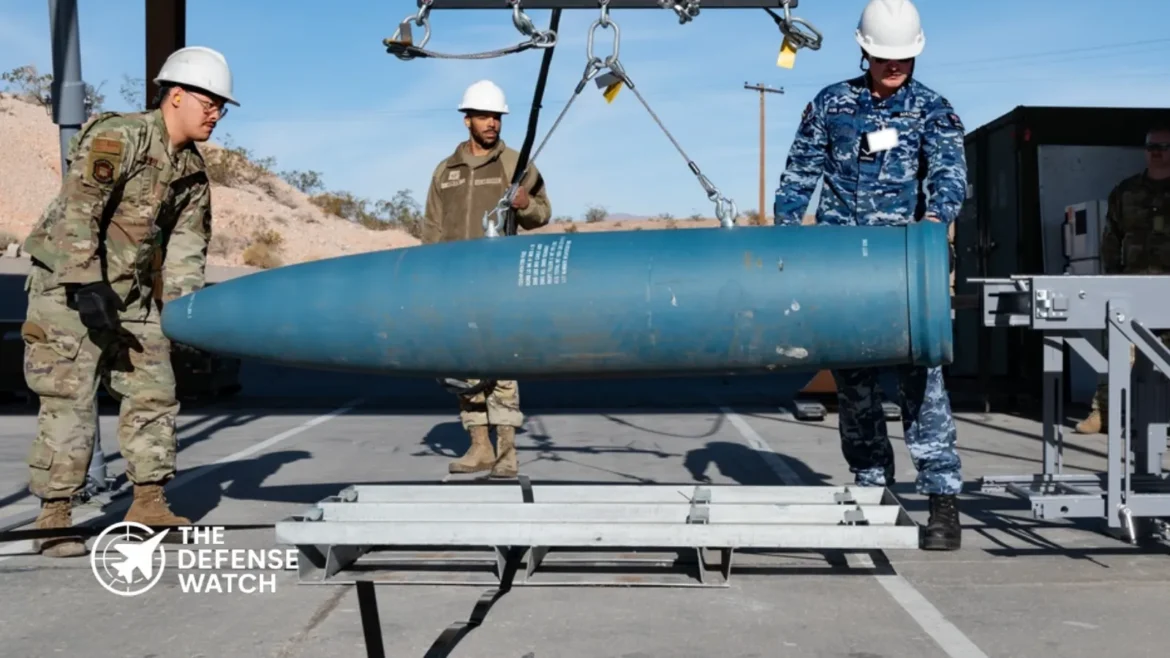
The US Air Force has awarded a $61.5 million contract for the GBU-57 Massive Ordnance Penetrator, reinforcing its long term sustainment of the deep penetration strike capability.
The award goes to The Boeing Company, St. Louis, Missouri, under a not to exceed $61,548,900 undefinitized contract. The procurement covers replenishment of critical components tied to the GBU-57 Massive Ordnance Penetrator weapon system.
According to the Department of Defense contract announcement, the scope includes Wing Drop Ship Kit sets, KMU-612 E/B tailkits, GBU-57 G/B fuze systems cable guides, separation nuts, and dedicated Massive Ordnance Penetrator containers. Fiscal 2025 procurement funds totaling $61,548,900 are being obligated at the time of award.
Work will take place in St. Louis and is scheduled for completion between September 2028 and May 2030. The contract was awarded on a sole source basis by the Armament Directorate’s Attack Division at Eglin Air Force Base under contract FA8681-26-C-B001.
Sustaining A Strategic Penetration Capability
The GBU-57 Massive Ordnance Penetrator is designed to defeat deeply buried and hardened targets. The weapon, often referred to as the MOP, forms part of the US Air Force’s inventory of specialized conventional munitions intended for high value, fortified objectives.
Unlike general purpose bombs, the GBU-57 Massive Ordnance Penetrator relies on precision guidance and a hardened casing to penetrate reinforced concrete or subterranean facilities before detonation. The KMU-612 E/B tailkit provides GPS guidance, converting the bomb into a precision guided munition.
While the Department of Defense did not disclose quantities under this replenishment contract, the inclusion of ship kits, fuze system components, and transport containers indicates a focus on lifecycle sustainment rather than new system development.
Undefinitized Contract And Sole Source Structure
The contract is structured as an undefinitized action. In Pentagon acquisition practice, this allows work to begin before final contract terms are fully negotiated, often used when urgency or production continuity is a factor.
The sole source nature of the award reflects Boeing’s role as the original manufacturer and integrator of the GBU-57 Massive Ordnance Penetrator. Given the technical complexity and certification requirements associated with such munitions, alternative suppliers are typically not available without extensive requalification.
This approach aligns with broader Air Force efforts to maintain readiness of niche, high impact capabilities that may have limited production lines but outsized strategic relevance.
Budget Context And Long Term Planning
Fiscal 2025 procurement funds were obligated at the time of award, signaling that the replenishment was planned within the regular budget cycle rather than through supplemental emergency appropriations.
The performance window stretching to 2030 suggests a measured production tempo. That timeline provides industrial stability for Boeing’s St. Louis operations while ensuring the Air Force retains operational depth in its hardened target strike portfolio.
In recent years, US defense planners have placed renewed emphasis on capabilities relevant to contested environments and hardened infrastructure scenarios. While no specific operational driver was cited in the contract notice, sustainment of the GBU-57 Massive Ordnance Penetrator fits within that broader modernization framework.
Industrial Base And Strategic Significance
For Boeing, the award reinforces its role in high end conventional munitions alongside its aircraft and missile portfolios. St. Louis remains a core hub for the company’s defense activities.
From a strategic standpoint, replenishment contracts such as this rarely generate headlines compared to major aircraft or missile procurements. However, they represent the steady funding streams that keep critical capabilities viable over decades.
Maintaining the GBU-57 Massive Ordnance Penetrator inventory ensures that the US Air Force retains a credible option against hardened and deeply buried targets. In deterrence terms, the existence of that capability can shape adversary calculations even if it is rarely discussed publicly.
As the Pentagon balances investments across airpower, space, cyber, and munitions stockpiles, targeted replenishment efforts highlight a key lesson from recent conflicts. High end platforms matter, but so do the specialized weapons they carry.
Boeing Secures Major F-15K Upgrade Contract
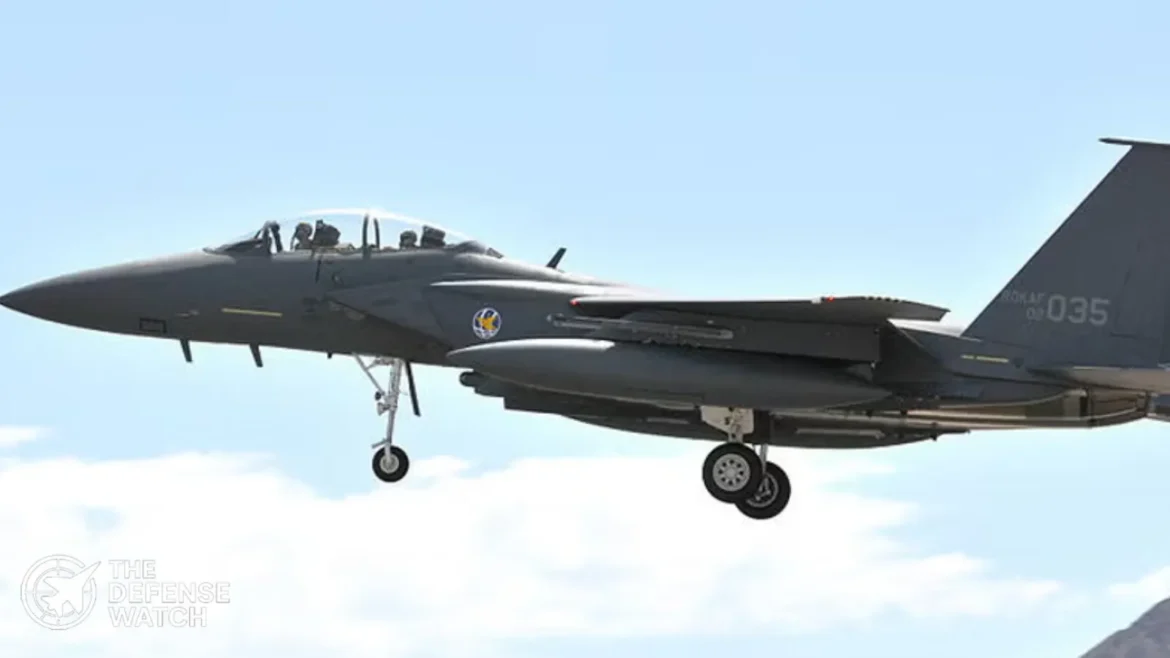
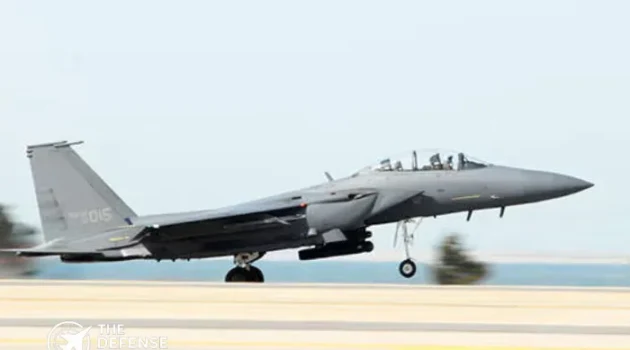
The Boeing F-15K upgrade contract has been awarded to Boeing in a deal valued at up to $2.81 billion to modernize the Republic of Korea Air Force F-15K fleet under the U.S. Foreign Military Sales framework.
(adsbygoogle = window.adsbygoogle || []).push({});The U.S. Department of Defense announced that The Boeing Co., based in St. Louis, Missouri, received a not-to-exceed $2,805,961,005 hybrid cost-plus-fixed-fee and fixed-price incentive undefinitized contract. The agreement supports a comprehensive upgrade program for South Korea F-15K Slam Eagle aircraft, operated by the Republic of Korea Air Force.
Contract Scope and Program Overview
Under the Boeing F-15K upgrade contract, the company will design and develop an integrated suite of aircraft systems to support modification of the F-15K fleet. The effort is being executed on behalf of the Republic of Korea Air Force and South Korea Defense Acquisition Program Administration.
The contract structure combines cost-plus-fixed-fee and fixed-price incentive elements and remains undefinitized at the time of award. This approach allows work to proceed while final contract terms are completed, a common practice for large, long-term military modernization programs involving complex systems integration.
Work will be performed primarily in St. Louis, Missouri, Boeing’s primary fighter aircraft production and sustainment hub. The program is scheduled to continue through Dec. 31, 2037, indicating a multi-decade modernization and support effort.
Foreign Military Sales and Funding Details
The F-15K upgrade effort is being executed as a Foreign Military Sales case between the United States and the Republic of Korea. At the time of contract award, $540 million in foreign military sale funds were obligated to initiate the program.
Foreign Military Sales contracts are managed by the U.S. government on behalf of allied nations, ensuring standardized contracting, configuration control, and long-term sustainment alignment with U.S. Air Force systems.
The Air Force Life Cycle Management Center at Wright-Patterson Air Force Base, Ohio, is serving as the contracting activity for the program. The contract identifier is FA8634-26-C-B002.
Sole Source Award and Industrial Context
The Boeing F-15K upgrade contract was awarded as a sole source acquisition. Boeing is the original manufacturer of the F-15 platform and remains the only entity with full design authority and system integration responsibility for the aircraft.
Sole source awards are typical for major fighter aircraft upgrade programs, particularly when proprietary mission systems, avionics architecture, and flight control software are involved.
(adsbygoogle = window.adsbygoogle || []).push({});Boeing continues to serve as the prime contractor for F-15 variants worldwide, including the F-15EX Eagle II for the U.S. Air Force and multiple international upgrade programs.
Strategic Importance for South Korea
The Republic of Korea Air Force operates the F-15K as one of its primary long-range strike and air superiority platforms. Modernization of the fleet supports South Korea’s broader efforts to maintain air combat capability amid evolving regional security challenges.
While specific system details were not disclosed in the contract announcement, integrated aircraft system upgrades typically focus on avionics, mission computing, sensors, electronic warfare, and interoperability with allied forces.
The long execution timeline suggests a phased approach to fleet upgrades, testing, and fielding, ensuring continued operational availability of the aircraft during modification.
Boeing Defense Portfolio and Long-Term Sustainment
The award further reinforces Boeing’s role as a key supplier in allied fighter sustainment and modernization programs. The St. Louis facility supports production, upgrades, and sustainment for multiple fighter aircraft lines, including F-15 and F-A-18 platforms.
By extending work through 2037, the Boeing F-15K upgrade contract provides long-term stability for the industrial base supporting fighter aircraft engineering, integration, and lifecycle management.
Newer Posts