

Executive Summary:
France is moving ahead with plans for a successor to the Future Combat Air System (FCAS) following the collapse of the trinational fighter program involving France, Germany, and Spain. Dassault Aviation says discussions with the French government are underway on a future combat aircraft demonstrator that could make its first flight in 2031 or 2032, marking a major shift in Europe’s sixth generation fighter landscape.
France Advances FCAS Successor Following Program Collapse
France’s FCAS successor effort has entered a new phase after Dassault Aviation confirmed it is discussing a future combat aircraft demonstrator with the French government. The announcement follows the end of the multinational Future Combat Air System fighter program, which had been intended to deliver a sixth generation combat aircraft through cooperation between France, Germany, and Spain.
According to Dassault Chief Executive Eric Trappier, the company is examining an alternative program that could proceed either as a purely French initiative or with carefully selected international partners. The proposed demonstrator would be based on French military requirements and is expected to target a maiden flight in 2031 or 2032.
Why FCAS Broke Down
The original FCAS program was launched in 2017 as Europe’s flagship sixth generation combat aviation project. However, years of disagreements over industrial leadership, intellectual property, workshare, and program management ultimately proved impossible to resolve.
Dassault maintained that the prime contractor for the manned fighter should retain overall design authority, while Airbus Defence and Space argued for a more balanced industrial structure reflecting German and Spanish participation. Those competing approaches prevented the program from progressing into full-scale aircraft development.
Although the fighter element has ended, some enabling technologies developed under FCAS, including networking, sensors, and collaborative systems, may continue independently within European defense initiatives.
France’s New Combat Aircraft Strategy
Rather than restarting a multinational program under the previous framework, France appears to be prioritizing a phased national roadmap.
That roadmap includes:
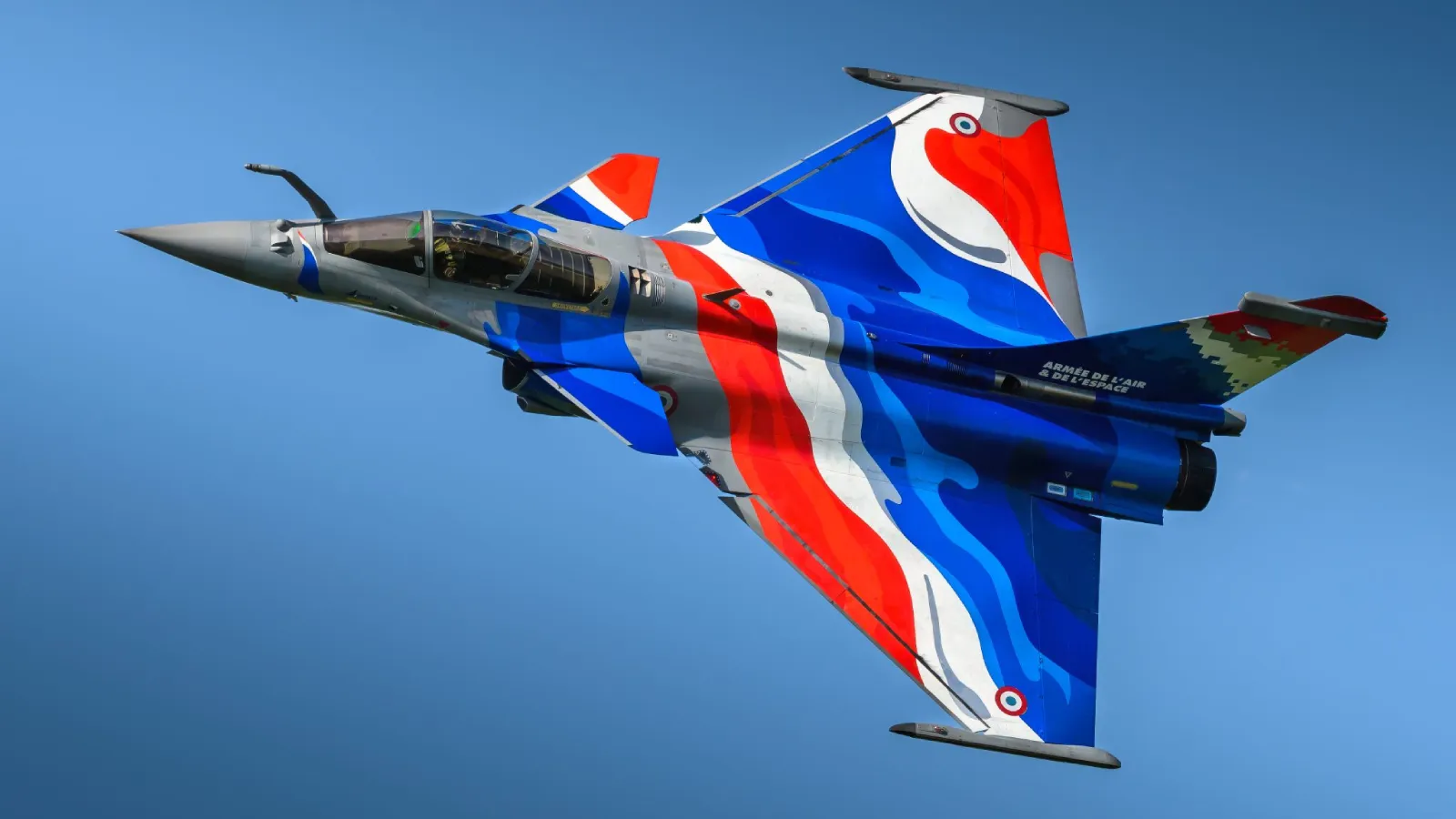
Program Element Current Status Rafale F5 Development continues as next major Rafale standard Combat drone integration Planned alongside Rafale F5 Future fighter demonstrator Under discussion with French government Demonstrator first flight Targeted for 2031 to 2032 Operational successor Expected during the 2040s timeframe This approach allows France to preserve its fighter aircraft design expertise while reducing dependence on complex multinational industrial arrangements.
What The Demonstrator Is Expected To Prove
The planned demonstrator is intended to validate technologies that define sixth generation combat aircraft rather than serve as a production aircraft itself.
Areas likely to receive emphasis include:
- Low observable airframe design
- Advanced sensor fusion
- Artificial intelligence assisted mission management
- Collaborative operations with unmanned combat aircraft
- Open mission systems architecture
- Improved electronic warfare integration
Many of these technologies are already being explored through Rafale modernization programs and France’s previous unmanned combat aircraft research.
Strategic Significance For European Defense
France’s decision highlights a broader shift occurring across Europe’s combat aviation sector.
Instead of relying exclusively on large multinational fighter programs, major defense powers are increasingly pursuing nationally led development efforts while remaining open to selective international participation.
The United Kingdom, Italy, and Japan continue development of the Global Combat Air Programme (GCAP), while France is positioning its own future aircraft around national operational priorities. Germany has also begun restructuring portions of its future air combat strategy following FCAS’s collapse.
Why This Matters For The United States
From a U.S. defense perspective, France’s new direction carries several implications.
First, it preserves Europe’s ability to independently develop advanced combat aircraft, maintaining competition and technological diversity within the Western aerospace industry.
Second, a successful French demonstrator would sustain Dassault’s expertise in designing high performance fighter aircraft, an important capability for NATO’s broader industrial base.
Finally, the shift illustrates the growing challenge of managing multinational defense acquisition programs as technology becomes increasingly software driven and intellectual property grows more valuable. Future partnerships may increasingly resemble modular technology collaborations rather than fully integrated aircraft development efforts.
For U.S. defense planners, the evolution of France’s program also provides another benchmark against ongoing sixth generation efforts such as the U.S. Air Force’s Next Generation Air Dominance initiative and allied combat aircraft programs.
Outlook
France has not formally launched a replacement acquisition program, but discussions surrounding a future combat aircraft demonstrator indicate that planning has moved beyond conceptual studies.
If government approval is secured, a demonstrator flying in the early 2030s would represent the first major milestone toward a new French combat aircraft expected to succeed the Rafale during the 2040s. The effort also signals France’s determination to preserve sovereign fighter aircraft design capabilities while remaining open to future international cooperation under conditions that align with French operational and industrial priorities.

