












@2026 – All Right Reserved. TheDefenseWatch.com
- Home
- Defense Systems
- Attack & Multirole Drones (UAVs)
- Penguin Mk3 Drone
Penguin Mk3 Drone
Defense Systems Full Specifications
1. General Information
| Name | Penguin Mk3 VTOL |
| Manufacturer | Redwire Corporation (Defense Tech Division) |
| Country of Origin | United States |
| Type / Role | Tactical Intelligence, Surveillance, & Reconnaissance (ISR) UAV |
| First Flight / Introduced | 2024–2026 (Latest Series Iteration) |
| Status | In Production / In Service |
| Unit Cost | $250,000 – $400,000 (Estimated per complete system) |
2. Performance
| Maximum Speed | 60+ knots (111 km/h) |
| Cruise Speed | 45+ knots (83 km/h) |
| Operational Range | 180 km (Line-of-Sight) |
| Endurance | Up to 14 hours |
| Service Ceiling | 13,000 ft (4,000 m) Density Altitude |
| Rate of Climb | Tailored via autonomous VTOL flight profiles |
3. Dimensions
| Length | 2.3 m (7.5 ft) approx. |
| Wingspan | 5.0 m (16.4 ft) |
| Height | 0.5 m (1.6 ft) approx. |
| Maximum Takeoff Weight (MTOW) | 49 kg (108 lbs) |
4. Payload & Armament
| Payload Capacity | 8 kg (17.6 lbs) |
| Hardpoints | None (Internal and wing-recessed payload bays only) |
| Weapons | None (Non-kinetic platform) |
| Sensors | Epsilon series gyro-stabilized EO/IR gimbals, laser rangefinders |
| Avionics | Automated retract mechanism, onboard power distribution, backup flight controls |
5. Propulsion
| Engine Type | Hybrid EFI internal combustion (cruise) + Electric quad-rotors (VTOL) |
| Engine Power | 28cc Electronic Fuel Injected gas engine core |
| Propeller Type | Fixed-pitch pusher propeller (cruise) + 4 VTOL lift rotors |
6. Communication & Control
| Control Type | Fully Autonomous (Catapult-free takeoff, waypoint flight, landing) |
| Data Link Range | Up to 180 km using high-gain tracking antennas |
| Navigation | Redundant GPS / INS with anti-jamming configurations |
| Ground Control Station | Portable dual-touchscreen ruggedized GCS |
7. Operational Use
| Primary Users | United States Armed Forces, Ukraine Armed Forces, NATO Allies |
| Combat Proven | Yes (Penguin lineage widely deployed in contested electronic environments) |
| Notable Operations | Ukraine Security Assistance Deployments, NATO Border Protection |
PROS
- Runway Independent: Fully automated VTOL capabilities allow launching and recovery from tight, restricted clearings without catapults or nets.
- Exceptional Endurance: Delivers up to 14 hours of continuous flight time, outclassing standard rotary-wing tactical alternatives.
- Multi-Mission Modular Architecture: Features multiple swappable payload bays in the fuselage and wings to carry diverse sensors simultaneously.
- All-Weather Resilience: Equipped with automated internal battery heaters and a heated pitot tube for reliable sub-zero winter deployment.
- Combat-Proven Pedigree: Extensively fielded by NATO allies and built directly upon a lineage with hundreds of successful operational deployments.
CONS
- Speed Penalties: With a maximum speed of 60+ knots, it is relatively slow and highly vulnerable to high-tier air defense networks.
- Unarmed Profile: The platform is strictly designed for ISR, communication relay, and mapping, lacking any hardpoints or kinetic strike capabilities.
- VTOL Weight Penalty: The inclusion of vertical lift rotors and landing gear reduces overall cruise endurance compared to its legacy fixed-wing catapult variants.
- Payload Constraints: Restricted to a maximum payload capacity of 8 kg (17.6 lbs), limiting its ability to carry heavier multi-sensor or radar setups.
- Line-of-Sight Limitations: Standard communication is bounded within 180 km, requiring daisy-chained relays for deeper beyond-line-of-sight operations.
Redwire Penguin Mk3 VTOL: Next-Gen Tactical ISR Drone
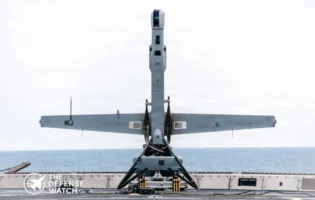
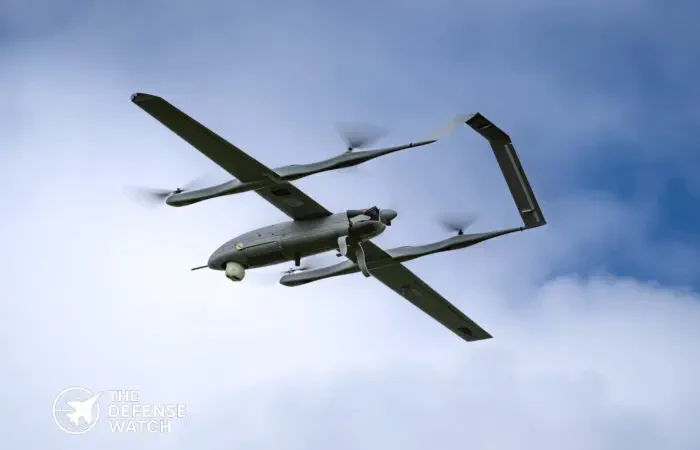
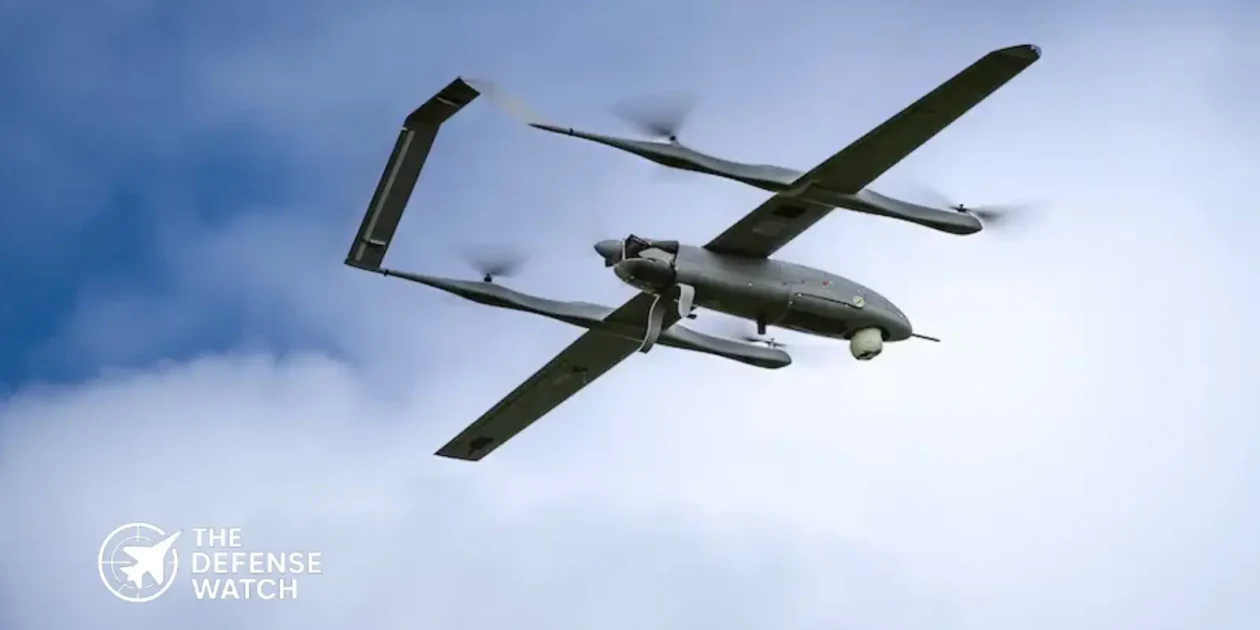
The Redwire Penguin Mk3 VTOL represents the cutting edge of tactical, small uncrewed aerial systems (UAS) engineered explicitly for modern contested battlefields. Originally developed under the UAV Factory lineage and now a flagship defense platform for Florida-based Redwire Corporation, this Group 3 / NATO Class I small UAS is purpose-built to execute persistent intelligence, surveillance, reconnaissance, and target acquisition (RSTA) missions. Optimized for operators requiring an agile footprint, the Penguin Mk3 completely eliminates the need for runways, pneumatic catapult launchers, or bulky recovery infrastructure, making it highly suitable for rapid expeditionary deployment by a minimal footprint crew.
High-Endurance Performance and Architecture
At the heart of the Penguin Mk3 VTOL is a sophisticated, twin-tail boom, high-wing composite airframe optimized for aerodynamic efficiency and multi-mission flexibility. Powered by an advanced electronic fuel-injected (EFI) internal combustion engine driving a pusher propeller for cruise flight, the platform achieves a maximum level speed exceeding 60 knots and a sustained cruise speed of over 45 knots. For vertical flight, integrated electric lift rotors enable seamless, fully autonomous vertical takeoff and landing operations from unimproved, tight terrains.
The drone boasts an exceptional endurance profile for a platform under 110 pounds, remaining airborne for up to 14 hours depending on the payload configuration. It features a line-of-sight communication range extending up to 180 kilometers (112 miles), secured via high-bandwidth Silvus S-band or C-band digital data links.
Modular Payloads and Cost Efficiency
The Penguin Mk3 VTOL features a highly adaptable modular architecture with multiple payload bays in both the fuselage and wings, supported by an onboard generator supplying 200W of continuous power. It typically flies gyro-stabilized electro-optical/infrared (EO/IR) gimbals like the Epsilon series, which feature advanced object tracking and moving target indicators (MTI). To combat severe environmental operational environments, the system features a heated pitot tube and specialized internal battery heaters. With over 250 Penguin series units field-proven in high-intensity European conflicts, an entire tactical system—including aircraft, a portable dual-touchscreen Ground Control Station (GCS), and tracking antennas—carries an approachable unit cost estimated between $250,000 and $400,000, presenting a highly cost-effective tactical asset for military and federal law enforcement agencies.
Disclaimer Note
The information provided on TheDefenseWatch.com is for general informational purposes only. While we strive to ensure the accuracy, completeness, and timeliness of our content regarding defense and aerospace products, technologies, and specifications, we cannot guarantee that all information is 100% accurate or up-to-date due to the evolving nature of military technology and classified data.TheDefenseWatch.com does not warrant the reliability, suitability, or availability of the information for any specific purpose. Users are advised to consult official sources, such as manufacturers, government publications, or defense agencies, for precise and verified data before making decisions based on our content.We are not affiliated with any defense manufacturers, governments, or military organizations mentioned. Opinions, reviews, and ratings reflect expert analysis but are subjective and should not be considered endorsements. TheDefenseWatch.com is not responsible for any errors, omissions, or consequences arising from the use of this website’s content.External links are provided for convenience and do not imply endorsement. TheDefenseWatch.com reserves the right to update or modify content without prior notice. By using this website, you agree to our Privacy & Cookies Policy.
New Arrivals
Popular Comparisons
-
 Tejas vs Gripen: Key Differences and Capabilities
View Comparison →
Tejas vs Gripen: Key Differences and Capabilities
View Comparison → -
Tejas vs MiG-21 Bison: How India Replaced Its Iconic Supersonic Fighter
View Comparison →
-
F-35 vs F-16: Stealth, Sensors and Combat Roles
View Comparison →
-
Tejas Fighter Jet vs F-16 Fighting Falcon: Capability Compared
View Comparison →
-
Rafale Fighter Jet vs F-16 Fighting Falcon : Which Fighter Has the Edge?
View Comparison →
-
Su-57 Fighter Jet vs J-20 Fighter Jet: Stealth and Air Combat Compared
View Comparison →
-
Mirage 2000 vs Tejas Mk1A: Legacy Combat Power vs Indigenous Modernization
View Comparison →
-
Rafale Fighter Jet vs F-22 Raptor: Which Air Dominance Fighter Has the Edge?
View Comparison →
-
Tejas Fighter Jet vs. Rafale Fighter Jet: India’s Indigenous Fighter Meets France’s Proven Multirole Combat Aircraft
View Comparison →
-
F-22 Raptor vs. F-35 Joint Strike Fighter: Which Fifth Generation Fighter Has the Edge?
View Comparison →
- F-15E Shot Down Over Iran: How the Dude 44 Crew Was Brought Home

- Operation Mount Hope III: How Two Night Stalker Chinooks Carried a Libyan Hind Out of Chad
- North Korea Fires Ballistic Missile From Wonsan Toward East Sea
- BAE Systems Wins $70.5 Million Trident II D5 Support Contract
- Saudi Arabia Weighs Yemen Offensive to Retake Bab el-Mandeb
- L3Harris Expands WESCAM Manufacturing Focus for Mission-Ready EO/IR Systems
- Northrop Grumman Unveils FORTITUDE RF Chip for Faster Defense Systems
- Northrop Grumman YFQ-48A Talon Blue Completes Autonomous Flight Test
- U.S. Warns Defense Industry Lacks Capacity for Rapid Weapons Surge
- NATO Uses B-1B Bomber in Baltic Air Defense Training