

Executive Summary:
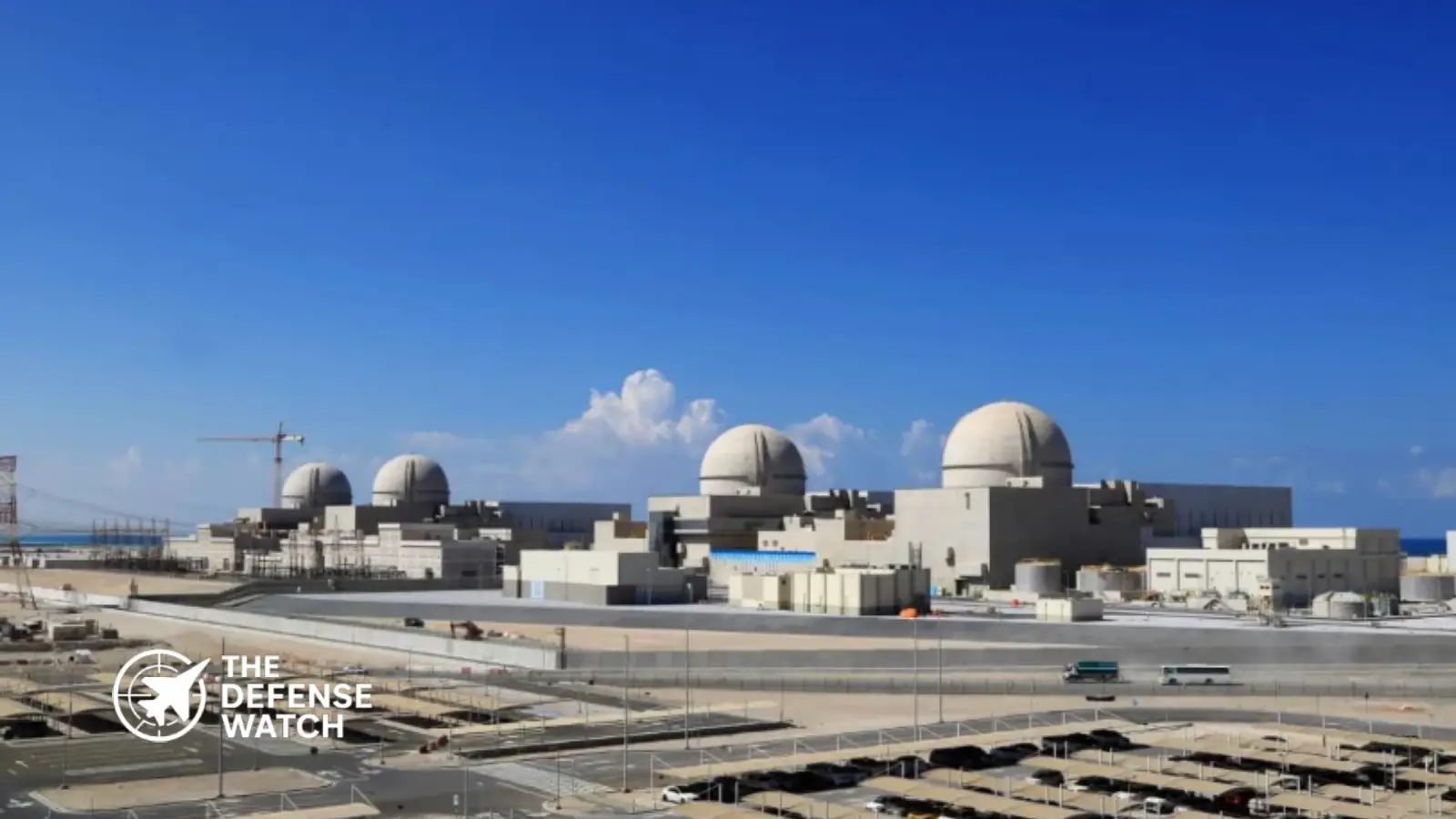
The United Arab Emirates has accused drones launched from Iraqi territory of targeting the Barakah Nuclear Power Plant, the Arab world’s only operational nuclear energy facility. Abu Dhabi is demanding immediate Iraqi action to prevent further attacks, amid growing concerns over regional drone warfare and critical infrastructure security in the Gulf.
UAE Demands Iraq Halt Drone Attacks After Barakah Nuclear Plant Strike
The United Arab Emirates has formally demanded that Iraq prevent further drone attacks originating from its territory after a strike near the Barakah Nuclear Power Plant triggered heightened regional security concerns across the Gulf.
In a statement released Wednesday, the UAE Ministry of Foreign Affairs condemned what it described as hostile drone attacks launched from Iraqi territory against civilian infrastructure in Gulf Cooperation Council countries. The statement called on Baghdad to take immediate and unconditional measures to stop future attacks and uphold regional security commitments.
The diplomatic escalation follows a May 17 drone incident involving the Barakah Nuclear Power Plant, located in Abu Dhabi’s Al Dhafra region. UAE authorities said one of three drones involved in the attack caused a fire near an electricity generator facility connected to the nuclear complex.
According to the UAE Ministry of Defense, technical analysis and tracking systems traced the drones back to Iraqi territory. Emirati officials also stated that six additional drones approaching civilian and strategic sites within the UAE were intercepted over a 48 hour period.
No casualties were reported in any of the incidents.
Barakah Nuclear Facility Becomes Strategic Security Flashpoint
The Barakah Nuclear Power Plant is the Arab world’s first operational civilian nuclear energy facility and represents one of the UAE’s most strategically significant infrastructure projects. Operated by the Emirates Nuclear Energy Corporation, the site plays a major role in the country’s long term energy diversification strategy.
The attack highlights how critical infrastructure across the Gulf is increasingly vulnerable to low cost unmanned aerial systems. Drone warfare has evolved into a central feature of regional security competition, particularly among Iranian aligned proxy groups operating in Iraq, Syria, Yemen, and elsewhere in the Middle East.
Although no organization has claimed responsibility for the Barakah incident, suspicion has centered on Iran backed Shiite militias active inside Iraq. Several of these groups possess long range one way attack drones and have previously threatened Gulf states and U.S. regional assets.
The UAE did not publicly identify a specific militia group.
Rising Drone Threat Reshapes Gulf Defense Priorities
The Barakah strike underscores the growing challenge Gulf states face in defending high value infrastructure against relatively inexpensive unmanned systems.
Over the last decade, regional militaries have invested heavily in layered air and missile defense architectures focused primarily on ballistic missile threats. However, smaller drones flying at low altitude have repeatedly demonstrated the ability to evade conventional radar coverage and create operational disruption.
The incident is likely to intensify UAE and GCC investment in counter UAS technologies, including:
- Advanced radar and electro optical tracking systems
- Electronic warfare jamming capabilities
- Directed energy weapons
- Integrated air defense command networks
- Artificial intelligence enabled drone detection systems
The UAE already operates one of the Middle East’s most advanced integrated air defense networks, combining U.S., European, and domestically developed systems. Interceptions reported during the latest attacks suggest those defensive layers remain operationally effective, though the Barakah incident demonstrates that infrastructure vulnerabilities remain.
The attack also reflects the broader regional shift toward asymmetric warfare, where non state actors increasingly rely on drones and precision strike capabilities to challenge technologically superior militaries.
Iraq Faces Pressure Over Militia Activity
Abu Dhabi’s statement places additional diplomatic pressure on Baghdad to rein in armed factions operating within Iraqi territory.
Successive Iraqi governments have struggled to fully control Iran aligned militias integrated into the Popular Mobilization Forces structure. While officially linked to Iraq’s security apparatus, several factions maintain independent command networks and regional operational agendas.
The UAE stressed that Iraq has a responsibility to prevent its territory from being used to launch attacks against neighboring states. Emirati officials warned that such incidents undermine regional stability and violate international law and national sovereignty.
For Baghdad, the situation presents another complex balancing challenge between maintaining relations with Gulf Arab states, preserving ties with Tehran, and managing powerful militia groups domestically.
The incident may also influence broader GCC security coordination efforts and deepen intelligence sharing on drone threats across the region.
Strategic Implications For Gulf Security
The targeting of a civilian nuclear facility, even indirectly, marks a significant escalation in the regional threat environment.
While the reported fire occurred near an external electricity generator area rather than inside a reactor facility, attacks involving nuclear infrastructure carry heightened political and strategic consequences. Even limited physical damage can generate substantial international concern over nuclear safety and regional escalation risks.
The UAE’s public attribution of the drones to Iraqi territory signals a more assertive posture toward cross border drone threats. It also reflects growing frustration among Gulf states over the expanding operational reach of Iranian aligned armed groups.
For regional defense planners, the Barakah incident reinforces the need for persistent airspace monitoring and rapid response systems capable of detecting and intercepting small unmanned aircraft before they reach critical infrastructure.
The event is likely to accelerate Gulf demand for advanced counter drone technologies, an area that has become one of the fastest growing sectors in the global defense market.
