






@2026 – All Right Reserved. TheDefenseWatch.com
- Home
- Catalog
- Defense Systems
- HQ-16 Air Defense System
HQ-16 Air Defense System
Full Specifications
1. General Information
| System Name | HQ-16 (LY-80 export) |
| Manufacturer | Shanghai Academy of Spaceflight Technology (SAST/CASC) |
| Country of Origin | China |
| Type / Role | Medium-Range Surface-to-Air Missile (SAM) System |
| In Service | Yes |
| Year Introduced | ~2011 |
| Unit Cost | ~USD 30-50 million (estimated per battery/system) |
2. Performance & Capabilities
| Maximum Engagement Range | 40-70 km (variants to 160 km) |
| Maximum Engagement Altitude | 15 m – 18-27 km |
| Target Types | Aircraft, Helicopters, Cruise Missiles, UAVs, SRBMs |
| Interception Probability | ~85% (aircraft), ~60% (cruise missiles) |
| Reaction Time | 6-15 seconds |
| Radar Detection Range | 85-140 km |
3. Missile Specifications
| Missile Type | Solid-fuel rocket, vertical cold launch |
| Missile Length | ~5.2 m |
| Missile Weight | ~650 kg |
| Warhead Type | Fragmentation / Proximity |
| Warhead Weight | ~65-70 kg |
| Speed | Mach 3+ |
4. Radar & Fire Control
| Radar Type | Passive Phased-Array (L/S-band) |
| Radar Name | IBIS-150 / multifunction arrays |
| Detection Range | 85-140 km |
| Tracking Capacity | Up to 48+ targets |
| Guidance System | Inertial + Semi-Active Radar Homing |
| Fire Control System | Automated, networked |
5. Launcher & Mobility
| Launcher Type | Mobile TEL (6x6 wheeled) |
| No. of Missiles per Launcher | 6 |
| Reload Time | Variable (truck-mounted support) |
| Mobility Platform | Wheeled transporter-erector-launcher |
| Crew Required | Small crew (integrated with battery) |
6. Command & Control
| C2 System | Integrated battery command post |
| Connectivity | Data links for network-centric operations |
| Network Capability | Yes |
| Operation Mode | Autonomous / Networked |
7. Operational Use
| Primary Operator | China (PLA), Pakistan |
| Combat Proven | Limited / Training exercises |
| Conflict History | Not widely documented in major conflicts |
| Notable Feature | Vertical launch for 360° coverage; layered defense role |
PROS
- Cost-effective production and operation relative to similar Western or Russian systems.
- Vertical cold launch enables rapid, omnidirectional firing and high rate of fire.
- Strong multi-target engagement capability with advanced phased-array radars.
- Effective against diverse threats, including low-altitude cruise missiles and UAVs.
- Highly mobile and integrable into larger networked air defense networks.
CONS
- Range is medium-tier, requiring support from longer-range systems like HQ-9 for full coverage.
- Semi-active homing may be vulnerable to advanced electronic countermeasures.
- Limited combat-proven track record compared to Western equivalents.
- Export versions may have downgraded capabilities for technology protection.
- Dependence on supporting radar vehicles increases system complexity and logistical footprint.
HQ-16 Medium-Range Air Defense System
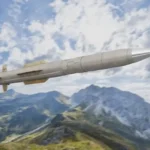
The HQ-16 (Hong Qi-16, NATO: CH-SA-16), also known as the LY-80 for export, serves as a cornerstone of China’s integrated air defense network. Developed to bridge gaps between short-range systems like the HQ-17 and long-range assets such as the HQ-9, this mobile surface-to-air missile (SAM) system provides robust protection for ground forces, airbases, and high-value assets against a wide array of aerial threats, including fighter aircraft, helicopters, cruise missiles, UAVs, and short-range ballistic missiles.
Manufacturer and Origin
The system was developed by the Shanghai Academy of Spaceflight Technology (SAST), part of the China Aerospace Science and Technology Corporation (CASC). It draws design heritage from the Russian Buk series (SA-11/SA-17) but incorporates significant Chinese advancements, including vertical cold launch technology. It entered service with the People’s Liberation Army (PLA) around 2011 and has been exported, notably to Pakistan as the LY-80.
Key Capabilities
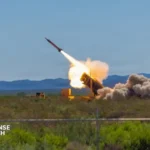
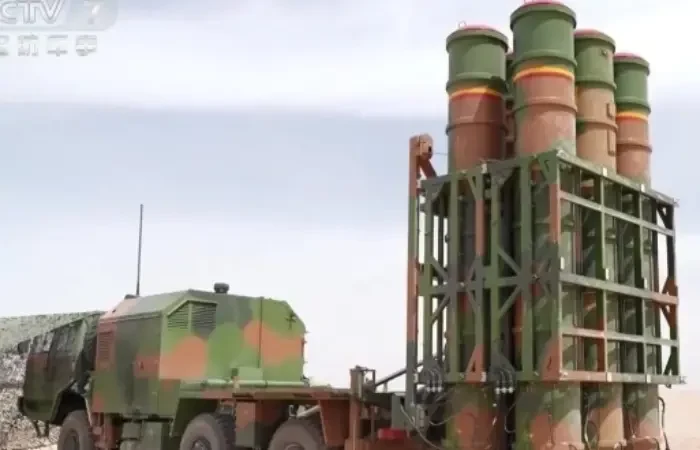
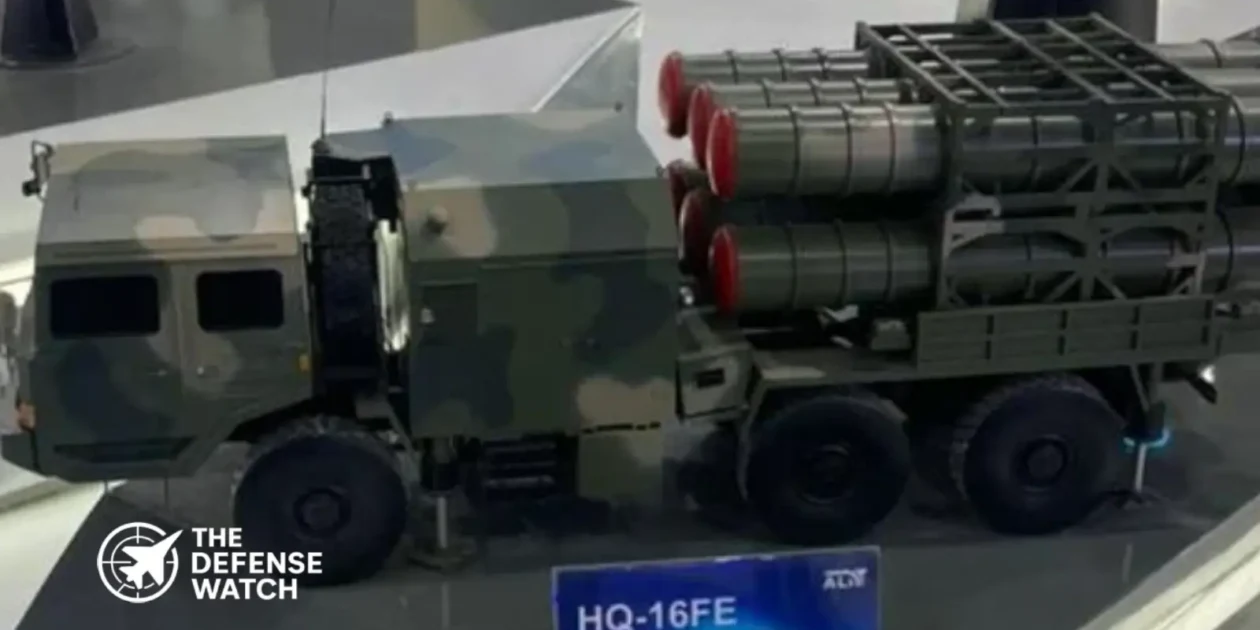
The HQ-16 uses a transporter-erector-launcher (TEL) configuration, typically with six vertical launch cells per vehicle. Missiles employ semi-active radar homing with inertial guidance, enabling effective engagement in electronic warfare environments. Later variants (HQ-16B/C) extend performance significantly. It operates in all-weather conditions and supports networked, multi-layered defense architectures.
Speed and Range
Base HQ-16/HQ-16A models offer a slant range of approximately 40 km, while upgraded HQ-16B/C variants reach 70 km. Advanced iterations like the HQ-16FE push capabilities to around 160 km. Missiles achieve speeds exceeding Mach 3 (up to Mach 4 in some reports), with engagement altitudes from very low level (~15 m) up to 18-27 km depending on the variant. Radar systems include S-band 3D phased-array detection out to ~140 km and L-band support, allowing a battery to detect up to 144 targets and track dozens simultaneously.
Cost/Price
Exact figures are classified, but estimates place a battery or system unit in the $30-50 million range, making it relatively cost-effective compared to Western peers due to cold-launch efficiency and domestic production. Full procurements, such as Pakistan’s initial batches, reflect competitive export pricing for medium-range SAMs.
In operational use, the HQ-16 enhances China’s A2/AD strategy and provides allies with credible medium-tier air defense. Its mobility on 6×6 vehicles ensures rapid deployment, while vertical launch supports 360-degree coverage without repositioning.
Reviews
Disclaimer Note
The information provided on TheDefenseWatch.com is for general informational purposes only. While we strive to ensure the accuracy, completeness, and timeliness of our content regarding defense and aerospace products, technologies, and specifications, we cannot guarantee that all information is 100% accurate or up-to-date due to the evolving nature of military technology and classified data.TheDefenseWatch.com does not warrant the reliability, suitability, or availability of the information for any specific purpose. Users are advised to consult official sources, such as manufacturers, government publications, or defense agencies, for precise and verified data before making decisions based on our content.We are not affiliated with any defense manufacturers, governments, or military organizations mentioned. Opinions, reviews, and ratings reflect expert analysis but are subjective and should not be considered endorsements. TheDefenseWatch.com is not responsible for any errors, omissions, or consequences arising from the use of this website’s content.External links are provided for convenience and do not imply endorsement. TheDefenseWatch.com reserves the right to update or modify content without prior notice. By using this website, you agree to our Privacy & Cookies Policy.
More Products from Shanghai Academy of Spaceflight Technology

New Arrivals
-
 F-15SA Fighter Jet
-
LOCUST X3 Laser Weapon System
-
AN/APG-83 SABR Radar
-
Lynx XM30 Infantry Fighting Vehicle
-
Bell 407M Helicopter
-
Bell 412 EPX Helicopter
-
Robin Radar IRIS Drone Detection Radar
-
C-130J Super Hercules Aircraft
-
Saab Gripen F Fighter Jet
-
F-22s Raptor Fighter Jet
-
Airbus A330 MRTT+ Refueling Tanker
-
Airbus A330 MRTT Refueling Tanker
Popular Comparisons
-
 Su-57 Fighter Jet vs J-20 Fighter Jet: Stealth and Air Combat Compared
View Comparison →
Su-57 Fighter Jet vs J-20 Fighter Jet: Stealth and Air Combat Compared
View Comparison → -
Mirage 2000 vs Tejas Mk1A: Legacy Combat Power vs Indigenous Modernization
View Comparison →
-
Rafale Fighter Jet vs F-22 Raptor: Which Air Dominance Fighter Has the Edge?
View Comparison →
-
Tejas Fighter Jet vs. Rafale Fighter Jet: India’s Indigenous Fighter Meets France’s Proven Multirole Combat Aircraft
View Comparison →
-
F-22 Raptor vs. F-35 Joint Strike Fighter: Which Fifth Generation Fighter Has the Edge?
View Comparison →
-
F-35A vs. F-22 Raptor: Which U.S. Stealth Fighter Dominates Modern Air Combat?
View Comparison →
-
AGM-114 Hellfire vs. AGM-179 JAGM: Which U.S. Precision Missile Is Better?
View Comparison →
-
Patriot (PAC-3) vs. THAAD: Complete Missile Defense System Comparison, Capabilities, Range, and Strategic Roles
View Comparison →
-
AIM-120 AMRAAM vs. AIM-9X Sidewinder: Complete Air-to-Air Missile Comparison, Range, Speed, and Combat Roles
View Comparison →
-
BGM-109 Tomahawk vs. AGM-158 JASSM: Which Long Range Precision Strike Missile Offers Greater Strategic Advantage?
View Comparison →
- Loyal Wingman Drones Explained: MQ-28 Ghost Bat, XQ-58 Valkyrie, and the Race for Collaborative Combat Aircraft

- Lockheed Martin Positions PAC-3 ACE For Battlefield Use As Lower-Cost Patriot Interceptor
- Aveo Engineering Group Brings High-Speed Counter-UAS Interceptors to Future Forces 2026
- Ukraine Seeks EU Funding for First PAC-3 Patriot Missile Purchase
- STARK Acquires Raydiant RF To Expand Electronic Warfare Capabilities
- Canada Keeps 72 Additional F-35s Under Review as U.S. Trade Tensions Escalate
- STARK Moves Gambit Toward Delivery After Successful TDW Warhead Test
- Britain Expands Atlantic Bastion With £1.5 Billion Plan To Counter Russian Submarines
- Germany Tests Israeli LORA Ballistic Missile In North Atlantic
- U.S. Approves $5 Billion JDAM-ER Sale To Saudi Arabia, Expanding Long-Range Precision Strike Capability