
- Home
- Defense Systems
- Missiles & Precision Weapons
- Fatah-2 Missile
Fatah-2 Missile
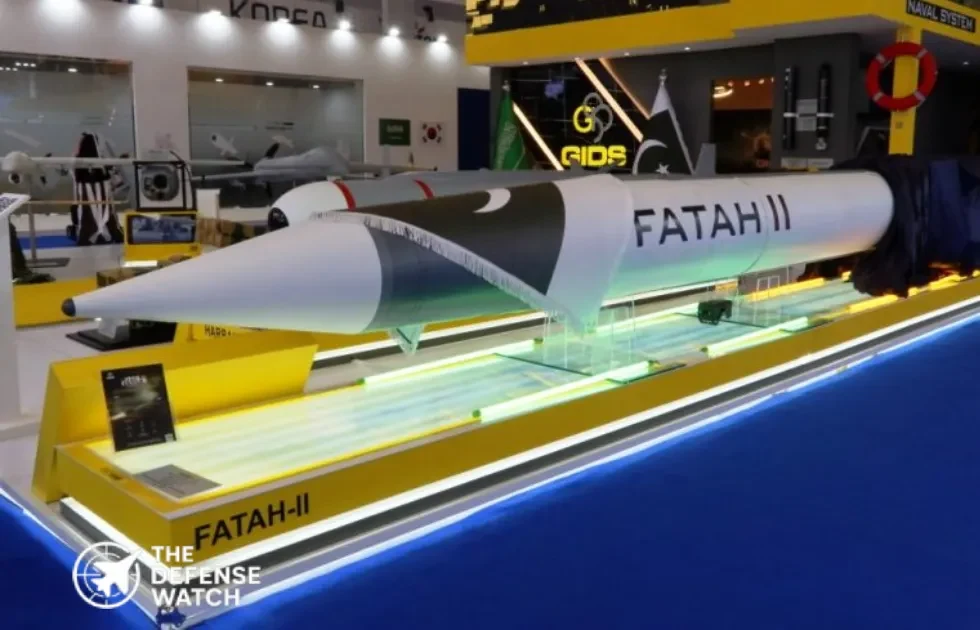
Defense Systems Full Specifications
1. General Information
| Name / Designation | Fatah-2 |
| Type / Role | Surface to Surface Tactical Ballistic Missile |
| Country of Origin | Pakistan |
| Manufacturer | National Engineering and Scientific Commission (NESCOM), with Pakistan's defense industry including GIDS |
| Service Entry / Year Introduced | Publicly unveiled in 2024 |
| Operational Status | Active (limited official information available) |
2. Performance & Range
| Range | Approximately 400 km |
| Speed | Estimated Mach 5+ |
| Ceiling / Altitude Limit | Not publicly disclosed |
| Accuracy (CEP) | Official value not disclosed |
| Warhead Type | Conventional High Explosive (reported) |
3. Guidance & Targeting
| Guidance System | INS with satellite navigation support (reported) |
| Targeting Mode | Fire-and-Forget (programmed coordinates) |
| Launch Platform Compatibility | Ground based Mobile TEL |
| Seeker Type | Not publicly disclosed |
4. Physical Characteristics
| Length | Not officially disclosed |
| Diameter | Not officially disclosed |
| Wingspan | Not applicable |
| Launch Weight | Not publicly disclosed |
| Propulsion | Solid fuel rocket motor |
5. Warhead & Payload
| Warhead Weight | Not publicly disclosed |
| Explosive Type | High Explosive (reported) |
| Detonation Mechanism | Impact fuse (likely, official details unavailable) |
| Payload Options | Conventional (no official confirmation of nuclear capability for Fatah-2) |
6. Operational Use & Capabilities
| Operational Range Type | Medium |
| Deployment Platform | Ground |
| Target Types | Command centers, logistics facilities, radar sites, air bases, military infrastructure |
| Combat Proven | No publicly confirmed combat use |
| Users / Operators | Pakistan |
PROS
- Long precision strike capability of around 400 km.
- Road mobile launcher improves survivability.
- Solid fuel propulsion enables rapid launch readiness.
- Modern INS and satellite aided guidance enhances accuracy.
- Indigenous Pakistani development supports domestic defense industry.
CONS
- Limited officially released technical information.
- No publicly confirmed combat use.
- Unit cost has not been officially disclosed.
- Exact CEP and seeker details remain undisclosed.
- Limited public information on export availability.
Pakistan Fatah-2 Tactical Ballistic Missile
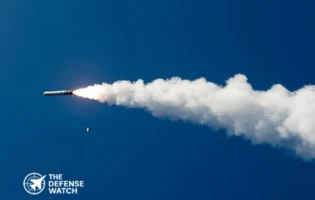
The Pakistan Fatah-2 missile is a guided surface to surface tactical ballistic missile developed to improve Pakistan’s long range precision strike capability. Publicly unveiled in 2024, the missile is part of the Fatah family and is intended to engage high value military targets with greater accuracy than traditional artillery rockets. Fatah-2 is designed to support battlefield operations by striking command centers, logistics hubs, radar sites, and other strategic targets while remaining mobile and difficult to detect before launch.
The missile combines modern navigation technology with a road mobile launch platform, allowing rapid deployment and increased operational flexibility. Although Pakistan has released limited technical information, defense analysts assess that the system represents a significant step in the country’s conventional precision strike capability.
Manufacturer
Fatah-2 is developed by Pakistan’s National Engineering and Scientific Commission (NESCOM) in cooperation with the country’s strategic defense industry, including the Global Industrial & Defence Solutions (GIDS) organization. The missile is designed and manufactured domestically to reduce dependence on foreign suppliers while strengthening Pakistan’s indigenous missile development program.
Speed and Range
Open source assessments indicate that Fatah-2 has an estimated maximum range of approximately 400 kilometers. It is powered by a solid fuel rocket motor, enabling quick launch preparation and lower maintenance compared to liquid fueled systems.
The missile is believed to reach hypersonic terminal speeds exceeding Mach 5, which reduces enemy reaction time and complicates interception. It reportedly employs an integrated Inertial Navigation System (INS) with satellite navigation support for improved precision, although official accuracy figures have not been publicly disclosed. The missile is launched from a mobile transporter erector launcher (TEL), increasing survivability during military operations.
Cost / Price
Pakistan has not officially disclosed the unit cost of the Pakistani Fatah-II missile or its launcher. Based on comparable short range tactical ballistic missile programs worldwide, analysts estimate the cost could range from approximately US$1 million to US$3 million per missile, depending on production volume, guidance package, and associated launch equipment. These figures remain unofficial and should be treated as estimates rather than confirmed procurement prices.
Disclaimer Note
The information provided on TheDefenseWatch.com is for general informational purposes only. While we strive to ensure the accuracy, completeness, and timeliness of our content regarding defense and aerospace products, technologies, and specifications, we cannot guarantee that all information is 100% accurate or up-to-date due to the evolving nature of military technology and classified data.TheDefenseWatch.com does not warrant the reliability, suitability, or availability of the information for any specific purpose. Users are advised to consult official sources, such as manufacturers, government publications, or defense agencies, for precise and verified data before making decisions based on our content.We are not affiliated with any defense manufacturers, governments, or military organizations mentioned. Opinions, reviews, and ratings reflect expert analysis but are subjective and should not be considered endorsements. TheDefenseWatch.com is not responsible for any errors, omissions, or consequences arising from the use of this website’s content.External links are provided for convenience and do not imply endorsement. TheDefenseWatch.com reserves the right to update or modify content without prior notice. By using this website, you agree to our Privacy & Cookies Policy.
More Defense Systems from NESCOM

New Arrivals




Popular Comparisons
-
 J-10C vs JF-17 Thunder: Which Fighter Is More Capable?
View Comparison →
J-10C vs JF-17 Thunder: Which Fighter Is More Capable?
View Comparison → -
Tejas vs Gripen: Key Differences and Capabilities
View Comparison →
-
Tejas vs MiG-21 Bison: How India Replaced Its Iconic Supersonic Fighter
View Comparison →
-
F-35 vs F-16: Stealth, Sensors and Combat Roles
View Comparison →
-
Tejas Fighter Jet vs F-16 Fighting Falcon: Capability Compared
View Comparison →
-
Rafale Fighter Jet vs F-16 Fighting Falcon : Which Fighter Has the Edge?
View Comparison →
-
Su-57 Fighter Jet vs J-20 Fighter Jet: Stealth and Air Combat Compared
View Comparison →
-
Mirage 2000 vs Tejas Mk1A: Legacy Combat Power vs Indigenous Modernization
View Comparison →
-
Rafale Fighter Jet vs F-22 Raptor: Which Air Dominance Fighter Has the Edge?
View Comparison →
-
Tejas Fighter Jet vs. Rafale Fighter Jet: India’s Indigenous Fighter Meets France’s Proven Multirole Combat Aircraft
View Comparison →


- Pratt & Whitney Begins $100 Million Polish Expansion for F-35 Engine Parts

- Northrop Grumman Wins $43.9 Million Contract for Trident II Rocket Motor Facilities
- Ukraine Drone Strikes Disrupt Russian Data Centers, Raising Questions About AI Infrastructure Security
- Lockheed Martin Wins $114.6 Million Contract to Redesign F-35 Navigation Systems
- Project Agincourt Pushes Pentagon to Speed Up Autonomous Weapons Fielding
- Northrop Grumman Factory Expansion Aims to Increase B-21 Raider Production
- France Orders Four More SAMP/T NG Air Defense Systems
- France and UAE Revive Rafale F5 Fighter Development Partnership
- P-800 Oniks Missile: Range, Speed and BrahMos Comparison
- Ukrainian Drone Unit Caused 70% of Simulated U.S. Brigade Casualties in Germany Exercise




Fighter Jets
-
 F-100 Super Sabre
-
North American F-86 Sabre
-
Northrop YF-23 Fighter
-
Rafale F5 Fighter
-
SU-57 Felon Stealth Fighter
-
Boeing F/A-XX Fighter
-
JF-17 Thunder Fighter Jet
-
F-47 Fighter Jet
-
MIG-31 Fighter Jet
-
J-10CE Fighter Jet
-
Chengdu J-10 Fighter Jet
-
Chengdu J-10C Fighter Jet
-
Gripen E Fighter Jet
-
Tejas Mk1A Fighter Jet
-
Tejas Mk‑2 Fighter Jet
-
F-16V Viper Block 70 Fighter Jet
-
F-15EX Eagle II Fighter
-
F-15E Strike Eagle Fighter
-
F/A-18E/F Super Hornet Fighter Jet
-
Saab Gripen F Fighter Jet
-
JAS 39E/F Gripen Fighter Jet
-
JAS 39 Gripen Fighter Jet
-
F-35A Lightning II Fighter Jet
-
F/A-18F Super Hornet








Recent Compares
-
J-10C vs JF-17 Thunder: Which Fighter Is More Capable?
View Comparison →
-
Tejas vs Gripen: Key Differences and Capabilities
View Comparison →
-
Tejas vs MiG-21 Bison: How India Replaced Its Iconic Supersonic Fighter
View Comparison →
-
F-35 vs F-16: Stealth, Sensors and Combat Roles
View Comparison →
-
Tejas Fighter Jet vs F-16 Fighting Falcon: Capability Compared
View Comparison →
Latest Defense Systems
10 Compares Defense Systems
-
J-10C vs JF-17 Thunder: Which Fighter Is More Capable?
View Comparison →
-
Tejas vs Gripen: Key Differences and Capabilities
View Comparison →
-
Tejas vs MiG-21 Bison: How India Replaced Its Iconic Supersonic Fighter
View Comparison →
-
F-35 vs F-16: Stealth, Sensors and Combat Roles
View Comparison →
-
Tejas Fighter Jet vs F-16 Fighting Falcon: Capability Compared
View Comparison →
-
Rafale Fighter Jet vs F-16 Fighting Falcon : Which Fighter Has the Edge?
View Comparison →
-
Su-57 Fighter Jet vs J-20 Fighter Jet: Stealth and Air Combat Compared
View Comparison →
-
Mirage 2000 vs Tejas Mk1A: Legacy Combat Power vs Indigenous Modernization
View Comparison →
-
Rafale Fighter Jet vs F-22 Raptor: Which Air Dominance Fighter Has the Edge?
View Comparison →
-
Tejas Fighter Jet vs. Rafale Fighter Jet: India’s Indigenous Fighter Meets France’s Proven Multirole Combat Aircraft
View Comparison →
- Pratt & Whitney Begins $100 Million Polish Expansion for F-35 Engine Parts
- Northrop Grumman Wins $43.9 Million Contract for Trident II Rocket Motor Facilities
- Ukraine Drone Strikes Disrupt Russian Data Centers, Raising Questions About AI Infrastructure Security
- Lockheed Martin Wins $114.6 Million Contract to Redesign F-35 Navigation Systems
- Project Agincourt Pushes Pentagon to Speed Up Autonomous Weapons Fielding