








@2026 – All Right Reserved. TheDefenseWatch.com
- Home
- Defense Systems
- Fighter Jets
- F/A-18F Super Hornet
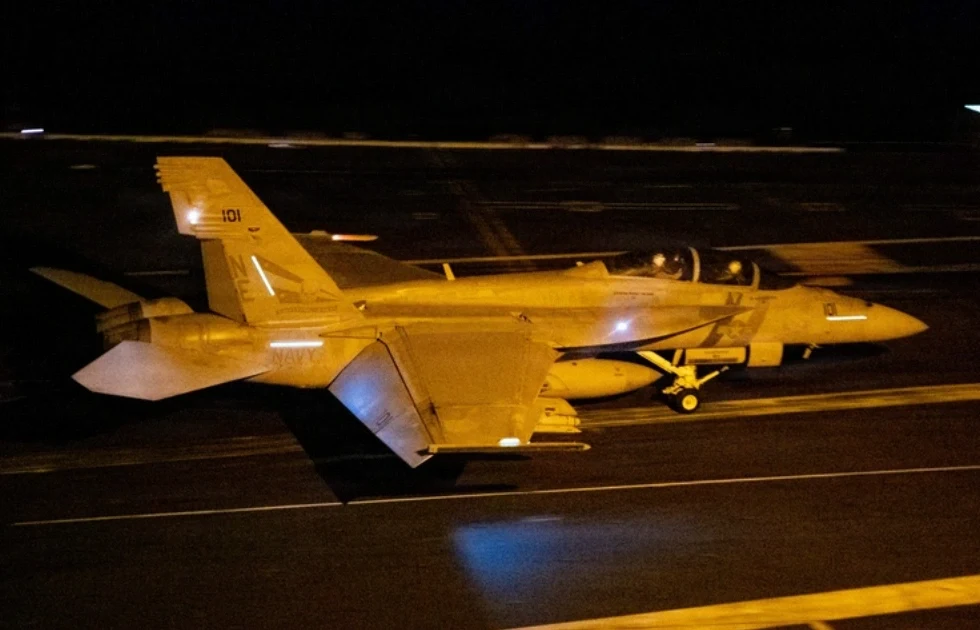
F/A-18F Super Hornet



Defense Systems Full Specifications
General Information
| Name | F/A-18F Super Hornet |
| Manufacturer | Boeing, originally McDonnell Douglas |
| Country of Origin | United States |
| Type / Role | Carrier-based multirole strike fighter |
| Generation | 4.5-generation class |
| Status | Operational |
| First Flight | November 1995 |
| Introduction / In Service Since | 1999 fleet service, 2001 IOC |
| Number Built | More than 600 E/F aircraft produced |
| Operators | United States, Australia, Kuwait |
Dimensions & Structure
| Length | 60.3 ft (18.5 m) |
| Wingspan | 44.9 ft (13.68 m) |
| Height | 16 ft (4.87 m) |
| Wing Area | Approximately 500 sq ft |
| Empty Weight | Approximately 32,000 lb |
| Maximum Takeoff Weight (MTOW) | 66,000 lb (29,932 kg) |
| Internal Weapons Bay | No |
| External Hardpoints | 11 |
Performance
| Maximum Speed | Mach 1.8+ |
| Range | 1,660 nmi ferry |
| Combat Radius | Mission dependent |
| Service Ceiling | 50,000+ ft |
| Rate of Climb | Not publicly specified |
| Thrust-to-Weight Ratio | Configuration dependent |
| G Limits | +7.5 G class |
Powerplant
| Engine Type | General Electric F414-GE-400 afterburning turbofan |
| No. of Engines | 2 |
| Thrust (each) | 22,000 lb static thrust |
| Thrust Vectoring | No |
| Fuel Capacity | Approximately 14,400 lb internal |
Armament
| Gun | M61A1/A2 Vulcan 20 mm cannon |
| Missiles (Air-to-Air) | AIM-9, AIM-9X, AIM-120, AIM-174B |
| Missiles (Air-to-Ground) | HARM, Harpoon, Maverick, SLAM-ER and others |
| Bombs | JDAM, JSOW, Paveway, SDB II and general-purpose bombs |
| Hardpoints | 11 |
| Payload Capacity | Up to approximately 17,750 lb class |
Avionics & Systems
| Radar | AN/APG-79 AESA |
| Radar Range | Classified / not publicly disclosed |
| Electronic Warfare (EW) System | Integrated defensive electronic warfare suite |
| Targeting System | ATFLIR and other targeting systems |
| Helmet Display | Joint Helmet Mounted Cueing System |
| Navigation | INS/GPS and carrier navigation systems |
| Autopilot / AI Assistance | Digital flight-control and mission computers |
| Communication | Secure tactical datalinks and voice communications |
Stealth & Technology
| Radar Cross Section (RCS) | Reduced compared with earlier Hornet |
| Stealth Features | Reduced-signature shaping and treatments |
| Infrared Signature Reduction | Limited, non-stealth design |
| Sensor Fusion | Integrated mission sensors and processors |
| Networking Capabilities | Tactical networking and distributed targeting |
Variants
| Special Export Versions | EA-18G Growler |
Operational History
| Major Conflicts / Deployments | Iraq, Afghanistan and later Middle East operations |
| Notable Operators | U.S. Navy, Royal Australian Air Force, Kuwait Air Force |
| Combat Proven? | Yes |
| Mission Types | Air superiority, strike, escort, CAS, SEAD, reconnaissance, tanker and maritime strike |
Cost & Program
| Unit Cost | $67.4 million, FY2021 figure |
| Development Cost | Program R&D exceeded $6 billion in early GAO estimates |
| Program Name | F/A-18E/F Super Hornet |
| Funding Countries | Primarily United States, with foreign procurement by partner nations |
Additional Information
| Upgrades Planned | Block III, service-life modification and sensor upgrades |
| Future Replacement | U.S. Navy F/A-XX program |
| Export Restrictions | U.S. government export controls apply |
| Notable Achievements | Long-serving carrier strike fighter and backbone of U.S. Navy carrier air wings |
| Competitors | F-35C, Rafale M, J-15, MiG-29K |
PROS
- Proven carrier-based multirole capability
- Two-seat configuration supports complex missions
- Powerful AESA radar and modern sensors
- Broad precision-weapons compatibility
- Block III upgrades extend service life
CONS
- Not a fifth-generation stealth fighter
- External weapons increase radar signature
- Lower survivability than newer stealth aircraft
- High carrier-operating and maintenance demands
- Being replaced by future-generation Navy aircraft
F/A-18F Super Hornet: U.S. Navy Carrier Strike Fighter
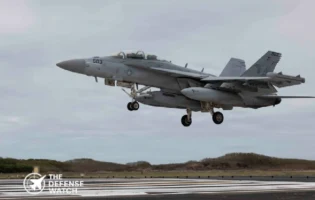
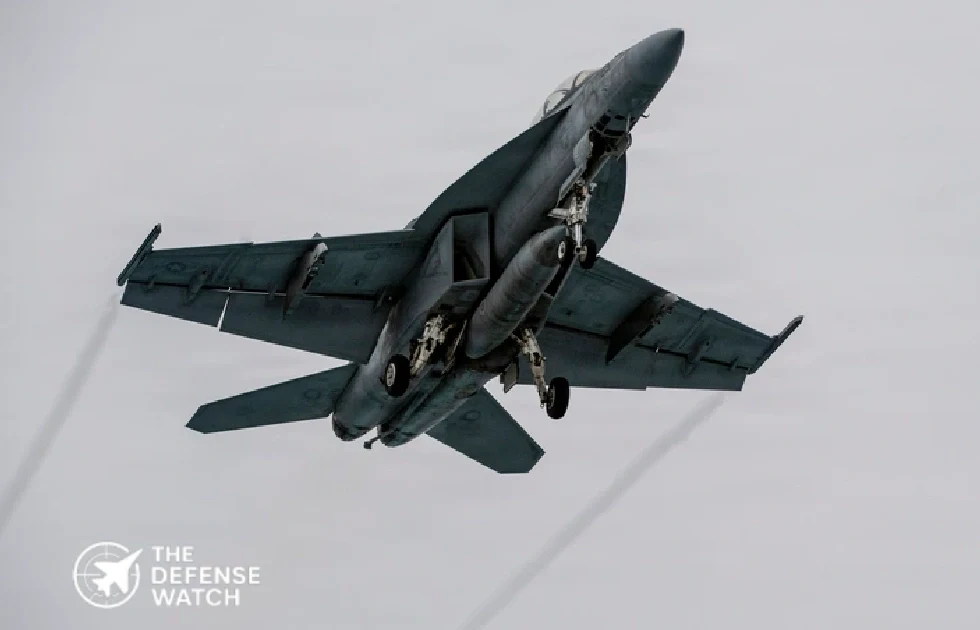
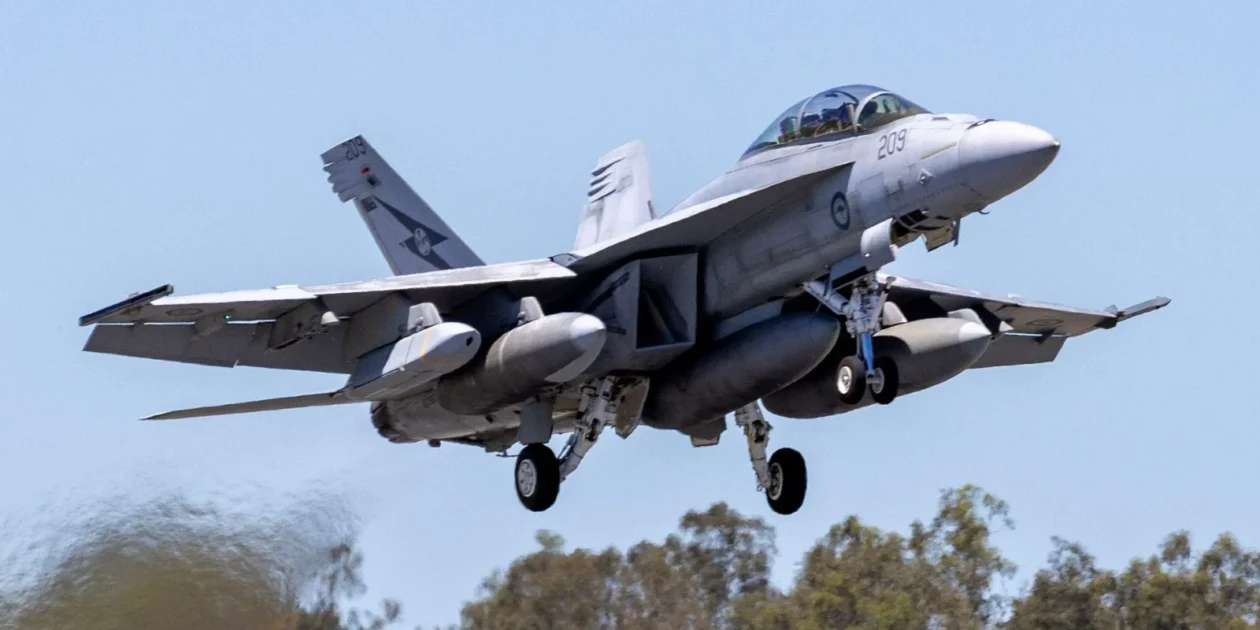
The F/A-18F Super Hornet is the two-seat variant of Boeing’s carrier-based F/A-18E/F multirole strike fighter. Designed for the U.S. Navy, the aircraft combines air-to-air combat, precision strike, reconnaissance, close air support, maritime attack, air defense suppression and aerial refueling capabilities. Unlike the single-seat F/A-18E, the F model carries two crew members, allowing the second aircrew member to manage sensors, weapons and mission systems during complex operations.
Manufacturer
The aircraft was developed by McDonnell Douglas and is now produced and supported by Boeing. The first F/A-18E/F flew in November 1995, while the Super Hornet achieved initial operational capability in September 2001. It entered fleet service as the successor to the F-14 Tomcat and expanded the carrier air wing’s multirole capability.
Speed and Range
The F/A-18F can exceed Mach 1.8 and operate above 50,000 feet. NAVAIR lists a combat range of approximately 1,275 nautical miles (2,346 km) and a ferry range of 1,660 nautical miles (3,054 km) under specified configurations. Its two General Electric F414-GE-400 engines provide approximately 22,000 pounds of static thrust each.
Cost and Price
NAVAIR lists a historical unit cost of $67.4 million in FY2021 dollars for the F/A-18E/F. Current procurement or upgrade costs vary by configuration, contract, equipment and modernization package.
The aircraft uses the AN/APG-79 AESA radar, advanced targeting systems, electronic warfare equipment and networked mission systems. Block III upgrades add reduced radar signature, improved cockpit displays, enhanced computing and expanded networking.
Variants
| Variant | Description |
|---|---|
| F/A-18E | Single-seat Super Hornet |
| F/A-18F | Two-seat Super Hornet |
| F/A-18E/F Block II | AESA radar and upgraded mission systems |
| F/A-18E/F Block III | Extended service life, improved cockpit, networking and reduced radar signature |
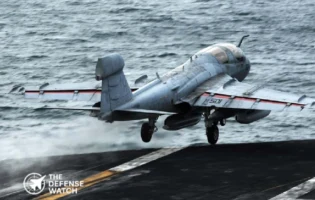
| EA-18G Growler | Specialized electronic-attack derivative |
Get real time update about this post category directly on your device, subscribe now.
Disclaimer Note
The information provided on TheDefenseWatch.com is for general informational purposes only. While we strive to ensure the accuracy, completeness, and timeliness of our content regarding defense and aerospace products, technologies, and specifications, we cannot guarantee that all information is 100% accurate or up-to-date due to the evolving nature of military technology and classified data.TheDefenseWatch.com does not warrant the reliability, suitability, or availability of the information for any specific purpose. Users are advised to consult official sources, such as manufacturers, government publications, or defense agencies, for precise and verified data before making decisions based on our content.We are not affiliated with any defense manufacturers, governments, or military organizations mentioned. Opinions, reviews, and ratings reflect expert analysis but are subjective and should not be considered endorsements. TheDefenseWatch.com is not responsible for any errors, omissions, or consequences arising from the use of this website’s content.External links are provided for convenience and do not imply endorsement. TheDefenseWatch.com reserves the right to update or modify content without prior notice. By using this website, you agree to our Privacy & Cookies Policy.
New Arrivals
Popular Comparisons
-
 Su-57 Fighter Jet vs J-20 Fighter Jet: Stealth and Air Combat Compared
View Comparison →
Su-57 Fighter Jet vs J-20 Fighter Jet: Stealth and Air Combat Compared
View Comparison → -
Mirage 2000 vs Tejas Mk1A: Legacy Combat Power vs Indigenous Modernization
View Comparison →
-
Rafale Fighter Jet vs F-22 Raptor: Which Air Dominance Fighter Has the Edge?
View Comparison →
-
Tejas Fighter Jet vs. Rafale Fighter Jet: India’s Indigenous Fighter Meets France’s Proven Multirole Combat Aircraft
View Comparison →
-
F-22 Raptor vs. F-35 Joint Strike Fighter: Which Fifth Generation Fighter Has the Edge?
View Comparison →
-
F-35A vs. F-22 Raptor: Which U.S. Stealth Fighter Dominates Modern Air Combat?
View Comparison →
-
AGM-114 Hellfire vs. AGM-179 JAGM: Which U.S. Precision Missile Is Better?
View Comparison →
-
Patriot (PAC-3) vs. THAAD: Complete Missile Defense System Comparison, Capabilities, Range, and Strategic Roles
View Comparison →
-
AIM-120 AMRAAM vs. AIM-9X Sidewinder: Complete Air-to-Air Missile Comparison, Range, Speed, and Combat Roles
View Comparison →
-
BGM-109 Tomahawk vs. AGM-158 JASSM: Which Long Range Precision Strike Missile Offers Greater Strategic Advantage?
View Comparison →
- Australia Declares JASSM-ER and LRASM Operational on F/A-18F Super Hornets

- GCAP Electronics Contract Advances Integrated Sensing And Communications For Sixth Generation Fighter
- Northrop Grumman Expands B-21 Raider Production With New Utah Facility
- Kongsberg Integrates Echodyne Radar With PROTECTOR Stations for Counter-UAS Missio
- Anthropic Says Yemen Weapons Cell Used Claude Code to Develop Missile Guidance Software
- Northrop Grumman Expands Air Defense and Weapons Collaboration Across Central Europe
- Rolls-Royce B-52 Engine Contract Rises To $3.04 Billion
- General Dynamics Secures $184.25 Million NGEAU Contract For Navy Growler Upgrades
- U.S. Space Academy Commission Begins Work As Washington Targets Next-Generation Space Workforce
- U.S. Moves to Close Air-Breathing Hypersonic Missile Gap With China