Northrop Grumman Expands Defense Cooperation in Central and Eastern Europe
Northrop Grumman is expanding defense cooperation with Central and Eastern European NATO allies through new industrial agreements covering IBCS integration, Bushmaster weapons production, airborne surveillance and short-range air defense. The company announced the initiatives on Sept. 10 during the MSPO 2026 defense exhibition in Kielce, Poland.
- Northrop Grumman Expands Defense Cooperation in Central and Eastern Europe
- Takeaways
- Estonia Adds Local Industry to the IBCS Ecosystem
- Poland Has Already Taken IBCS Into Operational Service
- Bushmaster Production Moves Further Into Poland
- E-2D Advanced Hawkeye Adds a Potential Airborne Surveillance Layer
- Raid Hunter Targets the Short-Range Air Defense Gap
- The Emerging Architecture Is More Important Than Any Single System
- NATO’s Industrial Base Is Becoming Part of the Defense Architecture
- Strategic Implications for the Eastern Flank
- What Comes Next
Takeaways
Northrop Grumman is expanding industrial and defense cooperation with NATO partners in Central and Eastern Europe, with emphasis on networked air defense, local weapons production and counter-drone capabilities.
The agreements come as Poland and other NATO members on the alliance’s eastern flank continue to invest in layered air defense, armored vehicles, sensors and domestic defense production. MSPO 2026, held from Sept. 8 to 11 in Kielce, has become a major venue for regional defense-industrial agreements and modernization programs.
Northrop Grumman’s latest activity covers several different parts of the defense architecture. Rather than representing a single weapons program, the initiatives connect command and control, sensors, weapons, production and sustainment.
Estonia Adds Local Industry to the IBCS Ecosystem
Two new memorandums with Estonian companies Go Craft and DefSecIntel are intended to support the Integrated Battle Command System, or IBCS.
Under the arrangements announced by Northrop Grumman, Go Craft will work on defense system integration, while DefSecIntel will support specialized mast fabrication and production for defense systems. Northrop Grumman said the agreements are intended to support the expansion of IBCS in Europe.
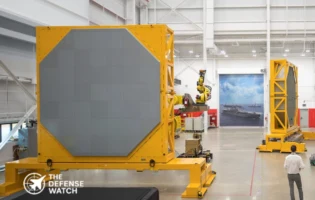
IBCS is designed around a networked command-and-control architecture that connects sensors and weapons from different systems and services. Northrop Grumman describes the system as a modular architecture capable of combining sensor information into a single battlespace picture and supporting an any-sensor, best-shooter approach.
The importance of the Estonian agreements therefore extends beyond the physical components being produced or integrated. Local industrial participation can help create regional expertise for installation, maintenance and future modifications.
That matters for NATO because integrated air and missile defense depends not only on interceptors and radars, but also on the ability to maintain the network connecting them.
Poland Has Already Taken IBCS Into Operational Service
Poland provides the clearest example of IBCS moving from procurement into operational use.
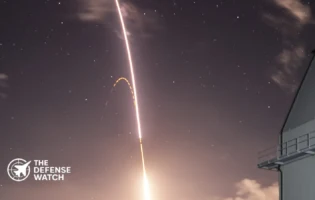
The Polish military declared full operational capability for its IBCS-enabled Patriot air and missile defense system in December 2025. The U.S. Army described Poland as the first international partner to field an IBCS-enabled Patriot system at full operational capability.
Poland’s WISŁA program combines Patriot equipment with IBCS command and control. The architecture allows multiple sensors and effectors to be connected through a common fire-control network rather than forcing individual air defense systems to operate as isolated units.
This distinction is important.
A modern air defense network may contain long-range radars, short-range sensors, Patriot launchers, other missile systems and future counter-UAS weapons. The operational challenge is determining how information from those systems can be combined quickly enough to identify a threat and assign the most appropriate interceptor or weapon.
IBCS is intended to address that command-and-control problem.
Bushmaster Production Moves Further Into Poland
Northrop Grumman is also expanding cooperation with Huta Stalowa Wola, or HSW, around the Bushmaster family of automatic cannons.
Northrop Grumman said the cooperation includes technology transfer, service and support for Bushmaster cannons used on Polish armored vehicles. HSW separately confirmed an agreement with Northrop Grumman covering licensed production and maintenance, repair and overhaul capabilities for the Bushmaster family in Poland.
The arrangement builds on an established industrial relationship.
Northrop Grumman says Poland is its largest user of the MK44 Bushmaster Chain Gun worldwide and that the weapon is integrated on the KTO Rosomak. The company also supports the next generation of Polish infantry fighting vehicles through the MK44 Stretch cannon integrated on the Borsuk.
Polish defense publications reported that the new HSW arrangement will establish licensed production as well as maintenance, repair and overhaul capabilities.
Why Local Weapons Production Matters
The significance of the Bushmaster agreement is not limited to manufacturing volume.
Local production and sustainment can reduce dependence on long overseas supply chains and allow a military to repair or maintain equipment closer to where it operates. It can also give the host industry greater control over spare parts, technical skills and long-term maintenance.
That is particularly relevant to Poland, which is simultaneously expanding armored vehicle production and acquiring large quantities of U.S. and European defense equipment.
The industrial model also fits a broader European trend toward creating domestic ammunition and weapons capacity after years in which many NATO members maintained comparatively limited production depth.
E-2D Advanced Hawkeye Adds a Potential Airborne Surveillance Layer
Northrop Grumman is also continuing discussions with Poland concerning the E-2D Advanced Hawkeye, an airborne command and control aircraft designed to provide wide-area surveillance and support air and missile defense operations.
The E-2D combines an advanced radar, mission systems and command-and-control functions. Northrop Grumman states that its radar provides 360-degree coverage and can simultaneously track more than 3,000 targets in all radar modes.
The aircraft has evolved beyond its original role as a carrier-based early-warning platform. Northrop Grumman says current E-2D modernization supports integrated air and missile defense, electronic warfare and other missions, while aerial refueling has extended endurance beyond eight hours.
For Poland, an airborne command-and-control aircraft would represent a different layer from ground-based air defense.
A ground radar is constrained by terrain, curvature of the Earth and the altitude of the target. An airborne sensor can operate at much greater altitude and potentially provide earlier detection of low-flying threats, while the aircraft’s command-and-control systems can distribute that information to other forces.
The E-2D would therefore complement rather than replace ground-based systems such as Patriot and the broader IBCS architecture.
Northrop Grumman has not announced a Polish E-2D acquisition in the material associated with the MSPO announcement. The company describes the relationship as continuing dialogue around adoption, training and industrial cooperation.
Raid Hunter Targets the Short-Range Air Defense Gap
The fourth major element of Northrop Grumman’s European push is Raid Hunter, a short-range air defense system designed around guided 50mm ammunition and Bushmaster Chain Gun technology.
Northrop Grumman says Raid Hunter is intended to counter high-volume attacks involving unmanned aircraft, cruise missiles and other aerial threats that could penetrate earlier defensive layers or overwhelm conventional interceptors.
The system uses a networked controller and a modular architecture. Northrop Grumman describes the design as platform agnostic, with a palletized configuration and future vehicle-mounted and containerized options.
The key operational idea is layered defense.
Longer-range missile systems are valuable against threats that require engagement at distance, but using expensive missile interceptors against every relatively inexpensive drone can create an unfavorable cost and magazine tradeoff. A gun-based system with guided ammunition provides another engagement option for threats that reach the terminal layer.
Raid Hunter is therefore positioned as a complement to missile-based defenses rather than a replacement for them.
The Emerging Architecture Is More Important Than Any Single System
Taken together, Northrop Grumman’s activities point to a broader European defense architecture built around networking, local production and layered engagement.
| Capability | Northrop Grumman system or activity | Regional role |
|---|---|---|
| Command and control | IBCS | Connects sensors and effectors across an integrated network |
| Medium-caliber firepower | Bushmaster | Armament for Polish armored vehicles |
| Airborne surveillance | E-2D Advanced Hawkeye | Wide-area airborne sensing and command and control |
| Short-range air defense | Raid Hunter | Terminal defense against high-volume aerial threats |
| Industrial support | Estonian and Polish partnerships | Integration, production and sustainment |
The common element is interoperability.
An air defense network becomes more useful when a sensor can detect a threat without requiring the same battery to provide the engagement solution. The ability to pass sensor data across the network can allow a more suitable weapon to engage the target.
That concept is particularly relevant on NATO’s eastern flank, where allied forces may operate in close proximity and need to exchange information rapidly.
The U.S. Army has described IBCS as a key component of its air and missile defense modernization effort, intended to integrate sensors, weapons and mission command into a common network.
NATO’s Industrial Base Is Becoming Part of the Defense Architecture
The industrial dimension of Northrop Grumman’s announcement may be as significant as the individual systems.
Poland has already pursued technology transfer and domestic production through its air and missile defense programs. A Polish Ministry of National Defence agreement with Northrop Grumman in 2024 included offset obligations associated with WISŁA, including work connected to radar integration and domestic production capabilities for Bushmaster ammunition.
The new HSW arrangement takes that approach further by addressing production and sustainment of the cannons themselves.
Estonia’s involvement adds another dimension. Its cooperation with Northrop Grumman around IBCS-related integration and specialized manufacturing could help create a broader regional industrial base for networked defense systems.
This approach can improve resilience because the ability to sustain a military system during a prolonged crisis depends on more than the initial purchase. Spare parts, repair capacity, software support, trained technicians and manufacturing capacity can all affect readiness.
Strategic Implications for the Eastern Flank
For NATO’s eastern members, the central issue is not simply acquiring more individual weapons.
The larger requirement is creating an integrated force capable of detecting, identifying, tracking and engaging different types of threats across national boundaries and across multiple layers of defense.
Poland’s operationalization of IBCS demonstrates that this model is already moving beyond the development stage. The country’s Patriot force has entered full operational capability, while its broader modernization effort continues across ground forces, air defense and domestic industrial production.
Northrop Grumman’s latest agreements extend that model into additional areas.
IBCS addresses command and control. Bushmaster cooperation addresses armored vehicle firepower and sustainment. E-2D provides a potential airborne surveillance layer. Raid Hunter addresses the growing requirement for high-capacity short-range defense against mass aerial threats.
None of these systems alone provides a complete air defense architecture.
Their value lies in how they could operate alongside other NATO sensors, command systems, aircraft, missile defenses and counter-UAS capabilities.
What Comes Next
The September 2026 agreements do not establish a single new NATO-wide weapons program, and the company has not disclosed financial values or firm delivery schedules for the new MOUs.
Instead, the announcements show Northrop Grumman expanding its industrial relationships in countries that are investing heavily in defense modernization.
For Poland, the immediate focus includes greater domestic Bushmaster production and sustainment while IBCS-enabled air defense continues to develop. For Estonia, the new industrial agreements create a pathway for greater participation in the IBCS ecosystem.
The E-2D remains a potential capability under discussion rather than an announced Polish acquisition, while Raid Hunter represents an emerging short-range defense option aimed at the high-volume aerial threat problem.
The broader direction is clear: NATO’s eastern members are increasingly seeking defense systems that can be integrated, sustained and, where possible, produced closer to home.
That shift could prove as important to long-term alliance readiness as the acquisition of individual platforms.