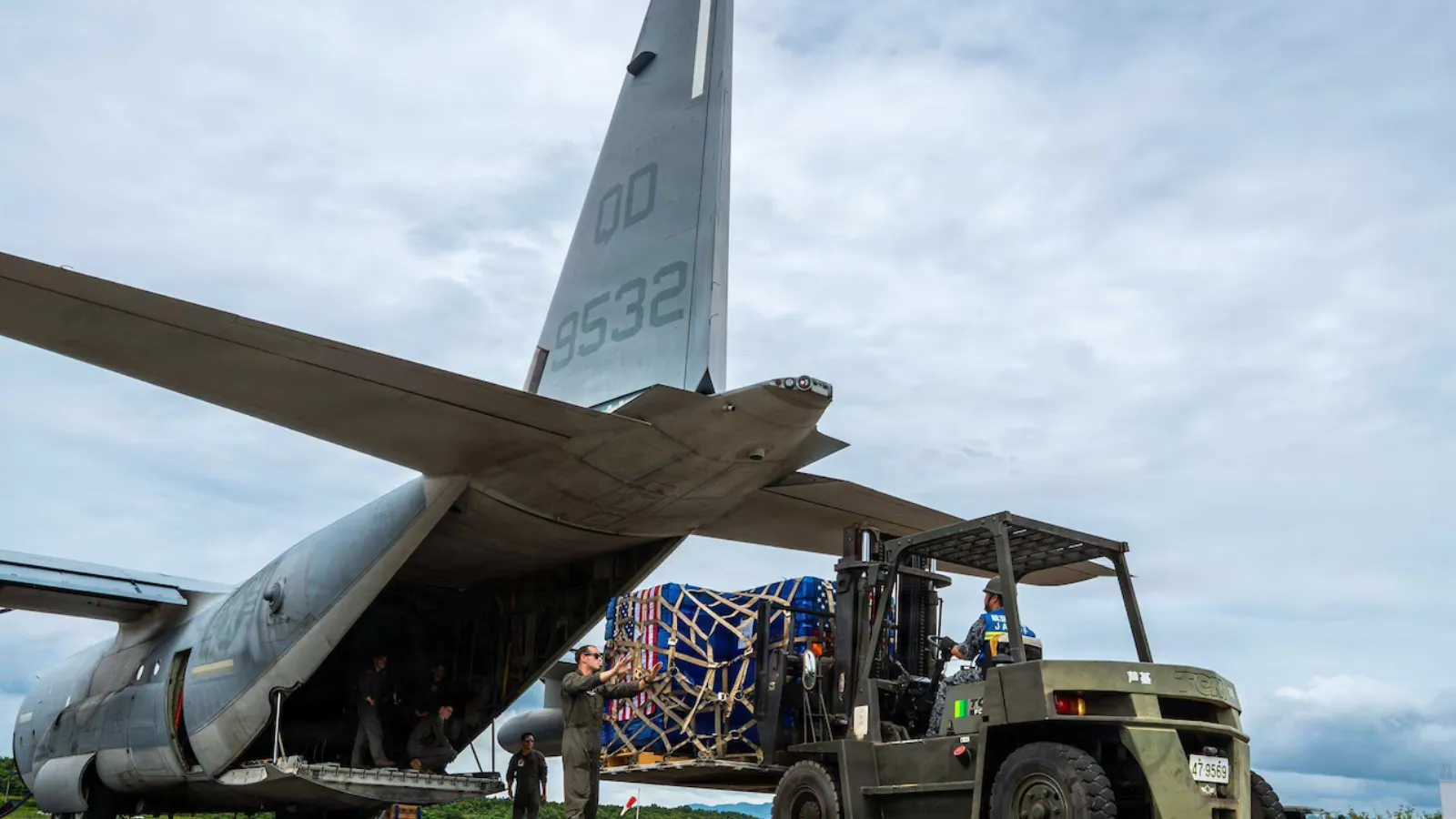
Executive Summary: U.S. Forces Japan conducted four airlift missions from Yokota Air Base to Kumamoto Prefecture from Aug. 9 to 11, transporting more than 100,000 pounds of drinking water and nonperishable food after a 7.1 magnitude earthquake disrupted infrastructure in southwestern Japan. The mission was launched at the request of the Japanese government and demonstrated the U.S.-Japan alliance’s ability to rapidly shift from routine readiness activities to real-world humanitarian assistance.
U.S. Forces Japan Launches Rapid Kumamoto Relief Airlift
U.S. Forces Japan airlifted more than 100,000 pounds of drinking water and nonperishable food to earthquake-affected Kumamoto Prefecture from Aug. 9 to 11, responding to a request from the Japanese government for military transportation support.
The operation used Yokota Air Base, located in the Tokyo region, as the launch point for four relief missions to Kumamoto. The supplies were subsequently moved by service members to a local distribution center for delivery to affected communities.
The mission followed a magnitude 7.1 earthquake that struck southwestern Japan on July 28, damaging infrastructure, roads, homes and essential facilities. Water and power disruptions created additional difficulties for residents dealing with severe summer heat.
U.S. officials described the response as an example of the alliance’s ability to coordinate quickly during a crisis. Lt. Gen. Stephen Jost, commander of U.S. Forces Japan, said the speed of the response was unprecedented for a request of this type.
KC-130 Provides First Delivery
The first shipment consisted of approximately 16 tons of bottled water and was flown from Yokota to Kumamoto by a U.S. Marine Corps KC-130 that was already at Yokota when the request was received.
That detail is significant from an operational perspective. Rather than waiting for a dedicated aircraft to arrive from another theater, the alliance was able to use an aircraft already positioned in Japan, reducing the time between the Japanese request and the first delivery.
The broader operation then expanded into four airlift missions, moving more than 100,000 pounds of relief supplies over several days.
Mission Element Reported Detail Earthquake Magnitude 7.1 Affected area Kumamoto Prefecture, southwestern Japan U.S. operation Aug. 9 to 11, 2026 Departure point Yokota Air Base Missions Four airlift missions Supplies More than 100,000 pounds of water and nonperishable food First shipment About 16 tons of bottled water Aircraft for first shipment U.S. Marine Corps KC-130 Destination Kumamoto, Japan 
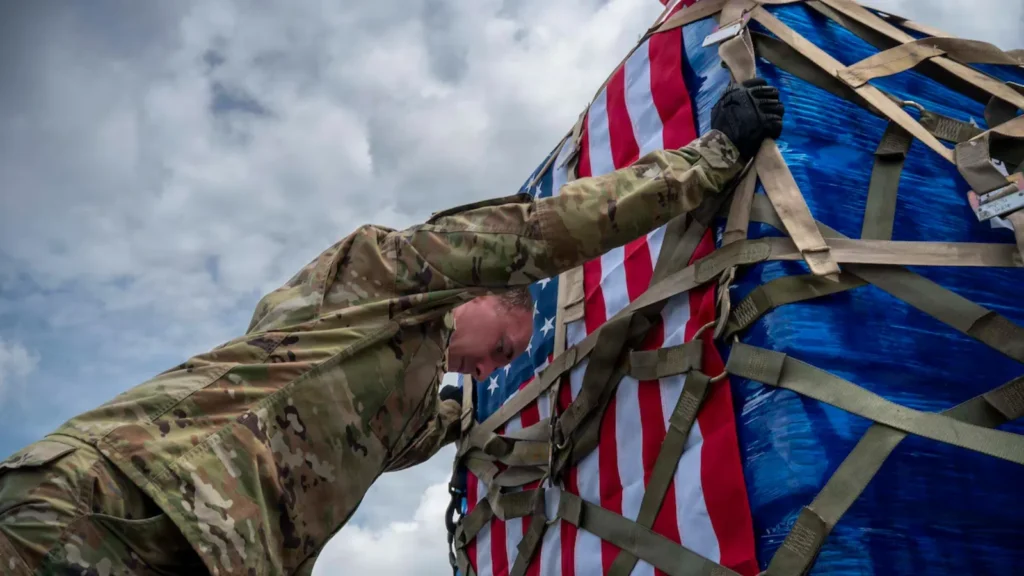
Air Force Tech. Sgt. Joshua Moritz, 374th Logistics Readiness Squadron air transportation function section chief, pushes a humanitarian assistance and disaster relief bundle at Yokota Air Base, Japan, Aug. 9, 2026. The supplies are part of relief operations following the recent Kumamoto earthquake. (Image : DoW) Yokota’s Role Extends Beyond Combat Airlift
The response also highlights the importance of Yokota Air Base as a regional mobility hub.
The 374th Airlift Wing, based at Yokota, conducts tactical airlift, airdrop, aeromedical and other air mobility missions. The wing describes Yokota as a primary airlift hub supporting the movement of personnel and cargo throughout the Indo-Pacific.
This infrastructure gives U.S. forces in Japan an established logistics network that can support both military operations and humanitarian assistance.
The value of such a network becomes particularly clear after earthquakes, when roads, bridges, power systems and commercial transportation infrastructure can be damaged or overloaded.
Military airlift does not replace Japan’s domestic disaster-response system. Instead, it provides an additional transportation option when the Japanese government identifies a requirement that can be met more quickly or efficiently through U.S. military aircraft.
Exercise Rescue Helped Build the Response Framework
The Kumamoto mission came shortly after U.S. and Japanese forces conducted Joint Exercise Rescue 2026, a command-post exercise focused on coordinating a response to a major earthquake and tsunami scenario.
The exercise was held at Yokota and Japan’s Ministry of Defense headquarters and included roughly 100 U.S. personnel. Training covered logistics, medical support, evacuation coordination, life-support operations and crisis communications.
That exercise provides an important operational context for the subsequent real-world response.
Humanitarian assistance and disaster relief missions depend heavily on procedures established before a crisis occurs. Command relationships, liaison arrangements, transportation requests, communications and logistics processes all have to function under time pressure.
The recent exercise was designed to test those mechanisms. The Kumamoto response then provided an opportunity to apply the broader alliance framework in an actual emergency.
U.S.-Japan Command Coordination Is Becoming More Operational
The relief mission also comes as the U.S.-Japan command relationship is undergoing a broader transformation.
Japan established the Japan Self-Defense Forces Joint Operations Command to improve coordination across its military services. Japanese officials have also emphasized closer coordination between the new command and U.S. Forces Japan.
Japan’s Joint Operations Command said in 2026 that cooperation with U.S. Forces Japan is intended to improve timely and reliable responses across the alliance, including during emergencies.
For humanitarian missions, this matters because disaster response requires more than aircraft and cargo. The ability to identify requirements, authorize support, coordinate with Japanese authorities and move supplies through damaged transportation networks is equally important.
The Kumamoto operation therefore demonstrates a practical application of the alliance’s broader command-and-control relationships outside a conventional military contingency.
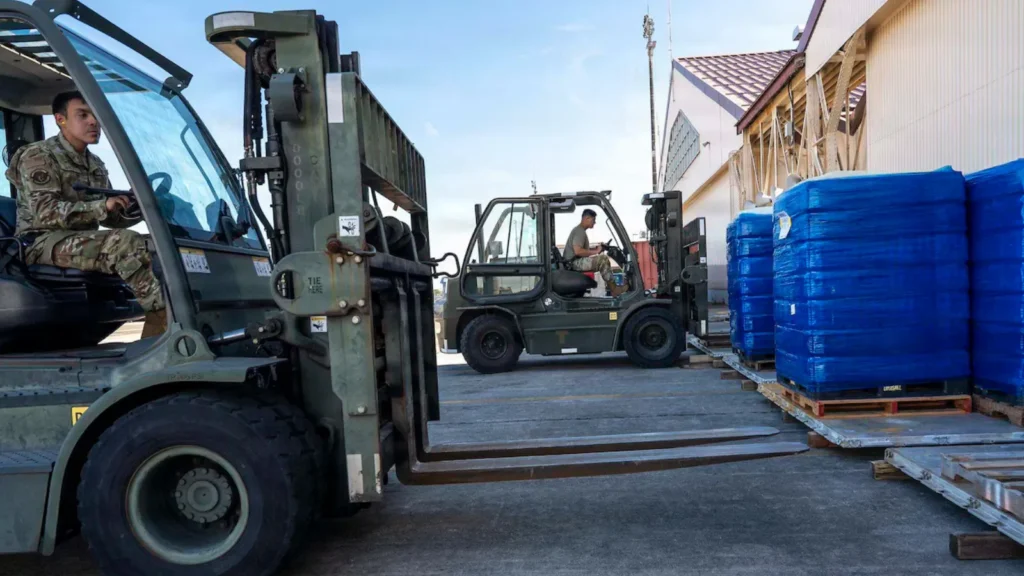
5/5 – Airmen assigned to the 374th Logistics Readiness Squadron combat mobility flight use forklifts to offload pallets to support Kumamoto earthquake relief operations at Yokota Air Base, Japan, Aug. 8, 2026. The squadron prepared and loaded humanitarian supplies for transport to Kumamoto Prefecture in support of ongoing disaster relief operations. (Image : DoW) A Familiar Role for U.S. Airlift in Japanese Disaster Response
The United States has repeatedly used its military mobility infrastructure to support Japan after major natural disasters.
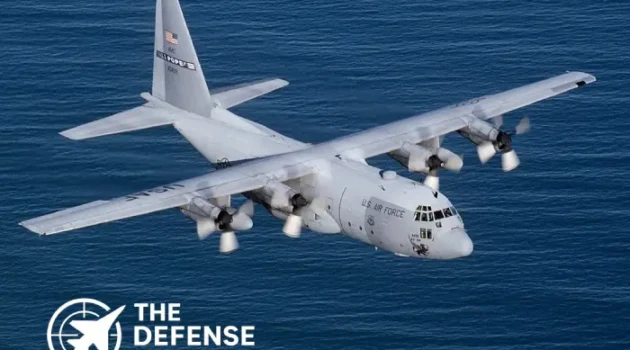
Following the 2016 Kumamoto earthquakes, the 374th Airlift Wing sent C-130 aircraft to Kyushu to transport vehicles and personnel for Japanese relief operations. At the time, each C-130H could carry up to 42,000 pounds of cargo.
The wing also played a major role in the U.S. response to the 2011 earthquake and tsunami in northeastern Japan. Its history includes additional humanitarian airlift missions following disasters elsewhere in the Indo-Pacific.
The repeated use of Yokota for disaster relief reflects the dual-use value of military air mobility. The same aircraft, crews, maintenance infrastructure and logistics systems that support operational requirements during peacetime and conflict can also move critical supplies during natural disasters.
Why the Mission Matters for the U.S.-Japan Alliance
The immediate purpose of the operation was humanitarian relief, but the mission also demonstrates a broader alliance capability: rapid logistical response inside Japan.
The ability to move more than 100,000 pounds of basic supplies over several days shows how existing military transportation capacity can supplement Japanese authorities when a disaster creates urgent demand.
It also reinforces the value of maintaining U.S. military forces and airlift infrastructure in Japan during peacetime. Readiness is not limited to preparing for armed conflict. It includes the ability to respond quickly to earthquakes, typhoons and other emergencies that can affect civilian populations and military infrastructure alike.
For the U.S.-Japan alliance, that creates a practical link between military readiness and regional resilience.
The response also demonstrates why bilateral exercises such as Joint Exercise Rescue remain relevant. Disaster scenarios force military organizations to test coordination, communications and logistics under conditions that resemble the complexity of a real crisis.
In this case, the Japanese government’s request could be translated into an operational airlift response, with the first aircraft already available at Yokota providing an early delivery.
Alliance Readiness Tested in a Real Crisis
The Kumamoto operation illustrates how the U.S.-Japan alliance can support Japan during a domestic emergency while relying on established military logistics and command relationships.
Four missions from Yokota delivered more than 100,000 pounds of essential supplies between Aug. 9 and 11, with the first shipment consisting of approximately 16 tons of bottled water transported by a U.S. Marine Corps KC-130.
The operation followed recent bilateral disaster-response training and drew on Yokota’s established role as a regional airlift hub.
For U.S. defense planners, the episode underscores a broader point about Indo-Pacific readiness: logistics, interoperability and rapid coordination are useful across the full range of military and humanitarian contingencies.
For Japan, the mission provided additional transportation capacity during a period when earthquake damage and infrastructure disruptions were placing pressure on local relief operations.
The result was a practical demonstration of an alliance capability that begins with peacetime training but ultimately has to work when a real crisis occurs.
Enjoying our coverage?
Make The Defense Watch a preferred source on Google to see more of our geopolitical and defense insights when relevant to you.