

Executive Summary:
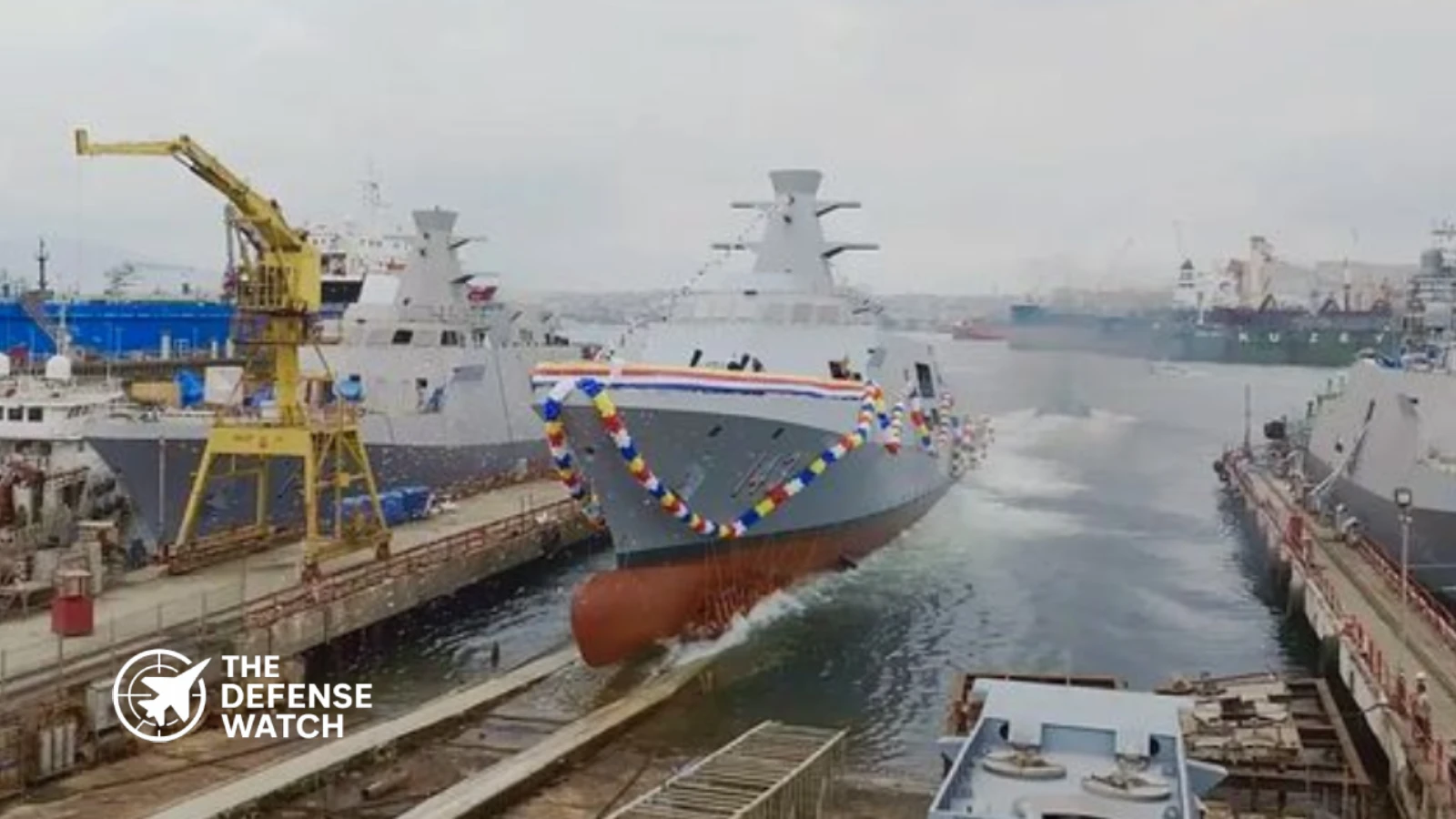
Türkiye has launched Tunku Osman Jewa, the third and final Littoral Mission Ship Batch 2 corvette being built by STM for the Royal Malaysian Navy. The August 9 launch completes the construction launch milestone for all three vessels, which are based on the Ada-class corvette design and are scheduled for delivery to Malaysia by the end of 2027.
Türkiye Completes Launches of Malaysia’s LMS Batch 2 Corvettes
Malaysia LMS Batch 2 reached another major milestone on August 9, when Turkish defense company STM launched Tunku Osman Jewa at Istanbul Shipyard for the Royal Malaysian Navy. Janes reported that the ship will enter service as KD Tunku Osman Jewa with pennant number 143 once commissioned.
The launch marks the completion of the three-ship construction launch sequence under the program. The first corvette, Tunku Laksamana Abdul Jalil, entered the water on May 24, followed by Raja Laut on June 7. STM therefore launched all three vessels within roughly four months.
The program is being executed under a government-to-government framework between Malaysia and Türkiye. Malaysia formally handed over the Letter of Acceptance for three LMS Batch 2 vessels in June 2024, while the contract was signed on August 5, 2024.
A Three-Ship Program Based on Türkiye’s Ada-Class Corvette
The LMS Batch 2 vessels are derived from STM’s Ada-class corvette design, but the ships have been adapted to meet Royal Malaysian Navy requirements. The platform is intended to provide a combination of surface warfare, air-defense, electronic warfare and asymmetric warfare capabilities.
STM is serving as the main contractor and is responsible for ship design, project management, procurement, systems integration, construction management, testing and integrated logistics support. This gives the Turkish company responsibility across much of the program lifecycle rather than limiting its role to hull construction.
The vessels have the following publicly disclosed characteristics:
| Specification | LMS Batch 2 |
|---|---|
| Length | 99.56 meters |
| Beam | 14.42 meters |
| Draft | 3.94 meters |
| Displacement | Approximately 2,500 tons |
| Propulsion | Four diesel engines, CODAD |
| Maximum speed | More than 26 knots |
| Cruising speed | 14 knots |
| Range | More than 4,000 nautical miles at 14 knots |
| Personnel | 111 |
| Endurance | 14 days |
| Helicopter facilities | Flight deck and hangar for a medium-size helicopter |
The combination of a relatively compact hull, more than 26-knot speed and a published range exceeding 4,000 nautical miles gives the vessels the endurance required for operations beyond Malaysia’s immediate coastal waters. The ships are therefore not simply short-range patrol craft, but are designed as general-purpose combatants capable of supporting a wider range of maritime missions.
Weapons and Sensors Give the Ships a Multimission Role
The LMS Batch 2 configuration includes a 76 mm main gun, two four-round surface-to-surface missile launchers, a 30 mm secondary gun and two pairs of surface-to-air missile launchers. The ships also carry two decoy launcher systems.
STM has identified the principal sensor and combat-system components as including a combat management system, 3D surveillance radar, identification friend-or-foe system, fire-control radar, electro-optical equipment, electronic support measures and tactical data links.
The industrial team also includes major Turkish defense companies. HAVELSAN is associated with the combat management system and gun fire-control system, while ASELSAN supplies several radar, electronic warfare and sensor components. ROKETSAN is providing the ATMACA surface-to-surface missile system.
This systems architecture is important because the combat value of a modern corvette depends on the integration of sensors, weapons and command systems rather than on the individual performance of any single weapon.
A combat management system can combine information from the ship’s radar, electronic support measures and other sensors to establish a common tactical picture. That information can then support the employment of guns, missiles and defensive systems according to the mission and threat environment.
From Steel Cutting to Three Launches
The speed of the LMS Batch 2 construction program is notable. Steel cutting began in December 2024, while the keel-laying ceremony for the class took place at Istanbul Shipyard in April 2025.
By April 2025, Malaysia’s Ministry of Defence said the project was being monitored through a dedicated Project Monitoring Committee. Malaysian officials were also briefed on progress involving the three ships and visited Turkish defense companies participating in the program.
The first ship was launched on May 24, 2026. Raja Laut followed on June 7, and Tunku Osman Jewa was launched on August 9. STM had previously stated that all three vessels were targeted for delivery to the Royal Malaysian Navy by the end of 2027.
The launch of a ship does not mean the vessel is ready for operational service. Following launch, the ships must undergo additional outfitting, system integration, testing, trials and acceptance activities before commissioning.
Malaysia’s Ministry of Defence specifically stated after the first vessel’s launch that the ship would enter the Setting to Work phase, followed by integration of its combat and sensor systems before delivery to the Royal Malaysian Navy.
Why the Program Matters to Malaysia
For the Royal Malaysian Navy, the LMS Batch 2 program adds larger and more heavily armed surface combatants to a fleet operating across a geographically complex maritime environment.
Malaysia has maritime interests stretching across the Strait of Malacca, the South China Sea and surrounding waters. Its naval forces must therefore balance coastal security requirements with the need to maintain a credible presence across distant maritime approaches.
The LMS Batch 2 design addresses part of that requirement through a combination of endurance, speed, helicopter facilities, anti-surface weapons, air-defense systems and electronic warfare equipment.
The ability to operate a medium-size helicopter is particularly significant. A helicopter can extend the ship’s surveillance and response reach well beyond the physical limits of the corvette, supporting maritime surveillance, search and rescue and other naval missions.
At the same time, the vessels’ approximately 2,500-ton displacement places them in a different capability category from small patrol vessels. Their size provides greater space for sensors, weapons, aviation facilities, fuel and crew accommodations while retaining the speed expected from a modern corvette.
A Significant Turkish Naval Export to the Asia-Pacific
The LMS Batch 2 program also has significance for Türkiye’s defense industry. STM has described the Malaysian order as Türkiye’s first corvette export to the Asia-Pacific region.
The program demonstrates the growing role of Turkish shipbuilders in international naval markets. STM is not only building ships for Malaysia but is also providing naval platforms and modernization services to other foreign customers, giving the company an expanding international portfolio.
The Malaysian program also builds on broader defense cooperation between Kuala Lumpur and Ankara. Malaysia and Türkiye signed a government-to-government memorandum covering defense procurement in June 2024, with the LMS Batch 2 acquisition forming one of the major elements of that cooperation.
Malaysia’s Ministry of Defence has subsequently highlighted LMS Batch 2 alongside other Turkish defense procurements as part of the broader expansion of bilateral defense ties.
What Happens Next
With Tunku Osman Jewa now launched, the focus shifts from hull construction milestones to testing, combat-system integration and acceptance.
The three ships still have to complete the work required to become operational Royal Malaysian Navy assets. Their combat systems, sensors, propulsion and other onboard equipment will need to be tested and integrated before final delivery.
The current program schedule calls for all three vessels to be delivered to the Royal Malaysian Navy by the end of 2027.
The August 9 launch therefore represents an important construction milestone, but not the end of the acquisition program. The next major measure of progress will be how quickly the three corvettes move through equipment integration, sea trials and acceptance toward commissioning.
For Malaysia, the eventual entry of all three vessels into service will provide a new class of multimission surface combatants. For Türkiye, successful completion of the program would further strengthen STM’s position in the international corvette market and deepen defense-industrial ties with a Southeast Asian maritime power.
