(adsbygoogle = window.adsbygoogle || []).push({});Executive Summary:
Italy will deploy a SAMP/T air and missile defense system to Türkiye’s Konya province under NATO’s standing defense plans, according to the Turkish Ministry of National Defense. The deployment is designed to strengthen alliance air defense coverage, improve collective deterrence, and reinforce NATO’s integrated air and missile defense posture on its southern flank.
Italy Deploys SAMP/T Air Defense System To Türkiye Under NATO Defense Plan
Italy is preparing to deploy a SAMP/T air defense system to Türkiye as part of NATO’s standing defense plans, marking another example of alliance members contributing strategic air defense assets to strengthen collective security.
According to Türkiye’s Ministry of National Defense, the Italian-operated system will be stationed at the 3rd Main Jet Base Command in Konya. Turkish officials stated that the deployment is intended to reinforce NATO’s air defense architecture and improve allied defensive capabilities in the region.
The announcement comes as NATO continues to emphasize integrated air and missile defense as a core pillar of alliance deterrence amid evolving missile, drone, and airpower threats across Europe, the Black Sea region, and the Middle East.
Why NATO Is Deploying SAMP/T To Konya
Konya hosts one of Türkiye’s most important military aviation facilities and routinely supports NATO exercises, multinational operations, and alliance training activities.
Under the deployment plan, Italy’s SAMP/T battery will provide an additional layer of protection for NATO assets and critical infrastructure while contributing to the alliance’s broader Integrated Air and Missile Defense (IAMD) framework.
The move also reflects NATO’s growing focus on strengthening defensive capabilities across its southern flank, where regional instability, missile proliferation, and the expanding use of armed drones have increased demand for layered air defense systems.
(adsbygoogle = window.adsbygoogle || []).push({});What Is The SAMP/T Air Defense System?
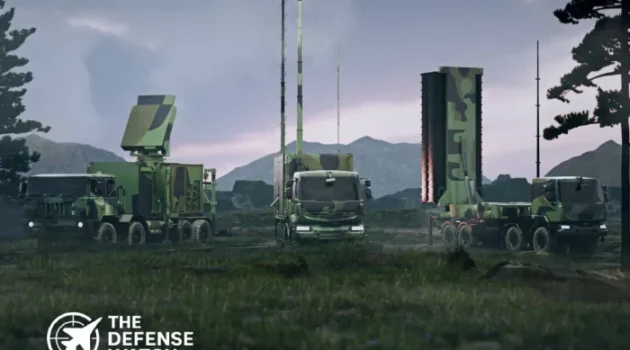
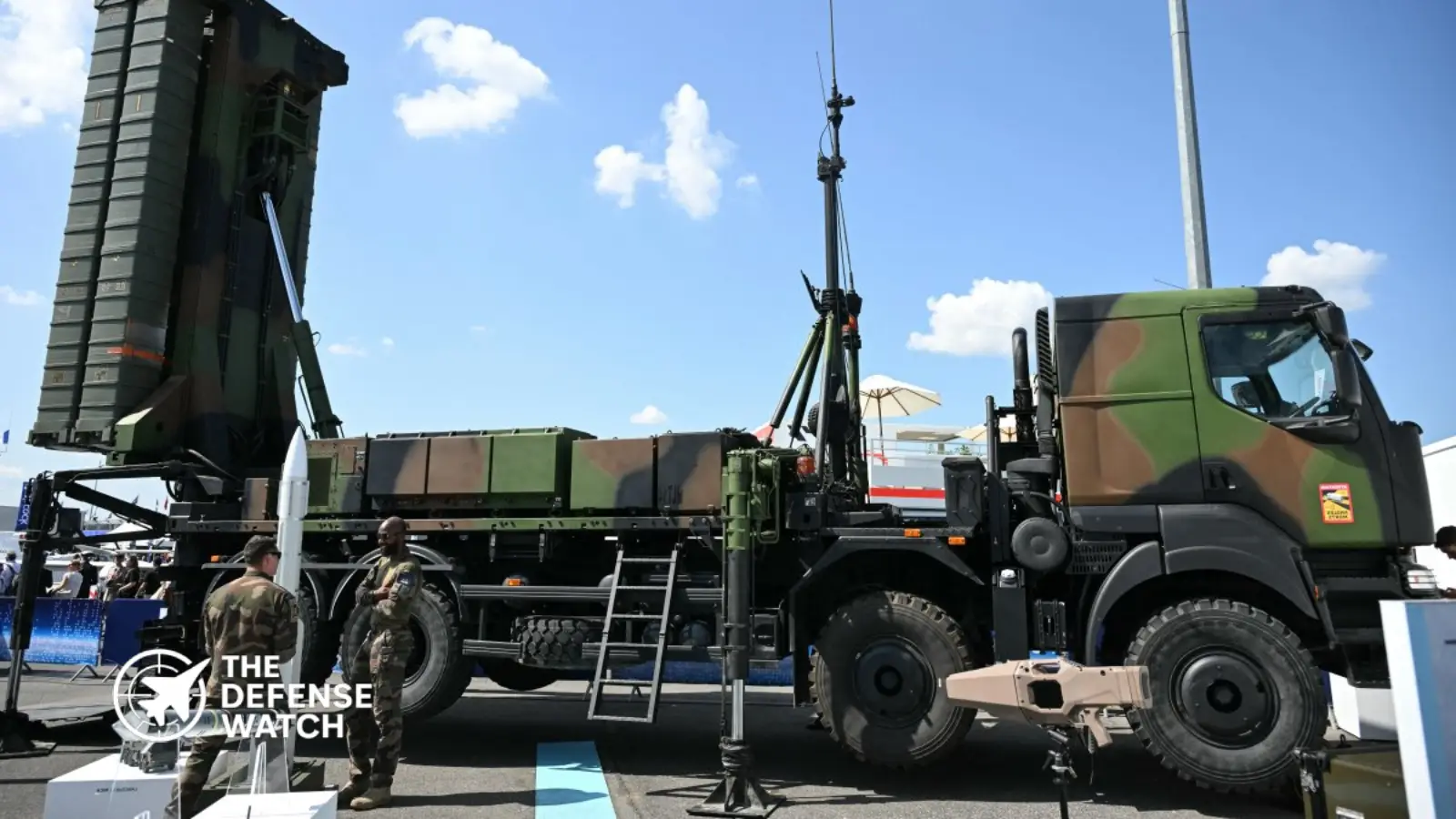
The SAMP/T (Sol-Air Moyenne Portée/Terrestre) is a Franco-Italian ground-based air and missile defense system developed by the Eurosam consortium, which includes MBDA and Thales.
Designed to defend against a broad range of aerial threats, the system can engage:
- Combat aircraft
- Helicopters
- Cruise missiles
- Unmanned aerial vehicles (UAVs)
- Tactical ballistic missiles
The system employs the Aster family of interceptor missiles and provides 360-degree coverage through advanced radar and fire-control systems. According to publicly available information, SAMP/T is among Europe’s most capable medium- to long-range air defense platforms.
Key SAMP/T Capabilities
Capability Description Interceptors Aster 15 and Aster 30 missiles Coverage 360-degree air defense Mobility Truck-mounted, rapidly deployable Target Types Aircraft, UAVs, cruise missiles, ballistic missiles Network Integration NATO-compatible command and control architecture Radar Systems Arabel and newer Kronos radar variants Source: Turkish Ministry of National Defense statements and publicly available system information.
(adsbygoogle = window.adsbygoogle || []).push({});Strategic Significance For NATO
The deployment carries significance beyond a single air defense battery.
NATO has increasingly emphasized multinational air and missile defense cooperation as allies seek to improve readiness against both conventional and emerging threats. In February 2026, alliance members launched additional cooperative initiatives focused on ballistic missile defense, sensor integration, interceptor development, and command-and-control modernization.
Deploying a SAMP/T battery to Türkiye demonstrates NATO’s continued reliance on shared capabilities, allowing member states to provide high-value assets where they can contribute most effectively to collective defense.
For Italy, the mission underscores Rome’s expanding role in alliance security operations and regional air defense efforts. Italy has previously deployed SAMP/T systems abroad in support of NATO and coalition missions, demonstrating the platform’s mobility and expeditionary utility.
(adsbygoogle = window.adsbygoogle || []).push({});Implications For Türkiye’s Air Defense Architecture
The deployment also arrives as Ankara continues efforts to strengthen its national air and missile defense network.
Türkiye has pursued a multi-layered air defense architecture combining indigenous systems with allied capabilities. Recent reports indicate ongoing discussions involving potential acquisition and co-production opportunities related to the SAMP/T system as part of Türkiye’s broader “Steel Dome” air defense initiative.
Although the newly announced deployment is a NATO mission rather than a Turkish acquisition, it offers additional operational experience with advanced European missile defense technologies and further enhances interoperability between Turkish and allied forces.
From a military planning perspective, integrating temporary allied air defense assets into NATO’s command structure helps validate operational procedures, communications networks, and joint engagement concepts that would be critical during a regional crisis.
(adsbygoogle = window.adsbygoogle || []).push({});Growing International Interest In SAMP/T
The SAMP/T has attracted increasing attention across Europe as governments seek modern air and missile defense systems capable of countering increasingly sophisticated threats.
Recent developments include Denmark’s selection of the next-generation SAMP/T NG system and broader discussions among European nations regarding expanded air defense cooperation. The system’s ability to engage ballistic missile threats while remaining fully interoperable with NATO command networks has strengthened its position within Europe’s evolving missile defense architecture.
The deployment to Türkiye further highlights the system’s growing operational footprint across NATO and demonstrates how alliance members are using rotational deployments to strengthen collective air defense coverage.
(adsbygoogle = window.adsbygoogle || []).push({});Outlook
Italy’s deployment of a SAMP/T battery to Konya represents a practical enhancement of NATO’s integrated air and missile defense posture at a time when air and missile threats continue to evolve.
While the deployment does not fundamentally alter the regional military balance, it reinforces alliance readiness, improves interoperability among NATO members, and provides additional defensive coverage for a strategically important region.
As NATO leaders prepare for upcoming alliance discussions focused on deterrence, burden-sharing, and defense modernization, deployments such as this illustrate how multinational capabilities are increasingly being used to strengthen collective security across the alliance.