(adsbygoogle = window.adsbygoogle || []).push({});Executive Summary:
German defense company Diehl Defence has entered discussions with Ukrainian missile developer Fire Point regarding potential co-production of the FP-5 Flamingo cruise missile in Germany. The move reflects growing European demand for sovereign long-range strike capabilities and highlights increasing cooperation between NATO defense industries and Ukraine’s wartime defense sector. If realized, the partnership could significantly expand production capacity and strengthen Europe’s deep-strike arsenal.
Diehl Defence Explores German Production Of Ukraine’s FP-5 Flamingo Cruise Missile
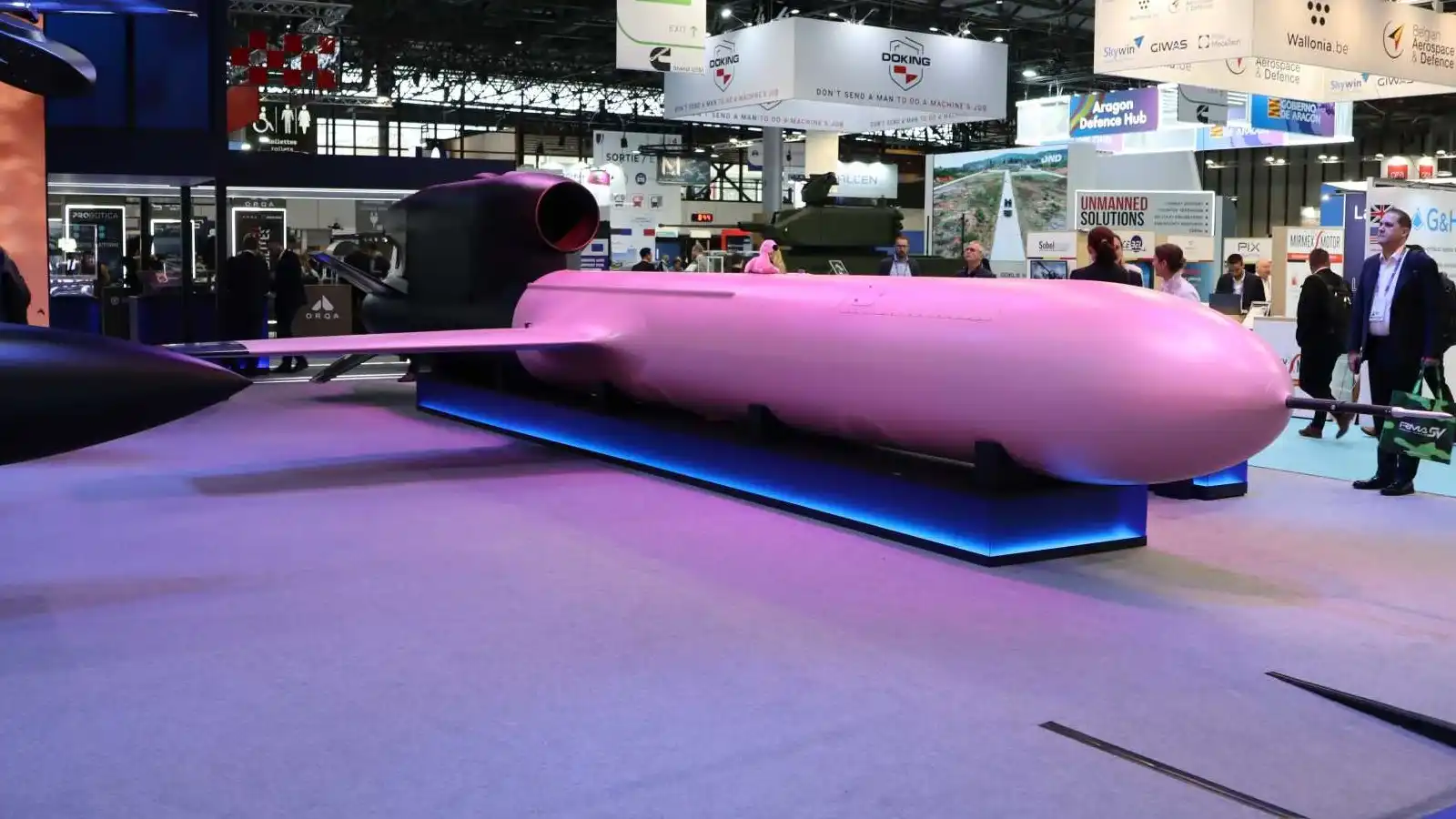
The FP-5 Flamingo cruise missile has emerged as a potential focal point of European long-range strike modernization after German defense manufacturer Diehl Defence confirmed discussions with Ukrainian company Fire Point regarding future cooperation and possible production in Germany. According to statements made by Diehl Defence CEO Helmut Rauch during the ILA Berlin Air Show, both companies are evaluating opportunities for joint development and manufacturing of the combat-tested missile system.
The discussions represent one of the most significant examples to date of European defense firms seeking to integrate Ukrainian battlefield-developed technologies into NATO industrial frameworks. Diehl is best known internationally for producing the IRIS-T family of air defense systems, which have become a critical component of Ukraine’s air defense network.
According to available reporting, Diehl is considering not only production cooperation but also the potential contribution of advanced missile guidance technologies and engineering expertise developed through decades of missile design experience.
What Is The FP-5 Flamingo?
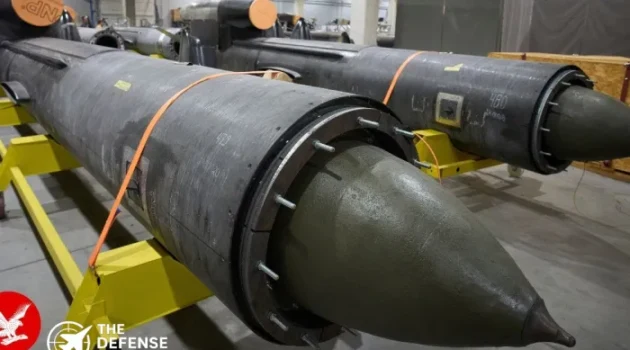
The FP-5 Flamingo is a Ukrainian-developed long-range strike system designed by Fire Point. The missile has been marketed as both a heavy unmanned strike platform and a cruise missile capable of attacking fixed targets deep inside enemy territory.
Fire Point claims the missile possesses the following characteristics:
| Specification | FP-5 Flamingo |
|---|---|
| Claimed Range | Up to 3,000 km |
| Maximum Speed | Approximately 950 km/h |
| Cruise Speed | 650 to 700 km/h |
| Payload Capacity | Up to 1,150 kg |
| Launch Method | Ground-launched mobile system |
| Operating Altitude | 20 m to 10 km |
| Maximum Takeoff Weight | Approximately 6,000 kg |
Source: Fire Point and exhibition data presented at SAHA Expo 2026.
- (adsbygoogle = window.adsbygoogle || []).push({});
The missile is launched from a road-mobile platform and is designed to operate without requiring aircraft, naval vessels, or fixed launch infrastructure. This approach aligns with Ukraine’s wartime emphasis on dispersed, survivable strike systems capable of operating under contested electronic warfare conditions.
Operational Use Demonstrates Deep-Strike Potential
The FP-5 gained international attention following reports that the system was used in strikes against Russian defense-industrial targets located far from the front lines. Public reporting in June 2026 linked the missile to attacks on facilities associated with the production of guidance and electronic systems used in Russian drones and missile programs.
Such operations highlight a major shift in Ukraine’s strike strategy. Rather than focusing solely on tactical battlefield targets, Kyiv has increasingly sought to disrupt production facilities, logistics networks, and military-industrial infrastructure deep within Russian territory.
The ability to conduct long-range precision attacks against strategic targets has become one of the defining features of modern warfare, particularly as both Russia and Ukraine seek to hold critical infrastructure at risk across greater distances.
(adsbygoogle = window.adsbygoogle || []).push({});Why Germany Is Interested
The potential cooperation reflects broader European concerns regarding long-range strike capability gaps.
Several NATO members are accelerating efforts to acquire indigenous or European-produced deep-strike weapons amid growing security concerns stemming from Russia’s military posture and the continuing war in Ukraine. The FP-5 offers an attractive combination of range, mobility, and potentially lower production costs compared with many established Western cruise missile systems.
For Germany, co-production could provide several advantages:
- Expanded domestic missile manufacturing capacity.
- Access to combat-tested Ukrainian design concepts.
- Greater European strategic autonomy in long-range strike systems.
- Reduced dependence on non-European suppliers.
- Faster fielding of scalable deep-strike capabilities.
The discussions also demonstrate how Ukraine’s defense industry is evolving from a wartime consumer of foreign military aid into an increasingly influential source of military technology and operational innovation.
(adsbygoogle = window.adsbygoogle || []).push({});Strategic Implications For NATO And European Defense
The significance of the FP-5 extends beyond the missile itself.
European defense planners are increasingly focused on generating large quantities of affordable long-range precision weapons capable of operating in highly contested environments. The war in Ukraine has demonstrated that mass, survivability, and production scalability are often as important as technological sophistication.
Traditional Western cruise missiles such as the Tomahawk, Taurus, and Storm Shadow remain highly capable systems. However, they are often expensive, inventory-constrained, and dependent on specialized launch platforms. The FP-5 concept seeks to address a different operational requirement by emphasizing mobile launchers, distributed operations, and lower-cost production models.
From a NATO perspective, systems like the Flamingo could provide additional options for:
- Deep precision strike missions.
- Suppression of enemy air defenses.
- Attacks against logistics hubs and ammunition depots.
- Targeting military-industrial infrastructure.
- Deterrence operations along NATO’s eastern flank.
The potential German-Ukrainian partnership also illustrates a broader trend toward integrating battlefield innovation directly into allied defense procurement and industrial planning.
Outlook
No production agreement has yet been announced, and discussions between Diehl Defence and Fire Point remain ongoing. Company officials have indicated that additional meetings are expected in the coming weeks to assess the feasibility of cooperation and future manufacturing arrangements.
Should a deal move forward, the FP-5 Flamingo could become one of the first major Ukrainian-developed long-range strike systems to enter large-scale production within a NATO member state. Such a development would mark a significant milestone in European defense industrial cooperation and underscore the growing influence of Ukraine’s combat-driven military innovation on future NATO capabilities.