(adsbygoogle = window.adsbygoogle || []).push({});Executive Summary:
German defense company Diehl Defence has entered discussions with Ukrainian missile developer Fire Point regarding potential co-production of the FP-5 Flamingo cruise missile in Germany. The move reflects growing European demand for sovereign long-range strike capabilities and highlights increasing cooperation between NATO defense industries and Ukraine’s wartime defense sector. If realized, the partnership could significantly expand production capacity and strengthen Europe’s deep-strike arsenal.
Diehl Defence Explores German Production Of Ukraine’s FP-5 Flamingo Cruise Missile
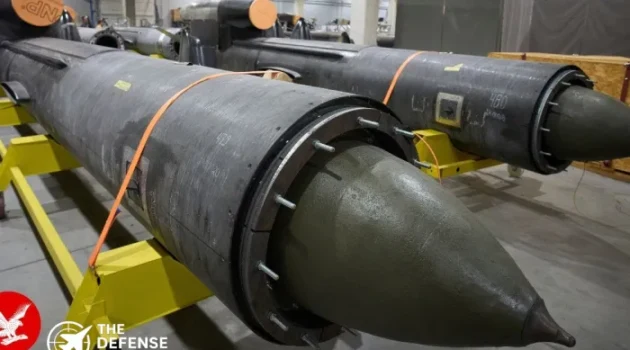
The FP-5 Flamingo cruise missile has emerged as a potential focal point of European long-range strike modernization after German defense manufacturer Diehl Defence confirmed discussions with Ukrainian company Fire Point regarding future cooperation and possible production in Germany. According to statements made by Diehl Defence CEO Helmut Rauch during the ILA Berlin Air Show, both companies are evaluating opportunities for joint development and manufacturing of the combat-tested missile system.
The discussions represent one of the most significant examples to date of European defense firms seeking to integrate Ukrainian battlefield-developed technologies into NATO industrial frameworks. Diehl is best known internationally for producing the IRIS-T family of air defense systems, which have become a critical component of Ukraine’s air defense network.
According to available reporting, Diehl is considering not only production cooperation but also the potential contribution of advanced missile guidance technologies and engineering expertise developed through decades of missile design experience.
What Is The FP-5 Flamingo?
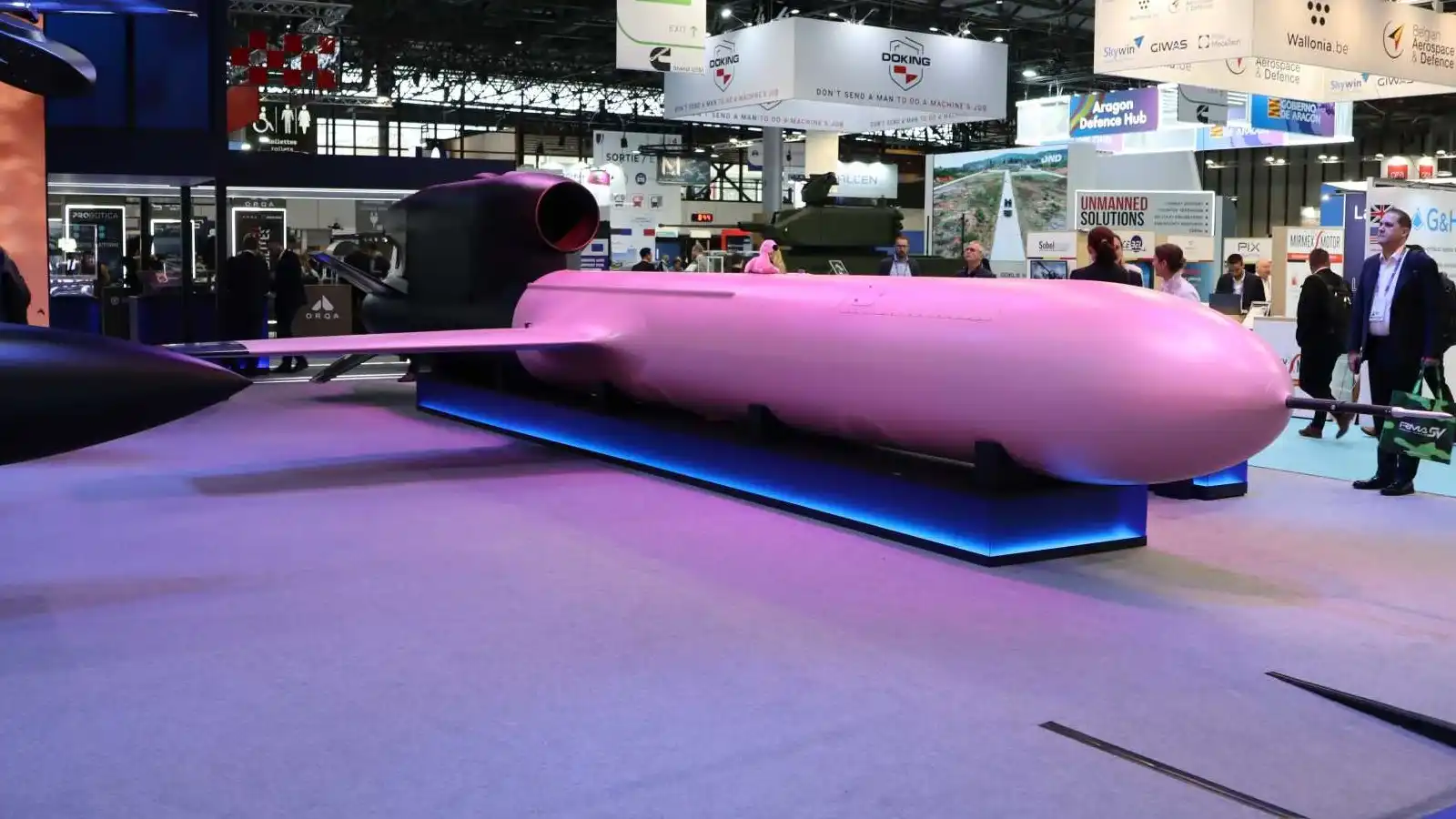
The FP-5 Flamingo is a Ukrainian-developed long-range strike system designed by Fire Point. The missile has been marketed as both a heavy unmanned strike platform and a cruise missile capable of attacking fixed targets deep inside enemy territory.
Fire Point claims the missile possesses the following characteristics:
| Specification | FP-5 Flamingo |
|---|---|
| Claimed Range | Up to 3,000 km |
| Maximum Speed | Approximately 950 km/h |
| Cruise Speed | 650 to 700 km/h |
| Payload Capacity | Up to 1,150 kg |
| Launch Method | Ground-launched mobile system |
| Operating Altitude | 20 m to 10 km |
| Maximum Takeoff Weight | Approximately 6,000 kg |
Source: Fire Point and exhibition data presented at SAHA Expo 2026.
- (adsbygoogle = window.adsbygoogle || []).push({});
The missile is launched from a road-mobile platform and is designed to operate without requiring aircraft, naval vessels, or fixed launch infrastructure. This approach aligns with Ukraine’s wartime emphasis on dispersed, survivable strike systems capable of operating under contested electronic warfare conditions.
Operational Use Demonstrates Deep-Strike Potential
The FP-5 gained international attention following reports that the system was used in strikes against Russian defense-industrial targets located far from the front lines. Public reporting in June 2026 linked the missile to attacks on facilities associated with the production of guidance and electronic systems used in Russian drones and missile programs.
Such operations highlight a major shift in Ukraine’s strike strategy. Rather than focusing solely on tactical battlefield targets, Kyiv has increasingly sought to disrupt production facilities, logistics networks, and military-industrial infrastructure deep within Russian territory.
The ability to conduct long-range precision attacks against strategic targets has become one of the defining features of modern warfare, particularly as both Russia and Ukraine seek to hold critical infrastructure at risk across greater distances.
(adsbygoogle = window.adsbygoogle || []).push({});Why Germany Is Interested
The potential cooperation reflects broader European concerns regarding long-range strike capability gaps.
Several NATO members are accelerating efforts to acquire indigenous or European-produced deep-strike weapons amid growing security concerns stemming from Russia’s military posture and the continuing war in Ukraine. The FP-5 offers an attractive combination of range, mobility, and potentially lower production costs compared with many established Western cruise missile systems.
For Germany, co-production could provide several advantages:
- Expanded domestic missile manufacturing capacity.
- Access to combat-tested Ukrainian design concepts.
- Greater European strategic autonomy in long-range strike systems.
- Reduced dependence on non-European suppliers.
- Faster fielding of scalable deep-strike capabilities.
The discussions also demonstrate how Ukraine’s defense industry is evolving from a wartime consumer of foreign military aid into an increasingly influential source of military technology and operational innovation.
(adsbygoogle = window.adsbygoogle || []).push({});Strategic Implications For NATO And European Defense
The significance of the FP-5 extends beyond the missile itself.
European defense planners are increasingly focused on generating large quantities of affordable long-range precision weapons capable of operating in highly contested environments. The war in Ukraine has demonstrated that mass, survivability, and production scalability are often as important as technological sophistication.
Traditional Western cruise missiles such as the Tomahawk, Taurus, and Storm Shadow remain highly capable systems. However, they are often expensive, inventory-constrained, and dependent on specialized launch platforms. The FP-5 concept seeks to address a different operational requirement by emphasizing mobile launchers, distributed operations, and lower-cost production models.
From a NATO perspective, systems like the Flamingo could provide additional options for:
- Deep precision strike missions.
- Suppression of enemy air defenses.
- Attacks against logistics hubs and ammunition depots.
- Targeting military-industrial infrastructure.
- Deterrence operations along NATO’s eastern flank.
The potential German-Ukrainian partnership also illustrates a broader trend toward integrating battlefield innovation directly into allied defense procurement and industrial planning.
Outlook
No production agreement has yet been announced, and discussions between Diehl Defence and Fire Point remain ongoing. Company officials have indicated that additional meetings are expected in the coming weeks to assess the feasibility of cooperation and future manufacturing arrangements.
Should a deal move forward, the FP-5 Flamingo could become one of the first major Ukrainian-developed long-range strike systems to enter large-scale production within a NATO member state. Such a development would mark a significant milestone in European defense industrial cooperation and underscore the growing influence of Ukraine’s combat-driven military innovation on future NATO capabilities.
Executive Summary:
Diehl Defence has successfully conducted live firings of SPIKE LR anti tank guided missiles from the Ziesel unmanned ground vehicle platform. The tests demonstrate growing European efforts to integrate precision weapons with unmanned land systems for future battlefield operations.
Diehl Defence Demonstrates SPIKE LR Missile Capability On Ziesel UGV
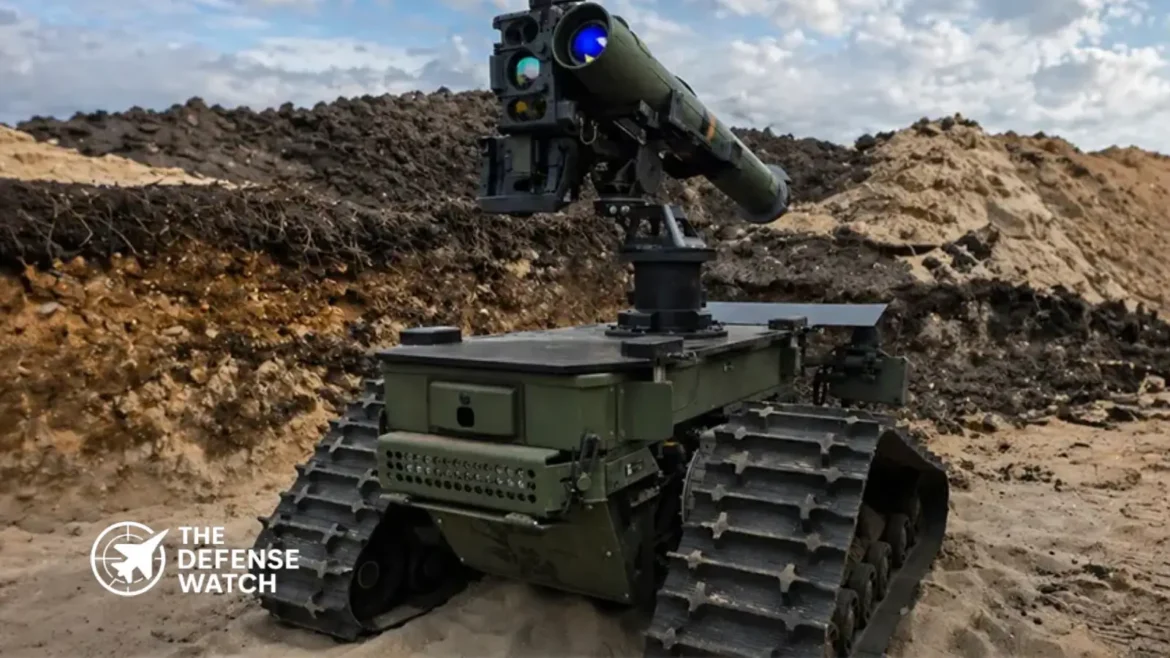
The SPIKE LR missile system was successfully launched from the Ziesel unmanned ground vehicle during recent live fire trials conducted by Diehl Defence.
The demonstration marks another step in Europe’s push toward integrating unmanned ground systems with precision strike capabilities. The Ziesel platform, developed for high mobility and modular battlefield operations, was fitted with the combat proven SPIKE LR anti tank guided missile system for the trials.
According to the company, the firings validated the integration between the missile launcher and the remotely operated ground vehicle. The tests also demonstrated the platform’s ability to engage armored threats while keeping operators at safer stand off distances.
Growing Interest In Armed Unmanned Ground Vehicles
Armed unmanned ground vehicles are gaining increased attention among NATO and European defense planners as militaries seek to reduce personnel exposure in contested environments.
The combination of the Ziesel UGV and SPIKE LR missile system reflects broader trends in modern warfare, where autonomous and remotely operated systems are increasingly paired with precision guided munitions. Lessons from ongoing conflicts in Eastern Europe and the Middle East have accelerated investment in unmanned land systems capable of reconnaissance, logistics, and direct fire support.
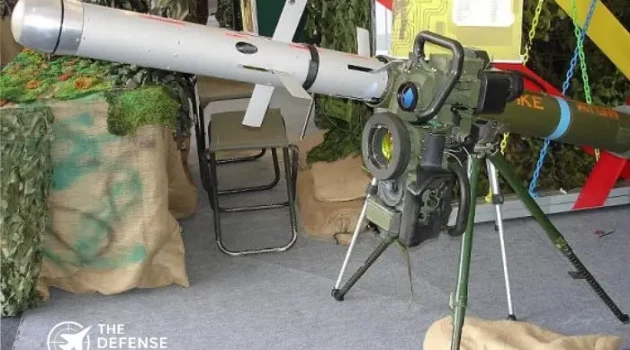
The SPIKE LR missile, developed by Rafael Advanced Defense Systems, is already widely used by NATO member states and allied militaries. The weapon offers fire and forget as well as fire observe update modes, enabling operators to engage targets beyond direct line of sight.
Integrating such missiles onto a compact unmanned platform could provide infantry formations with additional anti armor capability while limiting risks to crews operating near front line positions.
European Defense Industry Pushes Battlefield Automation
The Ziesel UGV project also reflects a wider European defense industry effort to develop modular unmanned systems that can support multi domain operations.
European companies have accelerated work on robotic combat vehicles following increased demand for survivable and flexible battlefield platforms. Several defense firms across Germany, France, Estonia, and the United Kingdom are currently testing unmanned systems designed for logistics, reconnaissance, electronic warfare, and weapons deployment.
Diehl Defence stated that the successful integration demonstrates the adaptability of both the Ziesel platform and the SPIKE LR weapon system. While the company did not disclose future procurement plans or potential customers, the demonstration could strengthen interest among European armed forces seeking rapid modernization options.
The ability to remotely deploy anti tank guided missiles from lightweight unmanned vehicles may become increasingly important in future high intensity conflicts, especially in environments where electronic warfare, artillery threats, and drone surveillance complicate traditional armored operations.
Operational Implications For Modern Ground Warfare
The successful SPIKE LR missile firings from the Ziesel unmanned ground vehicle underscore how robotic systems are reshaping land warfare doctrine.
Unmanned combat platforms can potentially support distributed operations by extending reconnaissance reach and precision strike capability without exposing crews directly to enemy fire. Smaller unmanned systems also offer advantages in mobility and concealment compared to larger armored vehicles.
However, battlefield survivability for unmanned ground systems remains dependent on secure communications, electronic warfare resilience, and sustained logistical support. Modern conflicts have shown that unmanned systems can be vulnerable to jamming, signal interception, and counter drone measures.
Even so, defense analysts increasingly view armed UGVs as an important complement to conventional armored formations rather than a replacement for main battle tanks or infantry fighting vehicles.
The latest Diehl Defence trials highlight how European manufacturers are positioning unmanned systems as a core component of next generation military modernization programs.
German Air Force IRIS-T SLM Marks Major Step In Air Defense Modernization
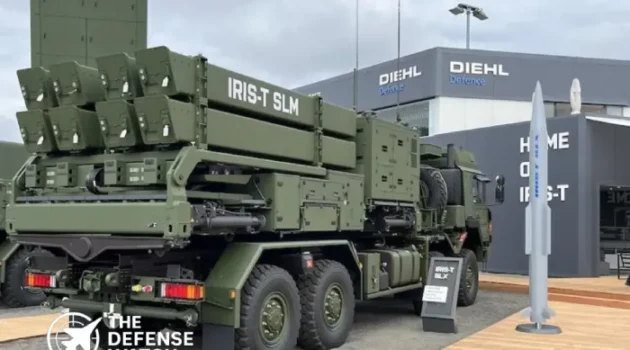
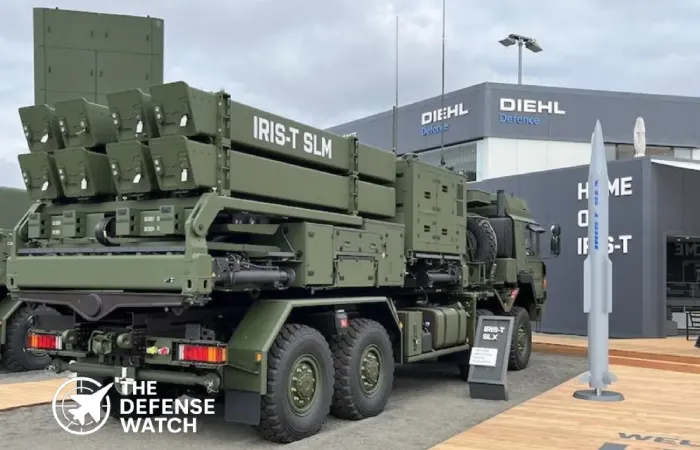
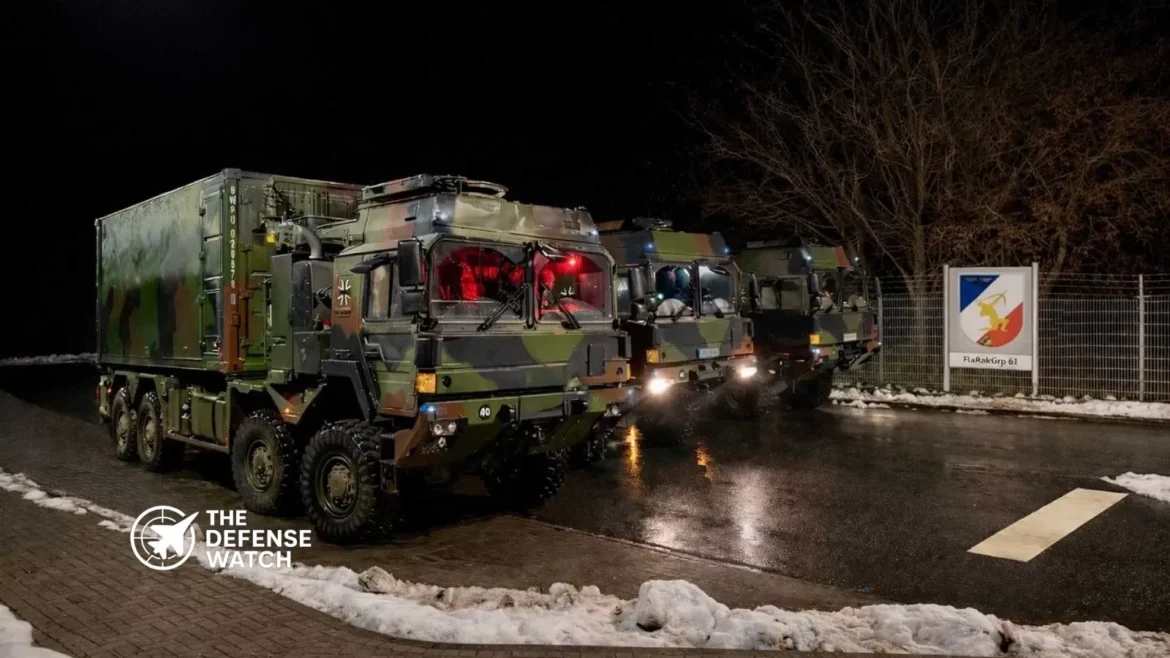
The German Air Force IRIS-T SLM air defense system has officially entered national service, marking a significant milestone in Germany’s effort to rebuild and modernize its ground-based air defense network.
(adsbygoogle = window.adsbygoogle || []).push({});According to German Air Force announced, the Luftwaffe has received its first IRIS-T SLM system in a configuration tailored specifically for German national requirements. The delivery represents the first operational step in restoring a medium-range air defense capability that Germany had largely phased out over the past decade.
The IRIS-T SLM air defense system is designed to counter a wide spectrum of aerial threats, including combat aircraft, helicopters, cruise missiles, and unmanned aerial systems.
Rebuilding Germany Ground-Based Air Defense
The German Air Force IRIS-T SLM delivery comes amid a broader modernization push following Berlin’s 2022 strategic shift in defense policy. Germany committed significant funding to improve readiness, enhance NATO interoperability, and strengthen territorial defense.
The IRIS-T SLM system fills a critical gap in Germany’s layered air defense architecture. After retiring legacy systems in the 2010s, the Bundeswehr faced limited medium-range ground-based air defense coverage. The new system is intended to restore that capability while aligning with NATO standards.
Germany has also committed to the European Sky Shield Initiative, a multinational effort aimed at building a coordinated and integrated air and missile defense shield across Europe. The IRIS-T SLM will play a key role in that framework.
What The IRIS-T SLM Air Defense System Brings
Developed by Diehl Defence, the IRIS-T SLM air defense system is the ground-launched variant of the IRIS-T missile family, originally derived from an advanced short-range air-to-air missile program.
(adsbygoogle = window.adsbygoogle || []).push({});The SLM variant offers extended range and altitude performance compared to earlier configurations. It typically consists of:
- A vertical launch missile unit
- A multifunction radar
- A tactical operations center
- Support and logistics vehicles

The system uses an active radar-guided interceptor capable of engaging multiple targets simultaneously. Its architecture supports network-enabled operations, allowing integration with other air defense assets.
Germany’s national configuration reportedly includes adaptations tailored to Luftwaffe command-and-control structures and operational doctrines.
Operational Lessons From Ukraine
The IRIS-T SLM has drawn significant international attention following its operational deployment in Ukraine. Berlin previously supplied IRIS-T SLM systems to Kyiv as part of military assistance packages.
Ukrainian officials have publicly credited the system with high interception rates against cruise missiles and unmanned aerial threats. While independent verification of battlefield performance remains limited, the system’s combat use has provided valuable operational feedback.
(adsbygoogle = window.adsbygoogle || []).push({});For Germany, fielding the IRIS-T SLM domestically reflects both confidence in the system’s performance and a desire to accelerate air defense readiness amid evolving security conditions in Europe.
Strengthening NATO Interoperability
The German Air Force IRIS-T SLM system is designed to integrate into NATO’s Integrated Air and Missile Defence framework. Germany remains a central contributor to NATO air policing and collective defense missions.
By restoring medium-range ground-based air defense, Berlin enhances both national resilience and alliance-wide capabilities. The system’s open architecture allows potential interoperability with other European and allied sensors and command systems.
Several European countries have also expressed interest in or placed orders for IRIS-T-based systems, reflecting broader demand for mobile and adaptable air defense solutions.
Industrial And Strategic Implications
For Diehl Defence, the delivery to the German Air Force represents a major domestic validation of its flagship ground-based air defense product. The company has positioned the IRIS-T SLM as a scalable system suitable for national defense, expeditionary missions, and infrastructure protection.
Germany’s renewed investment in air defense is part of a broader modernization cycle that includes aircraft procurement, missile defense initiatives, and upgrades to digital command networks.
(adsbygoogle = window.adsbygoogle || []).push({});The IRIS-T SLM complements other European efforts focused on layered defense against increasingly complex aerial threats, including low-flying cruise missiles and small unmanned systems.
A Shift In German Defense Posture
The fielding of the German Air Force IRIS-T SLM air defense system reflects a wider strategic reassessment in Berlin. After years of reduced emphasis on territorial air defense, Germany is rebuilding capabilities aligned with high-intensity conflict scenarios.
The Luftwaffe’s acquisition signals that ground-based air defense is once again a priority within the Bundeswehr force structure. As deliveries continue, additional batteries are expected to enhance coverage and readiness.
The system’s introduction also underscores Europe’s growing focus on sovereign defense manufacturing and regional supply chains, particularly in critical areas such as air and missile defense.
(adsbygoogle = window.adsbygoogle || []).push({});What Comes Next
With the first nationally configured IRIS-T SLM air defense system now delivered, attention will shift to operational training, integration testing, and full operational capability timelines.
Future procurements and deployment locations have not been fully detailed publicly. However, Germany’s stated defense objectives indicate that expanding layered air defense will remain central to its modernization agenda.
The German Air Force IRIS-T SLM deployment represents more than a single system delivery. It marks a structural return to medium-range air defense at a time when European security dynamics continue to evolve.

Germany has signed several contracts for IRIS-T guided missiles with the Federal Office of Bundeswehr Equipment, Information Technology and In-Service Support (BAAINBw), expanding procurement of both air-to-air and surface-to-air variants through defence firm Diehl Defence.
(adsbygoogle = window.adsbygoogle || []).push({});Germany expands IRIS-T missile procurement
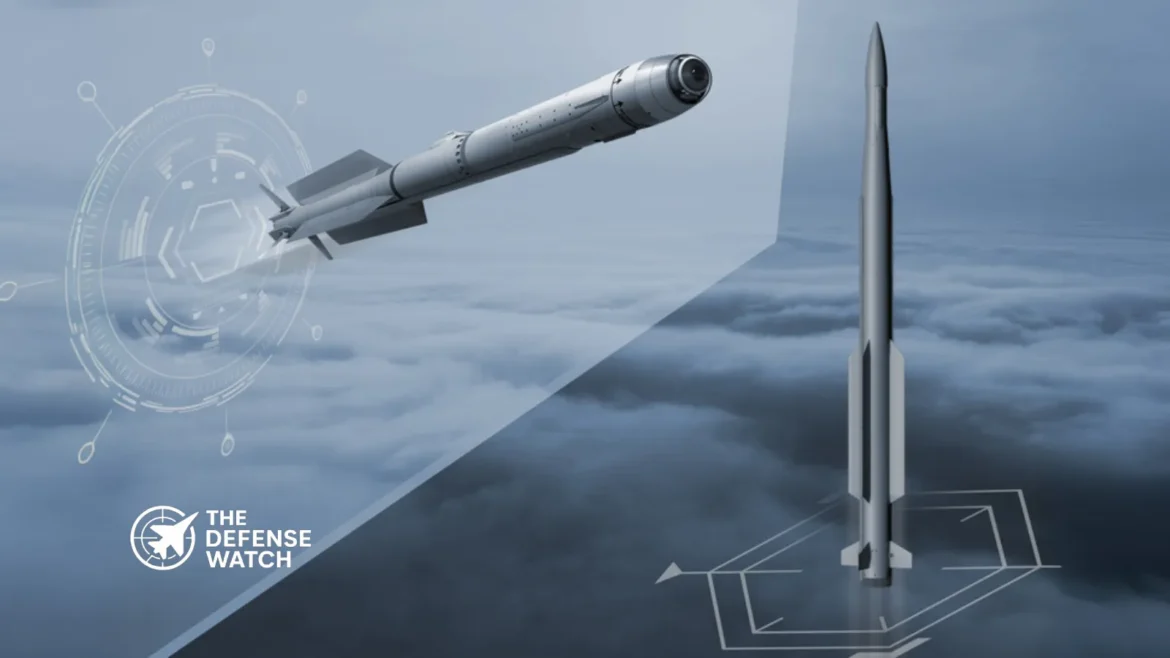
At the turn of the year, Diehl Defence and BAAINBw finalized multiple contracts covering missiles from the IRIS-T family for the German Armed Forces. These deals include guided missiles for short and medium range roles, both for air-to-air use and for ground-based air defence systems.
The agreements cover the standard IRIS-T air-to-air missile plus the IRIS-T SLS and IRIS-T SLM variants for short and medium range surface air defence.
Multi-role capability and system coverage
The IRIS-T guided missile’s design allows it to perform as a high-agility air-to-air weapon on fighter aircraft or as a surface-to-air missile in defence systems. This multi-role feature provides Germany flexibility in both fighter armament and ground defence layers.
The IRIS-T SLS variant focuses on short and very short range air defence, offering 360-degree coverage against aircraft, cruise missiles, helicopters, and drones. The IRIS-T SLM variant extends the defensive envelope, with an effective range up to about 60 km and altitude coverage near 20 km.
(adsbygoogle = window.adsbygoogle || []).push({});Strategic supply and expanded production
BAAINBw and Diehl Defence highlighted that close cooperation smoothed contracting and will help meet sustained demand for these systems. As part of the contract announcement, Diehl said it is expanding production capacity across its sites with planned investments around 1.5 billion euros to strengthen delivery capability for national and international customers.
The IRIS-T family now counts 21 user nations that have procured either the air-to-air missile or one of the ground-based air defence variants.
Context in wider European defence procurement
Germany has recently placed other large IRIS-T related orders, including a 2023 contract for more than 1,200 missiles covering IRIS-T SL and related variants.
Under the European Sky Shield Initiative, several nations have procured IRIS-T SLM medium range systems through BAAINBw acting as the procurement authority on their behalf, reinforcing an interoperable air defence network across NATO partners.
(adsbygoogle = window.adsbygoogle || []).push({});Earlier deliveries have placed IRIS-T SLM units into service and achieved initial operational capability with the German Air Force, supporting layered defence.
What this means for German defence
These latest contracts reflect Germany’s focus on strengthening air defence stocks and sustainment ahead of evolving threat environments. By ensuring ongoing supply of IRIS-T guided missiles across multiple roles, the German Armed Forces aim to maintain readiness and upgrade both airborne and ground defence capabilities.