atOptions = { ‘key’ : ‘e7d18db8b7513fb2a224cf4c3f18bbf0’, ‘format’ : ‘iframe’, ‘height’ : 90, ‘width’ : 728, ‘params’ : {} };Executive Summary:
Lockheed Martin has been selected by the U.S. Department of War to develop a 500 kilowatt class laser weapon under the Joint Laser Weapon System program. The effort is intended to strengthen U.S. defenses against cruise missiles, drones, and other advanced airborne threats by advancing high power directed energy technology that can provide rapid, low cost interception.
Lockheed Martin Wins Major Directed Energy Contract For 500 kW Laser Weapon
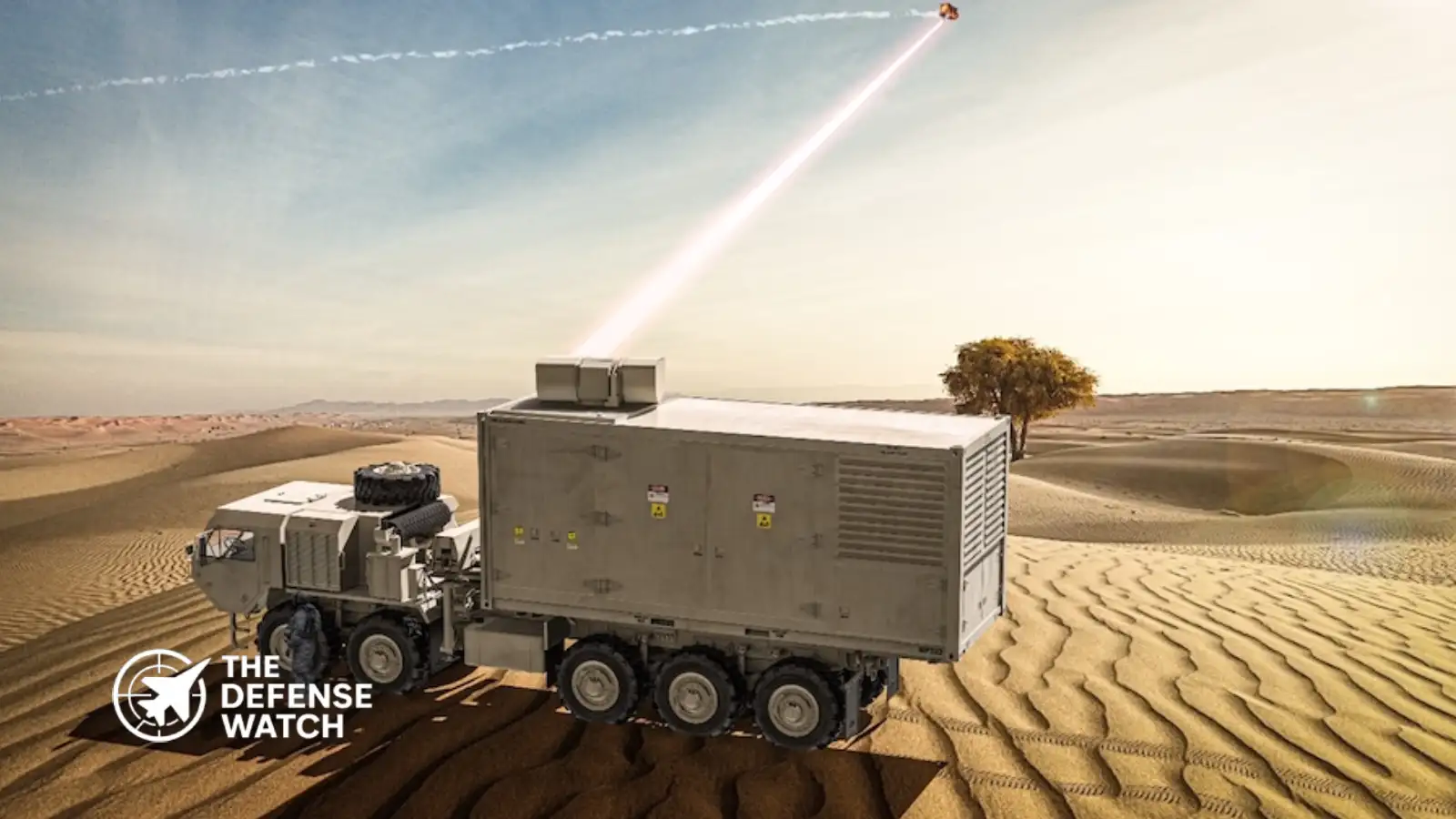
Lockheed Martin has secured a major U.S. Department of War contract to develop a 500 kilowatt class laser weapon system capable of defending military forces against cruise missiles, drones, and other advanced aerial threats. The award forms part of the Pentagon’s Joint Laser Weapon System (JLWS) effort, a next generation directed energy program designed to mature high power laser technology for operational deployment.
The initial contract awarded to Lockheed Martin’s Aculight business is valued at approximately $44 million, while the broader program could reach $627 million for the company if future development, integration, and production options are exercised. The overall Joint Laser Weapon System effort has a ceiling value of roughly $847 million, with another industry participant also selected to support the program.
Building On The HELSI Program
The latest contract represents the next step in Lockheed Martin’s long running investment in high energy laser weapons.
The company previously developed a 300 kilowatt class laser under the Department of Defense’s High Energy Laser Scaling Initiative (HELSI). In 2023, Lockheed Martin announced work to scale that technology to the 500 kilowatt class, emphasizing improvements in beam quality, efficiency, thermal management, and overall system size and weight.
According to Lockheed Martin, the objective is to deliver a laser capable of maintaining excellent beam quality while generating substantially greater power, enabling the engagement of more demanding targets.
Why A 500 kW Laser Matters
Directed energy weapons are increasingly viewed as an important complement to traditional missile based air defense.
Unlike interceptor missiles, laser weapons engage targets using concentrated energy rather than explosive projectiles. As long as sufficient electrical power is available, they can fire repeatedly without requiring conventional ammunition.
Potential advantages include:
| Capability | Operational Benefit |
|---|---|
| Speed of light engagement | Near instantaneous response against fast moving threats |
| Deep magazine | Multiple engagements without missile reloads |
| Low cost per shot | Far cheaper than firing interceptor missiles |
| Precision effects | Reduced collateral damage in many scenarios |
| Scalable power | Ability to address drones, cruise missiles, and potentially larger threats |
These characteristics have become increasingly attractive as militaries confront growing numbers of inexpensive drones and increasingly sophisticated cruise missiles.
Designed To Counter Modern Air Threats
The Joint Laser Weapon System is intended to provide another defensive layer against several categories of airborne threats.
Expected mission sets include:
- Cruise missile defense
- Counter drone operations
- Protection against drone swarms
- Defense of military bases
- Critical infrastructure protection
Lockheed Martin has previously demonstrated its Layered Laser Defense (LLD) system against surrogate cruise missiles and unmanned aircraft, showing the potential of fiber laser technology combined with advanced beam control and adaptive optics.
Technical Challenges Still Remain
Although laser technology has advanced significantly over the past decade, fielding a 500 kilowatt operational weapon presents several engineering challenges.
Among the most significant are:
- Supplying sufficient electrical power in operational environments.
- Managing the large amounts of heat generated during continuous firing.
- Maintaining beam quality over long distances.
- Preserving effectiveness in rain, dust, smoke, humidity, or atmospheric turbulence.
- Integrating the system with existing air defense sensors and command networks.
These factors explain why the Department of War continues to invest in phased technology maturation rather than immediate large scale deployment.
Strategic Significance For U.S. Missile Defense
The award reflects a broader Pentagon effort to expand directed energy capabilities as part of the evolving U.S. air and missile defense architecture.
Modern conflicts have demonstrated that defending against large numbers of inexpensive drones with multimillion dollar interceptor missiles is economically difficult. Directed energy systems offer the possibility of dramatically lowering the cost of defeating mass attacks while preserving valuable missile inventories for more demanding targets.
The program also aligns with wider investments supporting the U.S. homeland missile defense initiative and future integrated air defense modernization, where high energy lasers could eventually complement kinetic interceptors instead of replacing them entirely.
What Comes Next
Under the new contract, Lockheed Martin will continue developing, integrating, and demonstrating the 500 kilowatt laser technology before potential production decisions are made.
If successful, the Joint Laser Weapon System could become one of the most powerful operational directed energy weapons developed by the United States, providing military commanders with an additional option for defending installations and deployed forces against rapidly evolving missile and drone threats.
Rather than replacing traditional air defense systems, the laser is expected to become part of a layered defense architecture that combines radars, command and control networks, interceptor missiles, electronic warfare capabilities, and directed energy weapons.
Get real time update about this post category directly on your device, subscribe now.