(adsbygoogle = window.adsbygoogle || []).push({});Executive Summary:
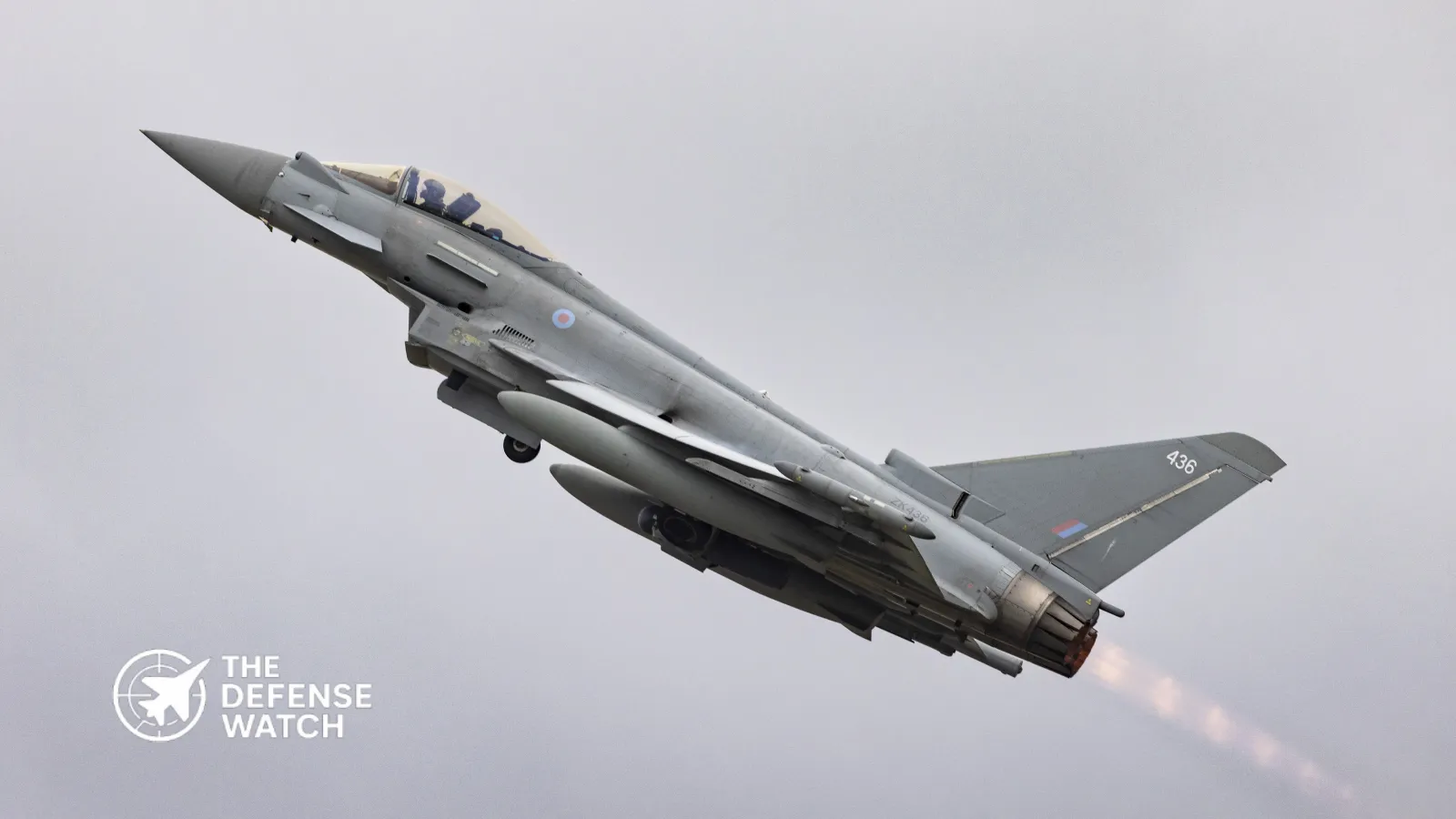
The United Kingdom has outlined a multi billion pound modernization program for its Eurofighter Typhoon fleet, reinforcing the aircraft’s role as the Royal Air Force’s primary combat platform into the 2040s. The investment focuses on advanced radar technology, expanded weapons integration, digital mission systems, and long term sustainment as Britain prepares for future high intensity operations while transitioning toward the Global Combat Air Programme (GCAP).
UK Details Billions In Typhoon Fighter Upgrades
The UK Typhoon fighter upgrades will see the Royal Air Force receive significant capability improvements through a series of modernization projects intended to keep the Eurofighter Typhoon operational for decades. The plans were outlined by the UK Ministry of Defence as part of wider defense investment aimed at maintaining combat readiness amid an increasingly challenging European security environment.
Rather than replacing the Typhoon in the near term, Britain intends to evolve the platform through incremental upgrades while simultaneously developing the sixth generation Global Combat Air Programme with Italy and Japan.
Multi Billion Pound Investment Targets Combat Capability
According to information released by the UK government, the modernization effort includes billions of pounds in planned spending covering aircraft upgrades, weapons integration, avionics modernization, logistics support, and industrial sustainment.
The investment supports both operational readiness and Britain’s domestic aerospace industry, with major work expected to involve BAE Systems, Leonardo UK, Rolls Royce, MBDA UK, and numerous suppliers throughout the national defense industrial base.
Officials emphasized that maintaining Typhoon capability remains essential while GCAP development continues over the coming decade.
atOptions = { ‘key’ : ‘3d48d603f906e3fe9f205be3c4433835’, ‘format’ : ‘iframe’, ‘height’ : 250, ‘width’ : 300, ‘params’ : {} };Key Upgrades Planned For The Typhoon Fleet
The modernization roadmap includes improvements across multiple mission systems designed to enhance survivability and effectiveness against increasingly capable air defense networks.
ECRS Mk2 Radar
One of the most significant enhancements is the introduction of the European Common Radar System Mark 2 (ECRS Mk2) active electronically scanned array radar.
The radar is expected to provide:
Capability Operational Benefit Electronic attack functions Ability to disrupt hostile radar systems Longer detection range Earlier target identification Improved target tracking Enhanced engagement against multiple threats Advanced air to air performance Better effectiveness against modern fighters High resolution mapping Improved strike mission support Unlike conventional fighter radars, the ECRS Mk2 has been designed with electronic warfare capabilities integrated directly into the sensor architecture.
Expanded Weapons Integration
The Typhoon modernization effort also supports continued integration of advanced precision weapons, including:
- Meteor beyond visual range air to air missile
- SPEAR 3 precision strike weapon
- Brimstone precision missile
- Storm Shadow cruise missile
- Paveway IV guided bomb
These weapons provide the aircraft with greater flexibility across air superiority, suppression of enemy air defenses, and deep strike missions.
Digital Mission Systems
The Royal Air Force is also investing in:
- Mission computer improvements
- Software upgrades
- Secure communications
- Enhanced cockpit displays
- Digital mission planning
- Improved electronic warfare capabilities
These upgrades enable faster software updates and improve interoperability with NATO forces.
Supporting NATO Air Power
The modernization comes as European NATO members continue increasing defense investment following Russia’s invasion of Ukraine and broader concerns regarding long term regional security.
The Royal Air Force regularly deploys Typhoon aircraft for:
- NATO Air Policing missions
- Baltic security operations
- Quick Reaction Alert duties
- Expeditionary deployments
- Coalition strike operations
Keeping the aircraft technologically relevant allows Britain to continue contributing advanced air combat capability to NATO without creating capability gaps before sixth generation aircraft become available.
Bridge To The Global Combat Air Programme
While the Typhoon remains Britain’s primary frontline fighter, it also serves as a technology bridge toward the Global Combat Air Programme (GCAP).
(adsbygoogle = window.adsbygoogle || []).push({});GCAP aims to field a sixth generation combat aircraft around 2035 through collaboration between the United Kingdom, Italy, and Japan.
Many technologies being introduced into Typhoon, including digital mission systems, advanced sensors, and network centric warfare capabilities, are expected to inform future GCAP development.
Maintaining an advanced Typhoon fleet also helps preserve critical engineering expertise within Britain’s aerospace industry during the transition.
Why The Investment Matters
From a strategic perspective, Britain’s decision reflects broader trends affecting Western air forces.
Modern fighter aircraft increasingly depend on software, sensors, electronic warfare, and networking rather than aerodynamic performance alone. Upgrading these systems can significantly improve combat effectiveness without requiring an entirely new aircraft.
For NATO, this approach offers several advantages:
- Faster capability improvements than developing new aircraft
- Lower acquisition costs compared with fleet replacement
- Continued interoperability among allied air forces
- Preservation of industrial production capacity
- Reduced operational risk during the transition to sixth generation platforms
For the United States, the UK’s Typhoon modernization complements allied investments in platforms such as the F-35 and future Next Generation Air Dominance initiatives. A more capable RAF fighter force strengthens NATO’s collective air combat capacity, particularly in the European theater, where integrated air and missile defense challenges continue to evolve.
The addition of the ECRS Mk2 radar is especially significant because it moves the Typhoon beyond traditional fighter roles by integrating electronic attack functions that can degrade enemy sensors while simultaneously supporting long range air combat. This capability aligns with modern concepts of multi domain operations, where electronic warfare is increasingly as important as kinetic effects.
Furthermore, continued investment ensures that the Typhoon remains relevant during the decade before GCAP enters service. Without sustained modernization, Britain could face declining operational capability precisely as peer competitors continue introducing advanced fighters, long range missiles, and integrated air defense systems.
Looking Ahead
The UK government has made clear that Typhoon will remain a cornerstone of Royal Air Force combat aviation into the 2040s. As modernization projects mature, upgraded aircraft are expected to deliver improved survivability, expanded mission flexibility, and greater integration with allied forces.
The investment also reinforces Britain’s commitment to sustaining a sovereign aerospace industry while preparing for the transition to sixth generation combat aviation through the Global Combat Air Programme.
Get real time update about this post category directly on your device, subscribe now.