(adsbygoogle = window.adsbygoogle || []).push({});Executive Summary:
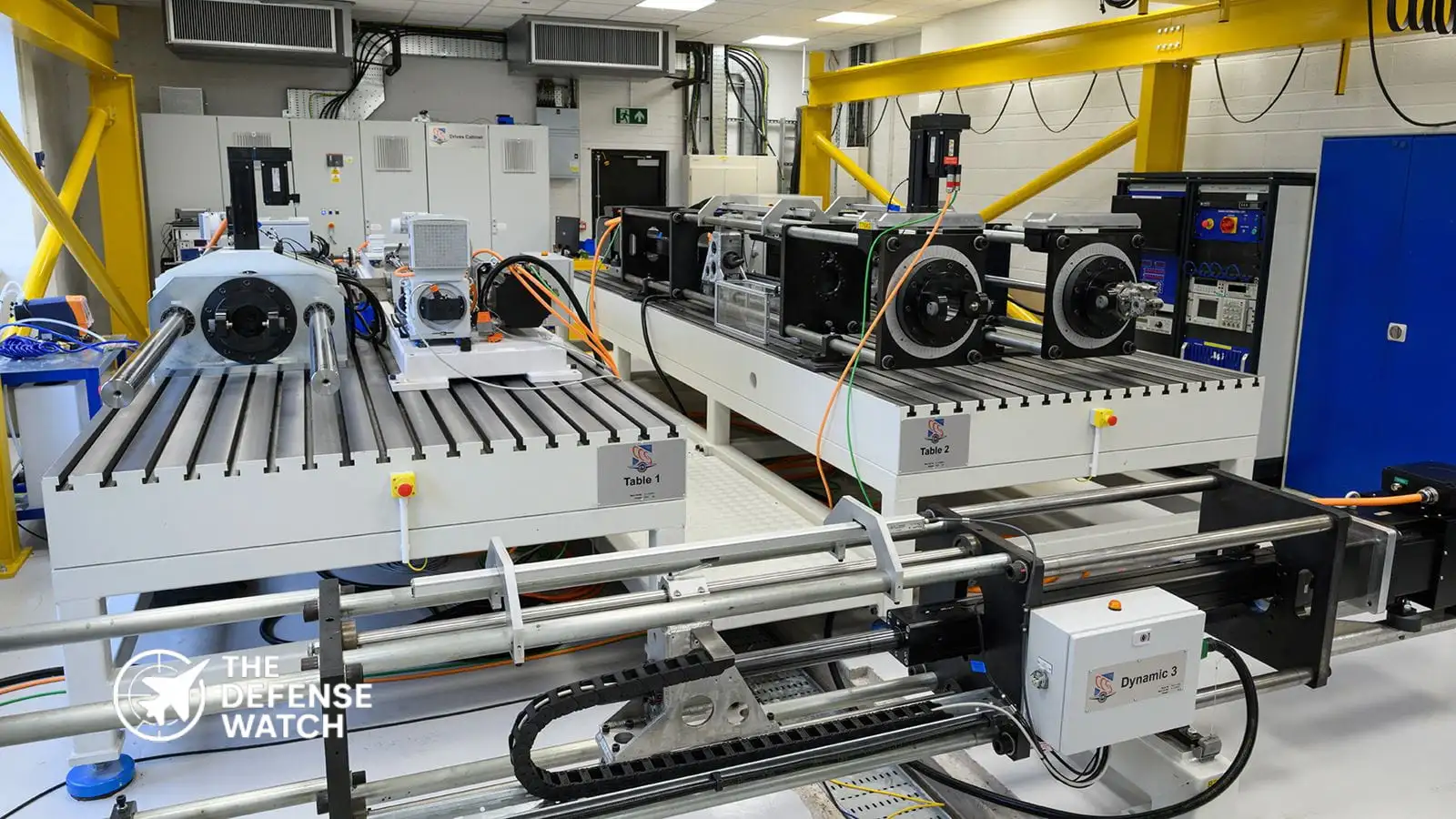
RTX’s Collins Aerospace has announced that its Engineering Center of Excellence in Wolverhampton, United Kingdom, is fully operational and focused on advancing next generation electric thrust reverser actuation systems (elecTRAS). The facility introduces a modular testing environment designed to speed aircraft system development, certification, and validation while supporting the aviation industry’s transition toward more electric aircraft architectures.
Collins Aerospace Opens UK Engineering Center to Advance Electric Thrust Reverser Technology
RTX’s Collins Aerospace Engineering Center of Excellence in Wolverhampton has officially entered full operation, marking a significant investment in aircraft electrification technologies. According to the company’s July 2026 announcement, the facility will serve as the primary engineering hub for the continued development, testing, and certification of its electric thrust reverser actuation system, known as elecTRAS.
The new center includes a modular and scalable testing laboratory capable of evaluating individual components, actuators, integrated subsystems, and complete aircraft actuation systems under simulated operational conditions. Collins Aerospace says this approach allows engineers to identify design issues earlier in the development cycle, shortening certification timelines while lowering development costs.
What Is elecTRAS?
Traditional thrust reverser systems rely heavily on hydraulic power to deploy the nacelle’s reversing mechanisms after landing. Collins Aerospace’s elecTRAS replaces much of this hydraulic architecture with electrically powered actuation.
According to the company, the technology offers several operational advantages:
| Capability | Benefit |
|---|---|
| Electric actuation | Eliminates hydraulic interfaces and fluids |
| Weight reduction | Approximately 15 to 20 percent lower nacelle actuation weight |
| Modular architecture | Supports multiple aircraft configurations |
| Simplified maintenance | Fewer hydraulic components reduce maintenance complexity |
| Scalable testing | Faster design validation and certification |
The company says reducing nacelle actuation weight contributes to improved fuel efficiency while simplifying installation and long term maintenance.
New Facility Designed for Faster Development
The Wolverhampton Engineering Center combines engineering design teams with advanced test infrastructure in a single location.
Its testing capability ranges from individual actuator modules to complete integrated systems, allowing engineers to validate designs throughout the development process rather than waiting until late stage integration.
Collins Aerospace President of Advanced Structures Ajay Mahajan said the facility supports the aerospace industry’s transition toward more electric aircraft while helping manufacturers improve efficiency, operational performance, and lifecycle maintenance.
The company also noted that engineers at the center are developing:
- Electric actuation technologies
- Smart control algorithms
- Motor control architectures
- Future aircraft system integration concepts
These efforts will support both existing aircraft programs and future commercial aviation platforms.
Technology Already Proven in Service
Unlike many emerging aircraft technologies, elecTRAS is already flying on operational aircraft.
Collins Aerospace reports that the system is installed on the Airbus A350 family, where it accumulated:
- More than 15 million flight hours
- More than 2.2 million flight cycles
- Service across over 700 aircraft by the end of 2025
Those operational data provide valuable reliability information that can be applied to future aircraft programs and next generation electric architectures.
Why Aircraft Electrification Matters
The Wolverhampton investment reflects a broader industry shift toward replacing hydraulic and pneumatic systems with electrical alternatives.
Modern aircraft increasingly use electrical power to operate systems that were traditionally hydraulic because electric architectures can:
- Reduce aircraft weight
- Improve fuel efficiency
- Lower maintenance requirements
- Simplify system integration
- Support future hybrid and more electric aircraft designs
For commercial operators, even modest weight reductions can translate into measurable fuel savings across thousands of flight hours. As airlines face pressure to improve operating efficiency and reduce emissions, electric subsystems have become an important area of investment.
Strategic Importance Beyond Commercial Aviation
Although the Wolverhampton center primarily supports commercial aviation, its engineering expertise has broader relevance.
Electric actuation, digital motor controls, and modular system architectures are increasingly influencing military aircraft development. Future combat aircraft, advanced transports, and unmanned systems are expected to rely on higher electrical power generation and more integrated electronic subsystems to support sensors, mission equipment, and survivability systems.
Engineering capabilities developed for commercial programs often provide manufacturing experience and technology maturation that can benefit future defense platforms, particularly as aerospace manufacturers pursue lighter, more efficient, and easier to maintain aircraft.
The facility also strengthens Collins Aerospace’s engineering footprint in Europe while complementing its aerostructures headquarters in Chula Vista, California, and its electronic controls expertise in Solihull, creating a more integrated development network across the United States and United Kingdom.
Outlook
The opening of Collins Aerospace’s fully operational Engineering Center of Excellence represents another step in the aviation industry’s transition toward electrically powered aircraft systems.
Rather than introducing an entirely new product, the facility expands the company’s ability to mature existing elecTRAS technology, accelerate certification activities, and support future aircraft manufacturers seeking lighter and more efficient propulsion support systems. As commercial and military aircraft continue adopting higher levels of electrification, specialized engineering centers such as Wolverhampton are likely to play an increasingly important role in developing next generation aerospace technologies.
Get real time update about this post category directly on your device, subscribe now.