Takeaways
SPY-6 demonstrated its role in multinational integrated air and missile defense during Pacific Dragon 2026.
1. SPY-6 Supported Pacific Dragon 2026
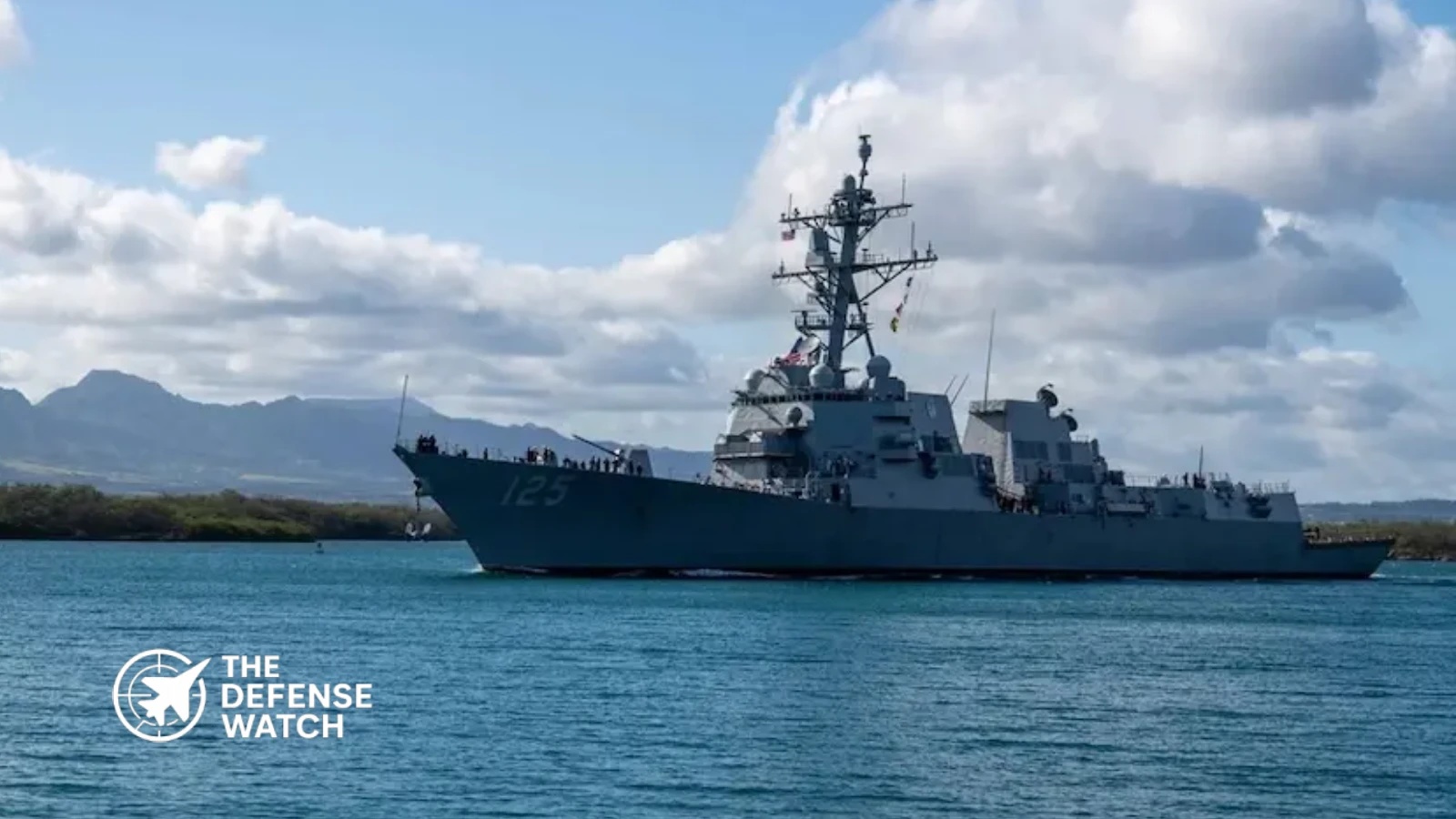
Raytheon’s AN/SPY-6 radar operated aboard USS Jack H. Lucas during the U.S. Navy’s multinational Pacific Dragon 2026 ballistic missile defense exercise.
2. First Flight III Destroyer Participated
USS Jack H. Lucas is the Navy’s first Arleigh Burke-class Flight III destroyer and combines SPY-6 with the Aegis Baseline 10 combat system.
3. Seven Allied and Partner Navies Took Part
Pacific Dragon 2026 included forces from Australia, Chile, Italy, Japan, South Korea and Spain alongside U.S. forces, with Chile and Spain participating for the first time.
4. Exercise Focused on Information Sharing
The exercise tested multinational ballistic missile defense, tactical data links and integrated air and missile defense procedures in the Indo-Pacific.
5. SPY-6 Production Is Expanding
Raytheon says SPY-6 is expected to reach more than 50 U.S. Navy ships over the next decade, while the company is expanding production capacity.
SPY-6 Radar Takes Part In Pacific Dragon 2026
Raytheon’s SPY-6 radar supported multinational missile defense operations aboard USS Jack H. Lucas during Pacific Dragon 2026, demonstrating the role of the U.S. Navy’s newest destroyer radar in integrated air and missile defense operations with allied and partner forces.
The U.S. Navy said Pacific Dragon 2026 was conducted by U.S. 3rd Fleet with support from the Missile Defense Agency from August 6 through August 13 around the Hawaiian Islands. The biennial exercise focused on ballistic missile defense, tactical data link information sharing and coordination between participating forces.
USS Jack H. Lucas, designated DDG 125, served as the U.S. Navy’s principal Flight III destroyer participant. The ship is equipped with the AN/SPY-6 radar and Aegis Baseline 10, giving the Navy a platform specifically designed to expand shipboard air and missile defense capacity.
Why USS Jack H. Lucas Matters
The participation of USS Jack H. Lucas is significant because DDG 125 represents the transition from earlier Arleigh Burke-class configurations to the Flight III standard.
The Flight III upgrade is centered on the AN/SPY-6(V)1 Air and Missile Defense Radar. The Navy also increased the ship’s electrical generation and cooling capacity to support the radar and associated combat-system requirements.
The Navy describes SPY-6 as providing significantly greater detection and tracking capacity than the radar systems associated with earlier destroyer configurations. That capability is particularly important for a destroyer expected to perform multiple missions while operating inside a network of ships, aircraft and other sensors.
The radar is not an interceptor by itself. Its importance comes from its ability to provide sensing and tracking information to the ship’s combat system, which can then support defensive engagements and the broader integrated air and missile defense architecture.
Pacific Dragon Tests The Network, Not Just The Ship
Pacific Dragon is designed around a problem that cannot be solved by a single radar or warship.
Ballistic missile defense depends on detecting a threat, developing an accurate track, sharing that information and coordinating an appropriate response. A multinational exercise therefore tests not only individual sensor performance but also the procedures and data links that connect different national systems.
The U.S. Navy said PD26 improved interoperability through shared tactical data links and coordinated ballistic missile defense operations. The exercise also included a multi-mission event combining ballistic missile defense and integrated air and missile defense scenarios.
Participating maritime forces included the Australian destroyer HMAS Sydney, Chilean frigate Almirante Cochrane, Italian frigate Giovanni delle Bande Nere, Japanese destroyer JS Kongo, South Korean destroyer ROKS Jeongjo the Great and Spanish frigate SPS Álvaro de Bazán.
U.S. aircraft participating in the exercise included P-8A Poseidon aircraft, F/A-18 Hornets, MQ-9 Reapers and BQM-177A subsonic aerial targets.
Chile and Spain were new participants in this year’s exercise, broadening the multinational component of the event.
What SPY-6 Brings To The Fight
The AN/SPY-6(V)1 is an active electronically scanned array radar developed for the U.S. Navy’s air and missile defense mission.
Unlike a mechanically steered radar, an electronically scanned array can direct its energy electronically, allowing the radar to manage multiple detection and tracking tasks rapidly.
For the Navy, the value of the system is therefore broader than a simple increase in detection range. The radar is intended to support a higher volume of air and missile defense activity while operating as part of the Aegis combat system.
The Flight III configuration also required changes beyond the radar itself. Navy documentation identifies upgrades to electrical power generation, cooling and associated ship systems as essential parts of the configuration.
That integration requirement illustrates an important point about modern naval air defense: improving the sensor often requires changes to the platform that carries it.
SPY-6 Is Becoming A Fleet-Wide Program
The Pacific Dragon demonstration comes as Raytheon continues expanding production of the SPY-6 family.
In July 2026, Raytheon announced a $1.8 billion contract extension covering SPY-6 hardware production and sustainment for the U.S. Navy. Options could increase the cumulative value of the arrangement to $3.3 billion.
Raytheon said SPY-6 was then aboard two commissioned U.S. Navy ships and installed on 11 additional ships undergoing testing. The company expects the radar family to be deployed on more than 50 Navy ships over the next decade.
The company also said it has invested more than $800 million to modernize radar manufacturing facilities and expand production capacity, with the goal of doubling SPY-6 output by 2028.
This production effort matters because the Navy’s air and missile defense architecture depends on deploying capable sensors across a sufficient number of combatants. A radar that exists only on a small number of ships provides less network depth than one deployed across a large portion of the fleet.
SPY-6 Also Supports Destroyer Modernization
The SPY-6 family is not limited to newly built Flight III destroyers.
Raytheon is also supporting installation of the SPY-6(V)4 on modernized Flight IIA Arleigh Burke-class destroyers. In August 2026, the company announced installation of the first SPY-6(V)4 array at the Navy’s Surface Combat Systems Center at Wallops Island, Virginia.
The Wallops facility will be used for testing the radar and its interfaces before installation aboard USS Pinckney, DDG 91, the first ship scheduled to receive the SPY-6(V)4 backfit.
This creates two parallel paths for expanding SPY-6 across the surface fleet. Flight III ships receive the radar as part of their new-build configuration, while selected Flight IIA ships can receive the SPY-6(V)4 through modernization.
The Strategic Importance For The Indo-Pacific
For U.S. forces operating in the Indo-Pacific, the ability to coordinate missile defense across multiple ships and national forces has particular operational importance.
The region is geographically large, and naval formations can operate across substantial distances. A distributed defense architecture can allow information generated by one sensor or platform to contribute to a wider operational picture.
Pacific Dragon is therefore useful as a test of the command, control and information-sharing layer that connects individual capabilities.
The exercise also gives the Missile Defense Agency an opportunity to work with partner nations in a realistic operational environment. The MDA has used Pacific Dragon as a venue for advancing regional ballistic missile defense and maritime theater missile defense capabilities with partner countries.
The central lesson is that integrated missile defense increasingly depends on interoperability. A sophisticated radar can provide high-quality tracks, but those tracks have greater operational value when allied forces can receive, interpret and act on relevant information through established networks and procedures.
A Broader Shift Toward Integrated Air And Missile Defense
The U.S. Navy’s investment in Flight III destroyers and SPY-6 reflects a wider shift toward integrating sensors, combat systems, weapons and data networks.
DDG 125 was designed to conduct anti-air warfare and ballistic missile defense while retaining the broader multi-mission functions expected from an Arleigh Burke-class destroyer. The Navy identifies anti-submarine warfare and anti-surface warfare among the class’s other missions.
That multi-mission requirement places significant demands on the ship’s combat system. The destroyer must manage air and missile defense tasks without becoming a single-purpose platform.
For the U.S. Navy, the significance of SPY-6 therefore extends beyond its radar specifications. Its value is tied to how effectively the radar operates with Aegis, shipboard weapons, tactical data links and other sensors in a distributed force.
What Pacific Dragon 2026 Demonstrated
Pacific Dragon 2026 did not represent the deployment of a new missile interceptor or the first operational use of SPY-6. Instead, its importance lies in demonstrating how the radar and Aegis-equipped Flight III destroyer fit into a multinational missile defense network.
The exercise brought together U.S. and allied maritime forces to practice ballistic missile defense, integrated air and missile defense and information sharing. The presence of USS Jack H. Lucas provided an opportunity to employ the Navy’s newest destroyer configuration within that multinational environment.
As the Navy expands its SPY-6-equipped fleet, exercises such as Pacific Dragon will remain important for validating the procedures that connect individual platforms into a wider defensive network.
The combination of more capable sensors, modernized combat systems and greater interoperability is becoming central to how the United States and its allies approach missile defense in the Indo-Pacific.
Key SPY-6 And Pacific Dragon 2026 Facts
Item Details Radar AN/SPY-6 family U.S. ship USS Jack H. Lucas, DDG 125 Ship configuration Arleigh Burke-class Flight III Combat system Aegis Baseline 10 Exercise Pacific Dragon 2026 Exercise period August 6-13, 2026 Primary location Waters around the Hawaiian Islands Exercise focus Ballistic missile defense, IAMD and tactical data links U.S. lead U.S. 3rd Fleet MDA role Support for multinational BMD activities New participants Chile and Spain Future SPY-6 fleet More than 50 U.S. Navy ships expected over the next decade Bottom Line
Pacific Dragon 2026 provided another demonstration of the U.S. Navy’s effort to build a more integrated missile defense architecture with allies and partners.
USS Jack H. Lucas, equipped with SPY-6 and Aegis Baseline 10, represents the technical foundation of the Navy’s Flight III destroyer program. Its participation also shows why sensor capability and multinational interoperability increasingly have to be developed together.
With SPY-6 production expanding and the radar moving onto both new Flight III destroyers and modernized Flight IIA ships, the system is positioned to become an increasingly important component of the U.S. Navy’s surface fleet air and missile defense architecture.