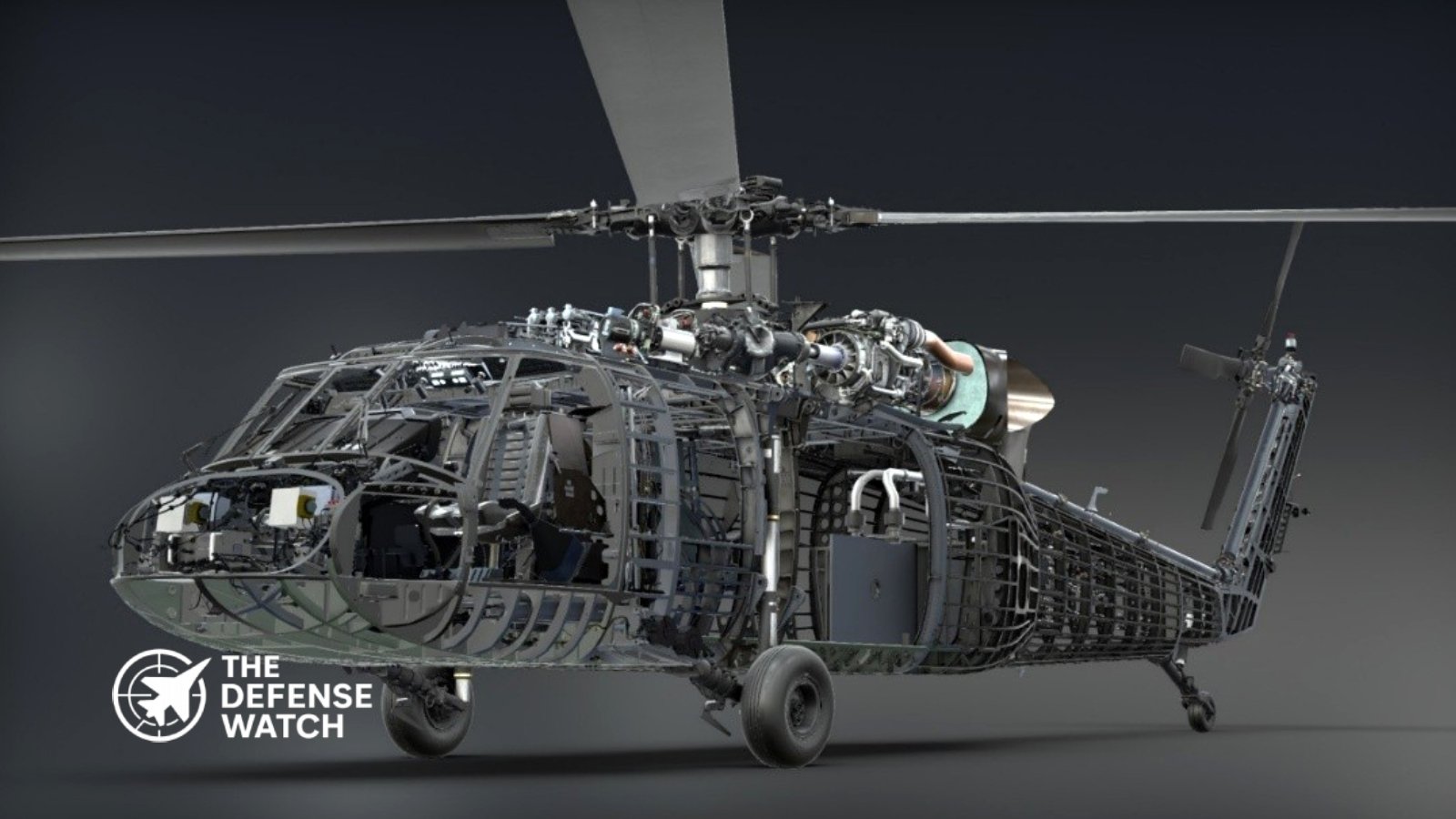
Lockheed Martin to Provide Philippine Air Force With Black Hawk Training Systems
Lockheed Martin has signed a contract with the Philippine Department of National Defense to supply the Philippine Air Force with an S-70i Black Hawk full flight simulator, a virtual maintenance trainer and supporting training materials. Announced on October 8, 2026, the agreement also includes spare parts and sustainment support through 2032.
The order is intended to establish more of the Philippines’ Black Hawk training capability within the country. Until that capability is established, Philippine Air Force pilots will continue to receive training at the U.S.-based Sikorsky Training Academy, according to Lockheed Martin.
The company has not disclosed the contract’s financial value, delivery schedule or the number of training devices covered by the agreement.
Two training systems for pilots and maintainers
The contract covers two distinct training capabilities designed to address different stages of helicopter operations.
The S-70i Black Hawk Full Flight Simulator is intended to reproduce the flying experience and aircraft systems of the helicopter in a simulated environment. Such simulators allow pilots to practice normal procedures, instrument flying and emergency responses without using an operational aircraft for every training event.
Lockheed Martin’s wider Black Hawk simulator portfolio includes motion and visual systems designed to reproduce flight conditions. However, the company announcement does not specify the exact motion configuration, visual system or certification level of the simulator ordered for the Philippines. Those details should not be assumed from specifications published for other training devices.
The second component, the Virtual Maintenance Trainer, focuses on ground crews and aircraft technicians. It uses digital models of aircraft subsystems, including hydraulics and avionics, to help personnel learn system layouts and maintenance procedures in a virtual environment.
This training can help technicians become familiar with components and troubleshooting tasks before working on operational aircraft. It does not replace physical maintenance practice, inspections or qualification requirements, but it can complement hands-on instruction and reduce the need to use an aircraft for some classroom exercises.
The package also includes associated courseware, spare parts and sustainment support through 2032, providing a framework for continued training and maintenance of the training equipment.
Why local training matters for the Philippines
The Philippines operates S-70i Black Hawk helicopters for missions that include troop transport, search and rescue, humanitarian assistance and firefighting. Its geography, which includes thousands of islands, makes rotary-wing aviation important for moving personnel and supplies between locations that may be difficult to reach by road or fixed-wing aircraft.
Establishing training facilities locally could reduce the need to send personnel abroad for some parts of their training. It may also make it easier for the air force to schedule refresher instruction and train additional personnel as its Black Hawk fleet grows.
The benefits will depend on when the devices enter service, how many crews and technicians can use them, and whether the air force has enough instructors and technical staff to operate the training program. The contract announcement does not provide those details.
Local simulation also has a practical fleet-management benefit. Helicopter availability depends not only on the number of aircraft acquired, but also on the ability to train pilots, maintainers and other crew members to operate and support them safely.
For an air force operating across a dispersed archipelago, building those skills at home could improve training access. The announcement, however, does not establish a specific increase in aircraft availability or operational readiness.
A larger Black Hawk fleet creates a training requirement
The new training contract follows the Philippines’ ongoing acquisition of additional S-70i helicopters. In February 2022, the Philippine Department of National Defense signed a contract for 32 additional aircraft, with production handled by PZL Mielec, a Lockheed Martin company.
Lockheed Martin reported in January 2025 that the Philippines had received 10 aircraft under that order during 2024. The company said the acquisition was intended to expand the air force’s existing fleet and support its utility helicopter missions.
As aircraft numbers increase, pilot conversion, recurrent training and maintenance instruction become important parts of sustaining the fleet. Training systems designed around the S-70i configuration can help personnel learn the aircraft’s specific systems and procedures, rather than relying exclusively on generic helicopter instruction.
The new order is also notable because Lockheed Martin describes it as the first order for its S-70i Black Hawk training devices. The company already offers training products for other aircraft, including the CH-53K, F-35, F-16 and C-130J.
For the Philippine Air Force, the main question is how quickly the new equipment can be integrated into its training system. The contract establishes a path toward greater domestic training capacity, but the announcement does not provide a commissioning date or quantify how many overseas training trips could eventually be avoided.
The arrangement also retains a U.S.-based training component while the local capability is established. That approach allows the existing training relationship to continue during the transition, although the company has not detailed how responsibilities will be divided between the two locations once the new systems become operational.
Get real time update about this post category directly on your device, subscribe now.