North Korea Fires Multiple Ballistic Missiles Toward East Sea
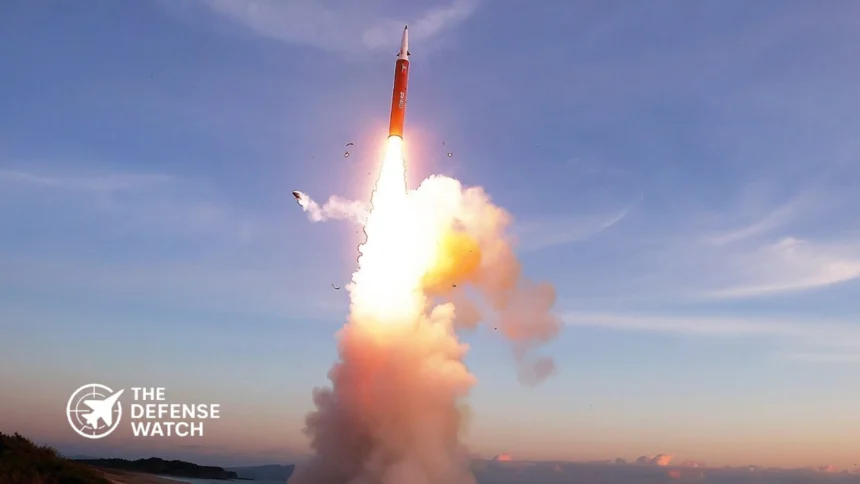
North Korea fired multiple ballistic missiles toward the East Sea on October 12, 2026, according to South Korea’s Joint Chiefs of Staff (JCS), prompting renewed monitoring by regional militaries as Seoul and Pyongyang continue to develop advanced missile capabilities.
The launches originated from the Pyongyang area at about 9:20 a.m. local time, South Korea’s military said. At least one missile traveled more than 900 kilometers, according to the JCS statement reported by Yonhap News Agency.
Japan’s authorities also detected the launches. The Japan Coast Guard reported that the projectiles appeared to have fallen, while Japanese authorities said there was no confirmed indication that they had entered Japanese territory or its exclusive economic zone.
The launch initially drew attention as an unidentified projectile, but subsequent reporting from South Korea identified multiple ballistic missiles. Public information available at the time did not establish the full technical characteristics of every missile involved.
South Korea and Japan Track the Launches
South Korea’s military said it had increased surveillance to prepare for possible additional launches and was sharing information with the United States and Japan. The response reflects the importance of coordinated tracking when North Korea launches missiles toward the waters separating the Korean Peninsula and Japan.
Japan’s prime minister issued instructions on October 12 to collect and analyze information, provide timely public updates, protect aircraft and vessels, and maintain readiness for contingencies. The statement confirmed the government’s response but did not provide a complete technical assessment of the missiles.
The available reporting did not establish that the launches caused damage to ships, aircraft or infrastructure. Nor did it indicate that the missiles struck Japanese territory.
Launches Follow Competing Missile Tests
The October 12 launches followed South Korea’s first test launch of a domestically developed hypersonic glide vehicle the previous week, overseen by President Lee Jae Myung. The South Korean test came amid heightened tensions following a landmine explosion near the Demilitarized Zone that injured three South Korean soldiers in September.
South Korea’s military described the North Korean launches as a show of force and a demonstration of missile capabilities. That assessment reflects Seoul’s interpretation of the timing, rather than independently established evidence of Pyongyang’s decision-making.
North Korea’s previous ballistic missile launch occurred on October 3. State media subsequently described that test as involving an intermediate-range strategic missile associated with what it called a hypersonic weapon system. The October 12 launches therefore continued a recent series of tests involving different missile types.
What the Launches Mean for Regional Missile Defense
The launches matter to South Korea, Japan and the United States because tracking ballistic missiles requires rapid detection, trajectory assessment and information sharing across national boundaries.
The reported flight of more than 900 kilometers indicates that at least one missile covered a substantial distance over the region. However, that figure alone does not establish the missile’s maximum range, accuracy, payload or operational effectiveness. Those characteristics cannot be reliably determined from the publicly reported launch data.
The report that the missiles appeared to be of different types is also relevant. If confirmed through further technical analysis, differences in flight profiles could affect how regional forces detect, track and assess incoming threats. The available reporting does not provide enough information to determine the specific countermeasures that would be required for each projectile.
The U.S. Indo-Pacific Command said it was aware of the launches and was consulting with allies and partners. It assessed that the event posed no immediate threat to U.S. personnel, territory or allies. That statement addressed the immediate incident and did not amount to a broader assessment of North Korea’s missile capabilities.
North Korea has been subject to United Nations sanctions since 2006 over its nuclear weapons and ballistic missile programs. South Korea’s National Security Office condemned the October 12 launches as violations of UN Security Council resolutions and called for them to stop.
A Continuing Test of Regional Readiness
The latest launches add to a period of heightened military activity on the Korean Peninsula, with both North and South Korea publicly demonstrating missile-related capabilities. South Korea has strengthened surveillance following the launches and is coordinating with Washington and Tokyo.
The available evidence confirms the launches and the reported flight distance of at least one missile. It does not yet establish the full performance characteristics of all the projectiles or whether the tests introduced a new operational capability.
For regional defense planners, the immediate priorities remain accurate missile tracking, timely information sharing and readiness to respond to further launches.