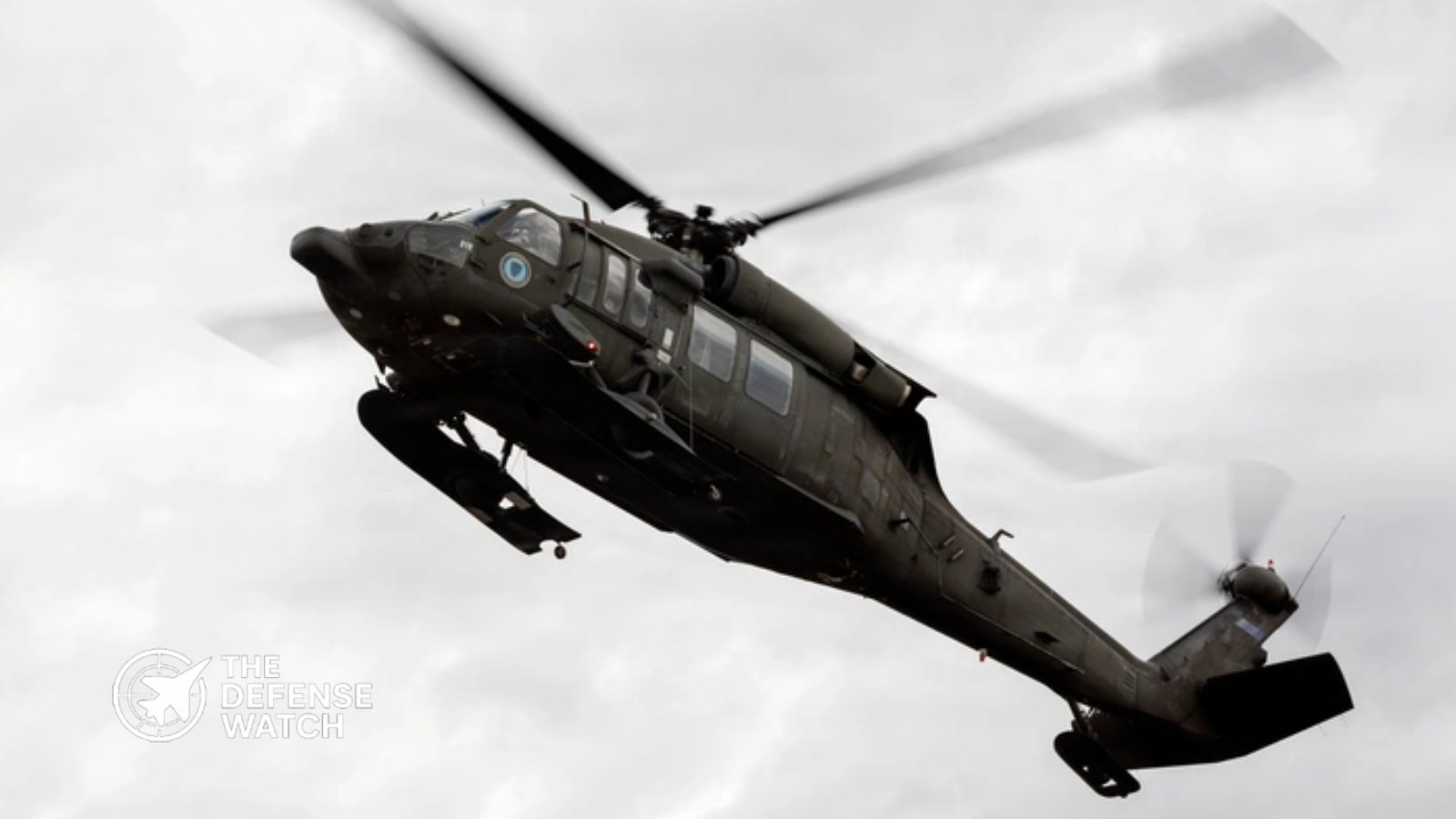
The U.S. Army has identified a series of failures in communications, aircraft maintenance, pilot training and aviation safety oversight linked to the January 2025 midair collision between an Army UH-60L Black Hawk helicopter and an American Airlines regional jet near Ronald Reagan Washington National Airport. The crash killed all 67 people aboard the two aircraft.
The findings were released on October 8, 2026, following an Army administrative investigation into the disaster. According to Reuters, the investigation identified two interrupted radio transmissions that prevented the helicopter crew from receiving critical information from air traffic control, alongside wider weaknesses in the Army’s aviation safety processes.
The Army’s findings add to the National Transportation Safety Board’s separate investigation, which concluded in January 2026 that deficiencies in airspace design, air traffic control and safety risk management contributed to the collision. The two investigations examine overlapping events but serve different purposes: the NTSB determined the accident’s probable cause, while the Army reviewed its own policies, procedures and responsibilities.
Radio failures and aircraft maintenance under scrutiny
The collision occurred at approximately 8:48 p.m. Eastern time on January 29, 2025, when the Army helicopter, operating under the callsign PAT25, collided with American Airlines Flight 5342 near Reagan National Airport. The passenger aircraft was a CRJ700 regional jet operated by PSA Airlines.
The NTSB confirmed that all 64 people aboard the passenger aircraft and all three helicopter crew members died. Both aircraft were destroyed.
According to the Army investigation as described by Reuters, two broken radio transmissions were a key factor because the helicopter crew did not receive critical air traffic control information. Radio communication failures can be particularly consequential in congested airspace, where military helicopters and commercial aircraft may operate on different frequencies and depend on timely traffic advisories.
The Army report also identified a maintenance problem affecting the helicopter’s Automatic Dependent Surveillance-Broadcast Out, or ADS-B Out, capability. This system transmits an aircraft’s position and other flight information to compatible ground systems and aircraft.
The helicopter was not transmitting the required location data because of improper maintenance, Reuters reported. Following the crash, the Army ordered inspections of its aircraft transponders, and all 3,600 Army helicopters had been inspected by July 2025.
ADS-B Out is not, by itself, a complete collision avoidance system. It supplies surveillance information that can improve air traffic monitoring and support compatible traffic awareness equipment. Its absence can reduce the information available to controllers and other aircraft, although restoring the transmission alone would not address every hazard identified in the investigation.
Training and altitude awareness were also deficient
The Army investigation identified concerns about pilot training hours, altitude awareness and the equipment available to helicopter crews operating near major civilian airports.
Reuters reported that some helicopter crews in the Army battalion had not consistently met semiannual minimum flying-hour requirements. The investigation also identified unresolved problems involving inaccurate altitude information and recommended measures to address them.
Altitude awareness was a central issue in the NTSB’s findings. Investigators determined that the Army had failed to ensure that pilots understood how error tolerances in barometric altimeters could affect their altitude readings. The NTSB concluded that this contributed to the helicopter flying above the maximum published altitude for its route.
The distinction matters because a pilot’s indicated altitude may not always match the aircraft’s actual altitude precisely. Crews operating in restricted or congested airspace must understand instrument limitations and follow procedures designed to maintain separation from other traffic.
The Army report also recommended improvements to night vision equipment, according to Reuters. Night operations around a major airport can place additional demands on crews attempting to identify and track other aircraft visually, particularly when traffic is moving across intersecting flight paths.
Collision avoidance equipment remains a wider concern
The investigation also raised questions about the availability of automated collision warning systems across Army helicopter fleets.
Reuters reported that many helicopters in the battalion, including the aircraft involved in the crash, were not equipped with Traffic Alert and Collision Avoidance Systems, commonly known as TCAS.
TCAS-equipped aircraft use information from nearby aircraft transponders to warn flight crews of potential conflicts. More advanced systems can provide resolution advisories, instructing crews to take action to increase separation. However, system capability and alert availability depend on the equipment installed, the aircraft’s operating environment and the circumstances of a developing conflict.
The NTSB’s findings show why the distinction between traffic awareness and effective collision avoidance is important. The board found that the passenger jet’s existing system operated as designed, but altitude-related limitations prevented it from issuing a resolution advisory that could have supplied maneuvering instructions. Investigators also concluded that neither aircraft had collision avoidance technology capable of providing effective alerts in the low-altitude environment involved in the accident.
The NTSB further found that an airborne collision avoidance system using ADS-B In could have provided the passenger jet’s crew with enhanced information about the helicopter. According to the board, that system could have delivered the first alert about the helicopter 59 seconds before the collision.
These findings do not establish that any single equipment upgrade would have guaranteed a different outcome. They show that collision avoidance depends on several layers working together, including accurate position information, cockpit alerts, reliable communications, safe route design and timely decisions by pilots and controllers.
Army and FAA coordination failed to identify hazards
The Army investigation found weaknesses in coordination between military aviation authorities and the Federal Aviation Administration before the crash.
According to Reuters, a joint working group had not discussed airspace violations, near-miss reports or pilot deviations. The Army also faulted air traffic control for using nonstandard terminology and providing incomplete traffic advisories.
The NTSB’s independent findings placed the collision within a broader pattern of weaknesses in Washington’s airspace management. The board concluded that the FAA had established helicopter routes close to the airport’s commercial aircraft approach path without adequate separation or effective risk controls.
It also found that the FAA had not acted sufficiently on previous warnings and available safety data showing recurring close encounters between helicopters and airplanes. The Army’s safety management processes, meanwhile, had failed to identify and address risks associated with helicopter operations in complex civilian airspace.
These findings point to an organizational problem that extends beyond individual cockpit decisions. Aviation safety depends on authorities identifying recurring hazards, sharing information between organizations and making changes before an incident becomes a catastrophe.
Military and civilian aircraft can operate safely in shared airspace, but the arrangements require clear procedures, reliable communications and an effective process for reviewing incidents and correcting known risks.
Army has begun safety reforms
The Army said it introduced immediate safety controls after the collision and has pursued longer-term changes involving aircraft airworthiness, altitude awareness, ADS-B reliability, cockpit traffic-awareness training, command oversight, safety reporting and coordination with civilian aviation authorities.
Its October 8 statement said some recommendations had been completed while others remained in progress. The Army also said it was continuing to verify implementation of the investigation’s recommendations.
Reuters reported that the service had strengthened training and surveillance checks, completed new helicopter safety inspections and conducted altitude-awareness testing. It was also pursuing a data-sharing agreement with the FAA to help identify potential midair collision risks. The investigation recommended additional training for military pilots operating near commercial airports around Washington and Baltimore, as well as reviews of Army helicopter operations near major cities in the United States, South Korea, Japan and Germany.
The NTSB has acknowledged progress by the Army while emphasizing that more work remains. Its recommendations cover helicopter route design, air traffic control procedures, safety management, data sharing and collision avoidance technology.
The Army’s investigation does not replace the NTSB’s independent findings. Nor does the announcement establish that every recommended reform has been completed or that all identified risks have been eliminated.
The central challenge now is implementation: ensuring that maintenance checks reliably detect equipment faults, flight crews understand altitude and traffic-awareness limitations, and military and civilian aviation authorities act on warning signs before another serious collision occurs.
Enjoying our coverage?
Make The Defense Watch a preferred source on Google to see more of our geopolitical and defense insights when relevant to you.