





















@2026 – All Right Reserved. TheDefenseWatch.com
- Home
- Defense Systems
- Military Satellites & Space Systems
- Northrop Grumman GHOST-R GEO Recon Satellite
Northrop Grumman GHOST-R GEO Recon Satellite
Defense Systems Full Specifications
1. General Information
| System Name | GHOST-R (Geosynchronous High-Resolution Optical Space-Based Tactical Reconnaissance) |
| Manufacturer | Northrop Grumman (payload: TRL-11) |
| Country of Origin | United States |
| Type / Role | Military GEO Reconnaissance / Space Domain Awareness Satellite |
| In Service | Prototype (planned operational transition 2029) |
| Year Introduced | Prototype delivery targeted ~2028 |
| Unit Cost | Not publicly disclosed (lower-cost commercial-derived design) |
2. Performance & Capabilities
| Orbit Type | Geosynchronous Earth Orbit (GEO) |
| Operational Altitude | ~36,000 km |
| Operational Inclination | Near-zero (GEO) |
| Imaging / Sensor Type | High-resolution electro-optical |
| Resolution / Accuracy | Fully resolved imagery of ~700 kg objects from ≥10 km |
| Revisit Time / Coverage | Weekly target observation capability |
| Mission Duration | ≥3 years design life |
3. Payload & Sensor Specifications
| Primary Sensor | Electro-optical imaging payload (TRL-11) |
| Secondary Sensor | Not publicly detailed |
| Data Transmission | Encrypted military SATCOM |
| Imaging Capability | Space-to-space high-resolution EO |
| Payload Weight | Compatible with ESPASat-L bus |
| Onboard Power | Solar arrays (typical commercial GEO bus) |
4. Guidance, Control & Communication
| Attitude Control System | Standard reaction control (bus-dependent) |
| Orbit Control | Propulsion for RPO and station-keeping |
| Communication Link | Secure military SATCOM |
| Data Encryption | DoD cybersecurity requirements |
| Telemetry & Command System | Transition from commercial to government control |
5. Launch & Deployment
| Launch Vehicle | Compatible with National Security Space Launch |
| Launch Site | U.S. sites (to be determined) |
| Deployment Orbit | Direct to GEO |
| Launch Mass | ESPASat-L class (compact, suitcase-sized bus) |
| Deployment Method | Rocket-launched to GEO |
6. Operational & Command Use
| Primary Operators | U.S. Space Force / Space Systems Command |
| Global Coverage | GEO-focused |
| Combat Proven | Prototype phase |
| Typical Missions | Object characterization, positive ID, battle-damage assessment |
| Notable Feature | Commercial-derived high-resolution GEO imaging |
7. Future & Experimental Use
| Planned Upgrades | Path to RG-XX constellation scaling |
| Replacement / Next Gen | Path to RG-XX constellation scaling |
| Experimental Variants | Potential multi-satellite constellation elements |
| International Collaboration | U.S.-only program |
PROS
- Leverages commercial buses and optical payloads for faster development and lower lifecycle costs
- Provides high-resolution space-to-space electro-optical imaging of GEO objects
- Supports characterization, positive identification, and battle-damage assessment
- Builds on proven GSSAP heritage and modular ESPASat-L platform
- Designed for rapid transition to operational RG-XX constellation use
CONS
- Prototype status; full operational capability not yet demonstrated
- Limited public data on exact resolution, propulsion, or endurance performance
- Relatively short design life (approximately three years) compared with some traditional systems
- Dependent on commercial payload and bus heritage meeting all military cybersecurity and reliability standards
- Operates in a contested GEO environment where proximity operations carry inherent risk
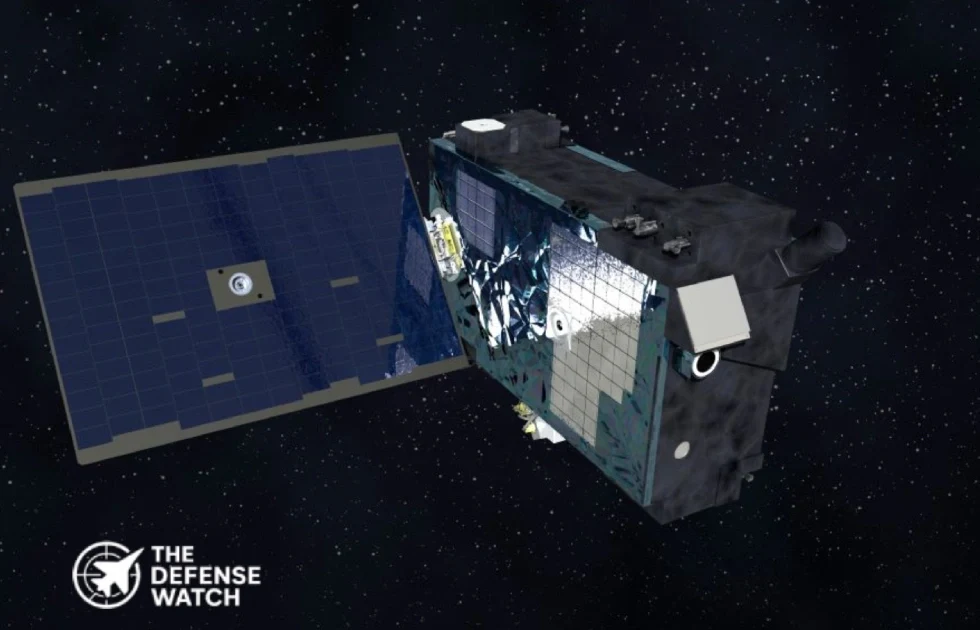
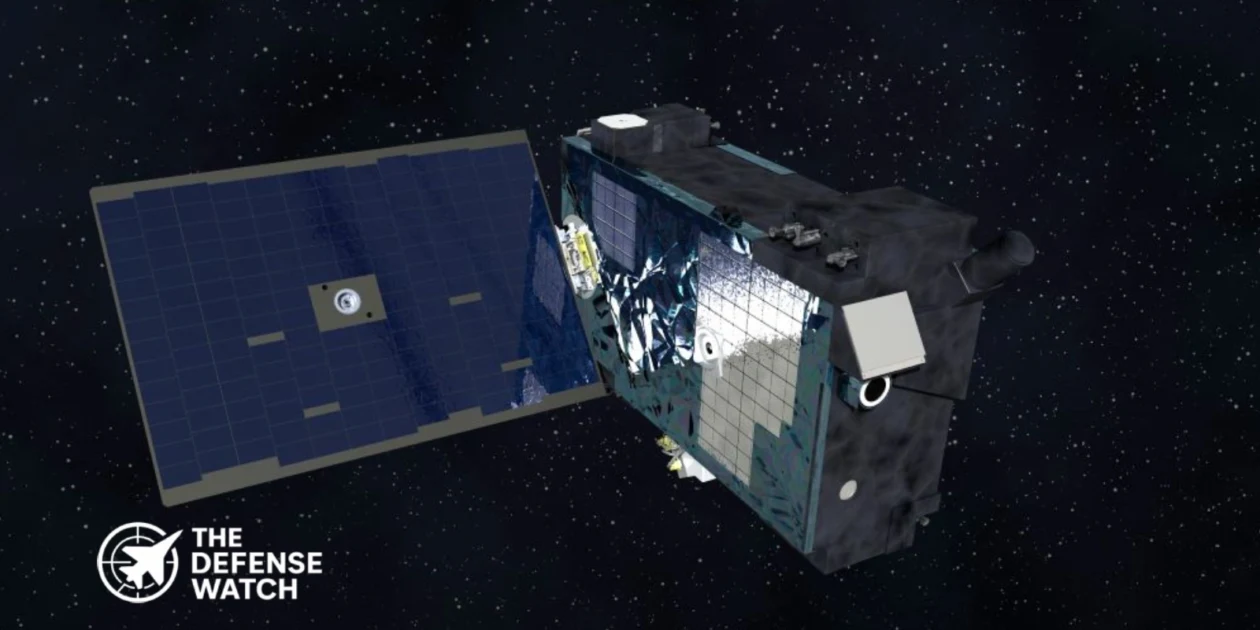
The Northrop Grumman GHOST-R is a commercially derived prototype reconnaissance satellite developed for the U.S. Defense Innovation Unit (DIU) and Space Systems Command under the Geosynchronous High-Resolution Optical Space-Based Tactical Reconnaissance program. It is designed to provide high-resolution electro-optical imagery of resident space objects in geosynchronous Earth orbit (GEO), enabling characterization, positive identification, and battle-damage assessment of both friendly and adversary satellites.
Manufacturer
Northrop Grumman, a major U.S. aerospace and defense contractor, is building the satellite on its ESPASat-L high-rate production bus platform. The optical payload is supplied by TRL-11 of Irvine, California. The effort builds on Northrop Grumman’s prior work on the Geosynchronous Space Situational Awareness Program (GSSAP) and supports the Space Force’s broader RG-XX proliferated reconnaissance constellation. Assembly, integration, and testing occur at Northrop facilities in Dulles, Virginia, and Gilbert, Arizona, with delivery targeted on an accelerated 24-month timeline.
Speed and Range
As a GEO-based platform, GHOST-R operates in geosynchronous orbit (approximately 36,000 km altitude). It is required to perform rendezvous and proximity operations, including the ability to image medium-sized (roughly 700 kg) satellites from no closer than 10 km while delivering fully resolved electro-optical imagery. Design life is at least three years in the GEO environment. The system is intended to support weekly observation passes of target objects once in government-operated status.
Cost/Price
Exact unit costs remain undisclosed as the program is in the prototype phase. The GHOST-R effort prioritizes lower-cost, commercially derived buses and payloads relative to traditional exquisite GEO surveillance systems, with the goal of enabling a proliferated architecture that can scale more rapidly and affordably than prior generations.
GHOST-R satellites are scheduled for launch around 2028, with transition to fully government-owned and -operated missions targeted for 2029 if prototypes succeed. The program forms part of DIU’s Kill Web portfolio, emphasizing commercial technology integration for enhanced space domain awareness.
Disclaimer Note
The information provided on TheDefenseWatch.com is for general informational purposes only. While we strive to ensure the accuracy, completeness, and timeliness of our content regarding defense and aerospace products, technologies, and specifications, we cannot guarantee that all information is 100% accurate or up-to-date due to the evolving nature of military technology and classified data.TheDefenseWatch.com does not warrant the reliability, suitability, or availability of the information for any specific purpose. Users are advised to consult official sources, such as manufacturers, government publications, or defense agencies, for precise and verified data before making decisions based on our content.We are not affiliated with any defense manufacturers, governments, or military organizations mentioned. Opinions, reviews, and ratings reflect expert analysis but are subjective and should not be considered endorsements. TheDefenseWatch.com is not responsible for any errors, omissions, or consequences arising from the use of this website’s content.External links are provided for convenience and do not imply endorsement. TheDefenseWatch.com reserves the right to update or modify content without prior notice. By using this website, you agree to our Privacy & Cookies Policy.
New Arrivals
Popular Comparisons
-
 Tejas Fighter Jet vs F-16 Fighting Falcon: Capability Compared
View Comparison →
Tejas Fighter Jet vs F-16 Fighting Falcon: Capability Compared
View Comparison → -
Rafale Fighter Jet vs F-16 Fighting Falcon : Which Fighter Has the Edge?
View Comparison →
-
Su-57 Fighter Jet vs J-20 Fighter Jet: Stealth and Air Combat Compared
View Comparison →
-
Mirage 2000 vs Tejas Mk1A: Legacy Combat Power vs Indigenous Modernization
View Comparison →
-
Rafale Fighter Jet vs F-22 Raptor: Which Air Dominance Fighter Has the Edge?
View Comparison →
-
Tejas Fighter Jet vs. Rafale Fighter Jet: India’s Indigenous Fighter Meets France’s Proven Multirole Combat Aircraft
View Comparison →
-
F-22 Raptor vs. F-35 Joint Strike Fighter: Which Fifth Generation Fighter Has the Edge?
View Comparison →
-
F-35A vs. F-22 Raptor: Which U.S. Stealth Fighter Dominates Modern Air Combat?
View Comparison →
-
AGM-114 Hellfire vs. AGM-179 JAGM: Which U.S. Precision Missile Is Better?
View Comparison →
-
Patriot (PAC-3) vs. THAAD: Complete Missile Defense System Comparison, Capabilities, Range, and Strategic Roles
View Comparison →
- Raytheon Wins $34.4M V-22 Tactical Software Sustainment Contract

- Dayton T. Brown Wins $55.8M P-8A Mobile Mission Systems Contract
- Finland deepens European F-35 cooperation with first pilot flight in Europe
- Luxembourg Deploys Additional Detection Assets After Drone Sightings
- China’s J-XDS Prototype May Be Testing a New Radar
- L3Harris Pushes Modular, Distributed Architecture for Electronic Warfare
- Northrop Grumman to Deliver GHOST-R Prototype for U.S. Space Force
- Airborne Early Warning Aircraft Ranked: E-7 vs E-2D vs A-50
- Lockheed Martin Shifts Hypersonic Focus From Peak Speed to Sustained Flight and Production
- Spanish F-18s Conduct 15 Scrambles in Romania During First Month of NATO Mission