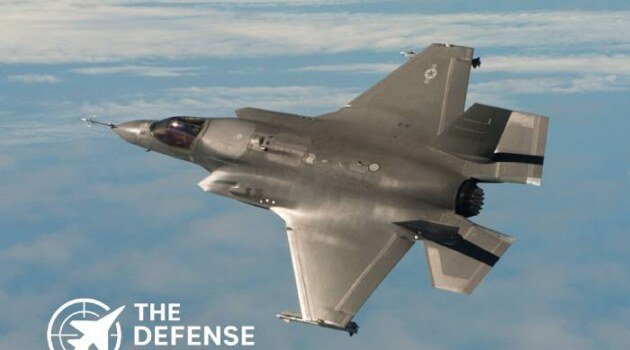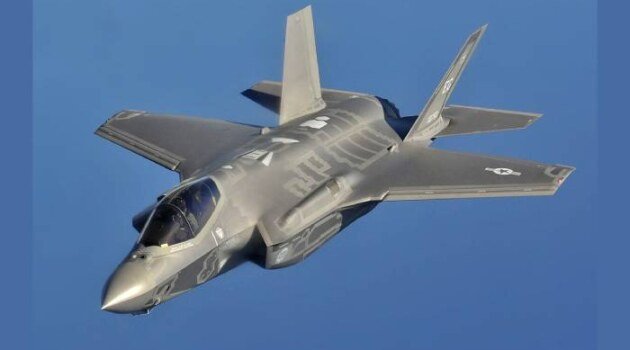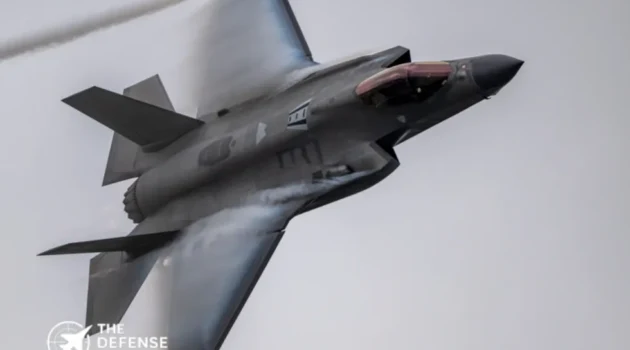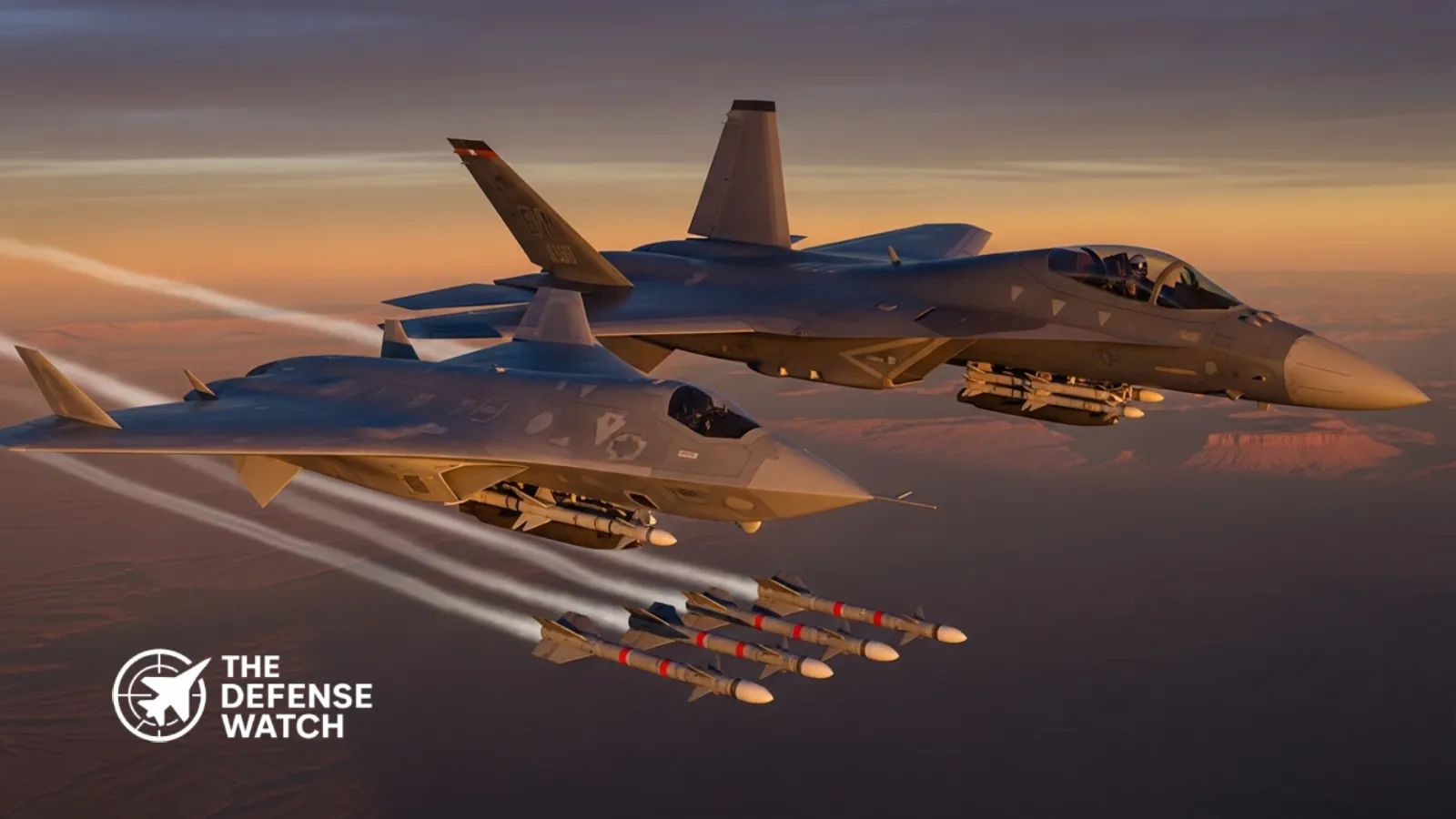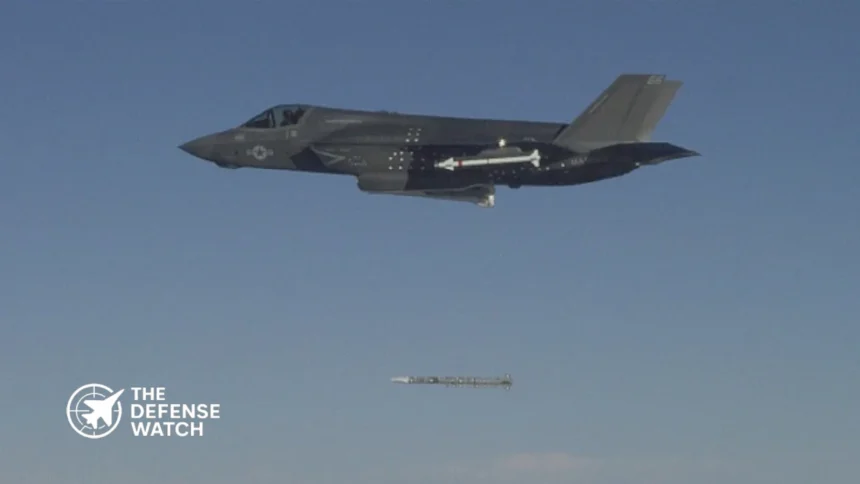
The F-35B Lightning II has completed its first flight test involving the release of an MBDA Meteor air-to-air missile from its internal weapons bay, advancing a multinational effort to integrate the European weapon onto British and Italian F-35 fighters.
The test took place on October 7, 2026, at Naval Air Station Patuxent River in Maryland. According to MBDA, the missile separated safely from the aircraft during a developmental jettison trial, providing engineers with data needed for further weapons integration testing.
The milestone was announced by MBDA on November 5. The F-35 Joint Program Office (JPO) also reported the achievement, describing it as the first Meteor release from an F-35B internal weapons bay.
The test moves the Meteor integration program beyond initial aircraft carriage and ground-based integration work. However, it does not mean the missile has been cleared for operational use on the F-35B. Additional separation testing and live missile firings remain necessary.
What the October Test Actually Demonstrated
The October 7 flight focused on the safe separation of Meteor from the F-35B rather than testing the missile’s ability to engage an aerial target.
During a jettison trial, engineers examine how a weapon leaves the aircraft under flight conditions. This is particularly important for an internally carried missile because the weapon must pass through the aircraft’s weapons-bay environment and clear the surrounding structure without creating an unsafe aerodynamic interaction.
MBDA reported that the test demonstrated safe separation in a complex aerodynamic environment. The flight also generated information for improving predictive digital models used to assess weapon-release characteristics.
These models help engineers evaluate how a missile behaves immediately after leaving the aircraft and identify potential separation problems before more demanding flight tests.
The missile used was a weapon test asset. The October event was not a live firing, and it did not demonstrate an operational interception or validate the missile’s complete flight performance after release.
The next stage will involve additional release profiles over the coming months. MBDA said the developmental testing campaign will eventually lead to live firings designed to assess both safe separation and missile fly-out performance under different release conditions.
A UK-US Test Team Behind the Milestone
The trial involved personnel from the Royal Navy, Royal Air Force and Lockheed Martin working through the F-35 Integrated Test Force (ITF).
A Royal Navy F-35 test pilot assigned to the UK’s Air and Space Warfare Centre flew the aircraft. The pilot was embedded with the F-35 ITF at Patuxent River, where British and American personnel are conducting integration work.
The wider program also involves the UK Ministry of Defence, U.S. Department of Defense, Italian Ministry of Defence, MBDA, BAE Systems, Lockheed Martin and Northrop Grumman.
The division of responsibilities reflects the multinational nature of both the F-35 program and the Meteor weapon development effort. The United States leads the wider F-35 Joint Program Office, while Britain is leading Meteor integration for the F-35B and Italy is sponsoring work on the F-35A.
This arrangement is intended to extend Meteor compatibility across two F-35 variants used by European partner nations.
Meteor is a beyond-visual-range air-to-air missile developed through cooperation between the United Kingdom, France, Germany, Italy, Spain and Sweden.
Its main technical distinction is its propulsion system. Unlike conventional air-to-air missiles that typically use an initial rocket boost followed by an unpowered flight phase, Meteor uses a solid-fuel, variable-flow ducted rocket propulsion system to sustain thrust during much of its flight.
This approach is intended to preserve missile energy during the engagement and provide a larger no-escape zone, the region in which a targeted aircraft has limited ability to evade an incoming missile.
Meteor also uses an active radar seeker for terminal guidance and a two-way data link that supports communication with the launching aircraft or other networked sources.
These characteristics are relevant to the F-35’s air-combat role. The fighter’s sensors and network connectivity can provide information for engagements beyond the pilot’s direct visual range, while Meteor adds another weapon option for attacking airborne threats.
However, the operational benefits will depend on successful integration of the missile, its software, aircraft mission systems and associated targeting functions.
Internal Carriage Preserves the F-35B’s Low-Observable Configuration
The internal weapons bay is an important part of the F-35’s low-observable design.
Carrying weapons internally reduces the radar signature associated with external stores and avoids the additional aerodynamic drag created by external missile pylons.
For the F-35B, integrating Meteor into the internal weapons bay is particularly relevant because the aircraft is designed for short takeoff and vertical landing operations from aircraft carriers and other suitable operating locations.
An internally carried long-range air-to-air missile would allow the aircraft to retain its low-observable configuration while expanding its available weapon options.
This is an important distinction from simply carrying Meteor externally during an early test flight. Initial aircraft carriage establishes that a weapon can be transported by the platform, but internal separation trials address the more demanding question of whether it can safely leave the aircraft’s enclosed weapons bay.
The October test therefore represents a specific engineering milestone, not completion of the entire integration process.
Integration Timeline Still Points to the Early 2030s
The latest test follows several earlier steps in the Meteor-F-35 integration campaign.
In February 2025, the Royal Air Force announced that a U.S. Marine Corps F-35B had conducted the first test flights carrying an inert Meteor missile. Those sorties took place at Naval Air Station Patuxent River and collected environmental data for the integration program.
In December 2025, MBDA and Lockheed Martin reported successful ground-based integration testing involving Meteor and the F-35A. The work was conducted with the F-35 Joint Program Office and formed part of Italy’s effort to integrate the weapon onto that aircraft variant.
The British government subsequently provided a clearer indication of the expected operational timeline.
In a written parliamentary answer published on April 20, 2026, Defence Minister Luke Pollard confirmed that Meteor integration with the F-35B was being driven by the U.S.-led Lightning II Joint Program Office. The government said integration testing was continuing and that the estimated timeline for in-service capability remained the early 2030s.
The October jettison test adds another step to that schedule, but no revised operational entry date has been announced.
What the Integration Means for British and Italian F-35 Fleets
For the United Kingdom, Meteor integration addresses an important requirement for its carrier-based F-35B fleet.
The F-35B operates alongside the Royal Navy’s Queen Elizabeth-class aircraft carriers and provides the UK’s principal carrier-based fixed-wing combat aircraft capability. Adding an internally carried long-range air-to-air missile would expand its options for engaging airborne threats while retaining the aircraft’s low-observable configuration.
The Royal Air Force already operates Meteor on its Eurofighter Typhoon fighters. Integrating the missile onto the F-35B would provide another platform for employing the same European-developed weapon.
Italy’s parallel F-35A integration effort also has implications for interoperability. Both countries could eventually operate Meteor-equipped F-35 aircraft, although the two variants have separate integration campaigns.
For the wider F-35 partnership, the work demonstrates that the multinational program can accommodate additional weapons developed outside the United States. However, weapon integration requires extensive testing, software development and certification, so compatibility should not be confused with immediate availability across the entire F-35 fleet.
Live Firing Remains the Next Major Milestone
The October 2026 trial establishes that a Meteor test asset can safely separate from an F-35B’s internal weapons bay under the conditions examined.
The remaining work is more demanding. Engineers must evaluate additional release conditions, validate the missile’s flight after separation and conduct live firings before the weapon can progress toward operational clearance.
The early 2030s remains the publicly stated UK target for F-35B Meteor in-service capability. Until the remaining developmental and integration activities are completed, the missile should be regarded as undergoing testing rather than available for operational employment on the aircraft.
The distinction matters: the F-35B has now demonstrated another important part of the integration process, but the full combat capability has yet to be established.