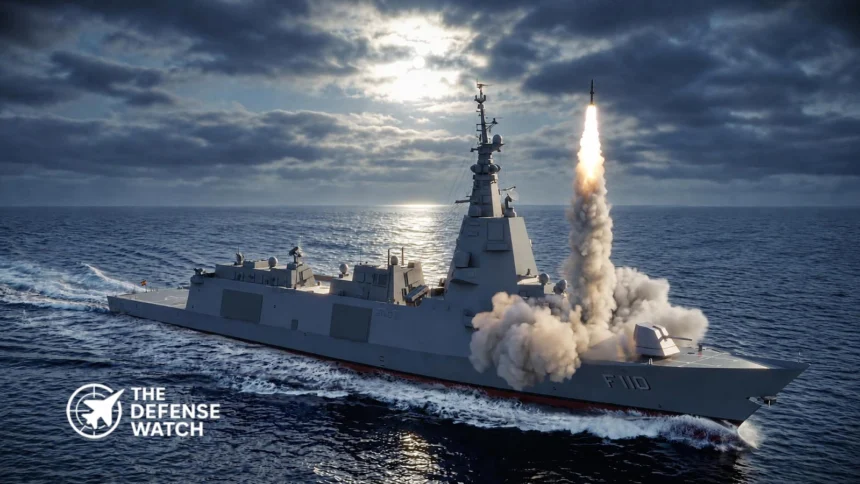
Spain is moving toward a new generation of naval combat capabilities as Lockheed Martin integrates its SPY-7(V)2 radar and Aegis-related fire-control technology into the Spanish Navy’s F-110 Bonifaz-class frigates.
The five-ship program combines Spanish shipbuilding and combat-system development with U.S. radar and weapons-integration technology. Its objective is to provide the Spanish Navy with modern multi-mission frigates capable of conducting anti-submarine warfare, air defense and surface operations.
In a November 5, 2026, company feature, Lockheed Martin outlined its continuing cooperation with Spanish shipbuilder Navantia, emphasizing the integration of SPY-7 radar technology and the Aegis Combat System into the F-110 fleet.
The announcement comes as the construction program progresses. Navantia launched the second F-110 frigate, F-112 Roger de Lauria, at its Ferrol shipyard on October 27, bringing another vessel into the next phase of construction and outfitting.
SPY-7 and Aegis Integration Form the Core of the New Combat Architecture
The SPY-7(V)2 is a naval variant of Lockheed Martin’s scalable solid-state radar technology. It is designed to provide air surveillance, target detection and tracking capabilities while supporting the engagement of multiple threats.
For Spain, its significance lies in the integration of the radar with the frigate’s combat-management architecture rather than simply adding another surveillance sensor.
The F-110 program combines three important elements:
- SPY-7(V)2 radar: Provides the frigate with modern radar surveillance and tracking capabilities.
- International Aegis Fire Control Loop (IAFCL): Provides the fire-control integration needed to support the ship’s anti-air warfare functions.
- SCOMBA: Navantia’s Spanish-developed combat management system, which serves as the central system for processing information from sensors, radars and weapons.
A key integration milestone was announced by Navantia on September 8, 2025.
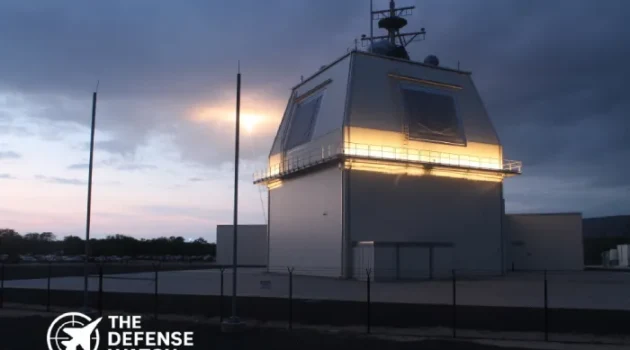
During testing at the Aegis SCOMBA Integration Center in Moorestown, New Jersey, Lockheed Martin and Navantia successfully integrated an engineering development model of the SPY-7 radar with the IAFCL and SCOMBA.
For the first time, real-time radar tracks appeared on SCOMBA operator consoles. The demonstration also supported simulated engagements against actual targets detected by the radar.
This was an important technical milestone because it demonstrated that the different elements of the combat architecture could exchange and process operationally relevant information.
However, the demonstration was not equivalent to completing shipboard integration or validating the frigate’s full operational air-defense capability. Further testing and integration work remain necessary.
Why Spain Selected a Different Radar Architecture
Spain already operates five F-100 Álvaro de Bazán-class frigates equipped with the Aegis combat system.
The F-110 program builds on that operational experience while introducing a different generation of radar and combat-system technology.
The SPY-7 is based on a modular architecture that allows radar configurations to be adapted to different platforms and requirements. Lockheed Martin describes its Sub-Array Suite approach as a way to expand radar capability through additional modules without requiring a completely new system design.
The manufacturer also identifies polarization diversity as one of the radar’s technologies for distinguishing and tracking complex targets.
These characteristics are relevant to modern naval operations, where warships must manage multiple air and surface contacts while operating in environments affected by electronic warfare, clutter and increasingly sophisticated weapons.
Nevertheless, the company has not disclosed sufficient F-110-specific performance information to establish the radar’s detection ranges, engagement envelopes or effectiveness against particular threat types.
Those details should not be assumed from the capabilities advertised for other SPY-7 configurations.
The F-110’s operational value will ultimately depend on the combined performance of its radar, combat-management software, weapons, electronic warfare equipment and communications architecture.
Five Frigates Will Expand Spain’s Naval Force
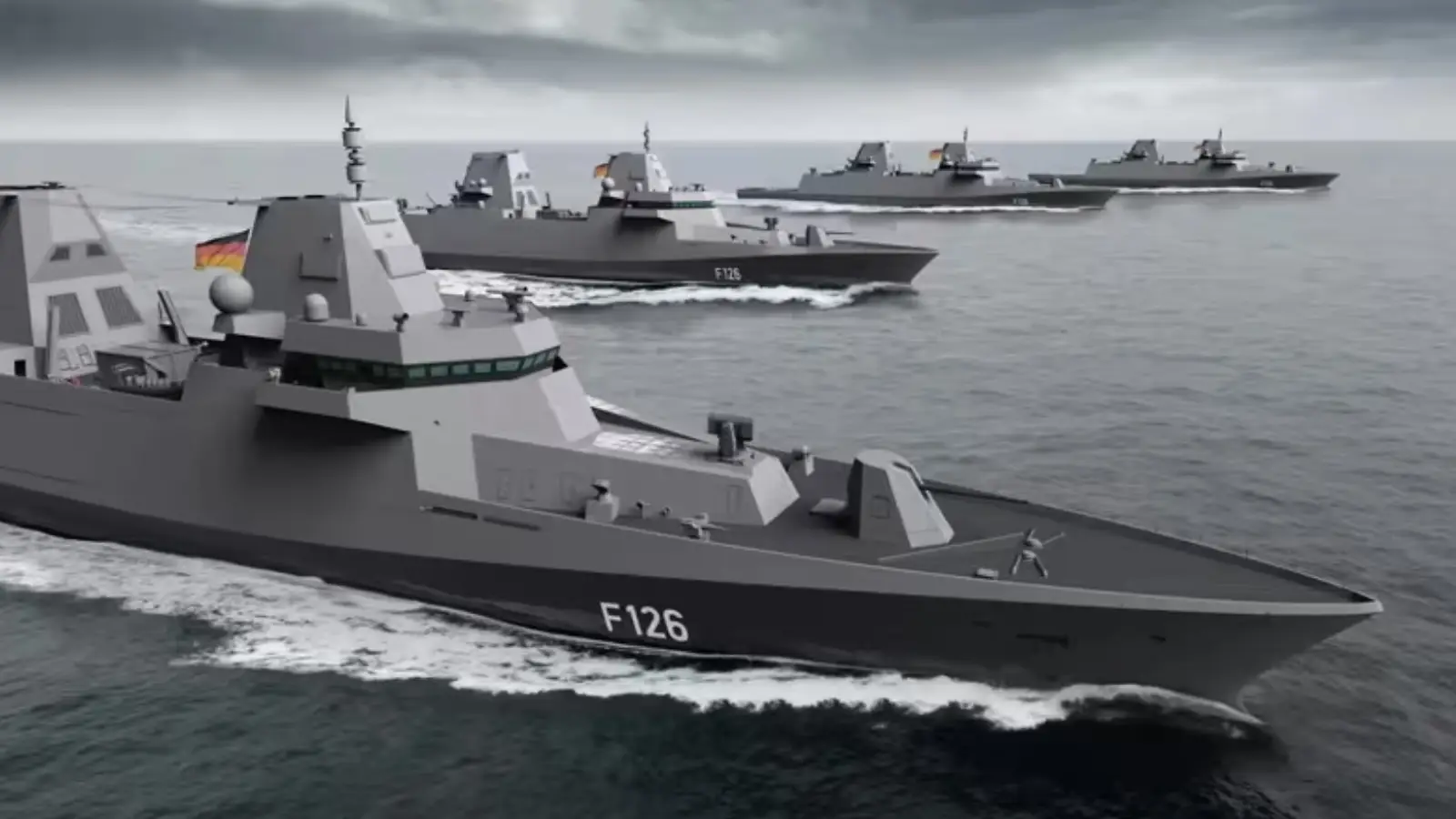
The F-110 program comprises five multi-mission frigates being built by Navantia at Ferrol.
The vessels are intended to replace the Spanish Navy’s aging Santa María-class frigates. They will complement the existing F-100 fleet rather than replace the Álvaro de Bazán-class ships.
The construction program has reached several important milestones.
Frigate Name Reported program status F-111 Bonifaz Undergoing systems installation and commissioning F-112 Roger de Lauria Launched October 27, 2026 F-113 Menéndez de Avilés Construction underway F-114 Luis de Córdova Initial construction underway F-115 Barceló Remaining vessel in the five-ship program Navantia reported that the F-111 is scheduled to begin sea trials in 2027, with delivery planned for 2028.
The company also said the F-112 is expected to continue construction and outfitting alongside the shipyard quay before delivery in 2029.
The Spanish Navy’s broader program schedule anticipates deliveries continuing through 2032.
Navantia has also disclosed that approximately 65 percent of the F-110 program’s industrial content comes from Spanish suppliers. Around 500 companies are involved, with the program expected to support approximately 9,000 jobs over more than a decade.
This industrial structure gives the project importance beyond the introduction of new warships. It supports domestic expertise in naval engineering, combat-system integration, ship construction and long-term maintenance.
Anti-Submarine Warfare Remains a Central Requirement
Although the SPY-7 radar and Aegis integration receive considerable attention, the F-110 is not designed exclusively as an air-defense frigate.
Anti-submarine warfare is a central part of the vessel’s intended mission.
The Spanish Navy plans to use the class to detect and track underwater threats while protecting naval formations and maritime routes. The design incorporates acoustic sensors and a propulsion arrangement intended to reduce the ship’s acoustic signature.
Reducing a vessel’s own underwater noise is particularly important during submarine-hunting operations because propulsion and machinery noise can affect the effectiveness of acoustic sensors.
The frigates are also intended to conduct surface warfare and provide protection against aerial threats.
This combination gives Spain a platform designed to operate in different naval environments rather than concentrating its capabilities on a single mission.
The addition of SPY-7 and the associated fire-control architecture provides another important element of this multi-mission design.
Spain Is Already Planning a More Advanced Air and Missile Defense Variant
An additional development could extend the F-110 family beyond its original five ships.
On October 23, 2026, Navantia announced that it was working with the Spanish Navy to define an evolved F-110 configuration known as F-110 IAMD, referring to Integrated Air and Missile Defence.
The proposed configuration is intended to provide stronger air and missile defense capabilities while retaining the original design’s anti-submarine and anti-surface warfare functions.
Navantia identified several planned improvements:
- Greater capacity to detect, classify and track multiple aerial threats.
- Expanded vertical launch system capacity.
- Enhanced area air-defense functions.
- An upgraded SCOMBA New Generation combat-management system.
- Improved integration of sensors, weapons and uncrewed systems.
- Greater interoperability with NATO and European naval forces.
The proposed configuration is particularly relevant because it suggests Spain wants to develop a more specialized fleet air-defense capability alongside the original F-110 frigates.
However, the distinction between the existing program and the proposed IAMD development is important.
The five original F-110 ships are already under construction. The IAMD configuration remains subject to further definition, operational requirements and the relevant procurement process. Navantia has not presented it as an already contracted additional shipbuilding program.
What the Partnership Means for NATO Naval Operations
The combination of SPY-7, Aegis-related fire-control technology and Navantia’s SCOMBA system has implications beyond Spain’s national fleet.
Modern naval operations increasingly depend on the ability of different ships, aircraft and command centers to exchange information and coordinate defensive actions.
Aegis-related technologies provide an established framework for integrating sensors and weapons across participating naval platforms. Spain’s use of this technology can support cooperation with other allied forces operating compatible systems.
However, interoperability does not automatically mean that every radar track is shared instantly across NATO forces. Actual information exchange depends on communications links, data standards, network access, security arrangements and operational procedures.
For the Spanish Navy, the F-110 program offers an opportunity to combine national industrial capabilities with technologies already used by allied navies.
It also provides a foundation for future modernization as air threats, anti-ship weapons, underwater platforms and uncrewed systems continue to evolve.
The immediate priority remains completing the integration and testing of the first five frigates. Their operational introduction will determine how effectively the new radar and combat architecture translate into improved naval capabilities.