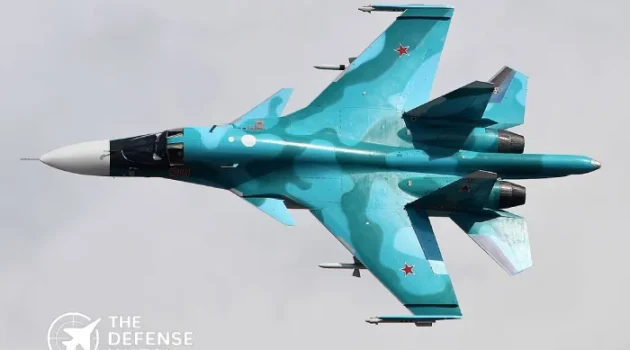
Ukraine’s military says an overnight strike on Borisoglebsk airfield in Russia’s Voronezh region damaged six Su-34M fighter-bombers, targeting aircraft that play a central role in Russian tactical air operations against Ukrainian forces.
The Ukrainian General Staff announced the reported damage on October 15, 2026. It said all six aircraft sustained varying degrees of damage. Ukraine also identified its Neptune missile system as the weapon used in the attack, according to Reuters.
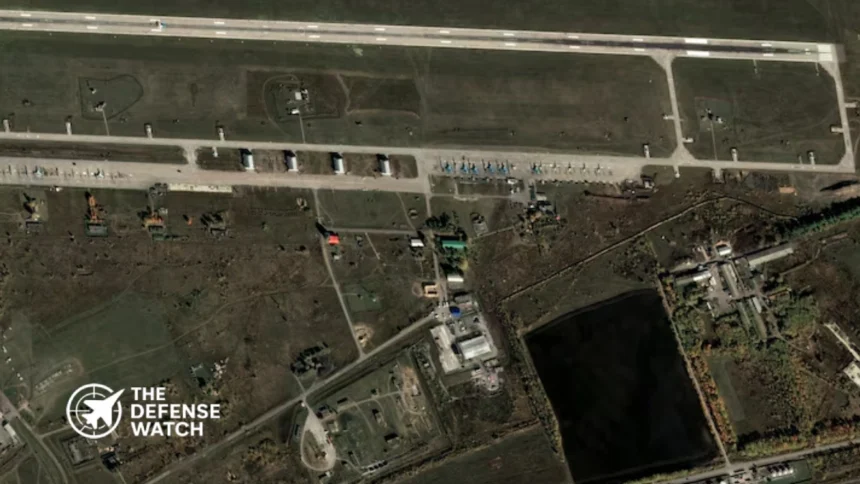
Reuters reported that satellite imagery collected on Thursday showed evidence of destruction at the airfield. The available reporting, however, does not establish the precise condition of each aircraft or confirm that all six have been rendered permanently unusable.
Why the Su-34 is an important target
The Su-34 is a twin-engine Russian fighter-bomber designed to conduct strike missions against ground targets. Russian forces have used the aircraft extensively to deliver guided glide bombs against Ukrainian military positions, frontline settlements and other targets.
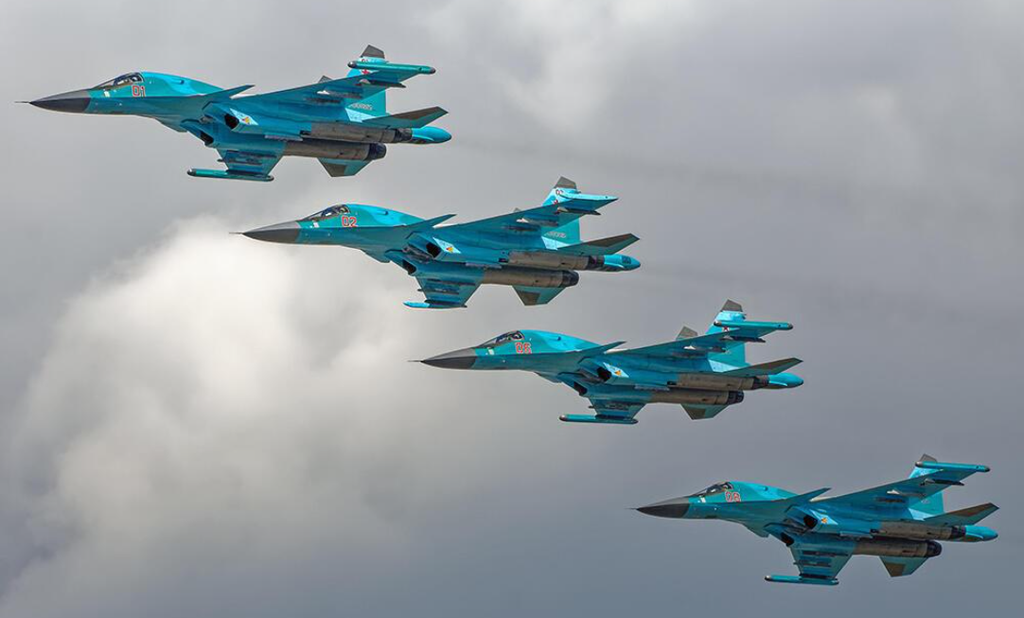
These weapons allow Russian aircraft to attack from a distance rather than always approaching targets at low altitude or flying directly over defended areas. Their operational effectiveness depends on several factors, including weapon configuration, launch conditions, targeting information and the strength of Ukrainian air defenses.
Damaging aircraft used for these missions can affect more than the number of available airframes. Aircraft require trained crews, maintenance personnel, weapons handling equipment, spare parts and operational support to generate combat sorties.
The extent of any disruption at Borisoglebsk will depend on the severity of the reported damage and how quickly Russian maintenance teams can return affected aircraft to service.
What is known about the Borisoglebsk strike
The Ukrainian General Staff’s statement identifies Borisoglebsk airfield as the target of the overnight operation on October 15.
The key details reported so far are:
- Target: Borisoglebsk military airfield in Russia’s Voronezh region.
- Aircraft involved: Six Russian Su-34M fighter-bombers reportedly damaged.
- Weapon identified by Ukraine: The Neptune missile system.
- Reported outcome: Damage of varying degrees to all six aircraft, according to the Ukrainian military.
- Independent evidence: Reuters verified satellite imagery showing destruction at the airfield, although this does not by itself establish the full damage to each aircraft.
The distinction between damage and destruction is important. An aircraft with damaged external equipment or repairable structural damage may return to service, while severe damage to its airframe, engines or other critical systems could require extensive repair or make it uneconomical to restore.
No verified aircraft-by-aircraft damage assessment or confirmed repair timeline was available in the reporting reviewed for this article.
Neptune missiles extend Ukraine’s strike options
Ukraine identified its Neptune missile system as the weapon used in the operation. The original Neptune was developed as an anti-ship missile, but Ukraine has also pursued land-attack applications of the system.
The missile family has become part of Ukraine’s effort to strike military and strategic targets beyond the immediate front line. Such operations can force Russian forces to consider the vulnerability of airfields, logistics sites, ammunition storage areas and other facilities that support combat operations.
The reported strike also illustrates an important distinction in air warfare: an aircraft does not need to be intercepted in flight to be removed temporarily from combat operations. Attacks on aircraft parked at airfields can create maintenance demands and reduce availability without requiring a direct engagement between fighter aircraft.
However, the effectiveness of this approach depends on target intelligence, weapon accuracy, the defenses protecting the facility and the availability of alternative operating locations.
Ukraine’s announcement identifies the missile system used, but the publicly available information does not establish the precise flight path, number of missiles fired, defensive measures encountered or individual impact points.
Airfield vulnerability and aircraft survivability
Military aircraft are particularly vulnerable when parked, armed, refueled or undergoing maintenance. Hardened shelters, dispersal, camouflage, runway repair teams and air defense systems can reduce the risks, but none guarantees protection against a determined strike.
Concentrating combat aircraft at a limited number of bases can simplify maintenance and logistics. It can also create an opportunity for an attacker to damage several aircraft during a single operation.
The reported damage to six Su-34Ms could therefore have operational value beyond the immediate cost of repairs. If the aircraft were scheduled for near-term missions, their temporary unavailability could affect sortie planning and place additional demands on other aircraft.
That impact should not be assumed, however. Public information does not establish whether the six aircraft were operational before the attack, how many were scheduled to fly, or whether Russian forces have already shifted missions to other bases.
Satellite imagery can help establish changes at an airfield, but determining whether an aircraft remains combat-capable may require closer imagery, additional reporting or subsequent evidence of repairs and flight activity.
What the strike could mean for Russia’s bombing campaign
Russian Su-34 aircraft are important platforms for delivering aerial munitions against Ukrainian positions. Any sustained reduction in their availability could complicate the planning and execution of these missions.
The immediate effect depends on the number of aircraft actually taken out of service, the duration of repairs and the capacity of other Russian tactical aviation units to compensate. Damage to six aircraft does not automatically translate into a comparable reduction in Russia’s overall air campaign.
Russia operates multiple combat aircraft types and can distribute missions across available units. It may also relocate aircraft, change operating patterns or increase maintenance activity in response to attacks on individual bases.
For Ukraine, strikes against aircraft on the ground offer a way to impose costs on Russian aviation without having to defeat every aircraft in an airborne engagement. The approach is most consequential when repeated attacks affect operational availability, maintenance capacity or the infrastructure needed to sustain combat sorties.
There is not yet enough public evidence to quantify the effect of this particular operation on Russian strike rates or the number of glide bombs delivered against Ukrainian targets.
Damage assessment remains the central question
Ukraine has publicly reported damage to six Su-34M aircraft, while Reuters has reported independent satellite-image verification of destruction at the airfield. These are meaningful pieces of evidence, but they do not provide a complete assessment of aircraft losses.
The distinction matters for understanding the military consequences. Aircraft that require short repairs impose a different burden from those needing extensive structural work or replacement. The number of permanently lost aircraft, if any, also remains distinct from the number initially damaged.
Further imagery, credible reporting on aircraft movements and any subsequent official statements could clarify the extent of the damage. Until then, the most defensible assessment is that Ukraine reports a successful strike against a Russian airfield and six damaged aircraft, with the full operational consequences still uncertain.