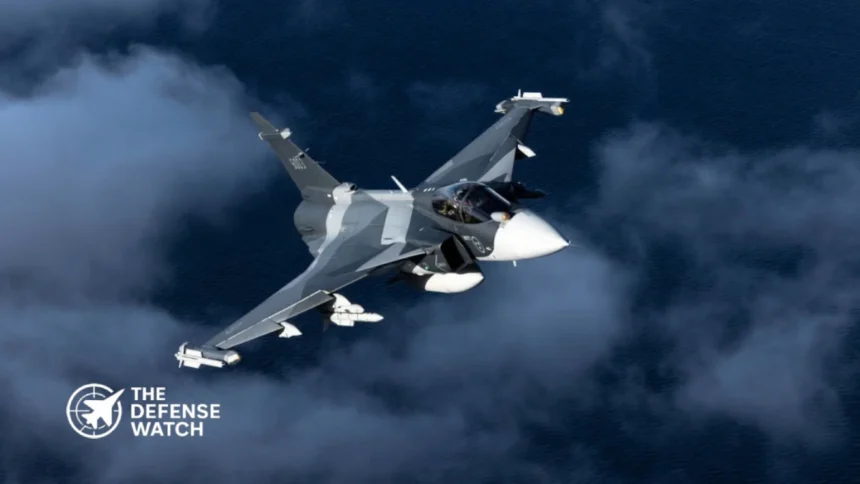
Saab has received a SEK 1.3 billion ($120 million) order from the Swedish Defence Materiel Administration (FMV) to develop a new-generation flight control computer for the Gripen fighter aircraft. Deliveries are planned for 2030, according to the company.
The project will replace the aircraft’s existing flight control computer with a new solution intended to support long-term availability, computing performance and security of supply. Saab said the work will be conducted in close cooperation with FMV.
The announcement does not specify which Gripen variants will receive the new computer first, whether the system will be introduced across the entire fleet, or when operational integration and testing will be completed.
Why the flight control computer matters
The flight control computer is a central part of Gripen’s flight control system. It processes control inputs and supports the precise management of aircraft movement, helping the fighter respond predictably to pilot commands.
Replacing this component is different from upgrading a radar or adding a new weapon. Flight control hardware and software are closely linked to aircraft safety, handling characteristics and system certification. Any replacement must be integrated and tested to demonstrate that the aircraft continues to meet its required flight performance and safety standards.
Saab has not disclosed the new computer’s architecture, processing capacity, software design, hardware supplier or specific technical improvements. The company has also not announced whether the upgrade will introduce new flight control functions.
The stated objectives are broader than a simple hardware replacement. By developing a system intended to meet long-term requirements, Saab and FMV are seeking to maintain the availability and supportability of the Gripen fleet as the aircraft continues in service.
Sweden’s longer-term Gripen modernization effort
The order fits into Sweden’s wider effort to maintain and develop its Gripen combat aircraft capability over an extended service life.
FMV has previously placed orders with Saab to sustain and upgrade the Gripen C/D fleet. In December 2022, the agency announced a contract worth approximately SEK 3.5 billion covering capability improvements and availability measures, with work planned through 2029. That program was intended to support continued operation of the C/D variants into the mid-2030s.
Sweden is also introducing the more advanced Gripen E, which incorporates changes to aircraft systems, sensors and electronic warfare capabilities. FMV has described continued development of both the C/D and E variants as part of its effort to maintain the country’s combat aviation capability.
The new flight control computer order is a separate procurement announcement. Public information does not establish whether the replacement will be common to all Gripen versions or tailored to a particular variant.
Maintaining compatible support arrangements across different aircraft generations can help reduce the complexity of long-term fleet management, but the extent of any commonality under this project has not been disclosed.
Security of supply is part of the requirement
Saab’s stated emphasis on security of supply is an important part of the contract. Modern combat aircraft depend on specialized electronic components, software support and engineering expertise that must remain available throughout their service lives.
A flight control computer replacement can help address obsolescence risks when existing hardware or components become difficult to maintain or procure. It can also give the manufacturer a new technical baseline for future support and maintenance.
However, Saab has not identified a specific supply-chain shortage, component discontinuation or foreign dependency as the reason for this order. It would therefore be premature to conclude that the current computer is unavailable or that the new design will eliminate reliance on overseas suppliers.
The value of the project will depend in part on how the replacement is qualified, supported and integrated into the aircraft’s maintenance and upgrade cycle.
What remains undisclosed
Saab has announced the order value and intended delivery schedule, but several details remain unavailable publicly.
These include the division of work between Saab and FMV, the development and testing milestones before the planned 2030 deliveries, the number of aircraft expected to receive the system, and whether the contract includes production units beyond the development effort.
The announcement also does not provide a breakdown of development costs, installation costs or any subsequent fleet-wide retrofit expenditure.
Saab Aeronautics head Marcus Wandt said the new computer is intended to support Gripen’s capability and performance for decades. That is the company’s stated objective, rather than a published performance assessment of the system, which remains under development.
For Sweden, the immediate significance is the start of another long-term subsystem modernization effort. The next important details will be the selected technical configuration, the aircraft variants covered and the schedule for testing and operational introduction.