Lockheed Martin, Avio Expand Missile Motor Production
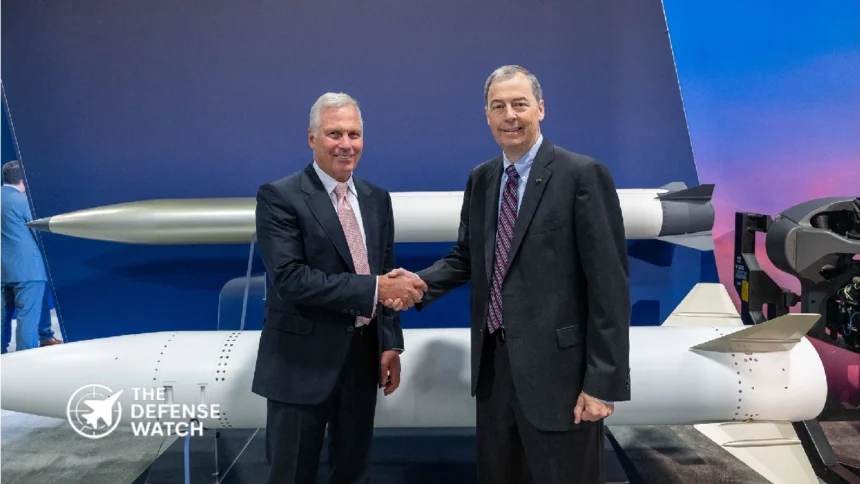
Lockheed Martin and Avio have signed a strategic cooperation agreement to expand the U.S. solid rocket motor supply chain, with production intended to support the Extended Range Guided Multiple Launch Rocket System (ER GMLRS) and Precision Strike Missile (PrSM). Announced on October 13, 2026, the agreement gives Lockheed Martin access to additional manufacturing capacity through Avio USA, subject to qualification of the production work.
The arrangement targets a key industrial requirement for U.S. Army precision fires: increasing the availability of propulsion components as demand grows for longer-range land-attack weapons. Neither company disclosed a contract value, production quantities or a detailed schedule for deliveries under the agreement.
Avio USA to manufacture motors in Virginia
Under the agreement, initial work will focus on solid rocket motors for ER GMLRS and PrSM after the relevant production processes are qualified. Manufacturing is planned at Avio USA’s new facility in Hurt, Virginia, according to Lockheed Martin’s announcement.
Avio USA is the U.S. subsidiary of Italy-based Avio S.p.A., which has experience in solid, liquid and cryogenic propulsion systems for defense and space applications. The U.S. operation is being developed to serve domestic defense customers and industry partners.
Lockheed Martin Missiles and Fire Control President Tim Cahill said the arrangement would provide another source of solid rocket motors and improve supply chain flexibility. Avio USA Chief Executive James Syring said the agreement would help establish the Virginia facility’s manufacturing workload as the company builds its U.S. production and engineering presence.
Avio said it has launched more than $500 million in investment in new U.S. solid rocket motor production capacity. That figure is the company’s stated investment, not the value of the Lockheed Martin agreement.
Why the agreement matters for two Army missile programs
The arrangement connects a new propulsion supplier to two weapons with different roles in the Army’s long-range fires portfolio.
ER GMLRS is an extended-range version of the Guided Multiple Launch Rocket System. It is designed to increase the distance at which Army units can engage targets while using existing compatible launch platforms, including HIMARS and the M270 family of tracked launchers.
In February 2026, the U.S. Army reported a successful ER GMLRS flight test using the alternative-warhead variant. The service said the January 30 test demonstrated engagement of area targets beyond 100 kilometers and described the missile’s range as approximately 150 kilometers. Further operational testing is part of the process toward fielding.
PrSM, meanwhile, is the Army’s next-generation precision-strike missile intended to replace the Army Tactical Missile System. It is compatible with HIMARS and the M270A2 launcher and is designed to provide a longer-range strike option for Army formations.
The Army announced a $4.9 billion ceiling-value contract for PrSM early operational capability in March 2025. The first delivery order covered 400 Increment 1 missiles. In September 2026, the service also announced a separate contract worth up to $1.2 billion for PrSM Increment 2 production, which incorporates additional seeker capabilities.
These program developments provide context for the new motor agreement. As missile production expands, propulsion components must be available in sufficient quantities to support the manufacturing schedule. Additional qualified suppliers can give a prime contractor more options when allocating production work and managing interruptions or capacity constraints.
A second source is useful only after qualification
Solid rocket motors are critical components of many tactical missiles. Their manufacture requires controlled processes and consistent performance, meaning a new factory cannot automatically begin supplying operational weapons simply because an agreement has been signed.
Avio’s planned contribution therefore depends on successful qualification for the relevant production requirements. The companies’ announcement does not establish that motors from the Virginia facility are already qualified for either missile program or entering serial production.
The agreement also does not mean that Avio will replace Lockheed Martin as the missile prime contractor. Lockheed Martin remains responsible for the ER GMLRS and PrSM systems covered by the announcement, while Avio is positioned to provide propulsion hardware as an additional industrial supplier.
The practical benefit will depend on how quickly Avio can complete qualification, establish repeatable manufacturing processes and deliver components at the required quality and rate. Public information does not yet specify the facility’s planned annual motor output or the proportion of either missile program’s requirements it could supply.
Expanding the U.S. munitions industrial base
The agreement follows a wider U.S. effort to increase the capacity and resilience of the defense industrial base. Missile output depends on more than final assembly. Propulsion, energetics, electronic components, guidance systems and other specialized inputs must all be available on compatible schedules.
Adding manufacturing capacity at a separate supplier can reduce reliance on a limited set of production lines. It can also give Lockheed Martin more flexibility as the Army orders additional missiles. However, a second source does not automatically eliminate shortages, particularly if suppliers depend on overlapping raw materials, specialist labor or other constrained components.
For the Army, the importance of the arrangement is tied to its ability to procure and sustain precision-strike weapons in greater numbers. ER GMLRS provides an extended-range option within the existing multiple-launch rocket system family, while PrSM is intended to expand the reach of Army ground-launched fires.
The next measurable milestones will be qualification of Avio’s manufacturing processes, confirmation of production schedules and evidence of actual motor deliveries. Until those details become public, the agreement should be viewed as an industrial capacity initiative rather than proof of an immediate increase in missile output.
The central question is how quickly the new supplier can move from planned capacity to qualified production. The agreement creates a path for additional solid rocket motor supply, but its effect on ER GMLRS and PrSM delivery rates will depend on execution and the wider availability of missile components.