

Executive Summary:
China’s Liaoning carrier group has returned from a more than 40-day deployment across the Western Pacific and South China Sea, conducting combat-oriented training and joint exercises with an amphibious assault ship group. The deployment highlights Beijing’s continued effort to strengthen long-range naval power projection and integrated maritime operations.
China Liaoning Carrier Group Completes Extended Far-Sea Training Mission
The Liaoning carrier group has concluded a major far-sea training deployment that Chinese state media says was designed to enhance combat readiness, joint operations, and long-range maritime capabilities.
According to Chinese state broadcaster CCTV, the carrier strike group returned to port after spending more than 40 days operating in the South China Sea, the Western Pacific, and other regional waters. The deployment began on May 19 and included a series of combat-oriented exercises involving carrier aviation, reconnaissance operations, search-and-rescue missions, and integrated naval maneuvers.
Chinese military officials stated that the exercises were intended to validate operational concepts, improve command effectiveness, and strengthen the carrier group’s ability to conduct real-world missions in distant maritime regions.
Beijing Highlights Response To Japanese Monitoring Activities
Chinese media also reported that Japanese ships and aircraft closely monitored the carrier group’s activities throughout the deployment.
According to CCTV, the Liaoning formation maintained a high operational alert level, launched carrier-based fighter aircraft on combat sorties, adjusted formations when required, and responded professionally to what Beijing described as repeated close-range surveillance and harassment activities.
Japan has routinely tracked Chinese naval movements in the Western Pacific, particularly aircraft carrier operations near strategic sea lanes and areas surrounding the Ryukyu island chain.
The latest deployment underscores the increasingly regular interaction between Chinese naval forces and regional militaries as Beijing expands the operating range of its carrier fleet.
First Publicly Reported Carrier And Amphibious Assault Ship Integration
One of the most significant aspects of the exercise was a joint drill involving the Liaoning carrier group and a formation centered on the Type 075 amphibious assault ship Anhui.
Chinese military analyst Wang Yunfei described the event as the first publicly disclosed far-sea training exercise involving both a Chinese aircraft carrier group and an amphibious assault ship group operating together.
The exercise reportedly focused on system-of-systems integration, including command coordination, intelligence sharing, communications links, and tactical cooperation between the two formations.
From a military modernization perspective, this development may be among the most important outcomes of the deployment.
Aircraft carriers provide air superiority, long-range strike options, and fleet defense. Amphibious assault ships enable expeditionary operations, helicopter assaults, and rapid force deployment. Integrating both platforms creates a more flexible force capable of conducting a wider range of operations across greater distances.
Growing Focus On Long-Range Power Projection
The Liaoning deployment reflects a broader trend within the People’s Liberation Army Navy (PLAN): moving beyond coastal defense toward sustained operations in the far seas.
China’s naval modernization efforts over the past decade have focused on expanding blue-water capabilities through new aircraft carriers, advanced destroyers, replenishment ships, and amphibious platforms.
The joint training between Liaoning and Anhui suggests Beijing is increasingly focused on developing integrated task forces capable of conducting complex operations far from the Chinese mainland.
While China has traditionally emphasized regional defense, these developments indicate a growing emphasis on operational reach, maritime security missions, and potential expeditionary capabilities.
Carrier Aviation Demonstrates Expanded Endurance
Footage released by CCTV showed J-15T carrier-based fighter aircraft conducting day and night flight operations, including aerial refueling with YY-20 tanker aircraft.
According to Chinese analysts, these activities demonstrate improvements in all-weather carrier aviation operations and extended mission endurance. Aerial refueling significantly increases operational range and allows aircraft to remain on station longer during maritime missions.
The deployment also appeared to include the new Type 054B frigate Luohe, marking what may be the vessel’s first major far-sea operational mission since entering service. Chinese observers argue that the addition of the Type 054B enhances the carrier group’s air defense, anti-submarine warfare, and escort capabilities.
Strategic Implications For The Indo-Pacific
The latest Liaoning carrier group deployment comes amid increasing military competition across the Indo-Pacific.
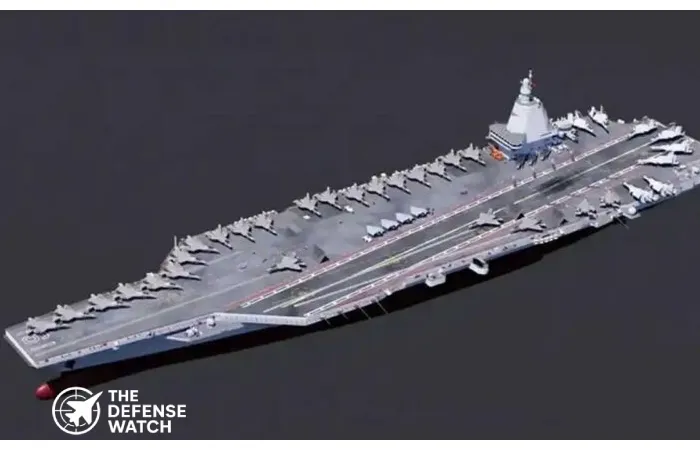
China’s carrier fleet currently includes the Liaoning, Shandong, and Fujian aircraft carriers, with the latter expected to achieve full operational capability in the coming years. The PLAN’s growing emphasis on carrier operations reflects Beijing’s ambition to field a modern blue-water navy capable of operating across the Western Pacific and beyond.
The integration of carrier strike groups with amphibious assault forces represents a notable evolution in Chinese naval doctrine. As these exercises become more frequent, regional militaries will likely continue monitoring how Beijing develops its long-range maritime power projection capabilities.
