The Hypersonic Arms Race Has Entered a New Phase
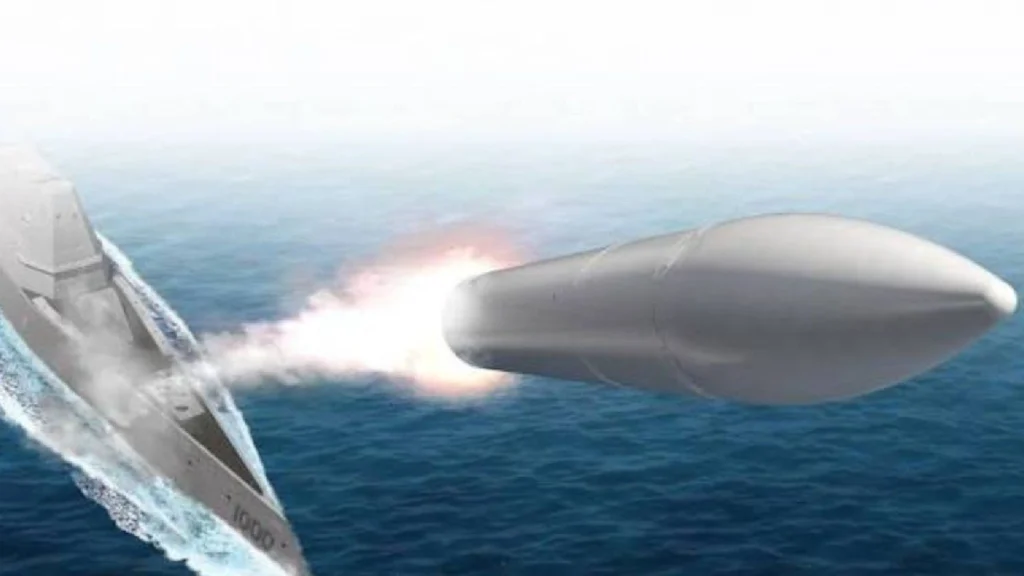
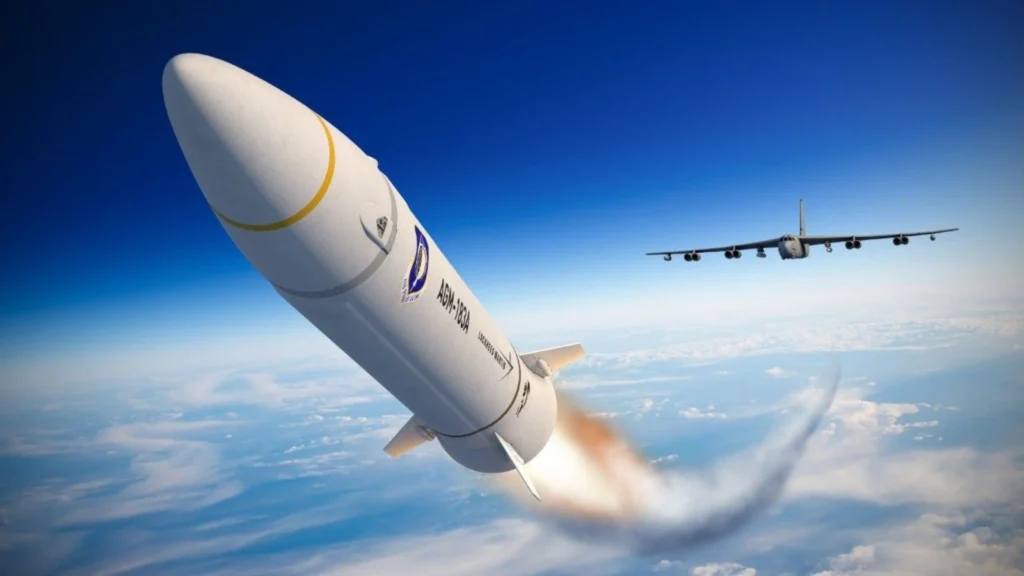
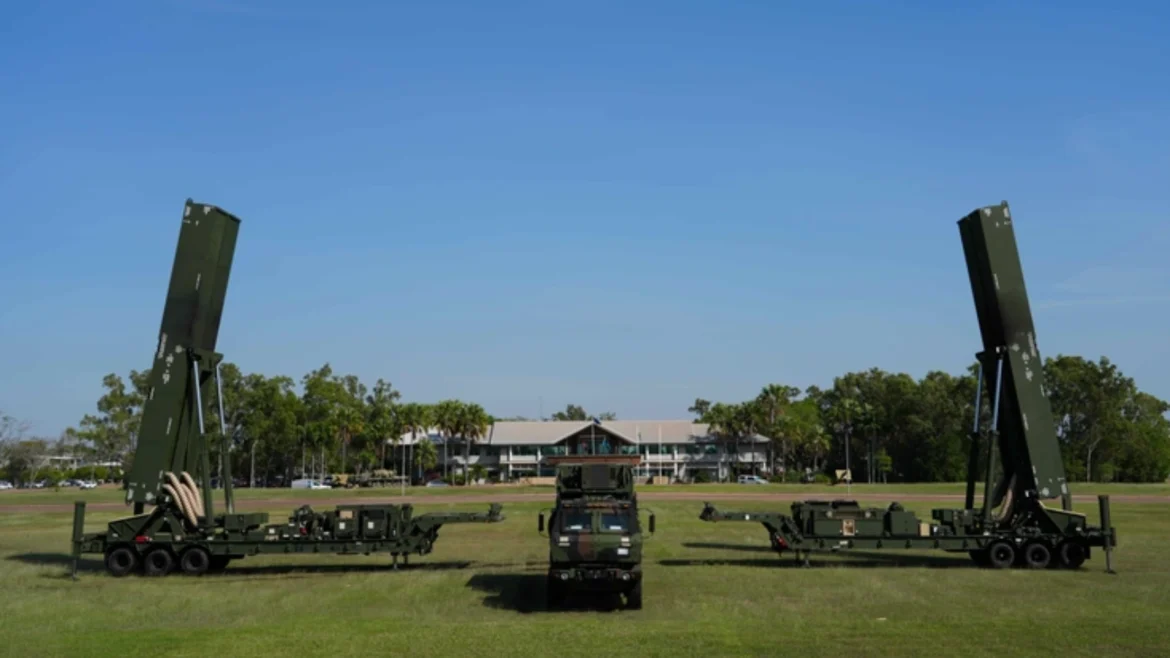
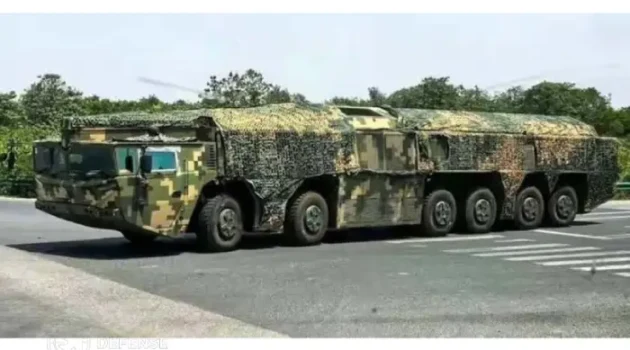
Hypersonic weapons 2026 are moving from a technology race into a fielding and operational integration race. China, Russia and the United States have pursued different approaches to high-speed strike, with the DF-27 representing China’s emerging long-range boost-glide capability, Russia’s 3M22 Zircon representing a sea-launched hypersonic cruise missile, and the U.S. Army’s Dark Eagle providing a ground-launched conventional hypersonic strike system.
The three weapons should not be judged simply by which one has the highest advertised Mach number.
They represent different engineering solutions and different military missions.
The DF-27 is associated with a long-range Chinese missile architecture that could provide land-attack and anti-ship capabilities at ranges potentially extending across the Indo-Pacific. Public reporting on the system remains incomplete, and the Pentagon has described the DF-27 as a developing long-range missile with a possible hypersonic glide vehicle option.
Russia’s Zircon is a scramjet-powered hypersonic cruise missile designed primarily for naval strike missions. Russian testing has demonstrated launches from surface ships and submarines, while the system has entered Russian Navy service. CSIS has documented Russian claims of ranges reaching approximately 1,000 kilometers and test speeds approaching Mach 8.
The U.S. Dark Eagle takes a different approach. It uses a common hypersonic glide body launched by a large rocket booster and is designed to deliver conventional precision effects against high-value and time-sensitive targets. The Army formally gave the Long Range Hypersonic Weapon the Dark Eagle name in April 2025.
By 2026, Dark Eagle has also moved beyond laboratory development. U.S. Army forces trained with the system during Valiant Shield 2026 in the Western Pacific, demonstrating its growing role in the Indo-Pacific operational concept.
Key Takeaways
The 2026 hypersonic competition is increasingly defined by range, survivability, launch flexibility, production capacity and operational integration rather than speed alone.
Hypersonic Weapons 2026: What Actually Makes These Systems Different?
Hypersonic weapons generally travel at speeds above Mach 5, but that definition covers several fundamentally different technologies.
A ballistic missile can exceed Mach 5 while following a largely predictable trajectory during portions of its flight. A hypersonic glide vehicle, by contrast, can separate from a booster and maneuver through the upper atmosphere, creating a more complicated tracking problem.
Hypersonic cruise missiles take another approach. They use air-breathing propulsion, such as a scramjet, to maintain high speed within the atmosphere.
This distinction matters when comparing DF-27, Zircon and Dark Eagle.
Hypersonic Glide Vehicles
A boost-glide weapon uses a rocket booster to accelerate the vehicle to high velocity and altitude.
The booster then separates, leaving the glide body to travel through the atmosphere while using aerodynamic lift and maneuvering controls to alter its trajectory.
The combination of speed, altitude and maneuverability can reduce the time available to defensive systems and complicate trajectory prediction.
The U.S. Dark Eagle and China’s suspected DF-27 HGV configuration belong broadly to this category.
Hypersonic Cruise Missiles
Zircon is different.
It uses a scramjet propulsion system after initial acceleration. A scramjet can sustain combustion using incoming atmospheric air at very high speeds.
This gives the missile characteristics closer to a high-speed cruise missile than a boost-glide vehicle.
That distinction gives Zircon a potentially useful combination of speed, maneuverability and naval launch flexibility.
DF-27: China’s Long-Range Hypersonic Challenge
The DF-27 is arguably the most difficult system in this comparison to assess because much of its performance remains classified or uncertain.
Open-source assessments place the weapon in the 5,000 to 8,000 kilometer range class. A 2026 academic assessment based on U.S. government reporting states that the DF-27 may have a hypersonic glide vehicle option and could support land-attack and anti-ship missions.
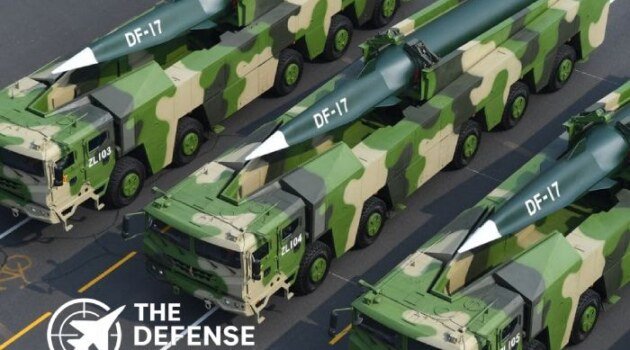
The U.S. Department of Defense has separately described China’s growing conventional missile force and identifies the DF-17 as an operational hypersonic glide vehicle system. The broader PLA Rocket Force architecture also includes long-range DF-26 missiles and other precision-strike weapons.
Why DF-27 Matters
If the higher-end range estimates are accurate, DF-27 could occupy an important space between regional ballistic missiles and China’s strategic intercontinental systems.
Its potential missions include:
- Long-range land attack
- Anti-ship strike
- Counter-intervention operations
- Attacks against high-value fixed targets
- Strategic conventional deterrence
The anti-ship possibility is particularly important for the Indo-Pacific.
A long-range maneuvering weapon capable of threatening surface combatants would fit naturally within China’s broader anti-access and area-denial strategy.
DF-27 Performance Remains Difficult to Verify
There is an important caveat.
The DF-27 does not have the same level of publicly documented operational information as systems such as the U.S. Dark Eagle.
Public reporting has varied over time regarding its deployment status, configuration and precise range.
For that reason, the most defensible assessment is that the DF-27 represents a major Chinese long-range missile development effort with a potential hypersonic glide capability, rather than treating every published specification as confirmed.
That distinction is important for credible defense journalism.
Zircon: Russia’s Naval Hypersonic Strike Weapon
Russia’s 3M22 Zircon takes a different path.
The missile is a scramjet-powered hypersonic cruise missile developed by NPO Mashinostroyeniya for Russian naval forces.
CSIS has documented Russian tests from both surface ships and submarines. A 2020 test involved a reported flight of approximately 450 kilometers at a claimed maximum speed of Mach 8. Later Russian claims placed the missile’s range at approximately 1,000 kilometers.
Naval Launch Flexibility
One of Zircon’s most important advantages is its integration with Russian naval platforms.
The weapon is associated with the Russian 3S-14 launch architecture, allowing it to be deployed from compatible surface combatants and submarines.
That creates a different threat model from a truck-launched weapon.
A naval platform can reposition before launch, creating uncertainty about the direction from which the weapon may arrive.
This is particularly significant for maritime forces operating in enclosed or heavily contested waters.
Zircon’s Strengths
Zircon’s principal strengths include:
- High terminal velocity
- Scramjet propulsion
- Naval launch capability
- Surface and submarine integration
- Potential land-attack and anti-ship applications
- Reduced warning time for defended targets
Its primary limitation in this comparison is range.
Even if the upper-end Russian range claims are accepted, Zircon does not appear to occupy the same long-range class as the estimated DF-27.
That does not make it less dangerous. It means the weapon solves a different operational problem.
Dark Eagle: America’s Most Advanced Fielded Hypersonic Strike System
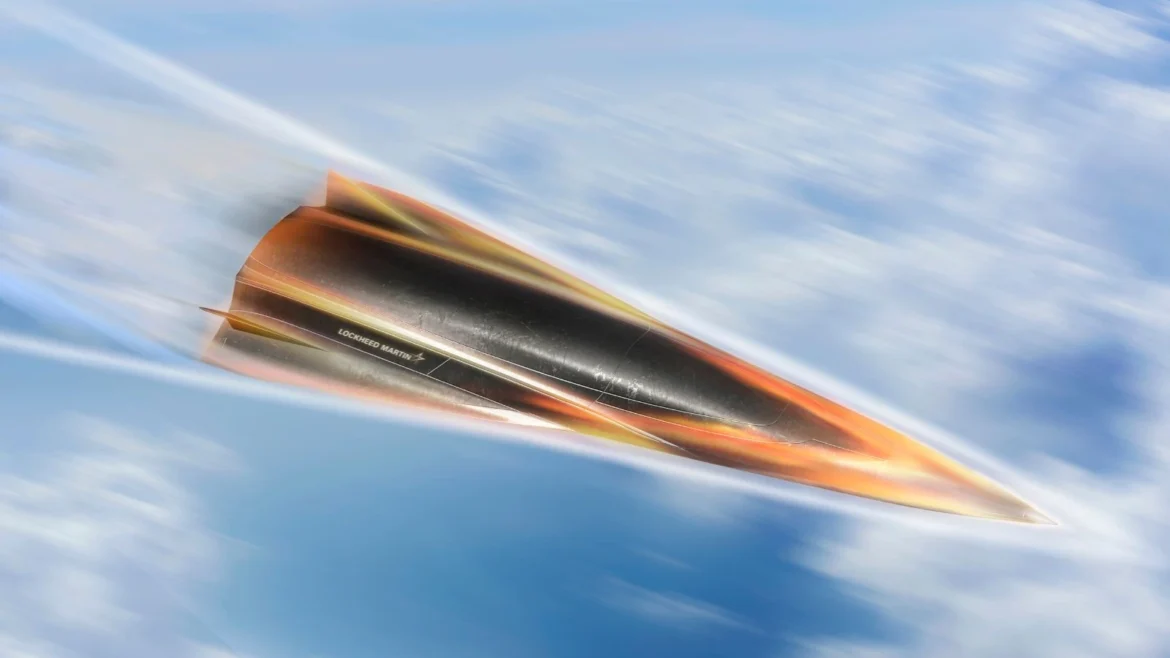
The U.S. Army’s Long Range Hypersonic Weapon, officially designated Dark Eagle, is built around the Common Hypersonic Glide Body.
The system uses a large rocket booster to accelerate the glide body before the vehicle separates and conducts the remainder of its flight.
The Congressional Research Service has reported a range of approximately 1,725 miles, or roughly 2,776 kilometers. The Army has stated that the weapon can travel well beyond 3,800 miles per hour.
The system is designed for conventional precision strike against high-payoff and time-sensitive targets in heavily defended environments.
Common Army and Navy Technology
One of the most important features of the U.S. approach is joint development.
The Army’s Dark Eagle and Navy’s Conventional Prompt Strike share a common hypersonic missile architecture.
The Navy describes the weapon as consisting of a Common Hypersonic Glide Body and a two-stage booster, with each service developing launchers and weapon-control systems suited to its own platform.
This approach is intended to reduce duplication while giving the United States land, surface and submarine launch options.
Dark Eagle Enters the Indo-Pacific
The most important development in 2026 is not another laboratory test.
It is operational integration.
U.S. Army personnel trained with Dark Eagle during Valiant Shield 2026 in the Western Pacific. The Army’s own reporting shows the system operating with the 7th Infantry Division’s Multi-Domain Command Pacific during the exercise.
The deployment places a long-range conventional hypersonic capability within the geographic environment where the United States expects to confront China’s increasingly sophisticated missile forces.
That makes Dark Eagle strategically significant even before the Army reaches full-scale fleet quantities.
DF-27 vs Zircon vs Dark Eagle: Technical Comparison
Metric DF-27 3M22 Zircon Dark Eagle Country China Russia United States General type Ballistic missile with potential HGV configuration Hypersonic cruise missile Boost-glide weapon Propulsion Rocket booster plus possible HGV Rocket booster and scramjet Large solid-fuel booster plus HGV Approximate range Reported 5,000 to 8,000 km class Claimed up to about 1,000 km Reported about 1,725 miles, approximately 2,776 km Speed Not reliably disclosed Russian claims around Mach 8 to 9 More than 3,800 mph stated by Army Launch platforms Ground based Surface ships and submarines Mobile ground launcher Primary role Long-range land attack and possible anti-ship strike Anti-ship and land attack Conventional precision strike Glide vehicle Reported possible capability No Yes Operational transparency Low Moderate High relative to competitors 2026 status Limited public information Operational Russian system Operational integration and fielding Key advantage Potential reach and geographic coverage Naval mobility and high speed Precision, mobility and U.S. joint architecture Performance figures should be treated carefully because several values are based on official claims, intelligence assessments or open-source estimates rather than independently verified operational data.
Which Is Fastest?
This is one of the most difficult questions to answer accurately.
Russia has publicly associated Zircon with speeds around Mach 8 to Mach 9.
The U.S. Army describes Dark Eagle as traveling at more than 3,800 miles per hour, although exact operational flight profiles and terminal speeds are not publicly disclosed.
China has not publicly provided enough reliable data to establish a confirmed maximum speed for DF-27.
More importantly, maximum velocity does not determine the overall effectiveness of a hypersonic weapon.
A weapon traveling at Mach 9 but operating inside a shorter engagement envelope can have less strategic reach than a slower weapon with substantially greater range.
The meaningful comparison therefore involves:
speed + range + maneuverability + survivability + targeting + launch position + sensor support + production capacity.
Which Has the Longest Range?
Based on currently available open-source assessments, the DF-27 appears to have the greatest potential range.
The reported 5,000 to 8,000 kilometer range class would place it substantially beyond Zircon and Dark Eagle.
However, the range figure should not be treated as a confirmed operational specification.
The Dark Eagle’s approximately 1,725-mile reported range is considerably more transparent because the U.S. Army and Congressional Research Service have publicly described the system and its mission.
Zircon remains a shorter-range weapon by comparison, but its naval launch architecture can partially compensate by moving the launch platform closer to the target.
Which System Is Most Operationally Mature?
Dark Eagle has the strongest publicly documented operational integration among the three.
The United States has openly described its development architecture, conducted end-to-end testing, formally designated the weapon and trained units with the system in the Indo-Pacific.
Russia’s Zircon is also operational, but reliable independent information about the size of the inventory, production rate and combat effectiveness is limited.
China’s DF-27 is the least transparent.
That does not mean it is less capable. It means outside analysts have less information with which to evaluate its true operational status.
The Real Advantage: Launch Architecture
The most important difference may not be the missile itself.
It is where the missile can be launched.
China
China’s land-based missile architecture provides the PLA Rocket Force with extensive geographic reach from mainland territory.
A long-range DF-27 could threaten targets across large portions of the Western Pacific without requiring China to expose aircraft or naval forces.
Russia
Russia can deploy Zircon from ships and submarines.
That gives Moscow the ability to generate mobile launch points and complicate maritime defense planning.
United States
Dark Eagle provides the U.S. Army with a mobile land-based strike capability.
The system becomes particularly relevant when combined with distributed forces, intelligence networks, long-range sensors and allied basing.
This is why the 2026 Guam deployment is strategically important.
It demonstrates the U.S. approach of placing long-range precision weapons inside the Indo-Pacific operating environment rather than relying exclusively on aircraft and surface ships.
Hypersonic Weapons and Integrated Air Defense
The rise of hypersonic weapons is also forcing a major change in missile defense.
Traditional ballistic missile defense relies heavily on predicting the trajectory of an incoming object.
Hypersonic glide vehicles can maneuver through the atmosphere, potentially changing their flight path and reducing the usefulness of a purely ballistic trajectory prediction.
CSIS has described this as a complex air defense challenge because hypersonic weapons combine characteristics associated with ballistic missiles and maneuvering atmospheric weapons.
This means future defenses will require a combination of:
- Space-based missile warning
- Persistent infrared sensing
- Long-range tracking radars
- Sensor fusion
- Advanced command and control
- High-speed interceptors
- Potentially directed-energy systems
- Distributed defensive architecture
The objective is not simply to build a faster interceptor.
The defense network must detect the weapon earlier, maintain a continuous track and provide a fire-control solution against a maneuvering target.
Dark Eagle’s Biggest Weakness May Be Production
The United States has made significant progress with hypersonic development, but production remains a major concern.
A 2026 Government Accountability Office review found that the Army and Navy are investing more than $50 billion in the shared hypersonic effort. It also identified coordination problems between the services and delays in the Navy’s integration of Conventional Prompt Strike onto Zumwalt-class destroyers.
The Congressional Research Service has also reported delays affecting additional Dark Eagle batteries, including missile delivery and testing challenges.
This exposes an important weakness in the American approach.
Developing an extremely sophisticated weapon is only part of the problem.
The United States must also produce enough weapons to matter during a prolonged conflict.
A small inventory of expensive hypersonic missiles can deliver powerful effects, but it cannot provide the same operational depth as a large conventional missile arsenal.
China Has a Different Scale Problem
China’s advantage is not simply technology.
It is scale.
The PLA Rocket Force operates one of the world’s largest land-based missile forces, including large numbers of short-, medium- and intermediate-range systems.
The DF-27 would therefore fit into an existing ecosystem rather than operate as a stand-alone capability.
That ecosystem includes:
- DF-17 hypersonic glide weapons
- DF-21 anti-ship ballistic missiles
- DF-26 intermediate-range ballistic missiles
- Long-range cruise missiles
- ISR satellites
- Over-the-horizon sensors
- Maritime surveillance systems
- Aircraft and unmanned systems
This creates a larger kill-chain problem for an adversary.
A hypersonic missile does not need to defeat an enemy by itself.
It needs to be part of a network that finds, identifies, tracks and engages the target.
Russia’s Zircon Provides a Different Strategic Option
Russia’s strongest argument for Zircon is platform mobility.
A submarine carrying hypersonic cruise missiles does not have the same geographic signature as a fixed ground-based missile battery.
A surface combatant can also reposition before launching.
This gives Zircon an important role within Russia’s naval deterrence architecture.
Its value increases when paired with long-range maritime surveillance, submarines, electronic warfare and other anti-ship weapons.
However, questions remain regarding actual production volumes, combat performance and the ability of Russian industry to sustain large-scale production under wartime conditions.
Hypersonic Weapons 2026 and the Cost Problem
The hypersonic arms race is expensive.
A modern hypersonic weapon requires advanced propulsion, thermal protection, guidance, flight-control technology, specialized materials and extensive flight testing.
The U.S. Navy’s FY2027 documentation shows the Conventional Prompt Strike program developing a common missile architecture for both Army and Navy use, while also pursuing future technology insertion to improve capability, manufacturing and affordability.
Lockheed Martin has also announced a Next Generation Glide Body program aimed at creating a more affordable and scalable hypersonic glide vehicle architecture. The company says the design is intended to support greater production capacity and multiple launch platforms.
This is significant because the next phase of the competition will not be won by laboratory performance alone.
It will be won by industrial capacity.
Who Leads the Hypersonic Arms Race in 2026?
There is no single winner across every category.
1. Range: DF-27
Winner: China, based on open-source estimates
The reported 5,000 to 8,000 kilometer range class gives DF-27 a potential reach advantage over Dark Eagle and Zircon. However, the uncertainty surrounding its configuration and operational status prevents a definitive judgment.
2. Naval Strike: Zircon
Winner: Russia
Zircon’s ability to operate from both surface ships and submarines gives Russia a highly mobile maritime hypersonic strike option.
3. Operational Transparency and Integration: Dark Eagle
Winner: United States
The U.S. Army has publicly documented testing, designation, unit training and Indo-Pacific deployment of Dark Eagle.
4. Strategic Geographic Position: DF-27
Winner: China
China can deploy long-range missile forces from mainland territory while using its broader surveillance and anti-access architecture to support targeting.
5. Joint-Service Architecture: Dark Eagle
Winner: United States
The common hypersonic missile architecture links Army and Navy requirements and creates a pathway toward land, surface and submarine launch options.
6. Overall 2026 Assessment
First: Dark Eagle for demonstrated operational integration
Second: DF-27 for potential strategic reach
Third: Zircon for naval hypersonic strike
This ranking should not be interpreted as a simple ranking of missile lethality.
The systems perform different missions.
What Comes Next?
The next generation of hypersonic competition is likely to focus on five areas.
More Survivable Sensors
Hypersonic weapons are only as effective as their targeting data.
Future systems will depend increasingly on satellites, aircraft, unmanned systems and distributed sensors.
Better Thermal Protection
At hypersonic speed, atmospheric friction creates extreme heating.
Thermal protection systems therefore remain one of the central engineering challenges.
Improved Maneuverability
Future glide bodies are likely to emphasize controlled maneuvering and greater cross-range capability.
The objective is to make interception even more difficult while maintaining precision.
Larger Production Capacity
This may become the decisive factor.
A country that can produce hundreds of capable missiles may have a greater wartime advantage than a country possessing a small number of technically superior weapons.
Hypersonic Defense
Offensive hypersonic development is also accelerating defensive programs.
The United States and allies are investing in improved detection, tracking and interception technologies because conventional air defense systems were not designed around large numbers of maneuvering hypersonic targets.
The Strategic Bottom Line
Hypersonic Weapons 2026 are no longer simply a contest over who can fly fastest.
China, Russia and the United States have developed different answers to the same strategic problem.
China is pursuing long-range missile systems that can support a broader anti-access and area-denial architecture.
Russia has emphasized naval mobility and high-speed cruise missile technology through Zircon.
The United States is building a joint Army-Navy boost-glide architecture centered on the Common Hypersonic Glide Body and is now moving Dark Eagle into operational Indo-Pacific activities.
The most important development in 2026 is therefore not the advertised Mach number of any single missile.
It is the transition from development to operational integration, distributed deployment, production and sustainment.
Dark Eagle has the clearest publicly demonstrated path toward operational employment.
DF-27 may ultimately offer the greatest range, but its precise capabilities remain difficult to verify.
Zircon gives Russia a mature naval hypersonic strike option with a different operational concept.
The wider competition will ultimately be decided by the ability to connect hypersonic weapons to sensors, command networks, launch platforms and industrial production.
For the United States and its allies, the challenge is therefore twofold: field enough offensive hypersonic weapons to provide credible long-range conventional strike options while simultaneously developing an integrated defensive architecture capable of detecting and defeating the next generation of high-speed maneuvering threats.
The hypersonic arms race has entered its next phase.
The question is no longer who can build a hypersonic weapon.
It is who can field, sustain, protect and integrate them at meaningful scale.
Northrop Grumman Propulsion Innovation Center Opens in Maryland
Northrop Grumman has opened its new Propulsion Innovation Center in Elkton, Maryland, expanding the company’s capacity to develop and manufacture propulsion systems for U.S. and allied defense programs.
The 57,000-square-foot facility houses about 250 engineers and forms part of a broader investment exceeding $100 million at Northrop Grumman’s Elkton propulsion campus. The expansion is aimed at increasing capacity for solid rocket motors and advanced air-breathing propulsion used in tactical missiles and hypersonic systems.
Takeaways
Northrop Grumman’s new Maryland facility expands the engineering and manufacturing base supporting solid rocket motors, hypersonic propulsion and tactical missile programs.
The opening comes as the U.S. defense industry continues to expand production capacity for missile and propulsion systems. For Northrop Grumman, the Elkton investment is less about adding a single building than increasing the number of engineers, production spaces and supporting infrastructure available across an established propulsion manufacturing network.
That distinction matters because advanced missile production depends on more than final assembly. Propellant manufacturing, motor design, materials processing, testing and quality control all have to scale together.
Elkton Expansion Adds Engineering and Manufacturing Capacity
Northrop Grumman said the new facility will increase solid rocket motor design and manufacturing capacity at the Elkton site by 25 percent while supporting more than 30 percent growth in staffing.
The company describes its 550-acre Elkton campus as a major advanced propulsion site where design, development, manufacturing and testing capabilities are located together. The facility supports solid-propellant propulsion as well as ramjet and scramjet technologies for hypersonic applications.
Maryland Gov. Wes Moore attended the ribbon-cutting ceremony on Sept. 8 and highlighted the economic impact of the expansion. According to the governor’s office, Northrop Grumman employs more than 15,000 people in Maryland and generated $9.7 billion in economic impact for the state during 2025.
The company’s investment also supports a wider effort to increase the availability of highly skilled engineering and advanced manufacturing workers. For defense programs, those personnel are increasingly important as production moves from technology development toward larger quantities.
Solid Rocket Motor Production Is Scaling
The Northrop Grumman Propulsion Innovation Center is part of a larger expansion of the company’s solid rocket motor industrial base.
Northrop Grumman currently reports approximately 30 million pounds of annual solid rocket propellant capacity across its production network. The company expects that figure to approach 50 million pounds annually by 2028. It also plans to increase annual solid rocket motor production from approximately 13,000 motors in 2024 to more than 25,000 by 2029.
Those targets illustrate the scale of the production challenge facing the defense industry.
Solid rocket motors are used across a wide range of missile and space systems. Increasing output therefore requires investment in energetics production, automated manufacturing, motor assembly and testing, rather than simply expanding one factory floor.
Northrop Grumman says it has invested more than $1 billion in advanced manufacturing facilities across the United States to expand solid rocket motor and missile-component production. Its broader munitions-related investment has exceeded $2 billion over the past seven years.
The company is also expanding production elsewhere. Its West Virginia operations are being scaled to triple tactical solid rocket motor capacity, while large solid rocket motor facilities in Utah are undergoing expansion.
Hypersonic Propulsion Adds Another Layer
A key feature of the Elkton site is its role in hypersonic propulsion.
Northrop Grumman has previously described its Elkton facility as the first U.S. plant specifically designed for large-scale manufacturing of air-breathing propulsion systems, including technologies associated with hypersonic scramjet propulsion.
The company’s hypersonic work includes propulsion systems designed for vehicles operating at speeds above Mach 5. These systems place unusual demands on propulsion components because engines and airframes must function under extreme thermal, aerodynamic and mechanical conditions.
Northrop Grumman has developed a manufacturing approach that combines digital design, advanced manufacturing and physical testing. The company says this approach is intended to shorten the path between propulsion design, prototype production and testing.
For the U.S. defense industrial base, expanding these capabilities can help address one of the central challenges in hypersonic weapons development: transitioning advanced propulsion technologies from successful demonstrations into repeatable production.
Why the Expansion Matters for the Defense Industrial Base
The significance of the Northrop Grumman Propulsion Innovation Center extends beyond the Elkton facility itself.
Missile production has become increasingly dependent on industrial capacity. A missile program can have a mature design and adequate demand, but production can still be constrained by the availability of motors, energetic materials, specialized components and skilled workers.
Expanding propulsion capacity therefore provides another layer of resilience.
Northrop Grumman’s strategy also spreads production growth across several locations rather than relying entirely on a single manufacturing facility. The company says its solid rocket motor network spans six major production sites, with additional investment planned in West Virginia and Utah.
This distributed model can provide greater production flexibility while allowing individual facilities to specialize in different classes of propulsion systems.
The approach also reflects a broader shift in U.S. defense manufacturing toward production readiness. Investments in engineering, tooling, automation, propellant processing and testing are increasingly being made before demand reaches the point where existing facilities become a bottleneck.
Maryland Strengthens Its Defense Manufacturing Role
The expansion further establishes Elkton as an important location within Maryland’s aerospace and defense sector.
The state government said Maryland has more than 10,000 aerospace and defense businesses supporting more than 107,000 private-sector jobs. The state has also provided $14.1 million in economic development incentives since 2018 to support continued development of the Elkton site.
For Northrop Grumman, the location provides an established workforce and an existing propulsion infrastructure that can support both traditional solid rocket motors and newer hypersonic propulsion technologies.
That combination is important because the next phase of missile production will require both established manufacturing methods and the ability to industrialize newer technologies.
The Northrop Grumman Propulsion Innovation Center adds engineering capacity at precisely that point in the production chain. Its value will ultimately be measured not simply by the size of the building or number of employees, but by how effectively the additional workforce and infrastructure translate propulsion designs into reliable, repeatable production.
The Larger Production Roadmap
Northrop Grumman’s Elkton investment is one component of a longer production expansion plan.
The company expects its overall solid rocket propellant capacity to approach 50 million pounds annually by 2028, followed by a planned increase in solid rocket motor production to more than 25,000 units per year by 2029.
Those milestones provide a useful measure of how quickly the company intends to expand its propulsion manufacturing base.
The Elkton center also sits alongside existing hypersonic manufacturing and testing capabilities. Northrop Grumman has described the site as a location where advanced propulsion systems can move through development, manufacturing and testing within a connected industrial ecosystem.
That model could become increasingly important as the Pentagon and U.S. allies seek larger quantities of precision weapons and advanced propulsion systems.
For now, the Elkton opening represents a concrete expansion of U.S. propulsion infrastructure, adding engineering capacity while increasing the ability of one of the country’s major defense contractors to manufacture solid rocket motors and advanced propulsion technologies.
The investment does not by itself resolve the broader challenges facing the U.S. missile industrial base. It does, however, add production capacity, engineering talent and manufacturing infrastructure at a critical point in the supply chain.
Why Missile Tests Matter
Missile tests are one of the clearest indicators of how military technology evolves from an experimental concept into an operational strategic capability. Since Nazi Germany’s V-2 program during World War II, missile development has progressed through increasingly sophisticated generations of ballistic missiles, submarine launched ballistic missiles, cruise missiles, maneuverable reentry vehicles and hypersonic weapons.
The V-2 established the basic foundation for modern ballistic missile technology. After World War II, the United States and Soviet Union rapidly expanded that technology into intercontinental ballistic missiles and submarine launched systems. Later, countries including China, North Korea and Iran developed increasingly diverse missile forces, while hypersonic glide vehicles and maneuverable missiles introduced new challenges for missile defense.
The historical record shows that missile testing is not simply about range. Tests provide information about propulsion, guidance, structural performance, reentry, launch reliability, maneuverability and integration with military command systems.
The Missile Defense Advocacy Alliance maintains a broad chronology of notable missile tests covering Germany, Russia, the United States, North Korea, Iran and China.
Key Takeaways
Decades of missile testing have transformed the rocket powered V-2 into modern strategic systems spanning ICBMs, SLBMs, cruise missiles and hypersonic weapons.
Germany and the V-2: The Beginning of the Ballistic Missile Era
Germany’s V-2, originally designated A-4, represents the critical starting point for the history of modern ballistic missiles.
The missile was developed by a German rocket team at Peenemünde under Wernher von Braun and other engineers. NASA identifies the V-2 as the antecedent of both U.S. and Soviet intercontinental ballistic missiles and space launch vehicles. The rocket was successfully launched in October 1942 and later used operationally against targets including London, Paris and Antwerp.
The V-2 used liquid propellant and autonomous guidance. Its ballistic flight profile allowed it to climb to high altitude before following a largely unpowered trajectory toward its target.
This represented a major change from conventional artillery. A ballistic missile could deliver a warhead hundreds of kilometers away without requiring a conventional aircraft to reach the target.
The V-1, meanwhile, represented a different technological path. Its pulsejet propulsion and relatively low altitude flight profile made it conceptually closer to the cruise missiles that would become widespread decades later.

The historical importance of the German program extends beyond the battlefield. Following the war, German rocket expertise, documentation and hardware influenced both American and Soviet rocket development. NASA describes the V-2 as an immediate antecedent of later space launch systems.
The program also carries a major human cost. V-2 production at Mittelwerk used forced labor from the Mittelbau-Dora concentration camp, an essential part of the historical record that should not be separated from the technological story.
Soviet Missile Tests: From the R-7 to Modern Strategic Weapons
The Soviet Union transformed the basic ballistic missile concept into a global strategic system.
A major milestone came on August 21, 1957, when the R-7 successfully completed an intercontinental range test. NASA records the flight as the first successful R-7 ICBM test. The same basic rocket architecture was then adapted to launch Sputnik on October 4, 1957.
This connection between missile technology and space launch systems became one of the defining features of the Cold War.
The Soviet missile program subsequently progressed through several generations:
| Period | System | Significance |
|---|---|---|
| 1957 | R-7 | First successful Soviet ICBM |
| 1961 | R-16 | Major second generation ICBM |
| 1960s | R-36 | Heavy ICBM development |
| 1966 | RT-2 | Early Soviet solid fuel ICBM |
| 1970s | Submarine launched systems | Expansion of sea based deterrence |
| 1980s | RT-23 | Rail based ICBM capability |
| 1990s | Topol-M | New generation strategic missile |
| 2000s | RS-24 Yars | Mobile and MIRV capable strategic system |
| 2010s | Avangard | Hypersonic glide vehicle |
| 2020s | RS-28 Sarmat | Heavy ICBM modernization |
The MDAA chronology records the development of Soviet and Russian systems from the R-7 through the R-36, RT-2, RT-23, Topol-M, RS-24, Avangard and Sarmat.
Russia’s Modern Missile Testing
Modern Russian missile development increasingly emphasizes survivability, multiple warheads, mobility and the ability to complicate missile defense.
The RS-28 Sarmat is intended to replace the older R-36M2 heavy ICBM. However, development has experienced delays and test problems. MDAA’s 2026 assessment describes Sarmat as a major strategic modernization effort while highlighting its troubled development history.
Russia has also pursued hypersonic systems such as Avangard and Zircon. These programs illustrate a broader shift away from relying solely on traditional ballistic trajectories toward weapons designed to introduce greater uncertainty into defensive tracking and interception.

United States Missile Tests: From Captured V-2s to Strategic Deterrence
The United States began its postwar missile development partly through captured German technology.
In April 1946, the United States launched an A-4, or V-2, from White Sands Missile Range in New Mexico. This marked the beginning of a major American missile test effort.
The U.S. program then moved rapidly toward indigenous missile designs.
The Atlas ICBM completed its first successful test mission in 1957, followed by Titan and Minuteman programs. The Minuteman represented a particularly important engineering step because solid propellant allowed faster launch preparation and simplified long term readiness compared with earlier liquid fueled ICBMs.
The U.S. Air Force records that the first full Minuteman test flight was successful in 1960, while the National Museum of the U.S. Air Force identifies 1961 as the first successful test flight in its operational timeline. The Minuteman I became operational in 1962.
Submarine Launched Ballistic Missiles
The American missile program also pioneered the operational use of solid fueled submarine launched ballistic missiles.
Polaris A-1 became the first U.S. SLBM, while the USS George Washington conducted the first submerged launch of Polaris in 1960.
Later systems included Poseidon and Trident.
A correction is important here: Poseidon C-3 was a submarine launched ballistic missile, not an ICBM. The same distinction applies to Trident, which belongs to the SLBM category.
The Trident program subsequently became a central element of the U.S. sea based nuclear deterrent.
U.S. Hypersonic Missile Tests
American missile testing has increasingly shifted toward hypersonic systems.
The Advanced Hypersonic Weapon completed a major test in November 2011, traveling from the Pacific Missile Range in Hawaii toward the Reagan Test Site at Kwajalein. A later 2014 test was terminated following a launch vehicle anomaly.
The AGM-183A ARRW program subsequently demonstrated successful boost glide testing in 2022 after earlier failures. The system was designed to accelerate a hypersonic glide vehicle using a rocket booster before release.
These programs demonstrate an important feature of modern missile development: test failures are often valuable engineering events rather than evidence that a technology has no military future.

North Korea: From Scud Derivatives to ICBMs
North Korea’s missile program developed through several stages, beginning with derivatives of Soviet designed Scud technology.
The Hwasong-5 was among the earliest confirmed North Korean ballistic missile systems. Its development created the foundation for longer range Hwasong-6 and No-Dong systems.
North Korea subsequently moved toward solid fuel systems, submarine launched missiles and intercontinental ballistic missiles.
Hwasong-14
On July 4, 2017, North Korea conducted the first successful flight test of the Hwasong-14 ICBM. The missile reached an altitude of approximately 2,802 kilometers and traveled about 933 kilometers on the test trajectory. A second test followed on July 28.
Hwasong-15
The Hwasong-15 represented another major step.
Its November 29, 2017 test reached approximately 4,475 kilometers in altitude and remained airborne for about 53 minutes. Analysts concluded that the system demonstrated the potential for intercontinental reach.
KN-23 and Maneuvering Ballistic Missiles
The KN-23 introduced another important development.
Unlike a traditional ballistic missile that follows a predictable trajectory, maneuverable short range ballistic missile designs can use lower flight paths and terminal maneuvering to complicate defensive tracking.
The first KN-23 test occurred on May 4, 2019. Subsequent tests demonstrated ranges of several hundred kilometers.
North Korea has continued expanding its missile portfolio, including solid fuel ICBMs, cruise missiles and sea based systems. CSIS maintains an independent chronology of North Korean missile launches and distinguishes full flight tests from subsystem tests such as engine firings and cold launch experiments.
Iran: From Imported Scuds to Indigenous Solid Fuel Missiles
Iran’s missile development followed a different trajectory.
Early Iranian ballistic missile development relied heavily on foreign technology, particularly Scud family systems. Over time, however, Iran developed increasingly indigenous designs and production capabilities.
The Shahab-3 became a central milestone.
The missile is a medium range, liquid fueled ballistic missile derived from technology associated with North Korea’s No-Dong program. CSIS records the first Shahab-3 flight test in July 1998 and identifies numerous subsequent tests and variants.
The evolution of the Shahab family produced systems such as the Ghadr and Emad.
The Emad is particularly significant because it introduced modifications to the reentry vehicle and guidance architecture. CSIS identifies it as a Shahab-3 family missile with an estimated range of about 1,700 kilometers.
Sejjil and Solid Propulsion
The Sejjil represents another important step because it uses a two stage solid propellant architecture.
CSIS identifies Sejjil as an Iranian medium range ballistic missile with a road mobile launcher, two solid fuel stages and an estimated range of about 2,000 kilometers. Its development illustrates Iran’s effort to move beyond the limitations of older liquid fueled systems.
Solid fuel technology offers important military advantages because missiles can generally remain stored in a ready condition for longer periods and can be launched with less preparation than traditional liquid fueled systems.
Iran’s missile development therefore demonstrates how testing can gradually convert foreign derived technology into a more independent national missile architecture.
China: From Ballistic Missiles to Hypersonic Glide Vehicles
China has developed one of the world’s most extensive modern missile forces.
Its missile modernization includes conventional ballistic missiles, anti ship ballistic missiles, cruise missiles, ICBMs, submarine launched ballistic missiles and hypersonic systems.
One of the most important developments has been the DF-ZF hypersonic glide vehicle and the DF-17 system.
The first reported DF-ZF test occurred on January 9, 2014. Additional tests followed through 2016. CSIS records at least nine DF-17 related flight tests between 2014 and 2017.
The DF-17 combines a ballistic missile booster with a hypersonic glide vehicle. Unlike a conventional ballistic reentry vehicle, the glide vehicle can operate within the atmosphere while maneuvering across a less predictable flight path.
CSIS estimates the DF-17’s range at approximately 1,800 to 2,500 kilometers and its speed at approximately Mach 5 to Mach 10.
China also tested the Starry Sky-2 hypersonic waverider in 2018, demonstrating continued research into aerodynamic vehicles capable of sustained high speed atmospheric flight.
What Modern Missile Tests Actually Measure
A missile launch is only one part of a much larger test process.
Modern missile testing can evaluate:
Propulsion
Engine tests measure thrust, combustion stability, fuel performance, staging and structural loads.
Guidance and Navigation
Testing evaluates inertial navigation, satellite navigation, guidance computers, control surfaces and other mechanisms required to maintain the intended trajectory.
Reentry
For ballistic missiles, the reentry vehicle must survive extreme aerodynamic heating and mechanical stress while maintaining its intended flight path.
Maneuverability
Modern systems increasingly test terminal or midcourse maneuvering. This is particularly important for hypersonic glide vehicles and maneuverable reentry vehicles.
Command and Control
A missile is only useful within a larger military architecture. Modern testing can therefore involve launch control, communications, surveillance, early warning and battle management systems.
Reliability
Repeated launches help determine whether a missile can perform consistently under different environmental and operational conditions.
This is why a test history often tells defense analysts more than a manufacturer’s advertised range or speed.
Missile Tests and the Evolution of Missile Defense
The history of missile development has always been connected to the development of missile defense.
The V-2 presented an almost impossible interception problem for World War II defenders because of its speed and high altitude trajectory. Modern ballistic missiles are considerably more sophisticated, while hypersonic glide vehicles introduce additional challenges because they can maneuver and fly at different altitudes.
Today’s missile defense architecture increasingly relies on multiple layers:
- Space based missile warning
- Ground based early warning radars
- Naval sensors
- Command and control networks
- Exoatmospheric interceptors
- Terminal interceptors
- Electronic warfare
- Directed energy research
- Counter UAS and short range air defense
The Missile Defense Advocacy Alliance continues to emphasize layered missile defense and integrated sensor, command and interceptor architectures.
The fundamental strategic problem is straightforward. Missile developers seek to make weapons faster, more mobile, harder to detect and harder to intercept. Missile defense developers seek better sensors, faster decision cycles, improved discrimination and more affordable interceptors.
That interaction is likely to remain central to future military technology.
Comparison of Major Missile Development Eras
Country or Program Major Milestone Approximate Era Main Technology Strategic Importance Germany V-2 1942 Liquid fueled ballistic missile Foundation of modern ballistic missile technology Soviet Union R-7 1957 Liquid fueled ICBM First successful Soviet ICBM and space launch foundation United States Atlas 1957 Liquid fueled ICBM First generation American ICBM United States Minuteman 1960s Solid fueled ICBM Rapid launch and persistent strategic deterrence United States Polaris 1960 Solid fueled SLBM Sea based nuclear deterrence Soviet Union R-36 1960s onward Heavy ICBM Large payload strategic deterrence United States Trident 1970s onward SLBM Survivable strategic nuclear force Iran Shahab-3 1998 onward Liquid fueled MRBM Regional long range strike North Korea Hwasong-14 2017 ICBM Demonstrated potential intercontinental reach North Korea Hwasong-15 2017 Heavy ICBM Expanded demonstrated ICBM capability China DF-ZF 2014 onward Hypersonic glide vehicle Advanced maneuvering hypersonic technology China DF-17 2017 onward MRBM plus HGV Operationally oriented hypersonic strike system Russia Avangard 2018 onward Hypersonic glide vehicle Strategic penetration capability Russia Sarmat 2022 onward Heavy ICBM Replacement for older heavy ICBMs How Missile Technology Has Changed
The historical trajectory can be divided into several technological generations.
Generation One: Liquid Fuel Ballistic Missiles
The V-2 and R-7 relied on liquid propulsion. These systems demonstrated long range ballistic flight but required substantial ground infrastructure and fueling operations.
Generation Two: Solid Fuel and Rapid Launch
Systems such as Minuteman and Polaris demonstrated the advantages of solid propulsion. This increased readiness and simplified storage and launch procedures.
Generation Three: Mobility and Survivability
Road mobile and submarine launched systems made missiles harder to locate and destroy before launch.
Generation Four: Precision and Maneuverability
Improved navigation systems and maneuvering reentry vehicles increased accuracy and made defensive interception more difficult.
Generation Five: Hypersonic and Multi Domain Weapons
Modern systems increasingly combine high speed, maneuverability, advanced guidance and networked command systems.
The DF-17, Avangard and American hypersonic programs represent different approaches to this emerging category.
What the Missile Test Record Reveals About Future Warfare
The most important lesson from decades of missile testing is that missile technology rarely develops in isolation.
A modern strike system can depend on:
- Propulsion technology for acceleration and range.
- Guidance systems for navigation and accuracy.
- Sensors for target information.
- Command networks for mission planning.
- Mobile or concealed launch platforms for survivability.
- Reentry technology for ballistic systems.
- Thermal protection for hypersonic vehicles.
- Electronic warfare resistance for operations in contested environments.
- Battle management systems for integration with wider military forces.
This means future missile competition will not be determined solely by who produces the fastest missile.
The decisive advantage may come from the combination of missile speed, sensor coverage, targeting data, launch survivability, electronic protection and the ability to sustain repeated operations.
The Strategic Importance of Missile Testing in 2026
The missile environment in 2026 is significantly more complex than the environment of the early ballistic missile era.
Russia continues strategic modernization while dealing with development challenges surrounding systems such as Sarmat. China continues expanding conventional and strategic missile capabilities, including hypersonic systems. Iran maintains a large regional missile inventory and continues improving precision and survivability. North Korea has developed a broad family of short range, medium range, submarine launched and intercontinental systems.
The modern security environment also demonstrates that missile technology is increasingly connected to actual combat operations.
MDAA’s current 2026 reporting highlights North Korean short range ballistic missiles being integrated into Russian operations against Ukraine, as well as continuing developments in Russian, Chinese and Iranian missile capabilities.
This development matters because it demonstrates that missile proliferation is no longer simply a question of national arsenals. Technology, components, production methods and operational experience can spread between states and military partners.
Challenges Facing the Next Generation of Missile Tests
Future missile programs will face several major engineering and strategic challenges.
Hypersonic Thermal Management
Vehicles traveling at extreme speed experience severe aerodynamic heating. Materials and thermal protection therefore remain major development areas.
Guidance in a Contested Environment
Electronic warfare can interfere with navigation and communications. Future missiles will need increasingly resilient navigation and guidance architectures.
Missile Defense
As missiles become faster and more maneuverable, defensive systems must shorten detection and engagement timelines.
Cost
Advanced missiles can be extremely expensive. Large inventories of relatively inexpensive missiles and drones can create unfavorable cost exchanges for defenders.
Test Infrastructure
High speed weapons require sophisticated ranges, telemetry systems, tracking radars, instrumentation and safety infrastructure.
Strategic Stability
The introduction of missiles that can maneuver unpredictably or carry multiple payload options can create uncertainty about an adversary’s intentions during a crisis.
Analytical Conclusion
The history of missile tests is ultimately a history of accelerating military technology.
The V-2 demonstrated that a rocket could deliver a weapon across hundreds of kilometers using a ballistic trajectory. The Soviet R-7 and American Atlas transformed that concept into intercontinental strategic weapons. Polaris and Trident added survivable sea based deterrence. Minuteman demonstrated the advantages of solid propulsion and rapid readiness.
Later programs in Iran and North Korea showed how missile technology could spread beyond the original Cold War powers and become a central element of regional military strategy.
China and Russia have pushed the technology further through hypersonic glide vehicles and advanced strategic systems, while the United States continues developing new hypersonic and long range strike capabilities.
The next phase of missile competition will therefore not be defined by range alone. Speed, maneuverability, survivability, precision, sensor integration, network connectivity and the ability to defeat or complicate missile defenses will increasingly determine the military value of a missile.
For defense planners, the most important lesson from the historical record is that every major missile breakthrough has also created a new demand for better detection, tracking and defense. That cycle is likely to continue as missile systems move deeper into the hypersonic and multi domain era.
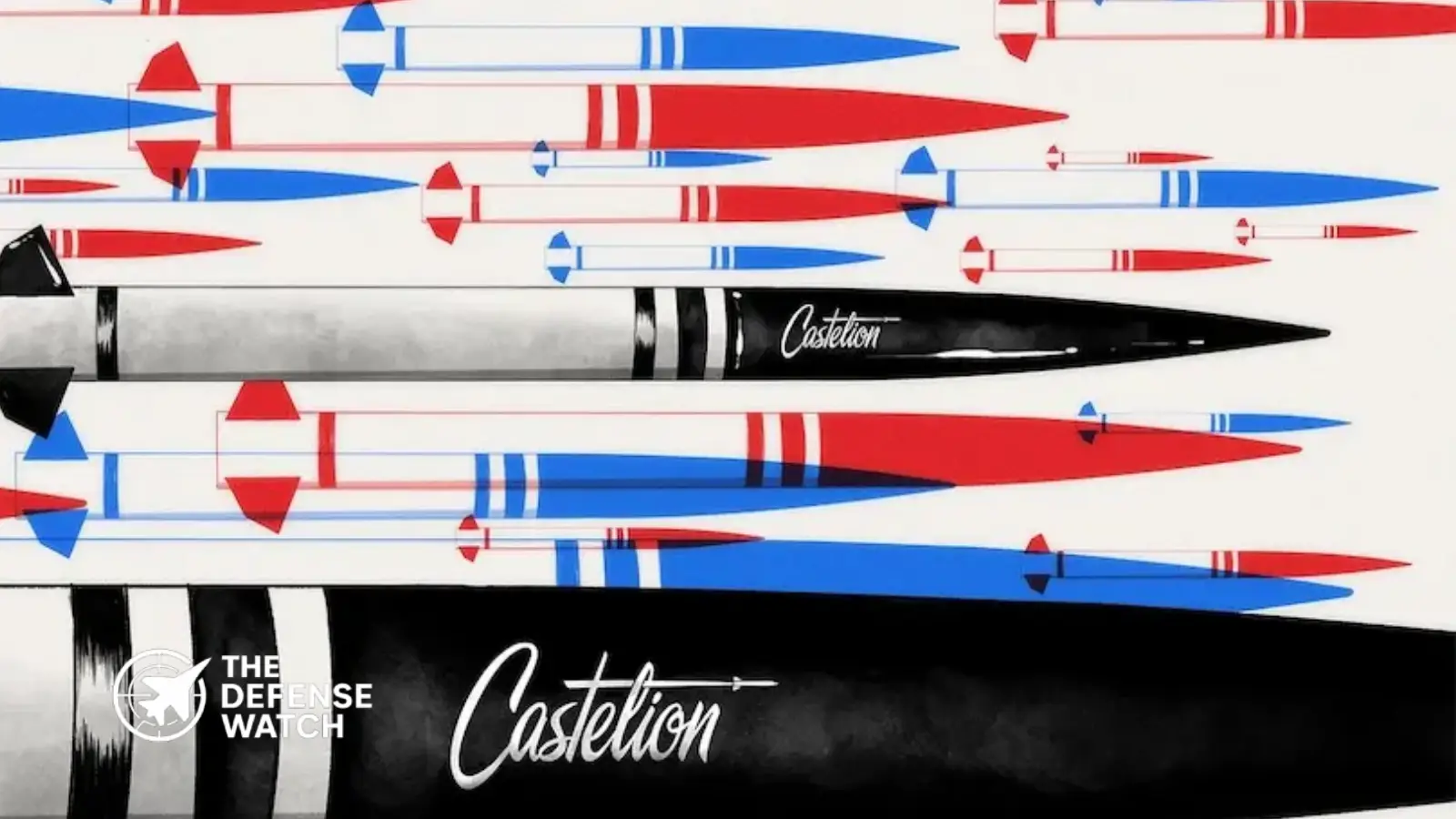
Castelion Expands Blackbeard Hypersonic Missile Production
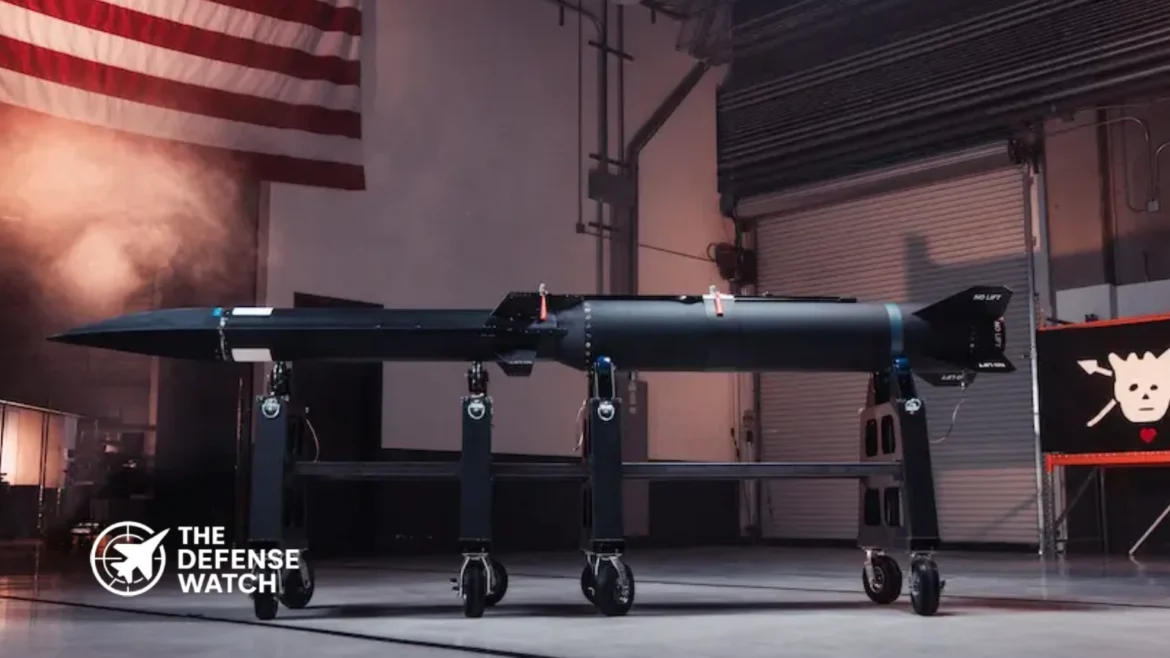
The Blackbeard hypersonic missile program is entering a new phase as Castelion raises about $1 billion in Series C financing to expand production, increase manufacturing capacity and develop additional strike and defensive weapons. The financing values the U.S. defense technology company at approximately $13 billion, according to Defence Industry Europe.
Takeaways
Castelion is putting private capital behind higher-rate U.S. hypersonic weapons production.
1. About $1 Billion Series C
Castelion has raised about $1 billion in Series C financing, combining $800 million in equity with $250 million in committed revolving credit financing.
2. Blackbeard Production Expansion
A substantial portion of the funding will support increased Blackbeard production capacity at Project Ranger in New Mexico.
3. Minimum 500 Missiles Annually
A May 2026 Department of War framework provides a pathway to a minimum procurement of 500 Blackbeard missiles per year after testing and validation.
4. Navy Integration Underway
The U.S. Navy has awarded Castelion contracts covering Blackbeard integration and production, including a $23.4 million order for 50 pre-production prototypes.
5. Broader Weapon Portfolio
The new financing will also support a longer-range precision strike weapon and defensive systems intended to use technologies and manufacturing methods developed for Blackbeard.
The financing consists of $800 million in equity and $250 million in committed financing for a revolving credit facility. JPMorganChase’s Strategic Investment Group, Andreessen Horowitz and funds managed by Carlyle co-led the equity round. Lightspeed Venture Partners, Lavrock Ventures, Altimeter, General Catalyst and Interlagos also participated, while T. Rowe Price Associates joined as a new investor.
The scale of the investment is significant because Castelion is attempting to address one of the most difficult parts of hypersonic weapons development: moving from successful testing and limited production to repeatable, high-volume manufacturing.
Private Capital Targets U.S. Weapons Production
Castelion said hundreds of millions of dollars from the financing will be committed to expanding Blackbeard production capacity. Much of that investment is expected to support Project Ranger, the company’s 1,000-acre manufacturing campus in Sandoval County, New Mexico. Castelion previously committed more than $250 million in private infrastructure spending at the site.
The company describes Project Ranger as a dedicated hypersonic missile manufacturing facility designed to support higher production rates.
That focus reflects a wider change in U.S. defense acquisition. For years, hypersonic weapons have been heavily associated with expensive development programs and limited numbers of test articles. The emerging requirement is different: the military increasingly wants weapons that can be produced in meaningful quantities without making each round prohibitively expensive.
The Department of War’s May 2026 framework agreement with Castelion established a pathway for a two-year, multi-year procurement contract covering at least 500 Blackbeard missiles annually once testing and validation are completed. The department also said it was seeking authorizations and appropriations for a potential purchase of more than 12,000 Blackbeard missiles over five years.
Those figures represent planned procurement pathways, not a completed purchase of 12,000 missiles.
Blackbeard Moves Toward Operational Fielding
The Blackbeard hypersonic missile has progressed through development, flight testing and integration work with U.S. military platforms.
In June, Castelion announced a $23.4 million U.S. Navy delivery order for 50 Blackbeard early operational capability pre-production prototypes and 50 associated storage and shipping containers. The company said the order would support production at Project Ranger and help move the weapon toward operationally relevant production.
The Navy also awarded Castelion a $105 million contract in April to continue integration of Blackbeard with the F/A-18 Super Hornet and support a planned Early Operational Capability in 2027. The work includes system safety and certification testing, flight testing and carrier-related integration activities.
In February, the Navy separately awarded nearly $50 million to advance Blackbeard from prototype development toward integrated early operational capability.
Together, these awards show that the program is moving beyond basic technology demonstrations. The remaining challenge is to prove that the weapon can meet military requirements while production expands.
Why Production Capacity Matters
Hypersonic weapons generally operate at speeds above Mach 5 and can maneuver during flight, making them difficult to track and intercept. U.S. congressional research has identified hypersonic weapons as an important area of competition involving the United States, China and Russia.
The United States has several major hypersonic programs, including the Army’s Long-Range Hypersonic Weapon and the Navy’s Conventional Prompt Strike system. However, the industrial challenge extends beyond developing a weapon that can fly at hypersonic speed.
Materials, propulsion, thermal protection, precision manufacturing, testing infrastructure and specialized labor can all constrain production. A 2026 congressional report specifically highlighted manufacturing bottlenecks involving carbon-carbon composites, precision machining, materials fabrication and system assembly.
This makes Castelion’s manufacturing approach particularly relevant. The company has positioned Blackbeard around manufacturability from the beginning rather than treating mass production as a later stage of the program.
That approach could matter if the Pentagon’s requirement shifts from a small number of highly capable weapons toward larger inventories that can be replenished quickly.
Longer-Range Strike Weapon Under Development
The new financing is not limited to Blackbeard.
Castelion said it will accelerate development and testing of a longer-range precision-strike weapon that has been under development for several years. The company said the weapon uses core technologies, components and manufacturing methods developed through Blackbeard, with the objective of providing another lower-cost strike option capable of higher production rates.
Castelion is also developing defensive systems based on technologies and manufacturing processes established for Blackbeard. The company said the objective is to reduce costs and increase production rates for air and missile defense missions, potentially allowing larger inventories of interceptors.
This is an important industrial-base development. Rather than building separate manufacturing ecosystems for every weapon, Castelion is seeking to reuse components, processes and production infrastructure across multiple weapon families.
U.S. Hypersonic Competition Adds Pressure
The push comes as the United States continues to close a gap with China and Russia in operational hypersonic weapons.
A Congressional Research Service assessment published in 2025 noted that Russia and China had reportedly fielded operational hypersonic glide and cruise missile capabilities, while U.S. programs remained largely in development. The report also highlighted the technical difficulty of conventionally armed U.S. hypersonic weapons, which require high accuracy rather than relying on nuclear warhead effects.
Congress has also raised concerns about whether some U.S. hypersonic programs can transition into sustained production. The House Armed Services Committee said in its FY2026 defense authorization report that the emerging U.S. hypersonic industrial base faces a risk if programs do not establish clear paths toward tactically relevant quantities.
Castelion’s model directly addresses that production problem by combining government procurement commitments with private investment.
The company said it has secured more than $500 million in U.S. military contracts over the previous 18 months. It now plans to use the Series C capital to expand Blackbeard production, develop longer-range strike capabilities and build defensive systems.
What The Funding Means For Blackbeard
The most important development is not simply the size of Castelion’s funding round. It is the combination of private capital, government procurement commitments and an existing production facility.
The Blackbeard hypersonic missile program still faces the normal testing, integration and validation requirements associated with a new weapon. The Navy’s planned 2027 early operational capability and the Department of War’s production framework depend on successful completion of those steps.
If those milestones are achieved, the program could provide the U.S. military with another path toward producing hypersonic strike weapons at higher rates.
For Castelion, the immediate task is therefore straightforward but demanding: convert investment into manufacturing capacity, complete military testing and demonstrate that a hypersonic weapon designed for production can be delivered in quantities relevant to operational planning.
The $1 billion financing round gives the company substantially more capital to pursue that objective, while the existing Navy contracts and Department of War framework provide a government pathway for eventual procurement.
Executive Summary:
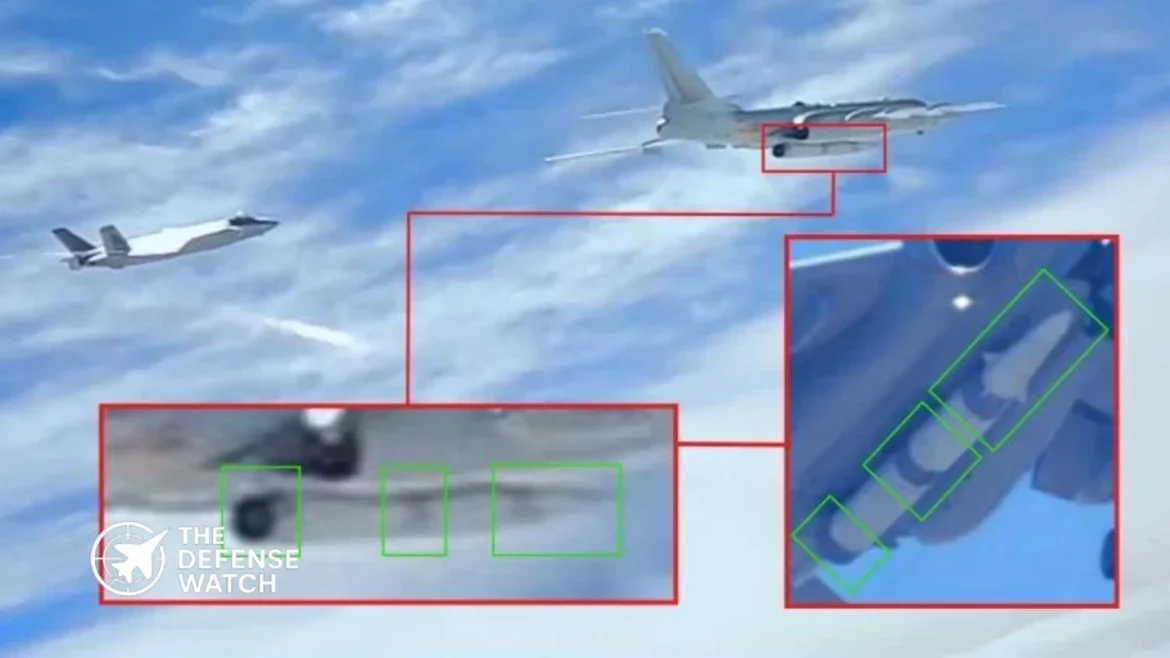
China has released its first official in flight footage showing an H-6N strategic bomber carrying the JL-1 nuclear capable air launched ballistic missile while escorted by two J-20 stealth fighters. The imagery highlights Beijing’s continued efforts to strengthen its long range conventional and nuclear strike capabilities while demonstrating an increasingly integrated strategic air force.
China Reveals H-6N Bomber Carrying JL-1 Air Launched Ballistic Missile
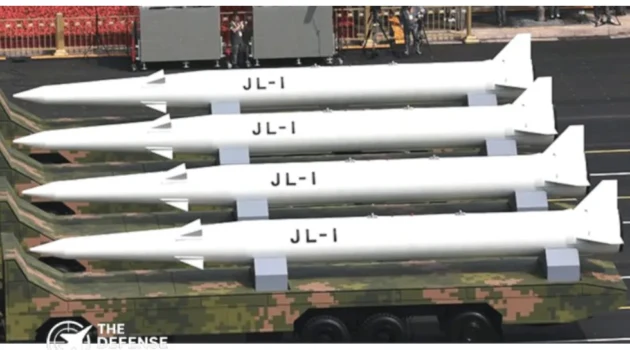
China has publicly released the first in flight footage of an H-6N bomber carrying the JL-1 air launched ballistic missile (ALBM), providing the clearest official view to date of one of the country’s most significant strategic aviation capabilities.
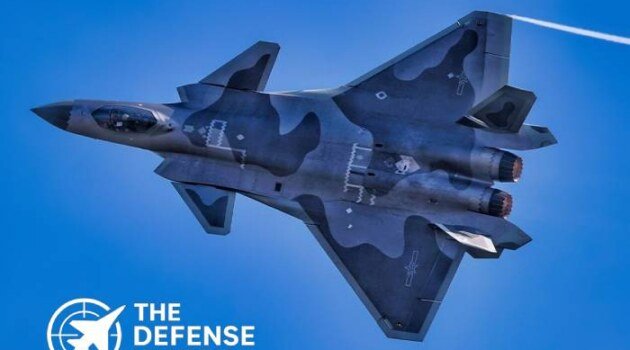
The video shows the H-6N operating with two J-20 fifth generation stealth fighters, underscoring the People’s Liberation Army Air Force’s emphasis on integrating strategic bombers with advanced fighter escorts during long range missions.
The release marks another step in China’s effort to showcase key elements of its evolving strategic deterrent while demonstrating improvements in long range strike operations.
First Official View of the JL-1 Air Launched Ballistic Missile
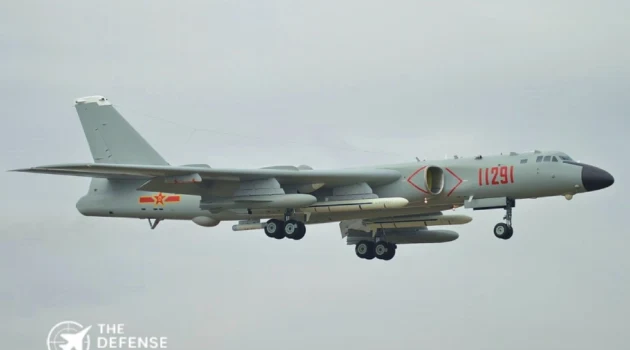
The footage provides the first official confirmation of the H-6N carrying the large externally mounted JL-1 missile beneath its fuselage.
Unlike earlier H-6 bomber variants, the H-6N was specifically modified with a recessed fuselage section to accommodate oversized weapons, including air launched ballistic missiles. The aircraft also incorporates aerial refueling capability, allowing significantly longer mission endurance than previous members of the H-6 family.
Defense analysts have long assessed that the H-6N was developed to serve as China’s first dedicated airborne platform for launching ballistic missiles capable of striking targets far beyond the reach of conventional cruise missiles.
JL-1 Strengthens China’s Long Range Strike Options
The JL-1 air launched ballistic missile is believed to be a nuclear capable weapon designed to expand China’s strategic strike flexibility.
Open source defense assessments indicate the missile offers an estimated range approaching 8,000 kilometers, depending on launch profile and payload configuration.
Key reported capabilities include:
- Nuclear capable payload
- Air launched ballistic trajectory
- Hypersonic reentry vehicle
- Long range land attack capability
- Potential anti ship strike capability against high value naval targets
Launching a ballistic missile from an airborne platform extends operational reach because the missile begins its flight at altitude and speed rather than from a fixed ground launcher.
This combination increases deployment flexibility while complicating an adversary’s early warning and missile defense planning.
J-20 Escort Highlights Integrated Air Operations
Another notable aspect of the released footage is the presence of two J-20 stealth fighters accompanying the H-6N.
The J-20 is China’s premier fifth generation fighter and is increasingly tasked with protecting high value airborne assets during long range operations.
Operating strategic bombers alongside stealth fighters reflects an evolving operational concept similar to those employed by other major air forces, where escorts enhance survivability against advanced air defense systems and hostile fighters.
The pairing also demonstrates improvements in command, control, and coordinated air operations across multiple aircraft types.
Strategic Significance Beyond the Video
While the footage primarily serves as an official demonstration, it also reflects broader trends within China’s military modernization program.
Over the past decade, Beijing has invested heavily in expanding its strategic aviation capabilities through new bombers, long range precision weapons, hypersonic systems, aerial refueling assets, and advanced fighter aircraft.
The H-6N forms an important component of this modernization effort by providing an airborne launch platform capable of supporting both conventional and nuclear missions.
For regional militaries and defense planners, an operational air launched ballistic missile introduces additional complexity compared with traditional ground based missile forces. Airborne launch platforms can approach from multiple directions, operate over vast distances with tanker support, and create less predictable attack profiles.
Although many technical details of the JL-1 remain classified, the newly released imagery offers additional visual confirmation of a capability that analysts have monitored for several years.
Regional Security Implications
The appearance of the H-6N carrying the JL-1 comes as security competition across the Indo-Pacific continues to intensify.
China has accelerated modernization across its air, naval, missile, and space forces while regional countries and the United States continue investing in integrated air and missile defense, advanced fighters, and long range precision strike systems.
The release of official imagery is therefore significant not only as a technological milestone but also as a strategic communication effort highlighting China’s expanding long range deterrence capabilities.
While the video does not reveal new technical specifications, it provides valuable confirmation of an operational configuration that had previously been observed primarily through satellite imagery and unofficial photographs.
Conclusion
China’s first official in flight footage of the H-6N bomber carrying the JL-1 air launched ballistic missile represents an important public demonstration of its evolving long range strike capabilities. Combined with J-20 stealth fighter escorts, the imagery illustrates an increasingly integrated strategic aviation force capable of supporting both conventional and nuclear deterrence missions.
Although many characteristics of the JL-1 remain undisclosed, the footage reinforces assessments that China continues to expand the flexibility, reach, and survivability of its strategic air power as part of its broader military modernization strategy.
Executive Summary:
Kratos Defense & Security Solutions has opened its new $50 million Indiana Payload Integration Facility to strengthen U.S. hypersonic testing capabilities. The facility is intended to accelerate payload integration, environmental testing, and flight test preparation while supporting the Department of Defense’s growing demand for rapid hypersonic weapons development.
Kratos Opens $50 Million Indiana Hypersonic Facility To Strengthen U.S. Testing Infrastructure
Kratos’ hypersonic facility represents another major investment in America’s defense industrial base as the United States works to expand the pace of hypersonic weapons development and testing.
Located near Naval Support Activity Crane in Indiana, the new 68,000 square foot Indiana Payload Integration Facility (IPIF) has been built specifically to prepare, integrate, and test experimental payloads for next generation hypersonic systems. According to Kratos, the facility will improve the speed at which payloads move from laboratory development to flight testing while supporting multiple government and industry programs.
The company said the project required an investment exceeding $50 million and forms part of a broader strategy to expand U.S. hypersonic infrastructure.
Built To Increase Flight Test Tempo
One of the primary missions of the Indiana Payload Integration Facility is supporting the Multi Service Advanced Capabilities Hypersonic Testbed (MACH TB) program.
The complex includes laboratories, payload integration areas, environmental testing equipment, and manufacturing capabilities designed to process experimental payloads more efficiently before launch.
Kratos says engineers designed the workflow specifically to reduce bottlenecks that traditionally slow hypersonic testing programs. Faster payload preparation allows more frequent flight tests, helping government agencies validate new technologies at a quicker pace.
Unlike production plants focused on manufacturing operational weapons, the Indiana facility emphasizes testing, evaluation, and rapid experimentation, critical stages before systems enter full rate production.
Why The Facility Matters
The United States has significantly increased investment in hypersonic technologies over the past several years as the Pentagon seeks to accelerate development of systems capable of traveling at speeds above Mach 5.
Testing infrastructure has emerged as one of the largest constraints in hypersonic development. Modern hypersonic vehicles require complex environmental testing, payload integration, telemetry verification, and launch preparation before every flight.
Facilities capable of performing these specialized tasks remain limited.
The opening of Kratos’ hypersonic facility therefore addresses more than a construction milestone. It expands national capacity for conducting frequent and affordable flight tests, an area repeatedly identified by defense officials as essential for shortening development timelines.
Supporting America’s Defense Industrial Base
The Indiana site is expected to create more than 100 high skilled jobs, with average annual salaries exceeding $80,000, according to Kratos and Indiana state officials.
Its location near Naval Surface Warfare Center Crane also provides access to one of the nation’s largest defense research and engineering communities.
Kratos has described the project as part of a broader effort to strengthen domestic defense manufacturing while improving collaboration among military organizations, government laboratories, and private industry.
The facility also complements other company investments across Indiana, including propulsion and energetics initiatives intended to expand America’s missile production capabilities.
Analysis: More Than A Construction Project
Beyond the physical infrastructure, the new facility reflects a broader shift in U.S. defense priorities.
In recent years, Pentagon leaders have emphasized that maintaining technological superiority requires not only advanced weapon designs but also the industrial capacity to test and refine them quickly.
Historically, limited test infrastructure has restricted the number of annual hypersonic flight demonstrations. By increasing payload processing capacity and reducing preparation time, facilities like IPIF can help improve testing cadence across multiple programs.
That increased tempo may prove as strategically important as advances in propulsion or guidance systems because frequent testing accelerates engineering improvements and reduces program risk before operational deployment.
The investment also illustrates growing reliance on commercial defense companies to provide specialized infrastructure alongside traditional government laboratories.
Growing Momentum For Kratos
The facility opens during a period of expanding hypersonic activity for Kratos.
Earlier this month, the company announced it had received approximately $400 million in new Department of War funding supporting hypersonic systems and other national security programs, reinforcing its role in the U.S. hypersonic industrial base.
While details of those programs remain limited due to security considerations, the funding underscores continued government investment in expanding America’s high speed weapons capabilities.
Combined with the Indiana Payload Integration Facility, these developments position Kratos as a key contributor to future U.S. hypersonic testing, payload integration, and systems development.
Conclusion
The opening of Kratos’ $50 million Indiana hypersonic facility marks a significant expansion of U.S. testing infrastructure rather than simply another manufacturing investment.
By increasing payload integration capacity, environmental testing capabilities, and support for MACH TB flight testing, the facility addresses a critical component of America’s effort to accelerate hypersonic weapons development. As demand for faster testing continues to grow, infrastructure investments like IPIF are expected to play an increasingly important role in strengthening the nation’s defense industrial base.
- Lockheed Martin Space received an $83.18 million contract modification to procure additional All Up Rounds for U.S. Army requirements.
- The award supports the Navy-led Conventional Prompt Strike program, which shares key technologies with the Army’s Long Range Hypersonic Weapon.
- Nearly $79.3 million in Army missile procurement funding was obligated immediately at contract award.
- Production work will be distributed across Colorado, Utah, Alabama, Connecticut, New York, California, and other U.S. industrial sites.
- The contract reinforces U.S. efforts to field operational hypersonic strike capabilities amid intensifying competition with China and Russia.
Lockheed Martin Space has been awarded an $83.18 million cost-plus-incentive-fee contract modification to procure additional hypersonic missile All Up Rounds (AURs) for the U.S. Army under the Navy’s Conventional Prompt Strike (CPS) program.
The award, announced by the U.S. Department of Defense, modifies contract N00030-22-C-1025 and was issued by Strategic Systems Programs (SSP), the Navy organization responsible for managing the nation’s sea-based strategic deterrent and the Conventional Prompt Strike initiative. The procurement will expand inventory available to the Army as the Pentagon continues transitioning hypersonic weapons from developmental testing into operational deployment.
The modification was awarded on a sole-source basis under 10 U.S. Code 3204(a)(1), which permits contracting without full competition when only one responsible source can satisfy government requirements.
Deep Technical & Strategic Context Analysis
The contract centers on the procurement of additional All Up Rounds, the complete missile assemblies intended for operational use rather than developmental components. Within the CPS architecture, these rounds incorporate the Common Hypersonic Glide Body (C-HGB), a maneuverable hypersonic vehicle designed to travel at speeds exceeding Mach 5 while remaining capable of changing trajectory during flight. This maneuverability significantly complicates interception compared with traditional ballistic missiles.
The Navy’s Conventional Prompt Strike program and the Army’s Long Range Hypersonic Weapon (LRHW), also known as Dark Eagle, are closely linked through a common missile design and shared glide body technology. By leveraging a joint development approach, the Pentagon seeks to reduce costs, accelerate production, and create a common hypersonic strike ecosystem across multiple military services. The Army’s LRHW batteries and the Navy’s future ship and submarine based CPS launch systems are expected to provide commanders with the ability to engage high-value targets at long ranges with minimal warning time.
The use of a cost-plus-incentive-fee contract is notable because it reflects the technical complexity and ongoing maturation of hypersonic weapon production. Under this arrangement, the government reimburses allowable development and manufacturing costs while providing performance-based incentives tied to schedule, cost control, and technical outcomes. Such contract structures are common for advanced defense programs where production processes continue to evolve and technical risk remains significant.
Strategically, the award underscores the Pentagon’s determination to expand hypersonic inventories following years of intensive testing and capability demonstrations. U.S. military planners increasingly view hypersonic weapons as essential for penetrating sophisticated anti-access and area-denial networks developed by near-peer competitors, particularly in the Indo-Pacific theater. Additional missile procurement also indicates growing confidence in transitioning the capability toward sustained operational fielding.
Contract Breakdown & Details
Contract Value
- Award Amount: $83,180,528
- Contract Number: N00030-22-C-1025 (Modification P00093)
- Prime Contractor: Lockheed Martin Space
- Contract Type: Cost-Plus-Incentive-Fee (CPIF)
- Contracting Agency: Strategic Systems Programs (SSP), Washington, D.C.
- Acquisition Method: Sole-source procurement
Purpose of the Award
- Procurement of additional All Up Rounds (AURs)
- Supports U.S. Army operational requirements
- Executed under the Navy’s Conventional Prompt Strike program
- Expands inventory of deployable hypersonic missile systems
Funding Details
- Funding Source: Fiscal Year 2025 Missile Procurement, Army Reconciliation Munitions funds
- Amount Obligated at Award: $79,251,957
- Expiration Status: Funds will remain available and will not expire at the end of the current fiscal year
Industrial Base Distribution
Work will be performed across multiple facilities supporting the CPS industrial supply chain:
| Location | Share of Work |
|---|---|
| Denver, Colorado | 31% |
| Magna, Utah | 26% |
| Cortland, Alabama | 14% |
| Simsbury, Connecticut | 10% |
| East Aurora, New York | 7% |
| Owego, New York | 7% |
| Sunnyvale, California | 2% |
| Other U.S. locations | 3% |
Program Schedule
- Expected Completion Date: June 30, 2029
- Supports long-term production ramp-up and inventory growth for future Army hypersonic formations.
Why This Contract Matters
The latest modification highlights how the Pentagon is moving beyond experimental hypersonic testing and toward building meaningful stockpiles of operational weapons. While previous headlines surrounding the Conventional Prompt Strike and Dark Eagle programs largely focused on flight tests and developmental milestones, this award reflects a more practical phase centered on manufacturing capacity and inventory accumulation.
For Lockheed Martin, the contract further strengthens its position as a central industrial partner in America’s hypersonic weapons enterprise. For the U.S. military, additional missile procurement is a critical step toward creating a credible long-range conventional strike capability capable of rapidly engaging time-sensitive targets across contested regions.
As the United States seeks to match and eventually surpass advances made by China and Russia in hypersonic weapons deployment, production-focused awards such as this one may prove as strategically significant as the test launches that initially demonstrated the technology’s potential.
Executive Summary:
Hypersonix Launch Systems is accelerating development of future hypersonic aircraft after its DART AE demonstrator completed a successful flight test at speeds exceeding Mach 5. The mission validated key propulsion, materials, guidance, and control technologies, providing valuable flight data for future operational systems and supporting broader U.S. and allied hypersonic development efforts.
Hypersonix DART AE Demonstrates Key Hypersonic Technologies
The Hypersonix DART AE program has entered a new phase following a successful flight test that validated several core technologies required for future hypersonic aircraft and test platforms.
Australian company Hypersonix Launch Systems confirmed that its DART AE hypersonic demonstrator successfully completed its first flight during the mission known as “That’s Not A Knife,” launched from Wallops Island, Virginia, aboard a Rocket Lab HASTE vehicle. The test was conducted under the U.S. Defense Innovation Unit’s Hypersonic and High-Cadence Airborne Testing (HyCAT) initiative.
According to the company, the mission achieved hypersonic flight conditions exceeding Mach 5 and generated critical data on propulsion, aerothermal performance, structural behavior, materials performance, and vehicle control systems.
The DART AE demonstrator was specifically designed to validate technologies in real-world flight conditions rather than laboratory simulations, an important distinction in hypersonic development where extreme temperatures, aerodynamic loads, and control challenges are difficult to replicate on the ground.
Why The Flight Matters
The successful DART AE mission highlights a growing shift in hypersonic development toward lower-cost, higher-frequency testing programs.
One of the major bottlenecks in hypersonic weapons and aircraft development has been limited access to flight-testing infrastructure. The Defense Innovation Unit’s HyCAT initiative aims to increase testing cadence by leveraging commercial industry partners capable of rapidly fielding experimental platforms.

The DART AE flight represents a practical example of this approach. Rather than developing a complete operational weapon system, the aircraft serves as a reusable technology pathway for validating propulsion concepts, sensors, communications, and guidance systems that could later support military or dual-use applications.
From a strategic perspective, hypersonic programs increasingly depend on frequent testing to mature technologies and reduce development risk. Flight data remains the most valuable source of information for engineers attempting to understand how vehicles behave in sustained hypersonic environments.
Hypersonix co-founder Dr. Michael Smart stated that the mission allowed the company to test propulsion, materials, and control systems in actual hypersonic conditions, emphasizing that real flight data cannot be fully replaced by simulations or ground testing.
DART AE’s Unique Design
Several aspects of the DART AE platform distinguish it from traditional aerospace test vehicles.
The aircraft incorporates Hypersonix’s SPARTAN scramjet technology and relies heavily on additive manufacturing techniques. The company has described DART AE as the world’s first hypersonic aircraft platform produced entirely through 3D printing using high-temperature metallic alloys.
The demonstrator is approximately three to three and a half meters long and was designed to support testing of advanced propulsion and thermal management technologies under extreme flight conditions.
Prior to launch, the aircraft completed extensive structural and vibration testing to verify its ability to withstand launch loads and hypersonic flight stresses. Those evaluations cleared the vehicle for shipment to the United States and eventual integration with Rocket Lab’s HASTE launch system.
What Comes Next For Hypersonix
The successful DART AE flight provides a foundation for Hypersonix’s broader roadmap, which includes development of more advanced hypersonic aircraft capable of sustained operations at speeds approaching Mach 12.
The company is also advancing its next-generation platform known as VISR (Velos Intelligence, Surveillance and Reconnaissance), which is intended to expand the operational utility of hypersonic technologies beyond experimental demonstrations.
Recent investment activity has strengthened the company’s position. In late 2025, Hypersonix secured approximately $46 million in Series A funding from a consortium of defense and aerospace investors, including support from Swedish defense firm Saab, Australia’s National Reconstruction Fund Corporation, Queensland Investment Corporation, and other strategic backers. The funding is being used to accelerate flight testing and expand advanced manufacturing capacity.
Growing Importance Of Commercial Hypersonic Testing
The DART AE mission reflects a broader trend across the United States and allied nations toward leveraging commercial aerospace companies to accelerate hypersonic research.
As governments seek faster development cycles for next-generation aerospace systems, commercial test vehicles offer a potentially more cost-effective method for validating technologies before transitioning them into operational programs.
For defense planners, the significance of the DART AE mission extends beyond a single flight. The test demonstrated that commercial industry can provide credible hypersonic test capabilities while generating the real-world data necessary to mature future systems. In an environment where testing capacity remains a strategic constraint, platforms like DART AE could play an i
(adsbygoogle = window.adsbygoogle || []).push({});Executive Summary:
Saronic and Castelion have announced plans to integrate the Blackbeard hypersonic weapon with the Marauder medium unmanned surface vessel for a live maritime demonstration in 2027. The effort could provide the U.S. military with a new distributed strike option that combines autonomous naval platforms with long range hypersonic capabilities.
Saronic And Castelion Plan 2027 Blackbeard Hypersonic Demonstration
The Blackbeard hypersonic missile is set to become part of a new maritime capability following a partnership between U.S. defense technology firms Saronic and Castelion.
The companies announced plans to integrate Castelion’s Blackbeard hypersonic vehicle with Saronic’s Marauder Medium Unmanned Surface Vessel (MUSV), with a maritime launch demonstration targeted for 2027. According to both companies, the effort represents the first planned integration of a hypersonic weapon with an autonomous surface vessel.
The announcement comes as the U.S. Department of Defense continues pursuing distributed maritime operations and seeks additional long range strike options capable of operating across contested environments.
(adsbygoogle = window.adsbygoogle || []).push({});What Is The Marauder Unmanned Surface Vessel?
Saronic unveiled its first Marauder MUSV earlier this year. The autonomous vessel is designed for long endurance missions and can operate either independently or under remote human supervision. The platform has a reported range of up to 5,400 nautical miles, speeds exceeding 25 knots, and the ability to carry payloads of up to 150 metric tons.
Its modular architecture allows the vessel to support multiple mission sets, including intelligence gathering, logistics, surveillance, maritime security operations, and future weapons integration.
By pairing Marauder with the Blackbeard hypersonic missile, Saronic and Castelion aim to transform the vessel from a support platform into a potential strike asset capable of operating far from traditional naval formations.
(adsbygoogle = window.adsbygoogle || []).push({});Blackbeard’s Growing Role In U.S. Hypersonic Programs
The Blackbeard weapon has become one of the most closely watched hypersonic development programs in the United States.
In February 2026, the U.S. Navy awarded Castelion a nearly $50 million contract to advance Blackbeard toward an early operational capability, with work scheduled through November 2027.
Two months later, the Navy awarded an additional $105 million contract to support integration of Blackbeard onto the F/A-18E/F Super Hornet fleet and continue testing and certification efforts ahead of a planned early operational capability in 2027.
Castelion describes Blackbeard as a lower cost, scalable hypersonic strike weapon designed from the outset for mass production. The company has also invested heavily in manufacturing infrastructure, including its Project Ranger production facility in New Mexico.
(adsbygoogle = window.adsbygoogle || []).push({});Why The Maritime Launch Matters
The significance of the Saronic and Castelion partnership extends beyond the technology demonstration itself.
For decades, most hypersonic weapons programs have focused on land based launchers, strategic bombers, fighter aircraft, or large naval combatants. Integrating a hypersonic capability onto an autonomous surface vessel introduces a different operational model.
A network of unmanned vessels carrying strike weapons could complicate adversary targeting efforts while reducing reliance on a limited number of high value crewed platforms. The concept aligns with broader Pentagon initiatives emphasizing distributed lethality, operational resilience, and the use of autonomous systems across the Indo-Pacific and other contested theaters.
(adsbygoogle = window.adsbygoogle || []).push({});The approach could also expand launch options available to commanders during maritime operations, particularly in scenarios where traditional surface combatants may face heightened risk from anti ship missile threats.
Strategic Implications For U.S. Naval Modernization
The planned demonstration highlights two major trends shaping U.S. defense modernization.
First, autonomous vessels are rapidly evolving from surveillance and logistics platforms into potential combat systems capable of carrying significant payloads.
Second, hypersonic weapons are moving beyond experimental programs and toward operational deployment across multiple military services. Recent Navy investments in the Blackbeard hypersonic missile indicate growing confidence in the program’s maturity and affordability.
If the 2027 demonstration succeeds, it could provide valuable data on how autonomous maritime platforms can support future long range strike missions. It may also influence how the Navy and other services structure future distributed force architectures.
(adsbygoogle = window.adsbygoogle || []).push({});While the capability remains in the testing phase, the combination of autonomous vessels and hypersonic weapons reflects a broader shift toward more flexible, survivable, and scalable strike networks.
Looking Ahead
Saronic and Castelion are expected to continue integration work over the next year before conducting the planned 2027 maritime launch demonstration. The effort will be closely watched by defense planners as the United States seeks to expand its portfolio of distributed maritime strike capabilities.
For now, the project represents another step in the convergence of autonomous naval systems and next generation hypersonic weapons, two technologies increasingly viewed as central to future military operations.
(adsbygoogle = window.adsbygoogle || []).push({});Executive Summary:
THAAD and Patriot PAC-3 represent the two most combat-tested layers of U.S. ballistic missile defense — but the emergence of maneuvering hypersonic glide vehicles is stress-testing both systems in ways their original architects never designed for. Real-world expenditure data from the June 2025 Israel-Iran conflict, where over 150 THAAD interceptors were fired in twelve days, has exposed a production crisis that no amount of technical capability can paper over. Understanding what these systems can and cannot do against hypersonic threats is no longer an academic exercise — it is the defining strategic question of the 2020s.
Thirty-nine THAAD interceptors, at $12.7 million each, were fired in a single twelve-day window during June 2025. That figure — a minimum estimate from CSIS and Arms Control Wonk analysis — consumed more than a full year’s production run of the entire system. The question of whether these interceptors actually work against the newest category of hypersonic threats is not rhetorical. It now has budget line items, operational after-action reports, and documented failures attached to it.
The layered air defense problem comes down to geometry, physics, and time windows measured in seconds. THAAD and Patriot PAC-3 MSE are complementary systems that occupy different altitude bands in U.S. missile defense architecture. Neither was designed primarily to defeat maneuvering hypersonic glide vehicles. Both are being asked to do exactly that.
The Architecture of Layered Defense: What THAAD and PAC-3 Are Actually Built to Do
THAAD — Terminal High Altitude Area Defense — is a hit-to-kill system produced by Lockheed Martin. It is designed to defeat short- and medium-range ballistic missiles in the terminal phase of flight, engaging targets both inside and outside the atmosphere using kinetic impact technology. The system’s operational altitude band runs from approximately 40 km to 150 km, sitting above Patriot but below the exoatmospheric intercept envelope of the Navy’s SM-3.
A complete THAAD battery deploys with six M1120 HEMTT-based launchers, each carrying eight interceptors, for a total capacity of 48 missiles, requiring a 95-soldier crew for full operations. The AN/TPY-2 radar — which received a Gallium Nitride (GaN) upgrade delivered in May 2025 that doubles detection range and provides enhanced sensitivity for hypersonic threat tracking — is the system’s most strategically valuable component. The radar alone runs $400–500 million per unit.
Patriot PAC-3 MSE (Missile Segment Enhanced) operates at the lower tier, handling threats in the 10–40 km altitude band that THAAD either overshoots or cannot engage cost-effectively. PAC-3 MSE features a dual-pulse motor, improved guidance, and the ability to counter ballistic missiles, cruise missiles, and aircraft, with an extended range of 60-plus kilometers. In 2022, Lockheed Martin integrated PAC-3 MSE with the THAAD system, allowing the Army to engage targets across both altitude bands without co-locating the two weapon systems — a significant reduction in logistics and ground equipment requirements.

The cost differential between the two systems is stark. THAAD interceptors cost $12.7 million per unit, while Patriot PAC-3 MSE interceptors run $3.7–4.2 million each — roughly 71 percent less expensive. That gap matters enormously when both systems are firing at volume.
The Hypersonic Problem: Physics That Neither System Was Designed For
A conventional ballistic missile follows a predictable arc. Radar tracks the trajectory; fire control calculates the intercept point; the interceptor flies to that geometry. The physics are difficult, but deterministic. THAAD has achieved a 100% success rate in controlled operational testing against ballistic threats with this profile.
Hypersonic glide vehicles break that determinism. They operate in the 20–80 km altitude band — precisely the seam between THAAD’s lower engagement floor and Patriot’s upper ceiling — and they maneuver laterally throughout terminal approach. If a hypersonic weapon is maneuvering aggressively while traveling at speeds exceeding Mach 6, interceptors may struggle to match its lateral acceleration and speed. A study modeled a scenario involving PAC-3 MSE attempting to destroy a hypersonic glide vehicle similar to the experimental HTV-2, with results suggesting successful interception becomes unlikely if the target maintains speeds above Mach 6 during its terminal dive.
The engagement timeline is the critical constraint. At Mach 10 — roughly 3.4 km per second — a target descending through THAAD’s engagement envelope gives a fire control system roughly 20–30 seconds to detect, track, compute, and launch. Some interceptors, such as Aegis SM-2 and SM-6 missiles, travel at around Mach 4, making them potentially less effective against hypersonic threats. THAAD’s own interceptor reaches approximately Mach 8 in boost phase, but that speed advantage narrows dangerously against a maneuvering target.
(adsbygoogle = window.adsbygoogle || []).push({});Real-world data confirmed the gap. In May 2025, THAAD failed to intercept a hypersonic missile targeting Ben Gurion Airport, followed by a second failure against a Houthi missile within one week — highlighting challenges against maneuvering threats that operate below THAAD’s optimal engagement envelope.
Comparative Data: THAAD vs. Patriot PAC-3 MSE
Parameter THAAD Patriot PAC-3 MSE Interceptor Unit Cost ~$12.7 million ~$3.7–4.2 million Engagement Altitude 40–150 km ~10–40 km Engagement Range ~200 km ~60 km Intercept Mode Hit-to-kill, endo- & exo-atmospheric Hit-to-kill, endoatmospheric Interceptors Per Battery 48 (6 launchers × 8) 16 (4 launchers × 4) Radar System AN/TPY-2 (GaN-upgraded 2025) AN/MPQ-65 / LTAMDS (new) FY2025 Annual Production ~12–32 interceptors ~600–620 interceptors Target Threat Profile MRBMs, IRBMs, limited HGVs SRBMs, cruise missiles, aircraft Battery Acquisition Cost ~$3 billion ~$1 billion Combat Deployment Israel (2025), UAE (2022) Saudi Arabia, Israel, Qatar (2025) Sources: FY2025 MDA Budget, CSIS Missile Defense Report, JINSA cost analysis
The Magazine Problem: Why Production Numbers Are the Real Strategic Vulnerability
Technical performance is only half the equation. During the June 2025 Israel-Iran conflict, a minimum of 39 THAAD interceptors were fired in twelve days, at $12.7 million each — more than an entire year’s FY2026 production quota of 32 missiles, with FY2025 production running at only 12 interceptors total.
The broader inventory picture is more alarming. The United States reportedly engaged Iranian ballistic missile attacks with over 150 THAAD interceptors and approximately 80 SM-3s during the 12-day conflict, following a year of defending against Houthi attacks in the Red Sea that consumed roughly 200 SM-2 and SM-6 interceptors.
The Pentagon, in partnership with Lockheed Martin and Boeing, is now executing a seven-year plan to triple PAC-3 MSE production from roughly 600 annually to 2,000 by 2030. THAAD production will also be increased. But seven-year production ramps offer zero relief for a conflict that could exhaust stockpiles in weeks.
(adsbygoogle = window.adsbygoogle || []).push({});“The strategic math is already alarming. More than an entire year’s worth of THAAD interceptors were fired in twelve days. The production rate in FY2025 was only 12 missiles.” — Arms Control Wonk, June 2025
This is the defining asymmetry in modern layered defense: adversaries can manufacture hypersonic glide vehicles — and the ballistic missiles used to saturate defense systems — at a fraction of the cost of the interceptors fired to stop them. The U.S. used up roughly 14 percent of all its THAAD interceptors during the twelve-day conflict, with replenishment estimated to take three to eight years at prior production rates.
The Layered Defense Doctrine: What Game Theory Teaches Us About Saturation
This is where the operational parallels to competitive strategy become analytically useful — not as decoration, but as structural insight. Any competitive system with high-value, limited-magazine assets faces the same core problem: when your opponent can force you to expend premium resources against low-cost probes, they shift the exchange ratio in their favor.
Iran’s June 2025 campaign sent approximately 550 ballistic missiles at Israel. The saturation logic is explicit — force the defender to shoot expensive interceptors at cheap threats, then route the actual priority payloads through degraded coverage. During periods when THAAD represented over 60 percent of interceptors used, Iran increased its successful hit rate by one to four percent. That marginal increase, compounded across a sustained campaign, compounds into strategic effect.
Layered defense doctrine is the counter: force the adversary to penetrate multiple overlapping systems, each with different engagement geometries, rather than concentrating all intercept burden on one tier. THAAD handles the high-altitude midcourse threats; PAC-3 MSE takes the low-end leakers and cruise missiles; the Aegis SM-3 provides midcourse engagement at sea. The seam, however, is the hypersonic glide vehicle — which threads the 20–80 km band between these tiers and maneuvers to avoid the intercept geometry each system is optimized for.
Traditional systems like Patriot and THAAD can engage ballistic missiles traveling at hypersonic speeds along predictable trajectories, but maneuvering hypersonic glide vehicles present significantly greater challenges due to their ability to change course during flight. No fielded U.S. system has a confirmed intercept of a maneuvering HGV under real combat conditions. That gap remains open.
The Next Step: LTAMDS, THAAD-ER, and the Future of the Kill Chain
The path forward has three vectors. First, sensor modernization: the Lower Tier Air and Missile Defense Sensor (LTAMDS) is a next-generation AESA radar replacing the AN/MPQ-65, providing 360-degree coverage and simultaneous multi-mission capability, while IBCS (Integrated Battle Command System) enables a network-centric architecture allowing distributed sensors and shooters — breaking the “one radar, one battery” limitation.
Second, interceptor upgrades: THAAD-ER (Extended Range) is a future variant with a larger booster for increased velocity, enabling extended engagement range and higher intercept altitude. Higher terminal velocity on the interceptor is the most direct kinematic response to the HGV speed problem.
(adsbygoogle = window.adsbygoogle || []).push({});Third, directed energy. Israel’s Iron Beam delivered confirmed operational use against drone and rocket threats in limited engagement on the Lebanon front in March 2026, with per-shot costs estimated at approximately two dollars. Directed-energy systems cannot yet engage maneuvering ballistic threats at altitude — but against the low-end saturation threats that drain Patriot and THAAD magazines, they represent an asymmetric cost equalizer.
Conclusion: The Exchange Ratio Is the War
THAAD and Patriot PAC-3 MSE are, by any objective metric, the most combat-capable mobile air defense systems currently deployed. The PAC-3 MSE’s documented intercept of Russian Kinzhal missiles over Ukraine validated hit-to-kill technology against a real hypersonic weapon. THAAD’s performance defending Israel — even while burning through annual production in less than two weeks — confirmed the system’s lethality under sustained attack.
But the hypersonic glide vehicle remains a fundamentally different problem. It exploits the altitude seam between tiers, combines ballistic speed with aerodynamic maneuverability, and degrades the fire control geometry that both systems depend on. The GaN radar upgrades and LTAMDS modernization improve tracking. THAAD-ER improves terminal kinematics. Neither fully closes the intercept gap against a Mach 8+ maneuvering target at 40 km.
The deeper issue is economic. At $12.7 million per THAAD shot versus the estimated $3–10 million cost of an advanced hypersonic missile, the attacker holds the exchange ratio advantage. No amount of technical performance closes that gap if the magazine runs empty first.
The strategic lesson from the June 2025 data is unambiguous: production capacity is now as operationally decisive as intercept probability. Until annual THAAD production scales from dozens to hundreds, the most technically advanced air defense system in U.S. inventory remains a finite resource in an era of potentially unlimited threats.