










@2026 – All Right Reserved. TheDefenseWatch.com
- Home
- Defense Systems
- Submarines
- INS Drakon Submarine
INS Drakon Submarine
Defense Systems Full Specifications
1. General Information
| Name / Class | INS Drakon Submarine |
| Country of Origin | Israel / Germany |
| Manufacturer | ThyssenKrupp Marine Systems (TKMS), Germany |
| Operators | Israeli Navy |
| In Service | Expected 2025 to 2026 |
| Status | Active |
2. Dimensions & Design
| Length | Approximately 73 m |
| Beam (Width) | Approximately 6.8 m |
| Draught / Draft | Approximately 6.2 m |
| Displacement (Surfaced) | Approximately 2,400 tonnes |
| Displacement (Submerged) | Approximately 2,900 tonnes |
| Hull Material | High strength steel |
| Crew | Approximately 35 to 50 personnel |
3. Propulsion & Performance
| Power Source | Diesel Electric |
| Engine / Reactor Type | MTU Diesel Engines with Fuel Cell AIP |
| Propulsion System | Electric Motor and Propeller |
| Speed (Surfaced) | Approximately 10 knots |
| Speed (Submerged) | Approximately 20 knots |
| Range | More than 8,000 nautical miles (snorkeling) |
| Endurance | Several weeks submerged using AIP |
| Operational Depth | Over 200 m |
| Test Depth | Estimated over 300 m |
| Maximum Depth | Classified, estimated over 350 m |
4. Armament
| Torpedo Tubes | Ten tubes (533 mm and 650 mm) |
| Torpedoes / Missiles | Heavyweight torpedoes, anti ship missiles |
| Cruise / Ballistic Missiles | Believed capable of launching long range cruise missiles (not officially confirmed) |
| Mines | Capable |
| Decoys / Countermeasures | Acoustic decoys and countermeasure launchers |
5. Sensors & Electronics
| Sonar System | Integrated flank, bow and towed sonar arrays |
| Radar | Surface navigation radar |
| Combat Management System | Advanced integrated combat management system |
| Electronic Warfare System | Electronic support and countermeasure suite |
| Communication Systems | Secure satellite and military communications |
| Navigation Systems | INS, GPS and digital navigation suite |
6. Stealth & Defense
| Anechoic Coating | Yes |
| Noise Reduction Features | Advanced machinery isolation and quiet propulsion |
| Magnetic Signature Reduction | Yes |
| Acoustic Signature Level | Very lo |
7. Payload & Capacity
| Weapons Payload | Torpedoes, missiles and naval mines |
| Special Forces Accommodation | Yes |
| UUV / Drone Capability | Believed capable, officially undisclosed |
8. Notable Technologies
| Reactor / AIP Type | Hydrogen Fuel Cell Air Independent Propulsion |
| Automation Level | High |
| Special Features | Enlarged sail, extended hull, strategic strike capability, intelligence missions |
9. Operational History
| Major Deployments | Strategic patrols with Israeli Navy (expected) |
| Combat / Exercises | Operational service beginning after 2025 delivery |
| Upgrades | New enlarged sail and improved mission systems compared with earlier Dolphin II submarines |
10. Cost & Production
| Unit Cost | Estimated US$900 million to US$1.2 billion |
| Number Built | One INS Drakon, sixth Dolphin II family submarine for Israel |
| Production Period | Laid down during the 2010s, delivered in 2025 |
11. Media & Credits
| Image / Video Source | Israeli Navy, ThyssenKrupp Marine Systems (TKMS), German Ministry of Defence |
| Official Website | ThyssenKrupp Marine Systems |
| Reference Credit | Israeli Navy, TKMS, German Government releases, defense industry publications |
PROS
- Excellent underwater stealth characteristics
- Air Independent Propulsion enables extended submerged endurance
- Long range strategic patrol capability
- Advanced sonar and electronic warfare systems
- Supports intelligence gathering and special operations missions
CONS
- High acquisition and lifecycle costs
- Many capabilities remain classified
- Limited fleet size reduces operational availability
- Conventional propulsion offers lower sustained speed than nuclear submarines
- Complex maintenance requirements
INS Drakon Dolphin-II Attack Submarine
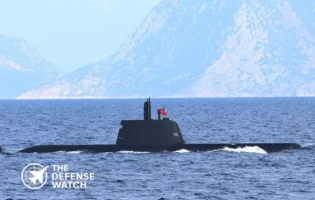
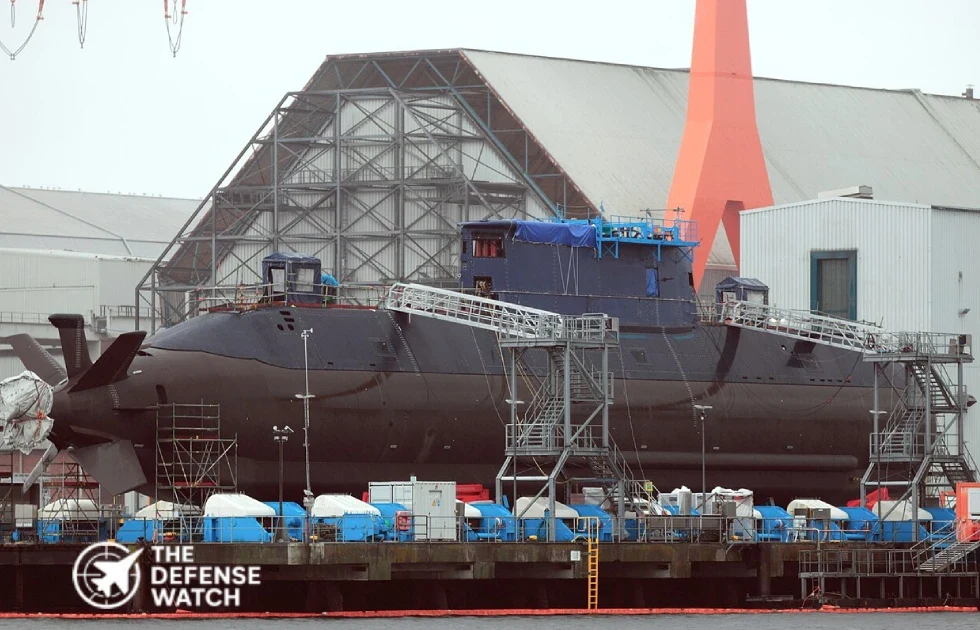
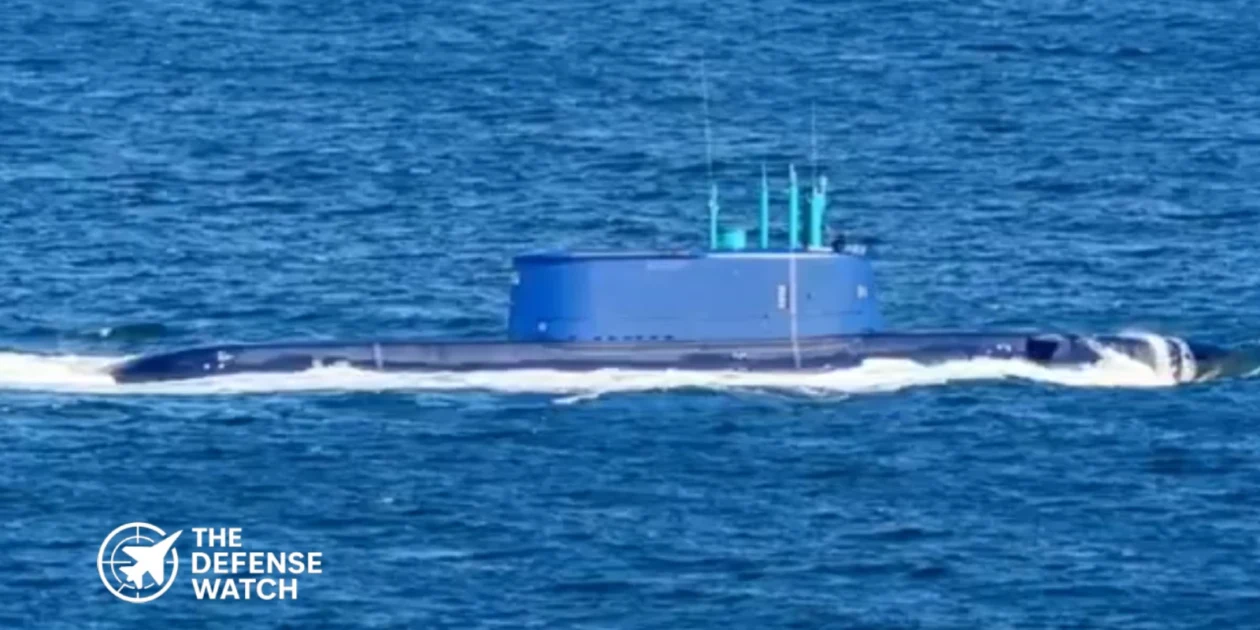
The INS Drakon is Israel’s newest and most advanced Dolphin II-class diesel electric attack submarine, designed to enhance the Israeli Navy’s long range intelligence, deterrence, and precision strike capabilities. Built by Germany’s ThyssenKrupp Marine Systems (TKMS), INS Drakon represents a significantly modified version of previous Dolphin II submarines, featuring a larger hull and an expanded sail believed to accommodate advanced payloads or special mission systems.
Officially transferred to Israel in 2025, INS Drakon is expected to strengthen Israel’s underwater warfare capabilities across the Mediterranean, Red Sea, and potentially beyond. While many of its capabilities remain classified, defense analysts believe the submarine is optimized for intelligence collection, special operations, strategic deterrence, and long endurance patrols.
Manufacturer
INS Drakon was built by ThyssenKrupp Marine Systems (TKMS) in Kiel, Germany. The submarine is part of the long running German Israeli submarine cooperation program and incorporates air independent propulsion (AIP), enabling extended submerged operations without surfacing.
Speed and Range
Powered by diesel electric engines combined with hydrogen fuel cell AIP technology, INS Drakon can remain submerged for several weeks. It is estimated to reach speeds of approximately 20 knots submerged and has an operational range exceeding 8,000 nautical miles while snorkeling. The submarine is designed for long duration strategic patrols far from Israeli waters.
Cost / Price
Although Israel has not officially disclosed the procurement cost, defense analysts estimate each advanced Dolphin II submarine, including INS Drakon, costs approximately US$900 million to US$1.2 billion, with Germany subsidizing part of the construction under bilateral defense agreements.
INS Drakon is equipped with heavyweight torpedoes, anti ship missiles, and large diameter torpedo tubes capable of launching specialized payloads. Reports suggest it may also support long range land attack cruise missiles, although Israeli authorities have never officially confirmed this capability. Advanced sonar, electronic warfare systems, acoustic quieting measures, and highly automated combat systems make the submarine one of the most capable conventional submarines operating today.
Disclaimer Note
The information provided on TheDefenseWatch.com is for general informational purposes only. While we strive to ensure the accuracy, completeness, and timeliness of our content regarding defense and aerospace products, technologies, and specifications, we cannot guarantee that all information is 100% accurate or up-to-date due to the evolving nature of military technology and classified data.TheDefenseWatch.com does not warrant the reliability, suitability, or availability of the information for any specific purpose. Users are advised to consult official sources, such as manufacturers, government publications, or defense agencies, for precise and verified data before making decisions based on our content.We are not affiliated with any defense manufacturers, governments, or military organizations mentioned. Opinions, reviews, and ratings reflect expert analysis but are subjective and should not be considered endorsements. TheDefenseWatch.com is not responsible for any errors, omissions, or consequences arising from the use of this website’s content.External links are provided for convenience and do not imply endorsement. TheDefenseWatch.com reserves the right to update or modify content without prior notice. By using this website, you agree to our Privacy & Cookies Policy.
More Defense Systems from TKMS
New Arrivals
Popular Comparisons
-
 Tejas Fighter Jet vs F-16 Fighting Falcon: Capability Compared
View Comparison →
Tejas Fighter Jet vs F-16 Fighting Falcon: Capability Compared
View Comparison → -
Rafale Fighter Jet vs F-16 Fighting Falcon : Which Fighter Has the Edge?
View Comparison →
-
Su-57 Fighter Jet vs J-20 Fighter Jet: Stealth and Air Combat Compared
View Comparison →
-
Mirage 2000 vs Tejas Mk1A: Legacy Combat Power vs Indigenous Modernization
View Comparison →
-
Rafale Fighter Jet vs F-22 Raptor: Which Air Dominance Fighter Has the Edge?
View Comparison →
-
Tejas Fighter Jet vs. Rafale Fighter Jet: India’s Indigenous Fighter Meets France’s Proven Multirole Combat Aircraft
View Comparison →
-
F-22 Raptor vs. F-35 Joint Strike Fighter: Which Fifth Generation Fighter Has the Edge?
View Comparison →
-
F-35A vs. F-22 Raptor: Which U.S. Stealth Fighter Dominates Modern Air Combat?
View Comparison →
-
AGM-114 Hellfire vs. AGM-179 JAGM: Which U.S. Precision Missile Is Better?
View Comparison →
-
Patriot (PAC-3) vs. THAAD: Complete Missile Defense System Comparison, Capabilities, Range, and Strategic Roles
View Comparison →
- FQ-42 Vengeance Flies With F-35 and F-15E as Air Force Advances CCA Teaming

- Albania Secures $302 Million U.S. Defense Loan for Military Modernization
- Rockwell Collins Wins $10.7M Navy E-2D Training Contract
- Boeing Receives $11.8 Million Contract Modification for Kuwait F/A-18E/F Support
- General Dynamics Wins $22.4M MK 41 VLS Engineering Contract
- Bell Boeing Wins $29.7M Contract for V-22 Loads and Dynamics Data
- Raytheon Wins $34.4M V-22 Tactical Software Sustainment Contract
- Dayton T. Brown Wins $55.8M P-8A Mobile Mission Systems Contract
- Finland deepens European F-35 cooperation with first pilot flight in Europe
- Luxembourg Deploys Additional Detection Assets After Drone Sightings