
- Home
- Defense Systems
- Compare
- B-21 Raider vs B-2 Spirit: High-Level Comparison
B-21 Raider vs B-2 Spirit: High-Level Comparison
1. Executive Summary / Tactical Overview
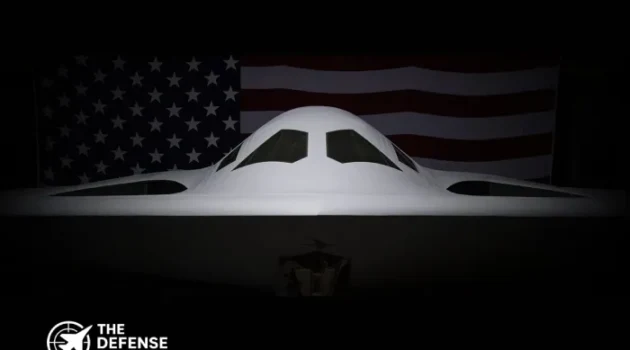
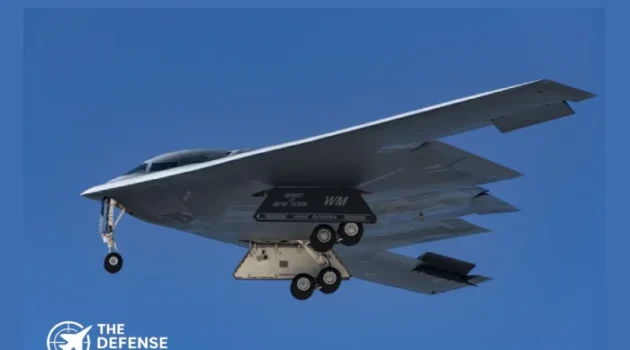
The B-2 Spirit revolutionized strategic bombing with its pioneering all-aspect stealth and massive internal payload, proving its value in high-threat operations from Kosovo to recent global strikes. The B-21 Raider builds on this legacy as a smaller, more affordable, and technologically superior sixth-generation platform, emphasizing advanced multi-spectral stealth, open architecture for rapid upgrades, and better sustainment from conventional bases. While the B-2 excels in raw payload capacity, the B-21 optimizes for survivability, range efficiency, and networked operations in future peer-contested environments.
2. Technical Specifications Table
| Metric | B-2 Spirit | B-21 Raider |
|---|---|---|
| Generation | 5th Generation (pioneer) | 6th Generation |
| Max Speed | High subsonic (~Mach 0.95) | High subsonic (Mach 0.8+, est. similar or slightly higher efficiency) |
| Combat Radius / Range | ~6,000 nmi unrefueled | Longer than B-2 (est. 6,500+ nmi unrefueled) |
| Internal Payload | Up to 40,000–60,000 lbs | ~20,000–30,000 lbs (est.) |
| Engines | 4 × GE F118 turbofans | 2 × PW9000 (commercial-derivative) |
| Wingspan | 172 ft (52.4 m) | ~138–155 ft (smaller, est. 40–47 m) |
| RCS (est.) | Extremely low (~0.1 m² or bird-sized) | Even lower (multi-spectral, ~0.01 m² class) |
| Crew | 2 | 2 (optionally unmanned capable) |
| Primary Advantages | Massive payload, proven combat record | Advanced stealth, lower cost/flight hour, easier maintenance |
3. Key Capability Pillars
Stealth & Survivability: The B-2 introduced world-changing low-observable technology with its flying-wing design, RAM coatings, and serrated edges, achieving an incredibly low radar cross-section from key aspects. However, its stealth was optimized more for frontal aspects, with greater vulnerability from the rear. The B-21 advances this dramatically with multi-spectral stealth (radar, infrared, acoustic, electronic) and refined shaping—smoother blended inlets, simplified trailing edges without extensive serrations, and improved RAM that is more durable and effective. This results in all-aspect low observability, making the Raider significantly harder to detect in modern threat environments.
Avionics & Sensor Fusion: The B-2 relies on advanced (for its era) systems but requires extensive hardware modifications for upgrades. The B-21 features cutting-edge open architecture and digital systems, enabling rapid software updates for new weapons, sensors, and networking. It likely incorporates enhanced sensor fusion similar to (or beyond) the F-35, providing superior situational awareness, electronic warfare capabilities, and integration into joint all-domain operations. Its design also supports optional unmanned operations, a major leap forward.
Payload & Mission Profiles: The larger B-2 carries a substantial internal payload suited for heavy saturation strikes, including massive ordnance like the GBU-57 MOP. The smaller B-21 trades some payload for efficiency, stealth, and cost but focuses on precision standoff and direct-attack munitions in a stealthy configuration. Its design emphasizes long-range penetration with lower operating costs (~$95k vs B-2’s ~$163k per flight hour est.), allowing more sorties and better fleet sustainability. Both are nuclear/conventional capable, but the B-21’s modularity supports evolving threats more effectively.
4. Strategic Verdict
The B-2 Spirit remains a powerhouse for missions requiring maximum payload in scenarios where its proven capabilities and size provide an edge, particularly when operating in numbers or with heavy ordnance needs. However, the B-21 Raider is favored in highly contested anti-access/area-denial (A2/AD) environments due to its superior stealth, efficiency, maintainability, and future-proof architecture. With plans for over 100 B-21s versus the B-2’s small fleet of ~20, the Raider represents the sustainable backbone of America’s future bomber force—cheaper to operate, easier to deploy globally, and better equipped for the high-tempo, networked warfare of the 2030s and beyond. Together, they form a complementary high-low mix for strategic deterrence.
This comparison highlights why the B-21 is not just a replacement but a significant evolution, ensuring U.S. airpower maintains its edge for decades.
| |
| Price | |
| Our Rating | |
| Manufacturer | Northrop Grumman Northrop Grumman |
| Category | Bombers & Strategic Aircraft Bombers & Strategic Aircraft |
1. General Information
| Name | B-21 Raider B-2 Spirit |
| Manufacturer | Northrop Grumman Northrop Grumman |
| Country of Origin | United States United States |
| Introduction / In Service Since | Initial operational capability planned for 2028 1997 |
| Status | In development, testing and production Active |
| Category | Stealth strategic bomber Strategic Stealth Bomber |
| Crew | 2 2 |
| Unit Cost | Approx. $692 million APUC, FY2022 dollars Approx. $2.1 billion (2024 est.) |
2. Dimensions & Structure
| Length | Est. 52–55 ft (16–17 m) 69 ft (21 m) |
| Wingspan | Est. 132–150+ ft (40–47 m) 172 ft (52.4 m) |
| Height | Est. ~17–20 ft (5–6 m) 17 ft (5.1 m) |
| Wing Area | Classified 5,140 sq ft (478 m²) |
| Empty Weight | Est. ~70,000 lb (31,750 kg) 158,000 lb (71,700 kg) |
| Maximum Takeoff Weight (MTOW) | Est. ~180,000 lb (81,650 kg) 336,500 lb (152,200 kg) |
3. Performance
| Maximum Speed | High subsonic (Mach 0.8+) 628 mph (Mach 0.95) |
| Range | Intercontinental (est. 6,000+ nm) 6,000+ nmi (11,000 km) |
| Combat Radius | Classified (long-range capable) 2,500 nmi (4,600 km) |
| Service Ceiling | Est. ~50,000 ft (15,000 m) 50,000 ft (15,000 m) |
| Rate of Climb | Classified Classified |
4. Powerplant
| Engine Type | 2 × Pratt & Whitney non-afterburning turbofans (PW9000 family / F135-derived) 4 × GE F118-GE-100 turbofans |
| Thrust (per engine) | Est. ~20,000–27,000 lbf 17,300 lbf |
| Total Thrust | Est. ~40,000–54,000 lbf 69,200 lbf |
5. Payload & Armament
| Internal Payload Capacity | Est. 20,000–30,000 lb 40,000 lb (18,000 kg) |
| Weapons Bay | Internal (main bay; possible additional) Dual internal bays |
| Compatible Weapons | B61-12, AGM-181 LRSO, JDAM family, JASSM/JASSM-ER, other conventional & nuclear munitions B61/B83 nuclear bombs, JDAMs, GBU-28 |
| Hardpoints | Internal only (no external hardpoints for stealth) None (internal only) |
6. Avionics & Systems
| Radar System | Advanced AESA (details classified) AN/APQ-181 multi-mode radar |
| Navigation | Modern integrated suite (classified) GPS-aided INS |
| Electronic Warfare (EW) | Advanced self-protection suite AN/ALQ-214 suite |
| Stealth Features | Flying-wing design, broadband all-aspect low observability, advanced materials RAM coating, flying-wing design |
7. Operational History
| Primary Operator | United States Air Force (Global Strike Command) United States Air Force |
| Conflict Usage | None (pre-operational) Kosovo, Iraq, Afghanistan, Libya |
| Notable Missions | Flight testing (Edwards AFB); first flight Nov 2023 Operation Allied Force (1999) |
8. Additional Information
| Variants | Single production variant planned B-2A Spirit |
| Successor / Future Replacement | Intended to replace B-1 and B-2; complement B-52 B-21 Raider |
| Notable Features | Open architecture, potential CCA control, optionally manned Stealth coating, long-range endurance |
| Estimated Operational Life | Multi-decade (through mid-to-late 21st century) Until 2035 |

|
Disclaimer Note
The information provided on TheDefenseWatch.com is for general informational purposes only. While we strive to ensure the accuracy, completeness, and timeliness of our content regarding defense and aerospace products, technologies, and specifications, we cannot guarantee that all information is 100% accurate or up-to-date due to the evolving nature of military technology and classified data.TheDefenseWatch.com does not warrant the reliability, suitability, or availability of the information for any specific purpose. Users are advised to consult official sources, such as manufacturers, government publications, or defense agencies, for precise and verified data before making decisions based on our content.We are not affiliated with any defense manufacturers, governments, or military organizations mentioned. Opinions, reviews, and ratings reflect expert analysis but are subjective and should not be considered endorsements. TheDefenseWatch.com is not responsible for any errors, omissions, or consequences arising from the use of this website’s content.External links are provided for convenience and do not imply endorsement. TheDefenseWatch.com reserves the right to update or modify content without prior notice. By using this website, you agree to our Privacy & Cookies Policy.
New Arrivals










Popular Comparisons
-
 J-10C vs JF-17 Thunder: Which Fighter Is More Capable?
View Comparison →
-
Tejas vs Gripen: Key Differences and Capabilities
View Comparison →
-
Tejas vs MiG-21 Bison: How India Replaced Its Iconic Supersonic Fighter
View Comparison →
-
F-35 vs F-16: Stealth, Sensors and Combat Roles
View Comparison →
-
Tejas Fighter Jet vs F-16 Fighting Falcon: Capability Compared
View Comparison →
-
Rafale Fighter Jet vs F-16 Fighting Falcon : Which Fighter Has the Edge?
View Comparison →
-
Su-57 Fighter Jet vs J-20 Fighter Jet: Stealth and Air Combat Compared
View Comparison →
-
Mirage 2000 vs Tejas Mk1A: Legacy Combat Power vs Indigenous Modernization
View Comparison →
-
Rafale Fighter Jet vs F-22 Raptor: Which Air Dominance Fighter Has the Edge?
View Comparison →
-
Tejas Fighter Jet vs. Rafale Fighter Jet: India’s Indigenous Fighter Meets France’s Proven Multirole Combat Aircraft
View Comparison →


- Modern Warfare Puts Command and Control at the Center of Military Operations

- Lockheed Martin Completes Third JR3 Rocket Test for U.S. Army Training
- Lockheed Martin Advances Robotic Welding Technology for In-Space Construction
- Europe Seeks U.S. National Guard F-16s for Ukraine’s Drone Defense
- U.S. Marines to Join Finland and Estonia in Baltic Sea Defense Exercise
- European Defence Forum Secures Industry Deals as Ukraine’s Battlefield Experience Shapes Cooperation
- South Korea Scrambles F-15Ks After Russian Warplanes Enter Air Defense Zone
- Japan Taps Auto Suppliers to Expand Military Drone Production
- Russia Uses Cold War-Era Il-20 Spy Plane to Monitor Ukrainian Radar From Belarus
- Boeing Receives $11.7 Million Air Force Contract Modification for VC-25B Parts Repair


Fighter Jets
-
 F-15J Eagle Fighter Jet
-
F-15EX Eagle Fighter Jet
-
F-47A Fighter Jet
-
F-100 Super Sabre
-
North American F-86 Sabre
-
Northrop YF-23 Fighter
-
Rafale F5 Fighter
-
SU-57 Felon Stealth Fighter
-
Boeing F/A-XX Fighter
-
JF-17 Thunder Fighter Jet
-
F-47 Fighter Jet
-
MIG-31 Fighter Jet
-
J-10CE Fighter Jet
-
Chengdu J-10 Fighter Jet
-
Chengdu J-10C Fighter Jet
-
Gripen E Fighter Jet
-
Tejas Mk1A Fighter Jet
-
Tejas Mk‑2 Fighter Jet
-
F-16V Viper Block 70 Fighter Jet
-
F-15EX Eagle II Fighter
-
F-15E Strike Eagle Fighter
-
F/A-18E/F Super Hornet Fighter Jet
-
Saab Gripen F Fighter Jet
-
JAS 39E/F Gripen Fighter Jet






Recent Compares
-
J-10C vs JF-17 Thunder: Which Fighter Is More Capable?
View Comparison →
-
Tejas vs Gripen: Key Differences and Capabilities
View Comparison →
-
Tejas vs MiG-21 Bison: How India Replaced Its Iconic Supersonic Fighter
View Comparison →
-
F-35 vs F-16: Stealth, Sensors and Combat Roles
View Comparison →
-
Tejas Fighter Jet vs F-16 Fighting Falcon: Capability Compared
View Comparison →
Latest Defense Systems
10 Compares Defense Systems
-
J-10C vs JF-17 Thunder: Which Fighter Is More Capable?
View Comparison →
-
Tejas vs Gripen: Key Differences and Capabilities
View Comparison →
-
Tejas vs MiG-21 Bison: How India Replaced Its Iconic Supersonic Fighter
View Comparison →
-
F-35 vs F-16: Stealth, Sensors and Combat Roles
View Comparison →
-
Tejas Fighter Jet vs F-16 Fighting Falcon: Capability Compared
View Comparison →
-
Rafale Fighter Jet vs F-16 Fighting Falcon : Which Fighter Has the Edge?
View Comparison →
-
Su-57 Fighter Jet vs J-20 Fighter Jet: Stealth and Air Combat Compared
View Comparison →
-
Mirage 2000 vs Tejas Mk1A: Legacy Combat Power vs Indigenous Modernization
View Comparison →
-
Rafale Fighter Jet vs F-22 Raptor: Which Air Dominance Fighter Has the Edge?
View Comparison →
-
Tejas Fighter Jet vs. Rafale Fighter Jet: India’s Indigenous Fighter Meets France’s Proven Multirole Combat Aircraft
View Comparison →
- Modern Warfare Puts Command and Control at the Center of Military Operations
- Lockheed Martin Completes Third JR3 Rocket Test for U.S. Army Training
- Lockheed Martin Advances Robotic Welding Technology for In-Space Construction
- Europe Seeks U.S. National Guard F-16s for Ukraine’s Drone Defense
- U.S. Marines to Join Finland and Estonia in Baltic Sea Defense Exercise