U.S. Marines will train alongside Finnish and Estonian forces in the Northern Baltic Sea from November 26 to December 4, 2026, as the three NATO allies prepare to improve maritime coordination, reconnaissance and combined defense operations.
The Finnish Navy will lead Exercise Narrow Waters 26.2 in the Northern Baltic Sea and Gulf of Finland. The exercise will focus on integrating military capabilities across different national forces, including command and control, fires coordination, maritime surveillance, and chemical, biological, radiological and nuclear (CBRN) defense.
According to the U.S. Marine Corps, the participating forces will practice operating together at task group, task unit and individual unit levels. The training is intended to improve their ability to exchange information, coordinate operations and respond to threats in a demanding maritime environment.
The exercise brings together U.S. expeditionary capabilities, Finnish naval forces and Estonian military personnel in a region where maritime security has become an increasingly important NATO priority.
What the Marines Will Bring to the Exercise
The U.S. Marine Corps will contribute several capabilities intended to support combined maritime operations.
These include:
- Reconnaissance: Gathering and sharing operational information to improve allied awareness of maritime activity.
- Fires coordination: Helping synchronize supporting fires between participating forces.
- Command and control: Improving communication and coordination between national military elements.
- CBRN defense: Practicing responses to chemical, biological, radiological and nuclear threats.
The exercise will also address the integration of air and missile defense and the coordination of strike capabilities.
These activities are particularly relevant in the Baltic region, where naval forces operate in relatively constrained waters and must account for civilian shipping, changing weather and complex coastal geography.
For the Marine Corps, the training provides an opportunity to demonstrate how expeditionary units can support naval operations beyond traditional amphibious missions.
Rather than operating independently, the Marines will work within a multinational framework that requires information-sharing procedures, compatible command arrangements and coordination between different military services.
Why the Baltic Sea Requires Closer Allied Coordination
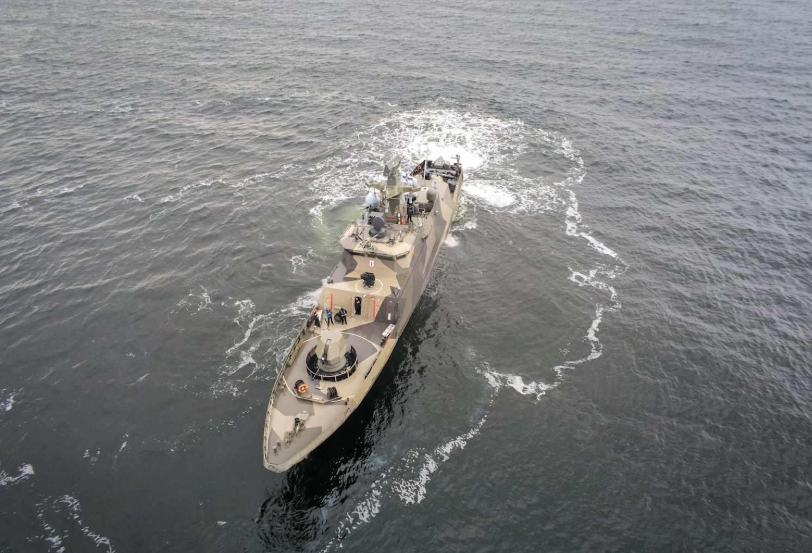
The Baltic Sea has become an important area of NATO maritime security planning because of its concentration of commercial shipping routes, energy infrastructure and telecommunications connections.
Undersea electricity and communications cables, gas pipelines and other critical infrastructure connect countries across the region. Damage to these assets can disrupt civilian services and create security concerns extending beyond the immediate maritime area.
NATO launched Baltic Sentry in January 2025 to strengthen surveillance and protection of critical undersea infrastructure.
The initiative increased allied maritime activity through the deployment of naval vessels, maritime patrol aircraft and uncrewed systems. It also sought to improve coordination between national surveillance capabilities and NATO’s maritime command structure.
Finland and Estonia have an important geographic role in these efforts. Their coastlines face the Gulf of Finland, a strategically important maritime corridor connecting the eastern Baltic Sea with the approaches to St. Petersburg.
The geography creates operational demands for surveillance, coastal defense and maritime coordination. Allied forces must maintain awareness of vessel movements while ensuring that military activities can be coordinated in waters used extensively by commercial shipping.
Narrow Waters 26.2 addresses some of these requirements through practical multinational training. However, it is a military exercise, not an announcement of a new permanent NATO deployment or a change in the alliance’s command structure.
From Baltic Sentry to Narrow Waters 26.2
The planned exercise builds on previous cooperation between U.S. Marines and Finnish forces.
In February 2025, approximately 40 U.S. Marines deployed to Finland in support of NATO’s Baltic Sentry activity. The personnel came from the 2nd Reconnaissance Battalion at Marine Corps Base Camp Lejeune, North Carolina.
Working alongside Finland’s Coastal Brigade, the Marines provided small unmanned aircraft systems and expeditionary surveillance capabilities to help improve maritime domain awareness.
The deployment was also the first activity of this kind between the U.S. Marine Corps and Finnish forces following the entry into force of the U.S.-Finland Defense Cooperation Agreement in September 2024.
The cooperation established an operational basis for combining American expeditionary reconnaissance capabilities with Finnish coastal and maritime security activities.
There is an important distinction between the two activities. Baltic Sentry focused on surveillance and protection of critical maritime infrastructure, while Narrow Waters 26.2 is designed to exercise a wider range of combined operational functions, including fires coordination, command and control and CBRN defense.
U.S. Marine Corps Forces Europe and Africa commander Maj. Gen. Daniel Shipley reinforced the importance of this cooperation during a November 6, 2026, meeting with Finnish Navy commander Rear Adm. Tuomas Tiilikainen in Finland.
According to the Marine Corps, their discussions covered NATO interoperability, bilateral defense cooperation and the role of combined forces in defending the alliance’s northern and eastern flanks.
Shipley said the training would help improve the ability of allied forces to operate as a combined force.
The Operational Value of Expeditionary Marine Capabilities
The participation of U.S. Marines is notable because the Marine Corps brings capabilities that differ from those traditionally provided by European naval forces.
Marine reconnaissance units can operate in coastal environments, gather tactical information and support the movement of information between forward elements and larger command structures.
These capabilities can be useful in maritime areas where conventional naval surveillance assets may require additional support from forces operating closer to shore.
Fires coordination is another important element. In a multinational operation, forces must establish procedures for identifying targets, sharing information and coordinating supporting effects without creating conflicts between participating units.
The exercise’s focus on command and control and air and missile defense integration also addresses the challenge of coordinating different national capabilities during a combined operation.
However, the U.S. Marine Corps has not publicly disclosed the number of personnel, specific equipment or individual platforms that will participate in Narrow Waters 26.2. The available announcement also does not identify specific live-fire events or operational scenarios.
What the Exercise Means for NATO’s Northern Flank
For Finland and Estonia, the exercise provides an opportunity to improve cooperation with U.S. forces in a strategically important maritime region.
Finland joined NATO in April 2023, while Estonia has been a member since 2004. Their geographic positions make maritime surveillance and regional defense important elements of NATO’s northern and eastern security arrangements.
The Gulf of Finland is particularly relevant because it connects the Baltic Sea with Russia’s maritime approaches. Maintaining maritime awareness in this area requires cooperation between coastal defense forces, naval units and allied surveillance networks.
NATO’s Baltic Sentry activity provides a wider framework for protecting critical undersea infrastructure, but exercises such as Narrow Waters address another requirement: ensuring that national forces can coordinate their responses when operating together.
The training will not independently resolve the region’s maritime security challenges. Its practical value will depend on whether participating forces can apply the procedures, communications arrangements and coordination skills developed during the exercise to future operations.
For the U.S. Marine Corps, the event also reinforces its role in supporting European allies through expeditionary capabilities and combined maritime operations, rather than relying exclusively on conventional naval deployments.
The exercise is scheduled to conclude on December 4, 2026. Public information currently provides no detailed assessment criteria or confirmed follow-on deployment plans.
Enjoying our coverage?
Make The Defense Watch a preferred source on Google to see more of our geopolitical and defense insights when relevant to you.