South Korea scrambled fighter jets and briefly ordered residents of Ulleung Island to seek shelter on November 24 after several Russian military aircraft entered the country’s air defense identification zone (KADIZ) over the East Sea.
The incident brought Russian military aircraft unusually close to South Korean territorial airspace, prompting a precautionary emergency alert and a rapid response from the South Korean Air Force. However, Seoul’s Joint Chiefs of Staff (JCS) subsequently clarified that the Russian aircraft did not violate South Korea’s sovereign airspace.
The episode also exposed weaknesses in the country’s emergency notification process after government agencies issued conflicting information about the identity of the approaching aircraft.
Russian aircraft approach Ulleung Island
According to South Korea’s Joint Chiefs of Staff, multiple Russian military aircraft entered KADIZ early Tuesday morning without prior notification.
The aircraft approached the airspace around Ulleung Island, an island in the East Sea, also known internationally as the Sea of Japan. South Korean military authorities detected their movement before they entered the identification zone and deployed fighter aircraft to prepare for a possible airspace violation.
Yonhap News Agency reported that approximately five Russian military aircraft were involved. South Korean authorities did not publicly identify their aircraft types or disclose a complete operational breakdown.
The Russian aircraft eventually departed the area after South Korean forces conducted tactical maneuvers.
Yonhap reported that the aircraft remained inside KADIZ for approximately 20 minutes before heading toward Japan and subsequently northward.
The South Korean military did not report an exchange of fire or an actual violation of territorial airspace.
F-15K fighters respond to the Russian approach
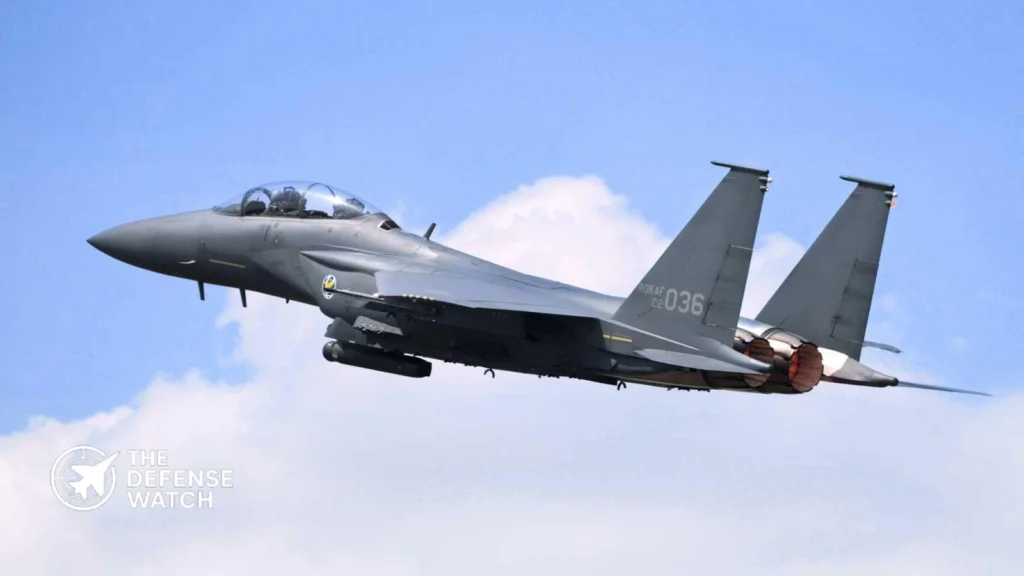
South Korea deployed fighter aircraft after tracking the approaching Russian formation.
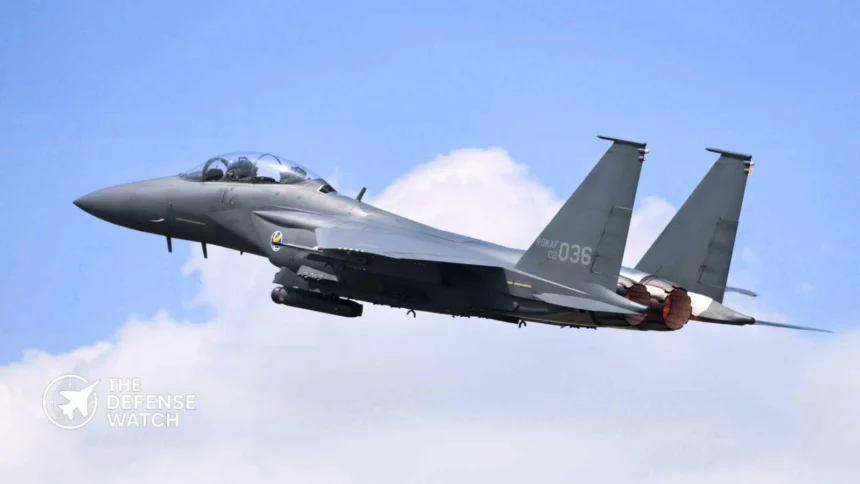
The responding aircraft included F-15K Slam Eagle fighters, according to reporting by Yonhap and KBS World. The aircraft conducted tactical maneuvers intended to manage the situation and prevent a potential airspace incident.
The F-15K is a major component of South Korea’s combat aviation fleet. Derived from the Boeing F-15E Strike Eagle, it is configured for multirole operations, including air defense and precision strike missions.
Its deployment in this incident illustrates the role of South Korea’s fighter force in responding to unidentified or uncoordinated military aircraft approaching sensitive areas.
The JCS said the Russian aircraft came close to violating South Korean airspace but ultimately left without crossing the territorial boundary.
Three-minute evacuation warning causes confusion
The military response was accompanied by an unusual civil defense measure.
At approximately 7:52 a.m. local time, South Korea’s Ministry of the Interior and Safety issued an emergency warning instructing residents of Ulleung Island to evacuate or seek shelter in underground facilities.
The warning was lifted approximately three minutes later after the Russian aircraft moved away from the area.
South Korean officials described the alert as a precautionary measure because the aircraft appeared close to entering territorial airspace.
The incident also produced confusion in local emergency communications. A separate notification from North Gyeongsang Province mistakenly identified the approaching aircraft as suspected North Korean aircraft rather than Russian military planes.
The provincial government subsequently corrected the information.
According to Yonhap, the JCS said the emergency warning had been coordinated with relevant authorities to protect residents against the possibility of an airspace violation.
The short duration of the alert does not diminish the significance of the incident for local emergency planning. However, the conflicting notifications raise questions about how quickly information concerning military aircraft is verified and communicated to civilians during a developing security situation.
What KADIZ means, and why the distinction matters
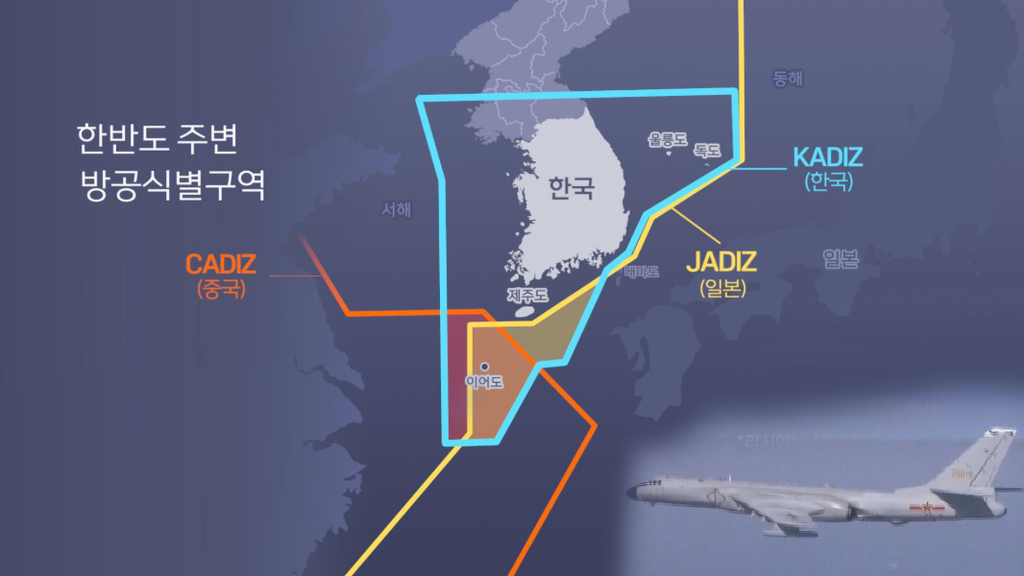
The incident requires an important distinction between an air defense identification zone and sovereign airspace.
An ADIZ is an area established beyond a country’s territorial airspace to give military authorities additional time to identify, track and respond to aircraft approaching national boundaries.
Entering an ADIZ does not automatically constitute an airspace violation under international law. It is not equivalent to entering sovereign territorial airspace.
South Korea expects foreign military aircraft to provide identification and flight information when approaching or entering its air defense zone. Russia, however, does not recognize South Korea’s designation, according to Reuters.
This difference has contributed to repeated encounters between Russian aircraft and South Korean fighters.
The latest incident therefore represents an air defense response to an approaching military formation rather than a confirmed violation of South Korean territory.
Repeated Russian military aircraft activity in the region
The November 24 encounter was not an isolated event.
South Korea’s military reported another entry by Russian military aircraft into KADIZ on November 17. South Korean fighters were deployed, but the aircraft left without violating territorial airspace.
Earlier, in June 2026, Chinese and Russian military aircraft also entered and exited South Korea’s identification zone over its eastern and southern waters during what appeared to be joint air exercises.
These encounters demonstrate the recurring challenge facing South Korean air defense authorities as Russian and Chinese military aviation activity continues around the Korean Peninsula.
The region also has a history of more serious airspace confrontations.
In July 2019, South Korean fighters fired warning shots after a Russian A-50 airborne early warning aircraft entered South Korean territorial airspace near Dokdo during a joint Russian-Chinese patrol. Moscow disputed Seoul’s account of the incident.
The 2019 episode illustrates why South Korean authorities closely monitor foreign military aircraft operating near sensitive maritime and territorial boundaries.
Seoul prepares diplomatic response to Moscow
South Korea’s Defense Ministry announced that it would summon the Russian military attaché in Seoul to lodge a formal protest over the latest aircraft activity.
The planned diplomatic action follows the military’s assessment that the Russian aircraft approached dangerously close to South Korean territorial airspace without prior coordination.
Reuters reported that the Russian Embassy in Seoul had not immediately responded to a request for comment.
The incident adds another point of friction to relations between Seoul and Moscow, particularly as South Korea continues to monitor Russian military cooperation with regional partners and military activity around the Korean Peninsula.
For South Korea, the immediate concern is maintaining reliable surveillance and interception procedures around its eastern maritime approaches.
The response also demonstrates the importance of coordination between military command structures and civilian emergency authorities. The mistaken identification of Russian aircraft as potentially North Korean, followed by a rapid cancellation of the shelter warning, shows why accurate information sharing is essential during fast-moving air defense incidents.
The Russian aircraft left without crossing South Korea’s territorial airspace. However, repeated approaches to the country’s identification zone will continue to require monitoring, interception readiness and diplomatic responses from Seoul.
Enjoying our coverage?
Make The Defense Watch a preferred source on Google to see more of our geopolitical and defense insights when relevant to you.