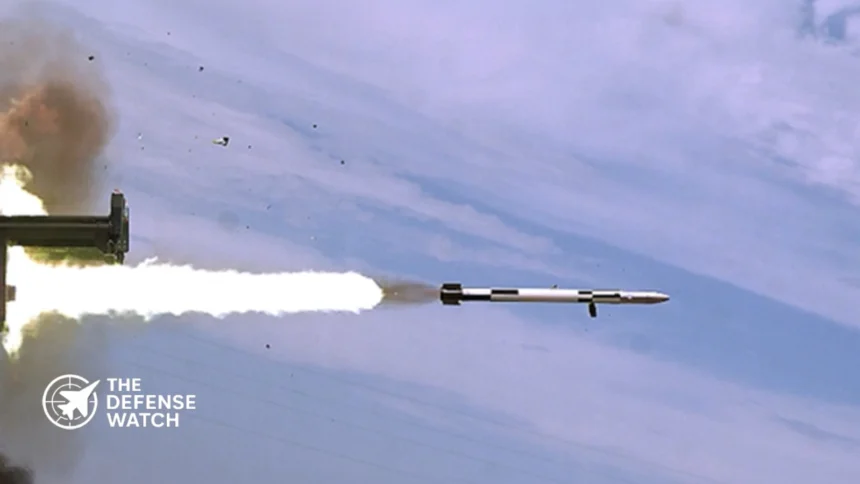
Lockheed Martin has completed the third flight test of its Joint Reduced Range Rocket (JR3), launching a full 24-round salvo at Yuma Proving Ground in Arizona as the company develops a replacement for the U.S. Army’s existing live-fire artillery training rocket.
The November 23, 2026, announcement provides another milestone for a program intended to maintain training capacity for soldiers operating the M142 High Mobility Artillery Rocket System (HIMARS) and M270 Multiple Launch Rocket System (MLRS).
Unlike operational precision-strike rockets, JR3 is designed specifically for training. Its purpose is to allow launcher crews to conduct realistic live-fire exercises without relying on more expensive combat ammunition.
Lockheed Martin said the latest test evaluated the rocket’s range, trajectory, accuracy and marking-payload effects. The company described the event as its third successful test, following an earlier demonstration in August 2026.
Why the Army Needs a New Training Rocket
The JR3 program addresses an ammunition sustainability problem as much as a training requirement.
The Army currently uses the Low-Cost Reduced Range Practice Rocket (LCRRPR) to support annual qualification and pre-deployment training for HIMARS and M270 launcher units.
According to the Army’s fiscal year 2025 budget documentation, the existing training rocket relies on limited supplies of rocket motors and launch pods. The motors were originally produced in the mid-1990s, making continued production increasingly difficult.
The Army identified fiscal year 2030 as the point by which continued production of the existing training rocket would no longer be feasible with available components.
This creates a direct requirement for a replacement that can maintain live-fire qualification activities without depending on aging rocket motor inventories.
The Army initiated JR3 development in fiscal year 2025 to address this requirement. The program is intended to provide a sustainable training munition compatible with existing artillery launchers rather than requiring the Army to introduce a separate training platform.
The Army’s FY2027 research and development justification identifies JR3 under Program Element 0605244A, Project DJ3.
What the Third Flight Test Demonstrated
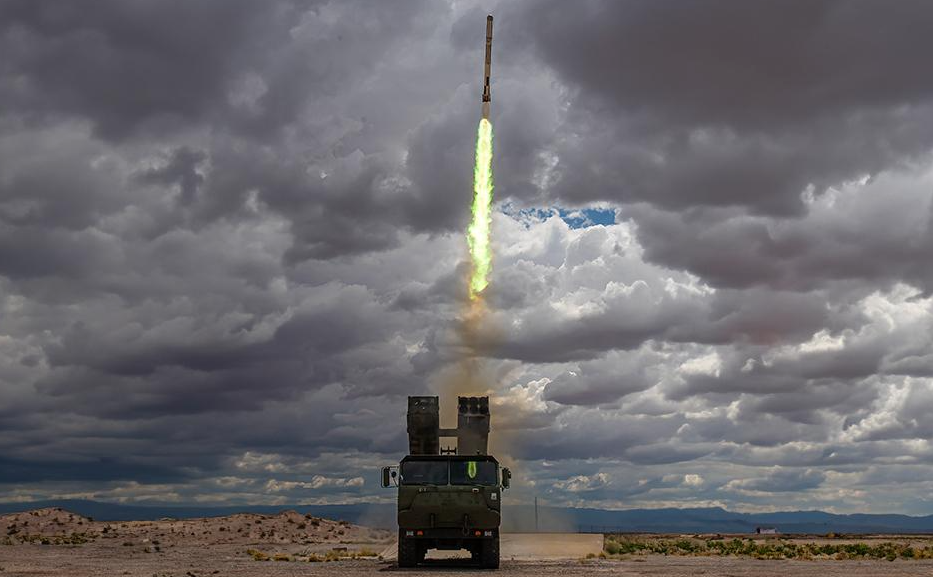
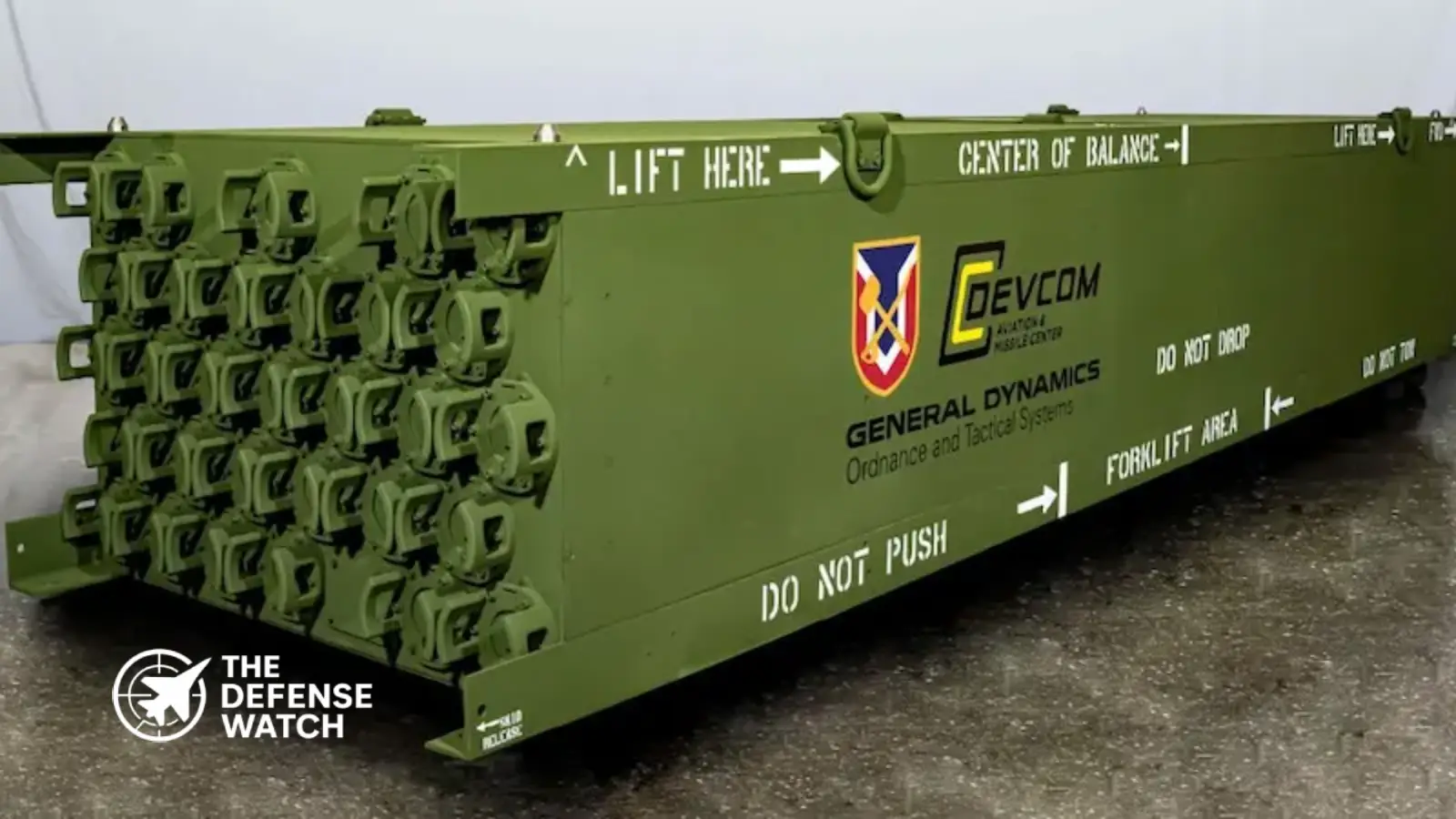
The November test involved the launch of 24 training rounds from a rocket launch pod.
Lockheed Martin said the test evaluated several performance areas:
- Range: The ability to operate within the intended reduced-range training envelope.
- Trajectory: Rocket flight characteristics during launch and flight.
- Accuracy: The consistency of the training rounds against their intended impact areas.
- Marking payload: The effects used to identify impact locations during exercises.
The 24-round configuration is an important part of the JR3 concept. It is designed to support higher-volume live-fire training while retaining compatibility with existing launcher infrastructure.
During the second test in August, JR3 rounds were launched from a HIMARS at Yuma Proving Ground. The November demonstration advanced the program by testing a full salvo configuration.
Lockheed Martin has not publicly disclosed detailed accuracy measurements, flight distances, test tolerances or the individual performance results for each round.
Consequently, the successful test should be understood as a development milestone rather than evidence that the system has completed Army qualification or entered operational service.
Reusable Launch Pod Is Central to the Cost-Saving Approach
One of JR3’s main design features is its reusable launch pod and reloadable launch tubes.
Traditional rocket artillery training can create substantial ammunition costs, particularly when units need repeated live-fire exercises to maintain crew proficiency.
JR3 is designed to reduce the cost of those training cycles by combining a lower-cost rocket motor, an adaptable payload and reusable launch equipment.
The approach also addresses the practical challenge of conducting training at facilities with limited range space.
Reduced-range training ammunition allows crews to practice launcher procedures and conduct live firing without requiring the full flight distances associated with operational rockets.
Lockheed Martin says the system is designed to support training in different environmental conditions, during daytime and nighttime exercises, and across multiple training locations.
However, the company has not released a verified unit price or quantified the expected savings compared with the existing LCRRPR. Its lower-cost positioning therefore remains a stated program objective rather than a publicly demonstrated cost comparison.
Army Acquisition Timeline and Program Funding
The Army’s fiscal year 2027 budget documents provide important context for understanding where JR3 stands in the acquisition process.
The program is being managed as a Middle Tier of Acquisition rapid-prototyping effort. This approach is intended to move promising technologies through development and testing before a future production decision.
The Army’s published acquisition strategy identifies several important milestones:
- FY2025: JR3 development and competitive prototyping began.
- FY2026: Prototype development, design reviews and flight demonstrations.
- FY2027: Completion of competitive demonstrations, selection of a preferred design and transition toward qualification.
- FY2027 to FY2030: Qualification and user testing.
- By FY2030: Planned start of production to support HIMARS and MLRS training requirements.
The Army’s FY2027 budget estimates put the total JR3 rapid-prototyping effort at approximately $115.7 million in research, development, test and evaluation funding across fiscal years 2025 to 2030. This is a program funding estimate, not a confirmed production contract value.
An important distinction remains: Lockheed Martin’s successful demonstrations do not establish that the company has secured the final production selection. The Army’s acquisition documentation describes competitive prototyping involving up to three candidate systems, followed by a down-selection process in FY2027.
That makes qualification and the Army’s eventual selection decision the next important measures of progress.
Implications for HIMARS and M270 Readiness
The JR3 program has implications beyond the replacement of an aging training munition.
HIMARS and M270 units require regular live-fire practice to maintain launcher crew proficiency. These systems are part of the Army’s precision-fires capability, and their effectiveness depends not only on missile availability but also on trained personnel who can operate the launchers safely and efficiently.
The existing LCRRPR provides a way to conduct live-fire training without expending operational ammunition. Maintaining that capability is particularly relevant for Active Army and National Guard units that must meet annual qualification and pre-deployment requirements.
JR3’s compatibility with both HIMARS and M270 launchers is also important. It could allow the Army to replace the existing training rocket without requiring a separate launcher infrastructure or a fundamentally different training arrangement.
The reusable pod concept could further improve training efficiency if it delivers the expected reduction in ammunition and support costs.
There is also a potential international dimension. Lockheed Martin identifies U.S. Army partners as possible users of the system, although no specific foreign procurement agreements or delivery commitments have been announced.
The program’s longer-term relevance extends to the Army’s interest in affordable rocket technologies. Lockheed Martin previously identified potential technology transfer to the Army’s Direct Support Fires Technology initiative, which focuses on developing lower-cost, mass-producible rockets.
However, JR3 remains a training munition. Its development should not be confused with the development or operational introduction of a new precision-strike weapon.
What Remains to Be Demonstrated
Three successful company-reported tests provide evidence of progress, but several questions remain unanswered.
The Army still needs to complete the competitive selection and qualification process. Publicly available information does not establish the final production configuration, confirmed unit cost, expected production quantities or delivery schedule.
The November 2026 demonstration also does not, by itself, establish that the rocket has met every Army qualification requirement.
For the program, the key test will be whether the selected design can deliver repeatable performance, reliable launcher compatibility and lower overall training costs while meeting the Army’s planned production timeline.
The 2030 production target is particularly important because the Army expects the existing training rocket’s available motors and launch pod inventory to become insufficient beyond that point.
JR3 therefore addresses a specific readiness requirement: preserving live-fire artillery training for HIMARS and M270 crews as the existing practice rocket approaches the end of its sustainable supply life.
Enjoying our coverage?
Make The Defense Watch a preferred source on Google to see more of our geopolitical and defense insights when relevant to you.