U.S. Navy Completes Harpoon Block II Delivery
The Harpoon Block II missile delivery marks a significant milestone as the U.S. Navy has officially completed the final Lot 91 shipment, reinforcing allied capabilities in anti-ship and coastal strike operations. According to reporting from Army Recognition, the delivery concludes one of the longest-running and most widely deployed anti-ship missile programs in modern naval warfare.
The Harpoon system, originally developed during the Cold War, continues to evolve. The Block II variant integrates GPS guidance and enhanced targeting, enabling precision strikes against both maritime and land-based targets. This dual-role capability reflects shifting operational requirements where naval forces increasingly face hybrid threats in littoral environments.
- U.S. Navy has completed delivery of the final Lot 91 Harpoon Block II anti-ship missiles.
- The missiles support allied naval forces in anti-ship and coastal strike missions.
- Harpoon Block II features GPS guidance and improved targeting against land and maritime threats.
- The system remains a key component of U.S. and allied maritime strike arsenals.
- Delivery reflects sustained demand for proven, cost-effective anti-ship missile systems.
Sustained Relevance In Modern Naval Warfare
Despite the emergence of newer missile systems, the Harpoon Block II missile delivery underscores the enduring relevance of the platform. Its adaptability, relatively low cost, and proven combat record make it a preferred choice for many allied navies.
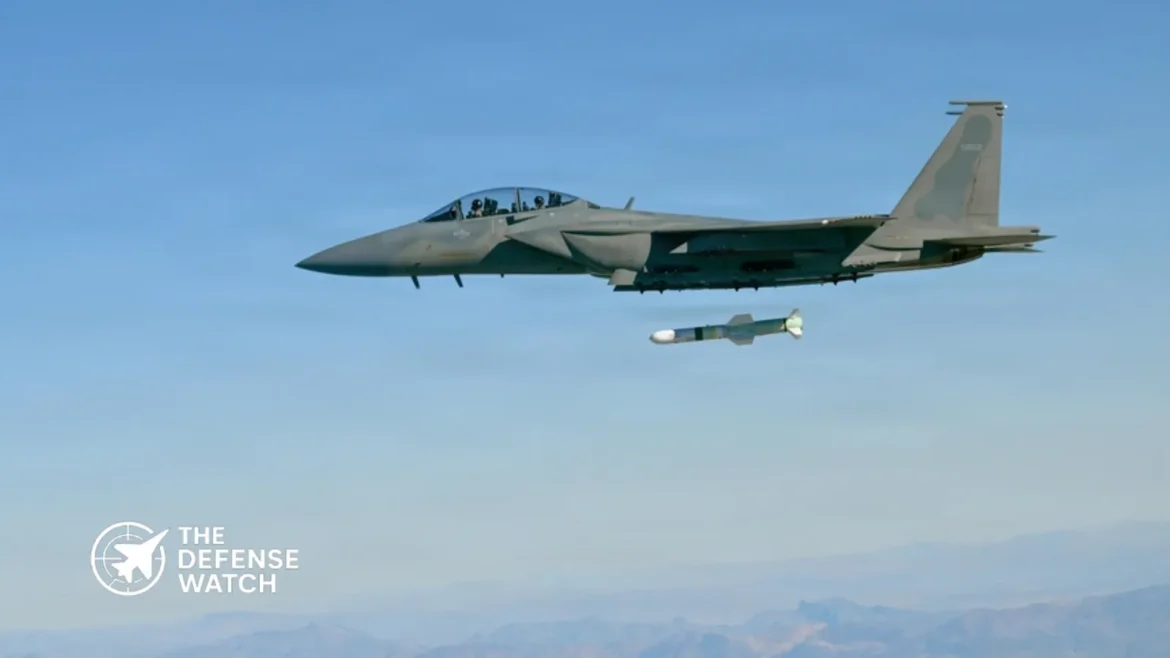
Unlike next-generation hypersonic or stealth cruise missiles, Harpoon offers reliability and interoperability across a wide range of platforms. It can be launched from surface ships, submarines, aircraft, and coastal defense batteries. This flexibility allows allied forces to maintain a layered maritime strike capability without requiring extensive platform upgrades.
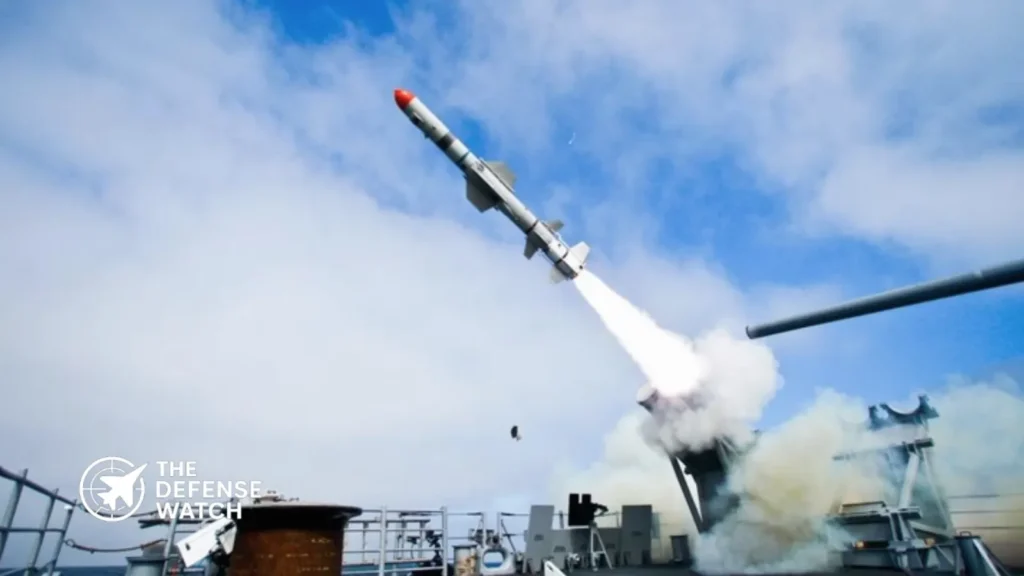
From an operational standpoint, the Block II upgrade significantly enhances targeting in contested environments. GPS-aided navigation allows the missile to engage targets in complex coastal regions where traditional radar-guided systems may face limitations. This is particularly relevant in regions such as the Indo-Pacific and the Persian Gulf, where dense shipping traffic and geographical constraints complicate targeting.
Strategic Implications For Allied Forces
The completion of the Harpoon Block II missile delivery also highlights broader trends in defense procurement. Many allied nations are prioritizing upgrades to existing systems rather than investing solely in high-cost next-generation platforms.
This approach reflects a balance between capability and affordability. While advanced systems like long-range anti-ship missiles offer extended reach, Harpoon remains effective for medium-range engagements and coastal defense scenarios. For smaller navies, it provides a credible deterrent without the logistical burden of more complex systems.
Moreover, the widespread adoption of Harpoon strengthens interoperability among allied forces. Shared systems simplify joint operations, training, and logistics, which are critical in coalition-based maritime security missions.
Industrial And Program Significance
The Lot 91 delivery represents the continuation of a mature production line that has supported decades of U.S. and allied defense requirements. Programs like Harpoon demonstrate the long lifecycle of military systems, where incremental upgrades extend operational relevance far beyond initial expectations.
The delivery also reflects ongoing international demand. Several countries continue to procure or upgrade Harpoon systems, reinforcing its position as a global standard in anti-ship weaponry.
This sustained demand provides stability for the defense industrial base while allowing incremental innovation. Instead of replacing legacy systems entirely, upgrades like Block II ensure compatibility with modern targeting and navigation technologies.
Evolving Threat Environment
The completion of the Harpoon Block II missile delivery comes at a time of increasing maritime tensions. Naval forces worldwide are adapting to challenges such as anti-access and area denial strategies, contested sea lanes, and the proliferation of advanced missile systems.
In this context, Harpoon serves as a dependable component of a broader strike ecosystem. While it may not match the speed or range of emerging systems, its reliability and integration across multiple platforms make it a critical tool for maintaining operational readiness.
Its role is particularly important in scenarios where rapid deployment and proven performance outweigh the need for cutting-edge capabilities. For many allied navies, this balance is essential in maintaining credible deterrence.
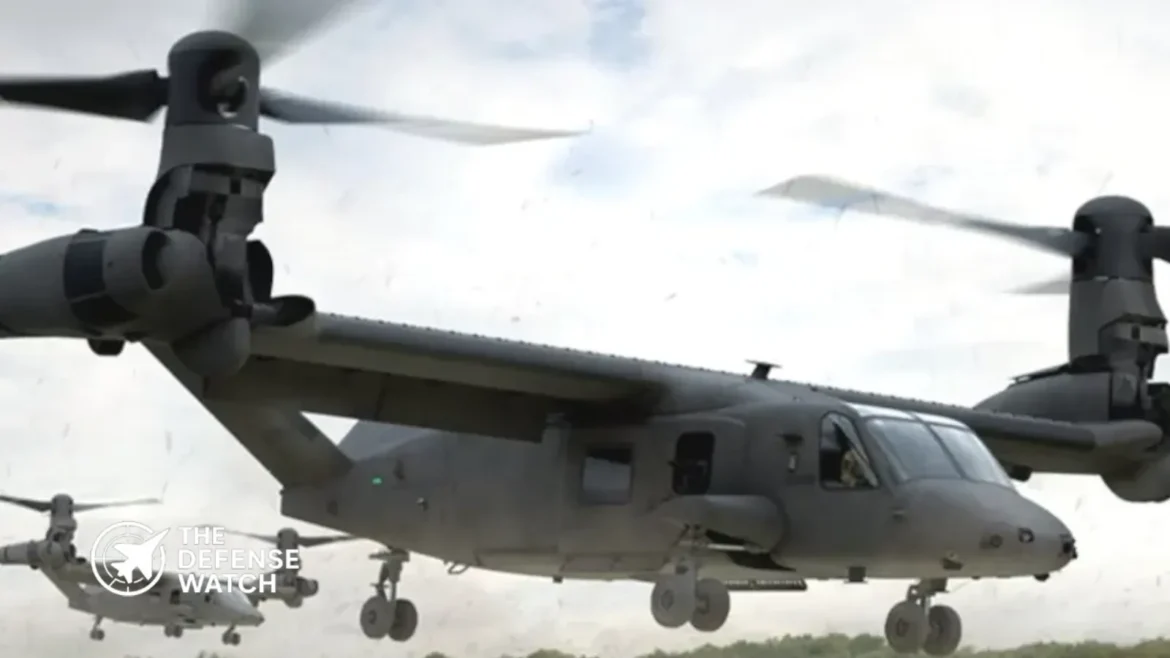
Night Stalkers’ MV-75 Cheyenne II Special Ops Variant Makes Its Public Debut
The MV-75 Cheyenne II special operations variant has made its public debut, offering the first concrete look at how the Army’s most capable tiltrotor will be configured for the elite 160th Special Operations Aviation Regiment. The U.S. Army gave the public its first glimpse at the MV-75A Cheyenne II in its special operations configuration on April 15, 2026, at the Army Aviation Association of America’s Warfighting Summit — and what was revealed signals a significant leap forward in how America’s Night Stalkers intend to fight in contested, complex environments.
- The 160th Special Operations Aviation Regiment’s MV-75A Cheyenne II variant has been publicly revealed for the first time via a rendering shown at the Army Aviation Association of America’s 2026 Warfighting Summit.
- The special operations variant features a nose-mounted terrain-following/terrain-avoidance radar — likely the AN/APQ-187 Silent Knight — a sensor turret, Degraded Visual Environment Pilotage System (DVEPS), and an in-flight refueling probe.
- The MV-75 is designed to replace a portion of the 160th’s MH-60M Black Hawk fleet, offering significantly greater range and speed for deep-penetration special operations missions in contested environments.
- The Army accelerated its MV-75 fielding timeline in January 2026, targeting initial delivery to operational units in 2027 — four years ahead of the original 2031 schedule.
- The aircraft features a modular open systems architecture (MOSA), enabling faster, more affordable capability upgrades — a critical design priority for the 160th SOAR commander.
The Big Picture
Special operations aviation has long depended on aging Black Hawk variants to execute the military’s most sensitive missions. The MH-60M, while heavily modified, is a platform rooted in 1970s airframe technology. The Army has said in the past that it plans to replace roughly half of the 160th’s special operations MH-60M Black Hawk helicopters with MV-75s, though whether that proportion remains unchanged is not yet confirmed.
The MV-75 Cheyenne II represents a generational shift — not an incremental upgrade. As a tiltrotor descended from Bell’s V-280 Valor demonstrator, it combines helicopter-like vertical takeoff with fixed-wing cruise speeds and range. For a unit whose entire operational philosophy centers on inserting forces at precisely the right moment, from precisely the right distance, speed and reach are not just performance metrics — they are mission-enabling characteristics.
The unveiling at AAAA comes against the backdrop of a broader U.S. military push to modernize rotary-wing assets ahead of potential high-end conflict with China across the Indo-Pacific — a theater defined by vast maritime distances that fundamentally stress rotorcraft range limitations.
What’s Happening
Army Col. Roger Waleski, commander of the 160th, shared the rendering of the special operations-specific MV-75 during a presentation at the Army Aviation Association of America’s 2026 Warfighting Summit.
From what is seen in the rendering, the special operations variant of Cheyenne II will differ from the baseline type most in the configuration of its nose end. Like the 160th’s Black Hawks, its version of the MV-75A will feature a nose-mounted radar and sensor turret underneath, as well as an in-flight refueling probe that extends out from the right side.
The radar is likely to be the AN/APQ-187 Silent Knight, or SKR, a terrain-following/terrain avoidance type. SKR is increasingly the default for U.S. special operations aircraft, including Army MH-60M and MH-47G Chinook helicopters, as well as Air Force CV-22 Osprey tiltrotors and MC-130J Commando II special operations tanker/transports.
The rendering also shows what looks to be a fixed, forward-facing aperture on the nose to the left of the radar — most likely reflecting the inclusion of a Degraded Visual Environment Pilotage System (DVEPS) or a similar capability, as is found on the 160th’s MH-60s and MH-47s today. DVEPS uses cameras and LIDAR, together with a terrain database, to help crew navigate through degraded environments full of dust, sand, snow, fog, and other obscurants.
Why It Matters
The sensor suite revealed on the special operations MV-75 is not simply a continuation of prior configurations — it is a deliberate replication and enhancement of the proven architecture used on the Night Stalkers’ current fleet, scaled to a faster, longer-range platform.
TF/TA radar and DVEPS, together with other sensors and in-flight refueling capability, will enable long-range operations along extremely low-altitude nap-of-the-earth flight profiles, even in poor weather and at night. This combination is the operational signature of 160th SOAR missions — the ability to fly fast, low, and undetected across hundreds of miles.
Col. Waleski made clear that performance is only part of what excites the 160th’s leadership. “We’ve gone to a completely modular open system architecture, maintaining the data rights on the aircraft,” he said. “For the warfighters in the room, what that means is your ability to adapt in the warfighting environment, it’s going to be cheaper, it’s going to be quicker.”
That statement carries significant weight. MOSA adoption means the Army — not the prime contractor — controls the integration roadmap. Future sensor upgrades, new electronic warfare packages, or emerging communications systems can be fielded without the contractor dependency that has historically delayed and inflated upgrade costs across military aviation programs.
Strategic Implications
The MV-75’s speed and range advantages over the MH-60M are particularly relevant in the Pacific theater. Rotary-wing platforms operating from sea bases or austere island locations face extreme distance penalties. A tiltrotor with MV-75-class performance could allow the 160th to execute direct-action or personnel-recovery missions from distances that currently fall outside the MH-60M’s practical combat radius.
The in-flight refueling capability shown on the Night Stalker variant further multiplies this reach. Combined with MC-130J tanker support — a mission set already deeply integrated into SOCOM’s theater playbook — the special operations MV-75 would be capable of conducting extremely long-range infiltrations without requiring forward staging bases that may not exist or may be contested in a high-end fight.
“I’ve said this before, I’m exceptionally excited about this platform,” Col. Waleski said. Yes, I’m excited about the speed. Yes, I’m excited about the payload, and I’m excited about the range.
Competitor View
China and Russia will note the MV-75’s special operations configuration with particular attention. Beijing’s military strategists have long studied the operational methods of the 160th SOAR, recognizing that the unit’s ability to project precision force across great distances represents a direct threat to high-value command-and-control assets, leadership targets, and critical infrastructure in a conflict scenario.
The MV-75’s extended range and speed advantage over the MH-60M would meaningfully complicate Chinese integrated air defense planning in the Pacific. A platform that can fly further, faster, and lower — under the radar coverage that Beijing has invested heavily in developing — forces a more distributed and resource-intensive defense architecture.
Russia will similarly factor the Cheyenne II into its special operations threat calculus for European theater contingency planning. The Night Stalkers’ presence in any NATO response scenario has historically required adversaries to allocate additional air defense resources to rear areas, a dynamic that a faster, longer-range MV-75 only amplifies.
What To Watch Next
The baseline MV-75A is still in development, and it is unclear when it might fly for the first time. The Army’s accelerated program timeline, announced in January 2026, targets initial fielding to operational units in 2027 — a compressed schedule that will test Bell’s production and integration pace.
Army Maj. Gen. Clair Gill, the Program Acquisition Executive for Maneuver Air, acknowledged the ambition of the timeline, stating: “We are moving as fast as we can.”
The special operations variant adds another layer of complexity to that schedule. Converting baseline MV-75As into the SOAR configuration requires integration of specialized sensors, avionics, and refueling systems. The Army’s decision to build special operations-friendly conversion features into the baseline airframe from the start suggests the program office is thinking ahead, but the actual timeline for Night Stalker-specific deliveries will likely trail the baseline fielding date by a meaningful margin.
Key near-term milestones to track include the first flight of the production-representative MV-75A, formal confirmation of the 160th SOAR procurement quantity, and any announcement related to Silent Knight radar integration contracts.
Capability Gap
The MH-60M Black Hawk has served the 160th with distinction for decades, but the platform’s speed, range, and altitude performance impose real operational constraints. In the Pacific, those constraints become strategic liabilities. The MV-75 Cheyenne II directly targets this gap.
The special operations variant’s terrain-following radar and DVEPS suite also address a survivability gap: the ability to fly nap-of-the-earth profiles in complete sensor-degraded environments — sandstorms, snowstorms, heavy fog — without mission abort. In contested airspace, the aircraft that can stay low and keep moving is the aircraft that survives.
A realistic limitation to acknowledge is integration risk. The Night Stalker community flies some of the most sensor-dense, software-intensive rotorcraft in the U.S. inventory. Packing equivalent complexity into a new-design tiltrotor airframe, on an accelerated timeline, introduces meaningful developmental risk. Managing that risk without sacrificing fielding speed will be one of the program’s defining challenges in the years ahead.
The Bottom Line
The first public rendering of the Night Stalker MV-75 Cheyenne II confirms that the Army is building a special operations tiltrotor designed from the ground up to dominate the long-range, low-altitude, all-weather mission space — and to keep adapting as the threat environment evolves.

Sweden Orders Saab Counter Drone System To Counter Evolving UAV Threats
Sweden’s decision to procure the Saab counter drone system marks a clear shift toward prioritizing protection against unmanned aerial threats, a capability gap exposed in recent conflicts. The Swedish Armed Forces have selected Saab’s Loke system to strengthen short-range air defense against small and low-cost drones.
The system is designed to detect, identify, and neutralize drones through a combination of sensors and electronic warfare tools. The move reflects a broader trend across Europe, where militaries are adapting rapidly to the proliferation of UAVs on the battlefield.
¦ KEY FACTS AT A GLANCE- Sweden has ordered Saab’s Loke counter drone system to strengthen protection against UAV threats.
- The system is designed to detect, track, and neutralize small drones using electronic warfare tools.
- Loke integrates sensors, command systems, and effectors for rapid battlefield deployment.
- The procurement reflects growing concern over drone use in Ukraine and other conflict zones.
- Saab continues to expand its counter UAS portfolio amid rising global demand.
A Modular Counter-UAS Approach
The Saab counter drone system, known as Loke, is built around a modular architecture. It combines radar and other sensors with command-and-control software and electronic attack capabilities.
This integration allows operators to track multiple targets and respond quickly, a critical requirement given the speed and scale at which drones are now deployed. Small UAVs, often used for reconnaissance or as loitering munitions, have proven difficult to counter using traditional air defense systems.
Saab has emphasized that Loke is designed for mobility and rapid deployment, making it suitable for both fixed-site protection and maneuver units. This flexibility aligns with Sweden’s defense posture, which increasingly focuses on dispersed operations and resilience.
Lessons From Ukraine Driving Procurement
Sweden’s investment in a Saab counter drone system comes as drone warfare continues to reshape military operations, particularly in Ukraine. Both Russian and Ukrainian forces have relied heavily on small UAVs for surveillance, targeting, and strike missions.
These systems are inexpensive, widely available, and capable of overwhelming conventional defenses. As a result, counter-UAS technologies have become a priority across NATO and partner nations.
Sweden, which formally joined NATO in 2024, is aligning its procurement strategy with alliance priorities. Countering drones is now seen as essential not only for battlefield effectiveness but also for protecting critical infrastructure and population centers.
Electronic Warfare At The Core
A key feature of the Saab counter drone system is its reliance on electronic warfare rather than kinetic interception. By jamming or disrupting drone communications and navigation signals, the system can neutralize threats without the need for missiles or guns.
This approach offers several advantages. It reduces the risk of collateral damage, lowers operating costs, and allows for sustained engagement against large numbers of drones.
However, electronic warfare solutions also face challenges. Adversaries are increasingly developing drones with autonomous capabilities or hardened communications links, which can limit the effectiveness of jamming.
Saab’s design attempts to address this by integrating multiple detection and response options, providing layered defense against evolving threats.
Strategic Implications For Sweden And Europe
The procurement of the Saab counter drone system highlights a broader shift in European defense planning. Countries are moving away from a sole focus on high-end platforms toward more balanced force structures that include counter-drone capabilities.
For Sweden, this investment supports its transition into NATO and strengthens its role in regional security, particularly in the Baltic Sea area. The ability to counter drones is increasingly seen as a baseline requirement for modern armed forces.
From an industrial perspective, the order reinforces Saab’s position in the growing global market for counter-UAS systems. Demand is expected to rise as more countries seek solutions to address drone threats in both military and civilian contexts.
Closing The Capability Gap
The Saab counter drone system aims to close a critical gap between traditional air defense systems and the emerging reality of drone warfare. While advanced missile systems remain essential for high-end threats, they are not always effective or cost-efficient against small UAVs.
By investing in specialized counter-UAS technology, Sweden is addressing a vulnerability that has been widely observed in recent conflicts. The move signals a pragmatic approach to defense modernization, focused on real-world operational needs.
¦ KEY FACTS AT A GLANCE- The UK has received more than 8,000 drones since 2024, according to official disclosures.
- The majority of systems are small, tactical UAVs designed for surveillance and frontline support.
- Procurement is heavily influenced by lessons learned from the war in Ukraine.
- The UK is prioritizing rapid acquisition and scalability over traditional long-cycle programs.
- Drone integration is reshaping British Army doctrine and operational planning.
UK Drone Fleet Expansion Accelerates Past 8,000 Units
The UK drone fleet expansion has surpassed 8,000 units since 2024, marking a significant shift in British military procurement toward unmanned systems, according to reporting by UK Defence Journal.
The figure reflects a rapid scaling effort across the British Armed Forces, particularly the Army, which is adapting to lessons drawn from high-intensity conflicts such as Ukraine. Rather than focusing solely on large, high-end platforms, the UK is investing heavily in small, cost-effective drones that can be deployed in large numbers.
This approach signals a broader doctrinal transition, where mass, attritability, and real-time battlefield awareness are increasingly prioritized over traditional force structures.
Shift Toward Mass and Tactical Utility
The majority of the newly acquired systems fall into the category of small unmanned aerial vehicles, including quadcopters and lightweight reconnaissance drones. These platforms are typically used for intelligence, surveillance, target acquisition, and battlefield coordination.
Officials indicate that the emphasis is on rapid deployment and ease of use at the unit level. Unlike legacy systems that require extensive training and infrastructure, these drones can often be operated by small teams with minimal preparation.
This shift reflects a key lesson from Ukraine, where commercially derived drones have played a decisive role in reconnaissance and targeting. The UK appears to be institutionalizing this model by integrating similar capabilities into its standard force structure.
From an operational standpoint, this allows for persistent surveillance across wide areas, faster decision-making, and improved coordination between ground units and indirect fire systems.
Procurement Strategy Driven by Urgency
The scale and speed of the UK drone fleet expansion highlight a departure from traditional defense procurement cycles. Instead of multi-year development programs, the Ministry of Defence is increasingly adopting rapid acquisition pathways.
This includes off-the-shelf purchases, iterative upgrades, and close collaboration with industry partners to field capabilities quickly. The focus is on adaptability, ensuring that systems can evolve in response to emerging threats.
Such an approach also mitigates the risk of technological obsolescence, a growing concern in a domain where advancements occur at a rapid pace.
However, this strategy introduces new challenges. Managing a large and diverse drone inventory requires robust logistics, training, and integration frameworks. Ensuring interoperability across different platforms and units remains a critical task.
Operational Implications for the British Army
The integration of thousands of drones is already reshaping how the British Army operates. Units are increasingly equipped with organic UAV capabilities, reducing reliance on centralized assets.
This decentralization enhances situational awareness at the tactical level, allowing commanders to make faster and more informed decisions. It also supports distributed operations, a key component of modern military doctrine.
In addition, drones are enabling more precise targeting and reducing the need for large-scale maneuver operations. This aligns with a broader trend toward networked warfare, where information dominance plays a central role.
The UK drone fleet expansion also has implications for training and doctrine. Soldiers must now be proficient not only in traditional combat skills but also in operating and countering unmanned systems.
Strategic Context and Future Outlook
The rapid growth of the UK drone fleet expansion reflects a wider global trend. Armed forces worldwide are investing heavily in UAVs as they become essential tools for modern warfare.
For the UK, this effort is part of a broader modernization agenda aimed at enhancing readiness and resilience in an increasingly contested security environment.
Looking ahead, the focus is likely to shift toward integrating drones with other emerging technologies, including artificial intelligence, electronic warfare, and autonomous systems. This could further enhance their effectiveness while reducing the burden on human operators.
At the same time, counter-drone capabilities will become increasingly important, as adversaries adopt similar technologies.
¦ KEY FACTS AT A GLANCE- British Prime Minister Keir Starmer and French President Emmanuel Macron are planning a multinational effort to secure the Strait of Hormuz once the Iran war ends, excluding U.S. combat forces due to its current military role.
- The move follows U.S. President Donald Trump’s announcement of a blockade targeting Iranian ports, a decision NATO allies including the UK and France declined to join. :contentReference[oaicite:0]{index=0}
- France and the UK plan to co-host a conference to build support for a defensive coalition focused on restoring freedom of navigation through the strait. :contentReference[oaicite:1]{index=1}
- The Strait of Hormuz remains a flashpoint in the conflict with Iran after months of disruption to global shipping and energy flows. :contentReference[oaicite:2]{index=2}
- NATO allies have resisted direct involvement in President Trump’s blockade plan, increasing diplomatic strain within the alliance. :contentReference[oaicite:3]{index=3}
Background And Strategic Shift
Britain and France are moving to lead a post-conflict security plan for the Strait of Hormuz security in a bid to restore safe international shipping lanes after Iran restricted movement during the broader Iran war and the United States announced a naval blockade of Iranian ports. The initiative comes as NATO allies have made clear they will not join U.S. blockade efforts, deepening strains within the alliance.
U.S. Central Command has begun intercepting vessels bound for or leaving Iranian ports as part of a strategy aimed at containing Tehran’s influence and countering maritime threats posed during the six-week conflict with Iran.
Prime Minister Keir Starmer has rejected participation in the Trump Hormuz blockade and said the UK will focus on reopening the waterway and convening international partners. French President Emmanuel Macron echoed this stance, noting that any military effort must be “strictly defensive” and separate from the combatants.
U.S. Blockade And Allied Response
President Donald Trump’s declaration of a blockade marked a sharp tactical turn in the conflict, with U.S. forces set to intercept shipping linked to Iran and destroy maritime mines laid in the strait. The blockade was ordered after peace talks in Islamabad failed to produce a lasting ceasefire, according to U.S. officials.
However, several NATO allies including the UK and Germany have publicly declined to take part in enforcing the blockade, insisting they will only engage once hostilities cease and conditions allow for a lawful, multinational operation.
That resistance underscores growing divisions between the U.S. and its European partners over how to address the crisis in the Gulf. European diplomats say direct involvement in an active blockade risks drawing forces into broader conflict and complicating diplomatic efforts.
Multinational Mission Planning
In response to these tensions, London and Paris are preparing a conference to coordinate a coalition designed to guarantee freedom of navigation in the strait after the fighting ends or under more stable conditions. Macron said the forthcoming conference aims to build support for a “purely defensive mission” by countries ready to contribute to safe passage.
The envisioned mission would focus on demining, maritime escorts, and logistical support for commercial vessels, distinct from U.S. military command. Allies see this as essential to reassure global shippers and stabilize energy markets once the conflict’s kinetic phase abates.
Starmer has framed the effort as a diplomatic and operational response that avoids dragging European forces into a war that British leaders argue should be resolved politically. The UK has also emphasized the need for a legal basis for any maritime security operation.
Geopolitical Implications
The move by the UK and France highlights a strategic divergence with Washington’s more aggressive posture toward Iran and underscores larger fractures within NATO over shared security priorities. European leaders have been wary of entanglement in U.S. initiatives that could escalate conflict or undermine broader alliances.
Global oil markets and shipping industries continue to watch developments in the strait closely, as about 20 percent of seaborne energy supplies traditionally pass through this chokepoint. Disruptions have already affected prices and supply chains, prompting calls for urgent international action.
What Comes Next
The upcoming conference co-hosted by the UK and France will be a key test of European diplomatic and naval coordination. Its success or failure will influence how quickly normal commercial traffic can resume once the conflict environment allows. Decisions made there may also set precedents for other coalition responses to future maritime security challenges.
SBIRS Logistics Support Contract Extended Through 2027
The SBIRS logistics support contract continues to underpin the United States missile warning architecture as Lockheed Martin receives an $86.34 million contract modification from the Space Systems Command.
This modification increases the total cumulative value of the long running contract to more than $1.6 billion. The work focuses on contractor logistics support, product sustainment, integration, and long term contract evolution for the Space Based Infrared System, better known as SBIRS.
Operations will continue at Peterson Space Force Base, Buckley Space Force Base, Greeley Air National Guard Station, and in Boulder, Colorado. The period of performance runs through January 31, 2027.
¦ KEY FACTS AT A GLANCE- Contract modification worth $86.34 million for SBIRS contractor logistics and product support.
- Total SBIRS support contract value now exceeds $1.6 billion.
- Work spans Peterson SFB, Buckley SFB, Greeley ANGS, and Boulder, Colorado.
- Funding includes $44.4 million from Fiscal 2026 operations and maintenance accounts.
- Support continues through January 31, 2027 under Space Systems Command oversight.
Why SBIRS Sustainment Matters More Than Ever
SBIRS is the backbone of U.S. strategic and theater missile warning. The constellation detects infrared signatures from ballistic missile launches worldwide and feeds real time data to combatant commands, homeland defense networks, and allied partners.
While newer systems like the Next Generation Overhead Persistent Infrared are in development, SBIRS remains fully operational and mission critical. That reality makes logistics support and system sustainment just as important as new satellite production.
Missile threats have evolved. Hypersonic glide vehicles, maneuvering reentry vehicles, and advanced cruise missiles present new detection challenges. Maintaining SBIRS performance, calibration, ground integration, and data reliability is essential during this transition period toward Next Gen OPIR.
What The Contract Modification Covers
The SBIRS logistics support contract is not about launching new satellites. It is about keeping the existing architecture reliable every hour of every day.
This includes:
- Ground system integration and software sustainment
- Sensor performance monitoring and calibration
- Contractor logistics and parts support
- Engineering updates and configuration control
- System level integration across multiple Space Force installations
These tasks ensure missile warning data reaches the right operators without delay. In missile defense, seconds matter.
Colorado Remains The Nerve Center Of Missile Warning
All listed performance sites are key nodes in U.S. missile warning operations.
Peterson Space Force Base hosts major Space Force command elements and SBIRS mission control.
Buckley Space Force Base operates SBIRS ground stations and data processing units.
Greeley Air National Guard Station supports missile defense operations tied to homeland protection.This geographic concentration highlights how Colorado functions as the operational heart of U.S. missile warning and space based surveillance.
Funding Signals Operational Priority
The obligation of $44.4 million from Fiscal 2026 operations and maintenance funds at the time of award is significant.
Operations and maintenance funding is used only for active, ongoing mission requirements. This signals that SBIRS sustainment is viewed as an immediate operational priority, not a long term modernization effort.
In practical terms, this means the Space Force is ensuring no capability gap emerges while Next Gen OPIR satellites are still years away from full deployment.
SBIRS And The Transition To Next Gen OPIR
The Space Force has been clear that SBIRS will remain in service well into the Next Gen OPIR era. The two systems will overlap for years.
That overlap requires careful integration, data continuity, and system reliability. Any degradation in SBIRS performance could create blind spots during a sensitive transition period.
This SBIRS logistics support contract directly supports that continuity.
From an operational perspective, sustainment contracts like this are often overlooked compared to satellite launch headlines. Yet they are what keep the architecture functional, calibrated, and trusted by commanders worldwide.
Strategic Context
Missile warning is one of the most sensitive and critical missions in U.S. national defense. It supports:
- U.S. Northern Command homeland defense
- Indo Pacific and European theater missile defense networks
- Early warning data sharing with allies
- Nuclear command and control decision timelines
Reliable infrared detection from space remains the first step in that chain.
Without consistent SBIRS performance, every downstream layer of missile defense and response is affected.
Role Of Space Systems Command
The Space Systems Command, located at Peterson SFB, manages the acquisition and sustainment of U.S. military space capabilities. This contract action reflects its role not only in future systems, but in keeping legacy systems fully mission capable.
Sustainment, integration, and contract evolution are now central parts of space acquisition strategy as constellations grow more complex.
Northrop Grumman Glide Phase Interceptor Program Accelerates
The Glide Phase Interceptor program received a major boost as the Missile Defense Agency awarded Northrop Grumman a $475.3 million agreement modification to accelerate development of its interceptor concept.
The award increases the total value of the existing Prototype Project Other Transaction Agreement from $832.7 million to more than $1.308 billion. The effort focuses on refining and speeding up the design of an interceptor capable of defeating hypersonic glide vehicles during the most challenging portion of their flight.
The work is managed by MDA in Dahlgren, Virginia, with an expected completion date of June 2028.
¦ KEY FACTS AT A GLANCE- Northrop Grumman awarded a $475,297,523 modification under an active Other Transaction Agreement.
- Total Glide Phase Interceptor agreement value rises to $1.308 billion.
- Work supports accelerated development of the Glide Phase Interceptor design concept.
- Funding includes $174.1 million obligated from Section 20003 of Public Law 119-21.
- Estimated completion date is June 2028, managed by MDA in Dahlgren, Virginia.
Why The Glide Phase Matters In Hypersonic Defense
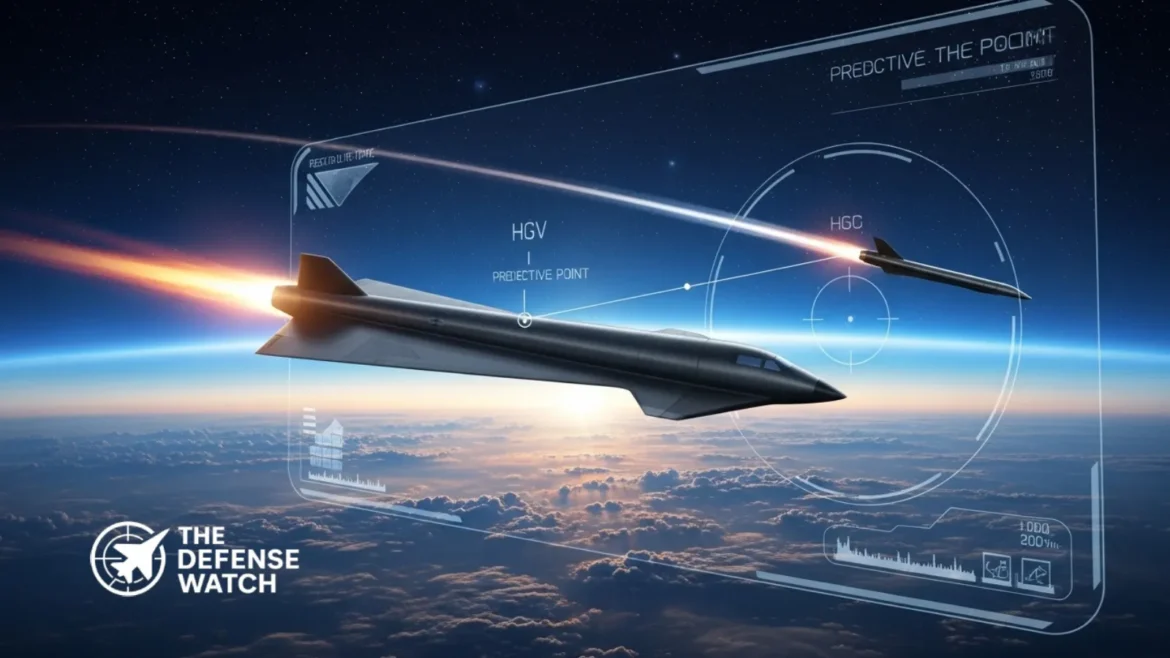
Hypersonic glide vehicles travel at extreme speeds and maneuver unpredictably within the atmosphere. Traditional missile defense systems are optimized for ballistic trajectories, not for threats that skip and glide at lower altitudes.
This is where the Glide Phase Interceptor becomes critical.
Instead of attempting interception during boost phase or terminal phase, the interceptor targets the weapon during its glide phase, when it is still traveling at hypersonic speed but before it descends toward its target.
This window is short. Detection, tracking, discrimination, and engagement must happen in seconds. That requirement is driving new sensor networks, command systems, and interceptor technologies across the U.S. missile defense architecture.
Other Transaction Authority Speeds Development
The agreement operates under Other Transaction Authority, a contracting approach that allows the Pentagon to move faster than traditional acquisition programs.
Under 10 U.S. Code 4022, MDA can rapidly prototype advanced technologies with fewer regulatory delays. This approach is increasingly used for cutting edge systems such as hypersonic defense, space tracking, and directed energy.
For the Glide Phase Interceptor, speed is central. U.S. defense leaders have repeatedly warned that hypersonic weapons from peer competitors are advancing faster than traditional defenses.
Funding Signals Urgency From Congress
At the time of award, $174.1 million was obligated from Section 20003 of Public Law 119-21. This reflects direct congressional support for accelerating hypersonic defense solutions.
Lawmakers have pushed for faster fielding of systems that can counter emerging threats from nations such as China and Russia, both of which have demonstrated operational hypersonic glide vehicles.
This funding is not for theoretical research. It is aimed at turning the Glide Phase Interceptor into a deployable capability within the next few years.
Integration With Broader U.S. Missile Defense Architecture
The Glide Phase Interceptor is not a standalone system. It is expected to work alongside space based tracking sensors, Aegis destroyers, and future missile defense networks.
Programs such as the Hypersonic and Ballistic Tracking Space Sensor and upgrades to Aegis weapon systems are being aligned to support glide phase engagements.
This layered approach reflects a shift in U.S. missile defense thinking. Rather than relying on a single interception opportunity, the Pentagon is building multiple chances to defeat a hypersonic weapon across its flight path.
Northrop Grumman Role In Hypersonic Defense
Northrop Grumman has emerged as a key player in hypersonic defense technologies, including propulsion, sensors, and interceptor concepts.
Its work on the Glide Phase Interceptor builds on experience in missile systems, space tracking, and advanced propulsion. The accelerated schedule suggests MDA sees Northrop’s design as a strong candidate for eventual operational deployment.
The company is competing in a high priority area that is likely to see continued funding growth through the decade.
Strategic Impact
The Glide Phase Interceptor represents one of the first serious attempts by the United States to directly counter hypersonic glide vehicles in their most survivable flight regime.
If successful, it would close a major gap in U.S. missile defense.
For years, analysts have noted that hypersonic weapons were designed specifically to bypass existing missile shields. The Glide Phase Interceptor is designed specifically to remove that advantage.
The expanded funding and accelerated timeline show that this is no longer a long term research project. It is now an urgent operational requirement.
Sikorsky Secures $65 Million UH-60M Black Hawk Contract For Army Production
The UH-60M Black Hawk contract awarded to Sikorsky Aircraft Corp. marks a $65 million investment in advanced procurement for the first 10 Army helicopters under the latest production effort.
According to a U.S. Department of Defense contract announcement, Sikorsky, based in Stratford, Connecticut, received a firm fixed price contract valued at $65,000,000. The award supports advance procurement activities tied to the first 10 UH-60M aircraft for the U.S. Army.
Work will be carried out in Stratford, with an estimated completion date of Dec. 31, 2026. Fiscal 2024 Aircraft Procurement, Army funding was fully obligated at the time of the award. The Army Contracting Command at Redstone Arsenal, Alabama, is managing the contract under number W58RGZ-26-C-0008.
¦ KEY FACTS AT A GLANCE- Sikorsky Aircraft Corp. awarded $65 million firm fixed price contract for UH-60M Black Hawk advanced procurement.
- Contract supports the first 10 Army UH-60M Black Hawk helicopters.
- Work to be performed in Stratford, Connecticut, with completion expected by Dec. 31, 2026.
- Fiscal 2024 Aircraft Procurement, Army funds obligated at time of award.
- Army Contracting Command at Redstone Arsenal, Alabama, is the contracting activity.
What Advanced Procurement Means
Advanced procurement funding allows manufacturers to secure long lead components and materials before full production funding is released. In rotary wing programs like the UH-60M Black Hawk, that often includes gearboxes, rotor systems, avionics components, and structural assemblies.
By issuing this UH-60M Black Hawk contract as a firm fixed price award, the Army locks in costs early, providing budget predictability while sustaining production tempo at Sikorsky’s Connecticut facility.
Only one bid was received after solicitation via the internet, according to the Pentagon notice.
The UH-60M Black Hawk’s Role In Army Aviation
The UH-60M Black Hawk is the latest production variant of the Army’s long serving utility helicopter platform. Built by Sikorsky, a Lockheed Martin company, the aircraft features upgraded digital avionics, improved flight controls, and enhanced lift performance compared to earlier models.
The platform supports air assault, medevac, command and control, and general support missions across active duty and National Guard formations. The M variant incorporates a glass cockpit, improved engines, and enhanced survivability systems.
Continued procurement signals the Army’s commitment to maintaining rotary wing readiness even as it develops next generation vertical lift capabilities under programs such as Future Vertical Lift.
Industrial Base And Production Stability
This Sikorsky Army helicopter deal reinforces production continuity at the Stratford facility. Stable production orders are critical to preserving the skilled workforce and supplier network that underpin the Army’s aviation industrial base.
Advance procurement contracts also help mitigate supply chain risk. By securing materials and components early, the Army reduces the likelihood of delays tied to long lead items.
The decision to obligate Fiscal 2024 Aircraft Procurement funds at the time of award ensures financial backing is already in place, limiting uncertainty for both the government and contractor.
Broader Budget Context
Army aviation modernization continues to balance legacy platform sustainment with emerging systems. While Future Long Range Assault Aircraft development progresses, the UH-60M remains central to current operational requirements.
Maintaining production through structured contracts like this $65 million award helps the Army avoid capability gaps during transition periods. It also ensures operational units continue receiving new aircraft to replace aging airframes.
Given ongoing global commitments and high operational tempo, sustained UH-60M procurement supports force readiness without relying solely on service life extensions.
Contracting Details
The Army Contracting Command at Redstone Arsenal, Alabama, is overseeing the award. The contract type is firm fixed price, meaning Sikorsky assumes cost risk beyond the agreed amount.
The estimated completion date is Dec. 31, 2026, aligning with production timelines for long lead components tied to the first 10 helicopters.
The UH-60M Black Hawk contract reflects incremental but steady investment in Army aviation capability.
RAF Scrambles Typhoon Jets After Russian Bomber Detected Near UK Airspace
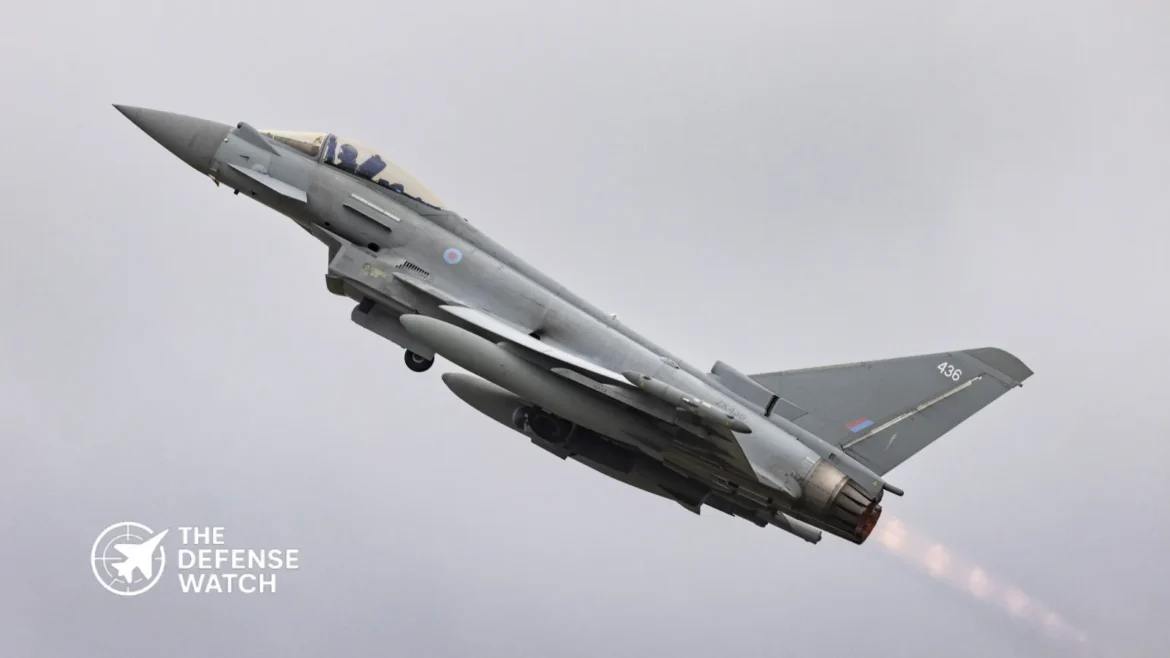
The Royal Air Force executed a Quick Reaction Alert (QRA) intercept mission on April 14, 2026, launching two Eurofighter Typhoon FGR4 fighters from RAF Lossiemouth in northern Scotland after ground-based radar detected a contact assessed as a possible Russian long-range strategic bomber approaching the northern UK area of interest near the Shetland Islands.
The scramble, first reported by The Telegraph, marks the latest episode in an ongoing pattern of Russian long-range aviation activity near NATO’s northern flank — and underscores the persistent readiness demands placed on British and allied air defense forces.
¦ KEY FACTS AT A GLANCE- On April 14, 2026, the RAF launched a Quick Reaction Alert (QRA) sortie after detecting an unidentified radar track assessed as a possible Russian long-range strategic bomber approaching the Shetland sector.
- Two Eurofighter Typhoon FGR4 fighters were scrambled from RAF Lossiemouth — the designated QRA North base — alongside a Voyager KC2/KC3 tanker from RAF Brize Norton.
- The Russian aircraft remained outside the UK’s 12 nautical mile sovereign airspace boundary; no visual identification or ICAO intercept procedures were executed.
- NATO integrated radar networks supported tracking throughout; allied command centers shared real-time trajectory data on the contact.
- The incident fits a pattern of Russian multi-domain probing operations near UK and NATO northern approaches, including recent naval and submarine activity in the North Sea.
What Happened: The April 14 QRA Sortie
The sequence of events on April 14 followed well-established NATO protocols. Once a radar contact lacking a matched flight plan, transponder code, or recognized identification profile was detected along the northern approaches, the RAF’s Air Surveillance and Control System — including long-range radar assets such as Saxa Vord on Shetland — initiated continuous tracking.
The contact’s trajectory toward the Shetland sector triggered a scramble order at RAF Lossiemouth, the QRA North station responsible for covering Scotland and the North Sea. Two Typhoon FGR4 jets were launched, with a Voyager KC2/KC3 air-to-air refueling tanker departing simultaneously from RAF Brize Norton to provide aerial refueling support if the mission extended into a prolonged surveillance profile.
The Russian bomber remained outside the UK’s 12 nautical mile sovereign airspace boundary throughout the event. No visual identification phase was initiated, and no ICAO intercept procedures — such as wing rocking or radio calls on emergency frequencies — were executed. The operation remained in a radar surveillance and readiness posture, concluding once the track was assessed as no longer requiring active monitoring.
Force Package and Operational Significance
The deployment of both fighters and a tanker reflects deliberate mission planning rather than a minimal alert response.
The Typhoon FGR4 has a combat radius of under 1,400 kilometers without aerial refueling — a constraint that becomes operationally significant over the vast open stretches of the North Atlantic and North Sea. The inclusion of the Voyager tanker extended the mission’s potential duration, allowing the Typhoon crews to loiter on patrol without returning to base, and enabling rapid repositioning should the track have altered course.
That the Voyager was included at all signals that UK planners assessed a non-trivial possibility that the situation could evolve. It reflects an operational planning philosophy that prioritizes endurance and flexibility in QRA responses, particularly in northern sectors where on-station distances from base are measured in hundreds of nautical miles.
RAF Lossiemouth maintains aircraft on Operational Readiness Platforms (ORPs) 24 hours a day, with takeoff required within a timeframe generally below 15 minutes from scramble order — a standard that the April 14 sortie appears to have met.
Russia’s Long-Range Bomber Operations: A Persistent Pattern
The April 14 sortie is not an isolated event. Russia has conducted long-range aviation patrols near NATO airspace consistently since at least 2007, using aircraft such as the Tu-95MS “Bear”, the Tu-160 “Blackjack”, and maritime patrol variants like the Tu-142 to probe allied air defense reaction times, assess radar coverage, and signal strategic reach.
These missions typically operate without active transponders or civilian air traffic coordination, creating the deliberate ambiguity that necessitates a QRA response. By remaining outside the 12 nautical mile threshold, Russian aircraft avoid triggering legal thresholds under international aviation law that would permit coercive intercept measures — while still generating significant monitoring demands on allied forces.
In a 2020 QRA event, the RAF scrambled six Typhoon fighters and progressed to visual identification and escort phases, indicating the Russian aircraft had closed to within visual confirmation range. The April 2026 event remained well short of that threshold — a single two-ship flight supported by a tanker, with no identification maneuvers executed. The difference in scale reflects a difference in assessed risk, not a reduction in Russian intent.
Multi-Domain Context: Not Just An Air Threat
The April 14 air intercept does not exist in isolation. It tracks alongside a broader pattern of Russian multi-domain operations near the United Kingdom that has intensified over recent years.
Russian naval vessels have conducted repeated transits through the English Channel under monitoring by the Royal Navy. More significantly, Russian submarine activity in the North Sea — including reported tracking of what was assessed as an Akula-class boat and associated deep-sea assets near subsea infrastructure — has generated sustained surveillance taskings for both British and allied forces.
The overlap of these air, surface, and subsurface activities increases the operational burden on UK and NATO command-and-control nodes. Managing simultaneous monitoring requirements across multiple domains stresses intelligence fusion, coordination capacity, and aircraft availability. Analysts assess this multi-domain overlap as deliberate — designed to test detection and response mechanisms under conditions that approximate, without crossing, thresholds that would trigger formal escalatory responses.
Analysis: What This Event Tells Us About NATO’s Northern Flank
From a strategic standpoint, the April 14 QRA reflects the enduring tension on NATO’s northern flank between Russian probing activity and allied deterrence signaling.
Russia’s use of long-range aviation as an instrument of strategic messaging is well-documented. These flights serve multiple purposes simultaneously: they generate intelligence on allied sensor coverage and reaction timelines; they demonstrate Russia’s ability to approach NATO territory without direct confrontation; and they sustain operational proficiency for aircrews conducting long-range missions under realistic conditions.
For the UK, the response was calibrated and measured. Deploying a two-ship Typhoon formation with tanker support demonstrates readiness without escalation — a proportional reply to what remained a surveillance-phase event. The decision not to execute visual identification procedures confirms that British and NATO controllers assessed the track did not require escalation to enforcement geometry.
What the April 2026 event does demonstrate is the continuing operational relevance of RAF Lossiemouth as NATO’s northern QRA anchor — and the Typhoon force’s capacity to sustain rapid response across northern approaches in coordination with allied radar and intelligence networks.
As Russian activity across maritime, subsurface, and aerial domains continues near UK and NATO peripheries, the demand on Quick Reaction Alert forces will remain high. Sustaining QRA readiness — in personnel, aircraft serviceability, and integrated sensor networks — remains one of the RAF’s most operationally consequential ongoing commitments.
Iran Chinese Spy Satellite Targeting US Bases Signals ISR Shift
Iran Chinese spy satellite targeting of U.S. military installations in the Middle East marks a notable evolution in Tehran’s intelligence, surveillance, and reconnaissance capabilities, according to a report by the Financial Times. The report cites leaked documents indicating that Iran used a Chinese-provided satellite system to monitor and potentially support strike operations against American and allied positions across the region.
The development underscores a growing integration of commercial and foreign-supplied space-based assets into Iran’s military planning cycle, narrowing long-standing gaps in precision targeting and real-time battlefield awareness.
¦ KEY FACTS AT A GLANCE- Iran reportedly acquired the Chinese-built “TEE-01B” reconnaissance satellite in late 2024.
- The satellite provided imagery of multiple U.S. and allied bases across the Middle East.
- High-resolution imagery, estimated at around 0.5 meters, enabled improved target identification.
- Satellite data was reportedly used before and after drone and missile strikes in March.
- China denied involvement, rejecting claims tied to military targeting operations.
Satellite Acquisition And Operational Use
According to the report, Iran obtained control of the Chinese-built “TEE-01B” satellite in late 2024, after it was launched from China and transferred to Iranian operators. The system is believed to be operated by the Islamic Revolutionary Guard Corps Aerospace Force.
The satellite reportedly captured imagery of key U.S. and allied military installations, including air bases, logistics hubs, and naval facilities. Among the locations monitored were Prince Sultan Air Base in Saudi Arabia, Muwaffaq al-Salti Air Base in Jordan, and sites near the U.S. Fifth Fleet headquarters in Bahrain.
Additional surveillance targets included Erbil Air Base in Iraq, Ali Al Salem Air Base in Kuwait, Camp Lemonnier in Djibouti, and Duqm Airfield in Oman. Civilian infrastructure, including ports and energy facilities in the Gulf, was also reportedly observed.
Imagery collection dates cited in the report align with mid-March activity, when Iranian-linked strikes targeted some of these locations.
Precision Gains Over Previous Systems
A key aspect of Iran Chinese spy satellite targeting capability lies in the system’s improved resolution. The TEE-01B satellite reportedly offers imagery resolution of approximately 0.5 meters, a significant upgrade over Iran’s domestically developed Noor-3 satellite, which is estimated at around 5 meters.
This level of detail enables identification of individual aircraft, support equipment, and infrastructure layouts. In operational terms, such precision can support strike planning, battle damage assessment, and pattern-of-life analysis.
From a military standpoint, this represents a shift from broad surveillance to actionable intelligence. It allows Iran to refine targeting cycles, reduce uncertainty, and potentially increase the effectiveness of drone and missile operations.
Integration Into Strike Operations
The report indicates that satellite imagery was collected both before and after attacks, suggesting integration into Iran’s targeting workflow. Pre-strike imagery likely supported target validation and planning, while post-strike imagery enabled damage assessment.
This mirrors operational practices used by advanced militaries, where ISR assets are tightly linked to strike platforms in a continuous feedback loop.
For Iran, which has relied heavily on drones and ballistic missiles, improved ISR could enhance the accuracy and timing of such systems. It also reduces reliance on human intelligence or less reliable reconnaissance methods.
Role Of Chinese Commercial Providers
The satellite and its supporting ground infrastructure were reportedly supplied by Chinese companies Earth Eye Co and Emposat. The deal, valued at approximately $36.6 million, included satellite access, launch services, and data infrastructure.
While such arrangements are often framed as commercial, dual-use capabilities are inherent in high-resolution Earth observation systems. The same imagery used for civilian purposes can support military operations when integrated into targeting networks.
China has denied the allegations, stating that it opposes the spread of unverified information and supports peaceful uses of space technology.
Strategic And Operational Implications
Iran Chinese spy satellite targeting highlights a broader trend in modern warfare, where access to space-based ISR is no longer limited to major powers. Commercial satellites and international partnerships are enabling regional actors to close capability gaps.
For U.S. forces and allies in the Middle East, this development introduces new operational risks. Fixed installations, previously shielded by distance or limited adversary ISR, are now more exposed to persistent surveillance.
This could drive changes in force posture, including increased mobility, deception measures, and hardened infrastructure.
From a strategic perspective, the integration of foreign satellite capabilities into Iran’s military ecosystem reflects deepening technological ties and a shift toward more networked warfare concepts.