• Home
  • About
  • Defense Systems
  • Manufacturer
  • Comparisons
  • Compare 
  • Tools
TheDefenseWatch.com
  • Aerospace & Aviation
  • Military & Ordnance
  • Naval & Maritime
  • Cyber & Space Defense
  • Policy & Strategy
  • Global News
  • Tools Library
    • Smart Calculator
    • Drone Flight Time Calculator
    • Drone Range Calculator
    • Counter-Drone Jammer Effective Range Calculator
    • Counter-Battery Radar Detection Calculator
    • Artillery Fire Correction Calculator
    • Thermal Camera Detection Range Calculator
    • Missile Range & Time-of-Flight Calculator
    • Radar Detection Range Calculator
    • FPV Strike Drone Payload vs Range Calculator
    • Loitering Munition Endurance Calculator
    • Sniper Ballistic Drop & Windage Calculator
    • Bullet Drop Calculator
    • U.S. Army Combat Fitness Test (ACFT) Calculator
    • Military Pension Calculator
    • Military Retirement Calculator
    • Military Pension Calculator
    • Large Number Calculator
Font ResizerAa

TheDefenseWatch.com

The Defense Watch | U.S. & Global Defense News, Analysis & Military Updates

Search
  • Home
  • About
  • Defense Systems
  • Manufacturer
  • Comparisons
  • Compare 
  • Tools

Stay Updated

Get the latest update

Subscribe

Explore

  • Drone
  • Fighter Jets & Military Aircraft
  • Hypersonic Weapons
  • Aircraft Carriers
  • Strategic History & Missions
  • Tools Library
Home » Missile Defense Agency Races To Advance Glide Phase Interceptor With $475M Northrop Grumman Boost
Hypersonic WeaponsMilitary & Ordnance

Missile Defense Agency Races To Advance Glide Phase Interceptor With $475M Northrop Grumman Boost

Samuel Drake | Defense Analyst
Last updated: April 15, 2026 7:37 am
Samuel Drake | Defense Analyst
Share
5 Min Read
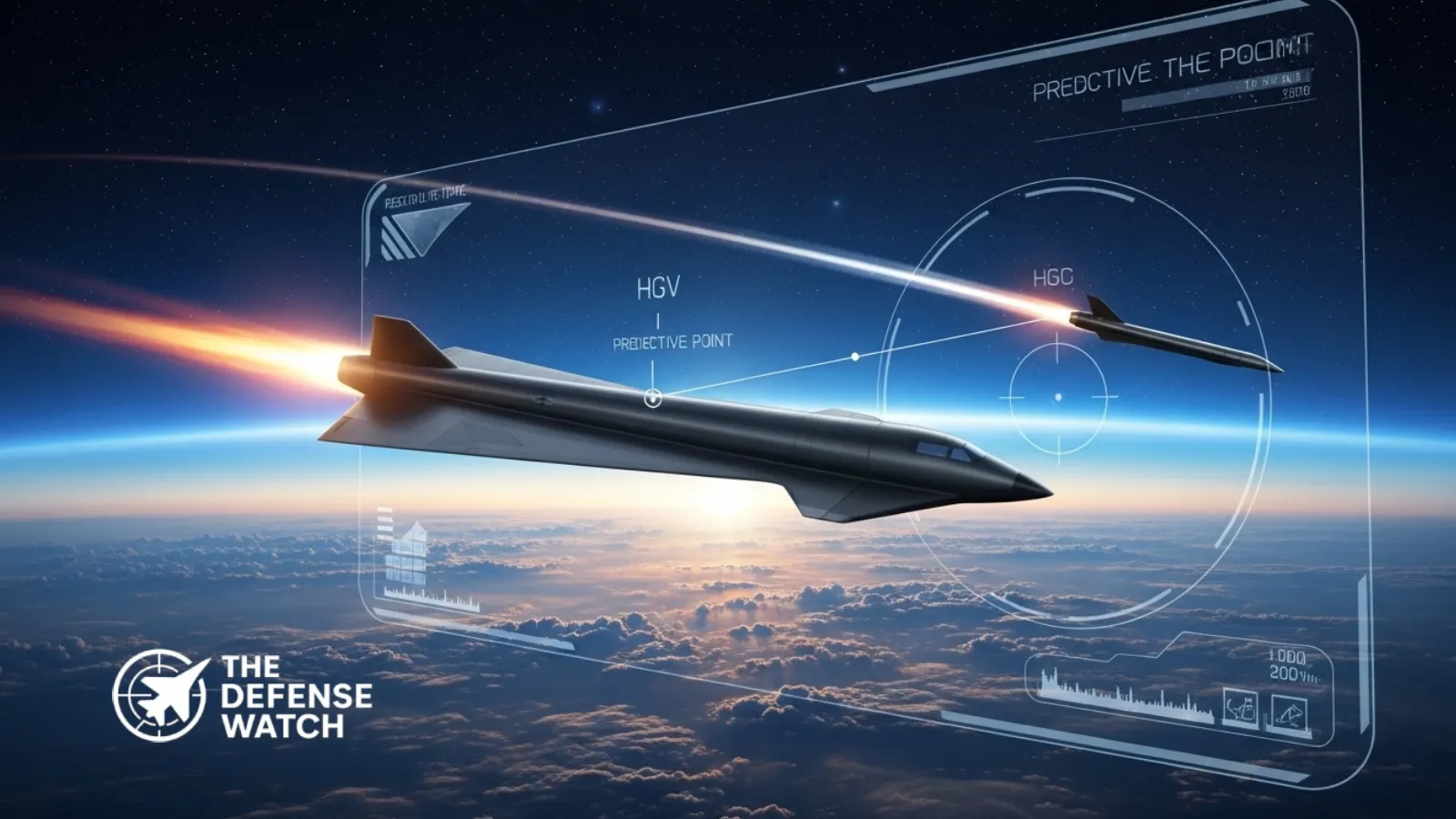
Glide Phase Interceptor program
Concept art - Computer generated
SHARE

Northrop Grumman Glide Phase Interceptor Program Accelerates

The Glide Phase Interceptor program received a major boost as the Missile Defense Agency awarded Northrop Grumman a $475.3 million agreement modification to accelerate development of its interceptor concept.

Contents
  • Northrop Grumman Glide Phase Interceptor Program Accelerates
  • Why The Glide Phase Matters In Hypersonic Defense
  • Other Transaction Authority Speeds Development
  • Funding Signals Urgency From Congress
  • Integration With Broader U.S. Missile Defense Architecture
  • Northrop Grumman Role In Hypersonic Defense
  • Strategic Impact

The award increases the total value of the existing Prototype Project Other Transaction Agreement from $832.7 million to more than $1.308 billion. The effort focuses on refining and speeding up the design of an interceptor capable of defeating hypersonic glide vehicles during the most challenging portion of their flight.

The work is managed by MDA in Dahlgren, Virginia, with an expected completion date of June 2028.

¦ KEY FACTS AT A GLANCE
  • Northrop Grumman awarded a $475,297,523 modification under an active Other Transaction Agreement.
  • Total Glide Phase Interceptor agreement value rises to $1.308 billion.
  • Work supports accelerated development of the Glide Phase Interceptor design concept.
  • Funding includes $174.1 million obligated from Section 20003 of Public Law 119-21.
  • Estimated completion date is June 2028, managed by MDA in Dahlgren, Virginia.

Why The Glide Phase Matters In Hypersonic Defense

Hypersonic glide vehicles travel at extreme speeds and maneuver unpredictably within the atmosphere. Traditional missile defense systems are optimized for ballistic trajectories, not for threats that skip and glide at lower altitudes.

- Advertisement -

This is where the Glide Phase Interceptor becomes critical.

Instead of attempting interception during boost phase or terminal phase, the interceptor targets the weapon during its glide phase, when it is still traveling at hypersonic speed but before it descends toward its target.

This window is short. Detection, tracking, discrimination, and engagement must happen in seconds. That requirement is driving new sensor networks, command systems, and interceptor technologies across the U.S. missile defense architecture.

Other Transaction Authority Speeds Development

The agreement operates under Other Transaction Authority, a contracting approach that allows the Pentagon to move faster than traditional acquisition programs.

Under 10 U.S. Code 4022, MDA can rapidly prototype advanced technologies with fewer regulatory delays. This approach is increasingly used for cutting edge systems such as hypersonic defense, space tracking, and directed energy.

For the Glide Phase Interceptor, speed is central. U.S. defense leaders have repeatedly warned that hypersonic weapons from peer competitors are advancing faster than traditional defenses.

Funding Signals Urgency From Congress

At the time of award, $174.1 million was obligated from Section 20003 of Public Law 119-21. This reflects direct congressional support for accelerating hypersonic defense solutions.

Lawmakers have pushed for faster fielding of systems that can counter emerging threats from nations such as China and Russia, both of which have demonstrated operational hypersonic glide vehicles.

- Advertisement -

This funding is not for theoretical research. It is aimed at turning the Glide Phase Interceptor into a deployable capability within the next few years.

Integration With Broader U.S. Missile Defense Architecture

The Glide Phase Interceptor is not a standalone system. It is expected to work alongside space based tracking sensors, Aegis destroyers, and future missile defense networks.

Programs such as the Hypersonic and Ballistic Tracking Space Sensor and upgrades to Aegis weapon systems are being aligned to support glide phase engagements.

This layered approach reflects a shift in U.S. missile defense thinking. Rather than relying on a single interception opportunity, the Pentagon is building multiple chances to defeat a hypersonic weapon across its flight path.

Northrop Grumman Role In Hypersonic Defense

Northrop Grumman has emerged as a key player in hypersonic defense technologies, including propulsion, sensors, and interceptor concepts.

Its work on the Glide Phase Interceptor builds on experience in missile systems, space tracking, and advanced propulsion. The accelerated schedule suggests MDA sees Northrop’s design as a strong candidate for eventual operational deployment.

The company is competing in a high priority area that is likely to see continued funding growth through the decade.

Strategic Impact

The Glide Phase Interceptor represents one of the first serious attempts by the United States to directly counter hypersonic glide vehicles in their most survivable flight regime.

If successful, it would close a major gap in U.S. missile defense.

For years, analysts have noted that hypersonic weapons were designed specifically to bypass existing missile shields. The Glide Phase Interceptor is designed specifically to remove that advantage.

The expanded funding and accelerated timeline show that this is no longer a long term research project. It is now an urgent operational requirement.


TAGGED:Glide Phase Interceptorhypersonic defenseMissile DefenseMissile Defense AgencyNorthrop Grumman
Share This Article
Facebook Copy Link Print
BySamuel Drake | Defense Analyst
Follow:
Samuel Drake is a defense analyst at TheDefenseWatch.com covering naval warfare, military ordnance, maritime technology, fleet modernization, and defense procurement. His reporting focuses on documented capabilities, procurement programs, and military technology.
Leave a Comment

Leave a Reply Cancel reply

Your email address will not be published. Required fields are marked *

Latest Defense Systems

  • SU-57 Felon Stealth Fighter SU-57 Felon Stealth Fighter
  • Boeing F/A-XX Fighter Boeing F/A-XX Fighter
  • JF-17 Thunder Fighter Jet JF-17 Thunder Fighter Jet
  • Gaurav Glide Bomb Gaurav Glide Bomb
  • F-47 Fighter Jet F-47 Fighter Jet
  • Spirit UAS Spirit UAS
  • GBU-43/B MOAB Bomb GBU-43/B MOAB Bomb
  • John F. Kennedy Aircraft Carrier John F. Kennedy Aircraft Carrier
  • Voyager Tanker Voyager Tanker

Recent Compares

  • J-10C vs JF-17 Thunder: Which Fighter Is More Capable? J-10C vs JF-17 Thunder: Which Fighter Is More Capable? View Comparison →
  • Tejas vs Gripen: Key Differences and Capabilities Tejas vs Gripen: Key Differences and Capabilities View Comparison →
  • Tejas vs MiG-21 Bison: How India Replaced Its Iconic Supersonic Fighter Tejas vs MiG-21 Bison: How India Replaced Its Iconic Supersonic Fighter View Comparison →
  • F-35 vs F-16: Stealth, Sensors and Combat Roles F-35 vs F-16: Stealth, Sensors and Combat Roles View Comparison →
  • Tejas Fighter Jet vs F-16 Fighting Falcon: Capability Compared Tejas Fighter Jet vs F-16 Fighting Falcon: Capability Compared View Comparison →
  • Rafale Fighter Jet vs F-16 Fighting Falcon : Which Fighter Has the Edge? Rafale Fighter Jet vs F-16 Fighting Falcon : Which Fighter Has the Edge? View Comparison →
  • Su-57 Fighter Jet vs J-20 Fighter Jet: Stealth and Air Combat Compared Su-57 Fighter Jet vs J-20 Fighter Jet: Stealth and Air Combat Compared View Comparison →
  • Mirage 2000 vs Tejas Mk1A: Legacy Combat Power vs Indigenous Modernization Mirage 2000 vs Tejas Mk1A: Legacy Combat Power vs Indigenous Modernization View Comparison →
  • Rafale Fighter Jet vs F-22 Raptor: Which Air Dominance Fighter Has the Edge? Rafale Fighter Jet vs F-22 Raptor: Which Air Dominance Fighter Has the Edge? View Comparison →
  • Tejas Fighter Jet vs. Rafale Fighter Jet: India’s Indigenous Fighter Meets France’s Proven Multirole Combat Aircraft Tejas Fighter Jet vs. Rafale Fighter Jet: India’s Indigenous Fighter Meets France’s Proven Multirole Combat Aircraft View Comparison →

Recent Posts

  • Department of War and Lockheed Martin Sign 10-Year F-35 Agreement With $7 Billion Investment Commitment
  • Pentagon Approves Active Denial System for Potential U.S. Southern Border Use
  • U.S. Air Force Plans Larger F-35 Role in 1,509-Aircraft Fighter Fleet
  • Raytheon Wins Two-Year Extension for AN/TPY-2 Radar Support
  • Space Force Selects Northrop Grumman, True Anomaly for New Orbital Reconnaissance Satellites

You Might Also Like

Workers at a Swedish defense manufacturing facility supporting TNT and ammunition production expansion.
Military & Ordnance

Sweden Moves To Expand TNT Production As Europe Races To Rebuild Ammunition Stockpiles

May 9, 2026
Ursa Major HAVOC missile system
Artillery & Missile SystemsMilitary & Ordnance

Ursa Major Unveils HAVOC Hypersonic Missile System to Field Scalable, Affordable Strike Capability

September 8, 2026
Tomahawk missile modernization contract
Conventional Weapons & ModernizationMilitary & Ordnance

Raytheon Secures $476.5M Tomahawk Missile Modernization Contract for U.S. Navy

September 9, 2026
Mildef Mirsad 4x4
Conventional Weapons & ModernizationMilitary & Ordnance

Mildef Unveils Mirsad 4×4 Vehicle To Expand Malaysia Infantry Mobility

April 23, 2026

Logo

Copyright © 2026 TheDefenseWatch.com

Helpful Links

  • Home
  • About Us
  • Privacy Policy
  • Terms of Use / Disclaimer
  • U.S. Privacy Notice – CCPA Compliance

Defense Systems

  • Defense Systems
  • Comparisons 
  • Manufacturer
  • Tactical Calculators

Popuplar

Which 5 Air Forces Possess the Costliest Fighter Jet Fleets in the World
Evolving Strategic Value: Carrier Strike Groups in the Indo-Pacific’s Future Security Architecture
Autonomous Weapon Systems Spark U.S. Ethics Debate Amid Rapid Military AI Integration

We report on developments involving military forces, governments, defense companies, research organizations, and security institutions around the world. 

Welcome Back!

Sign in to your account

Username or Email Address
Password

Lost your password?