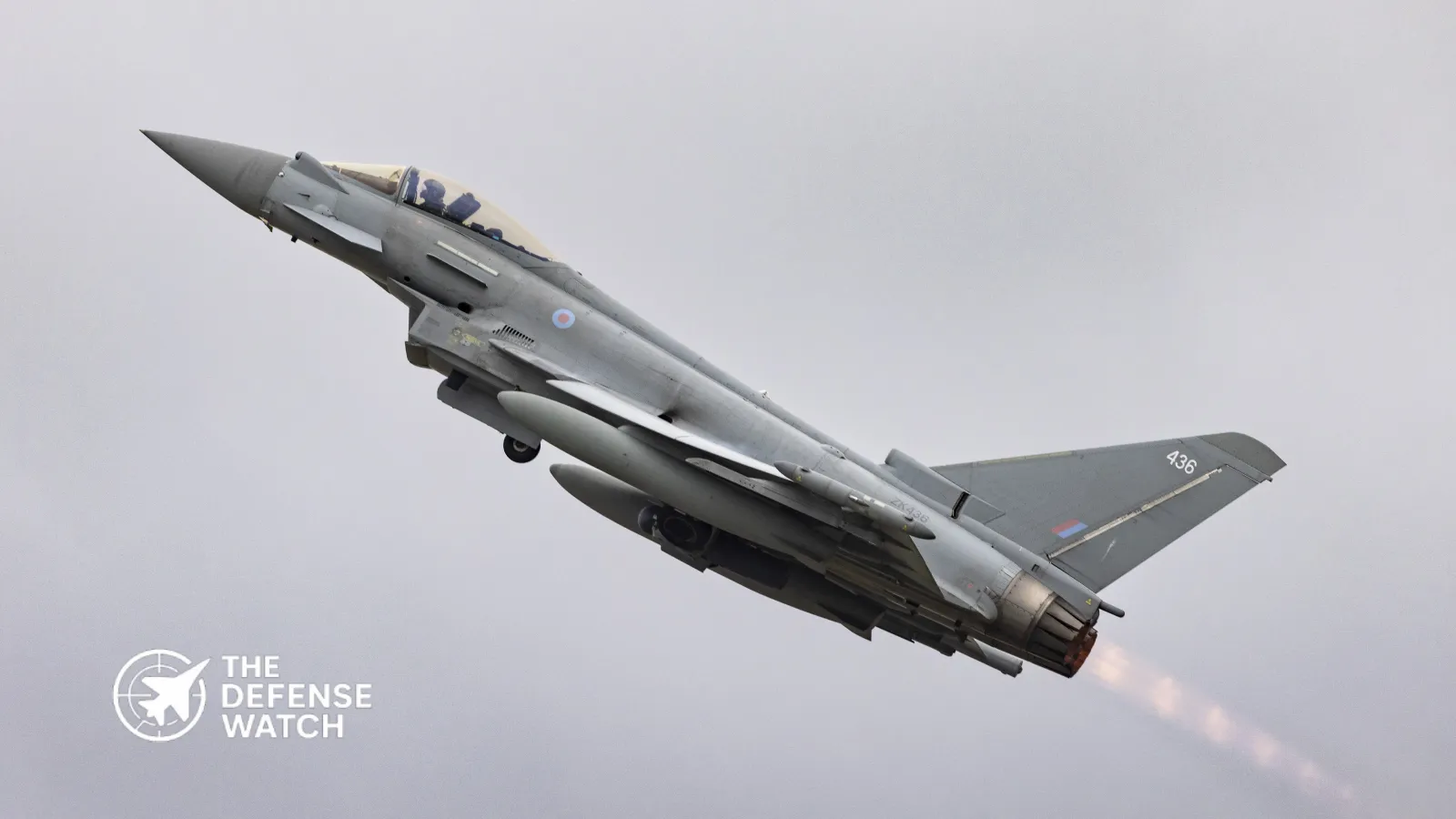
RAF Scrambles Typhoon Jets After Russian Bomber Detected Near UK Airspace
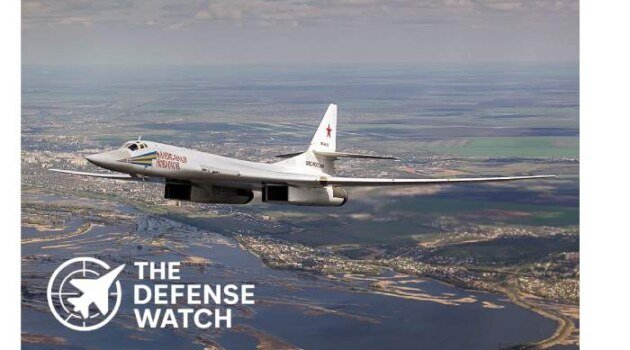
The Royal Air Force executed a Quick Reaction Alert (QRA) intercept mission on April 14, 2026, launching two Eurofighter Typhoon FGR4 fighters from RAF Lossiemouth in northern Scotland after ground-based radar detected a contact assessed as a possible Russian long-range strategic bomber approaching the northern UK area of interest near the Shetland Islands.
The scramble, first reported by The Telegraph, marks the latest episode in an ongoing pattern of Russian long-range aviation activity near NATO’s northern flank — and underscores the persistent readiness demands placed on British and allied air defense forces.
- On April 14, 2026, the RAF launched a Quick Reaction Alert (QRA) sortie after detecting an unidentified radar track assessed as a possible Russian long-range strategic bomber approaching the Shetland sector.
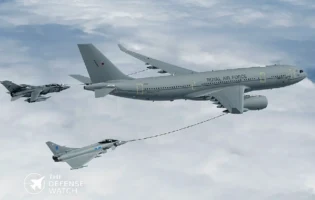
- Two Eurofighter Typhoon FGR4 fighters were scrambled from RAF Lossiemouth — the designated QRA North base — alongside a Voyager KC2/KC3 tanker from RAF Brize Norton.
- The Russian aircraft remained outside the UK’s 12 nautical mile sovereign airspace boundary; no visual identification or ICAO intercept procedures were executed.
- NATO integrated radar networks supported tracking throughout; allied command centers shared real-time trajectory data on the contact.
- The incident fits a pattern of Russian multi-domain probing operations near UK and NATO northern approaches, including recent naval and submarine activity in the North Sea.
What Happened: The April 14 QRA Sortie
The sequence of events on April 14 followed well-established NATO protocols. Once a radar contact lacking a matched flight plan, transponder code, or recognized identification profile was detected along the northern approaches, the RAF’s Air Surveillance and Control System — including long-range radar assets such as Saxa Vord on Shetland — initiated continuous tracking.
The contact’s trajectory toward the Shetland sector triggered a scramble order at RAF Lossiemouth, the QRA North station responsible for covering Scotland and the North Sea. Two Typhoon FGR4 jets were launched, with a Voyager KC2/KC3 air-to-air refueling tanker departing simultaneously from RAF Brize Norton to provide aerial refueling support if the mission extended into a prolonged surveillance profile.
The Russian bomber remained outside the UK’s 12 nautical mile sovereign airspace boundary throughout the event. No visual identification phase was initiated, and no ICAO intercept procedures — such as wing rocking or radio calls on emergency frequencies — were executed. The operation remained in a radar surveillance and readiness posture, concluding once the track was assessed as no longer requiring active monitoring.
Force Package and Operational Significance
The deployment of both fighters and a tanker reflects deliberate mission planning rather than a minimal alert response.
The Typhoon FGR4 has a combat radius of under 1,400 kilometers without aerial refueling — a constraint that becomes operationally significant over the vast open stretches of the North Atlantic and North Sea. The inclusion of the Voyager tanker extended the mission’s potential duration, allowing the Typhoon crews to loiter on patrol without returning to base, and enabling rapid repositioning should the track have altered course.
That the Voyager was included at all signals that UK planners assessed a non-trivial possibility that the situation could evolve. It reflects an operational planning philosophy that prioritizes endurance and flexibility in QRA responses, particularly in northern sectors where on-station distances from base are measured in hundreds of nautical miles.
RAF Lossiemouth maintains aircraft on Operational Readiness Platforms (ORPs) 24 hours a day, with takeoff required within a timeframe generally below 15 minutes from scramble order — a standard that the April 14 sortie appears to have met.
Russia’s Long-Range Bomber Operations: A Persistent Pattern
The April 14 sortie is not an isolated event. Russia has conducted long-range aviation patrols near NATO airspace consistently since at least 2007, using aircraft such as the Tu-95MS “Bear”, the Tu-160 “Blackjack”, and maritime patrol variants like the Tu-142 to probe allied air defense reaction times, assess radar coverage, and signal strategic reach.
These missions typically operate without active transponders or civilian air traffic coordination, creating the deliberate ambiguity that necessitates a QRA response. By remaining outside the 12 nautical mile threshold, Russian aircraft avoid triggering legal thresholds under international aviation law that would permit coercive intercept measures — while still generating significant monitoring demands on allied forces.
In a 2020 QRA event, the RAF scrambled six Typhoon fighters and progressed to visual identification and escort phases, indicating the Russian aircraft had closed to within visual confirmation range. The April 2026 event remained well short of that threshold — a single two-ship flight supported by a tanker, with no identification maneuvers executed. The difference in scale reflects a difference in assessed risk, not a reduction in Russian intent.
Multi-Domain Context: Not Just An Air Threat
The April 14 air intercept does not exist in isolation. It tracks alongside a broader pattern of Russian multi-domain operations near the United Kingdom that has intensified over recent years.
Russian naval vessels have conducted repeated transits through the English Channel under monitoring by the Royal Navy. More significantly, Russian submarine activity in the North Sea — including reported tracking of what was assessed as an Akula-class boat and associated deep-sea assets near subsea infrastructure — has generated sustained surveillance taskings for both British and allied forces.
The overlap of these air, surface, and subsurface activities increases the operational burden on UK and NATO command-and-control nodes. Managing simultaneous monitoring requirements across multiple domains stresses intelligence fusion, coordination capacity, and aircraft availability. Analysts assess this multi-domain overlap as deliberate — designed to test detection and response mechanisms under conditions that approximate, without crossing, thresholds that would trigger formal escalatory responses.
Analysis: What This Event Tells Us About NATO’s Northern Flank
From a strategic standpoint, the April 14 QRA reflects the enduring tension on NATO’s northern flank between Russian probing activity and allied deterrence signaling.
Russia’s use of long-range aviation as an instrument of strategic messaging is well-documented. These flights serve multiple purposes simultaneously: they generate intelligence on allied sensor coverage and reaction timelines; they demonstrate Russia’s ability to approach NATO territory without direct confrontation; and they sustain operational proficiency for aircrews conducting long-range missions under realistic conditions.
For the UK, the response was calibrated and measured. Deploying a two-ship Typhoon formation with tanker support demonstrates readiness without escalation — a proportional reply to what remained a surveillance-phase event. The decision not to execute visual identification procedures confirms that British and NATO controllers assessed the track did not require escalation to enforcement geometry.
What the April 2026 event does demonstrate is the continuing operational relevance of RAF Lossiemouth as NATO’s northern QRA anchor — and the Typhoon force’s capacity to sustain rapid response across northern approaches in coordination with allied radar and intelligence networks.
As Russian activity across maritime, subsurface, and aerial domains continues near UK and NATO peripheries, the demand on Quick Reaction Alert forces will remain high. Sustaining QRA readiness — in personnel, aircraft serviceability, and integrated sensor networks — remains one of the RAF’s most operationally consequential ongoing commitments.