Germany Ukraine Defense Data Agreement Expands Digital Battlefield Integration
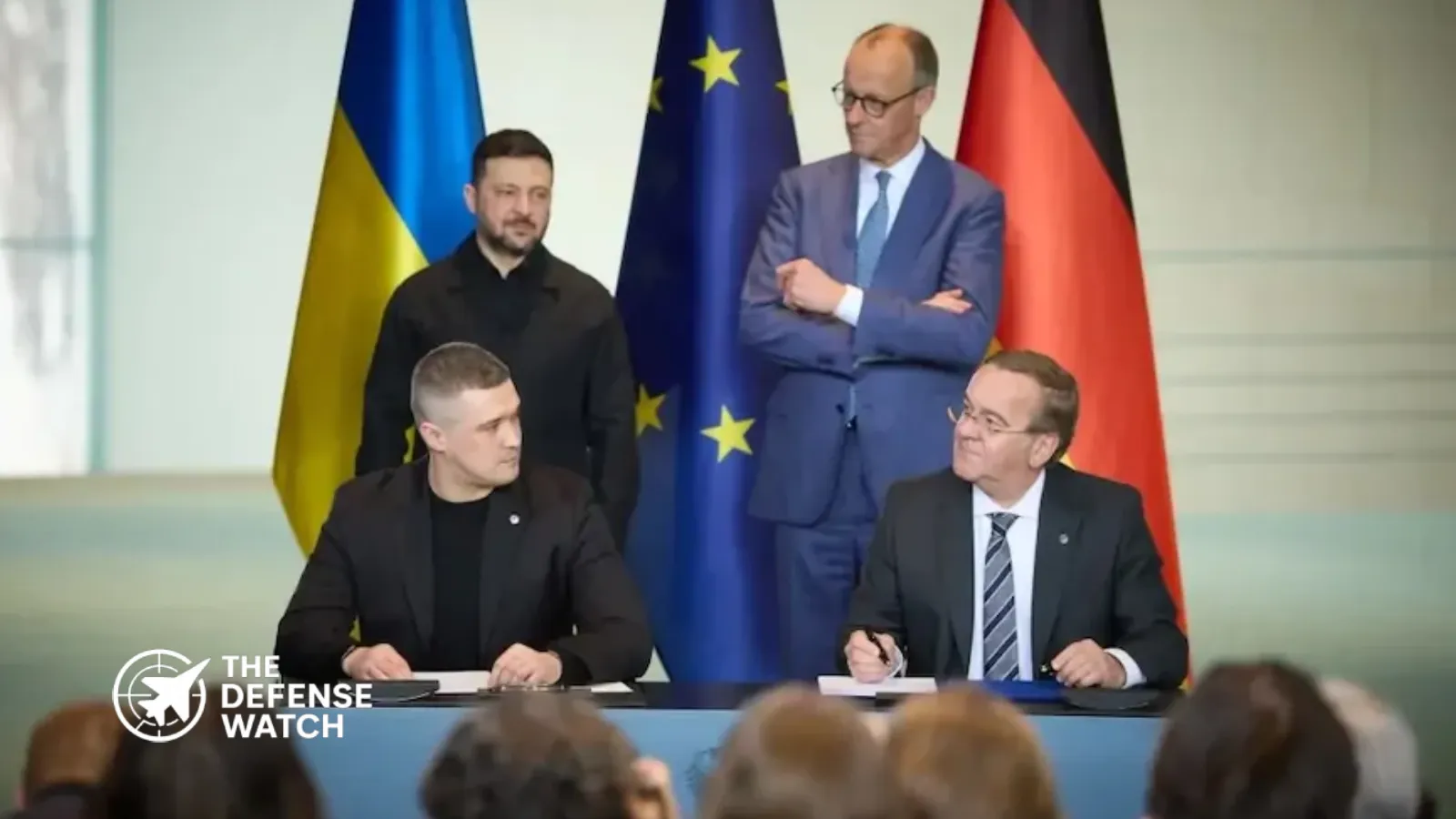
The Germany Ukraine defense data agreement marks a significant step toward deeper military integration, with both countries committing to share defense data and expand cooperation in artificial intelligence and advanced weapons systems.
Announced through a memorandum of understanding, the deal reflects a shift in how modern conflicts are fought. Instead of focusing only on hardware, both sides are prioritizing data, software, and real time information flow as core elements of combat effectiveness.
The agreement will enable closer collaboration on digital technologies that support battlefield awareness, targeting, and operational coordination.
- Germany and Ukraine signed a memorandum to exchange defense data and expand cooperation on AI and weapons systems.
- The agreement focuses on digital battlefield integration, including data sharing for real time military decision making.
- Cooperation includes artificial intelligence applications for targeting, logistics, and operational planning.
- The move reflects Europe’s growing emphasis on networked warfare and interoperability amid the Ukraine conflict.
- The pact strengthens long term defense ties between Berlin and Kyiv beyond immediate military aid.
A Shift Toward Data Driven Warfare
The agreement underscores a broader transition toward data centric warfare, where the speed and accuracy of information can outweigh traditional force size.
For Ukraine, access to German defense data systems and expertise could improve how quickly battlefield intelligence is processed and acted upon. This includes integrating sensor data, reconnaissance inputs, and targeting systems into a unified operational picture.
Germany, in turn, gains insights from Ukraine’s combat experience against a near peer adversary. Kyiv has been operating under sustained high intensity conditions, offering real world data on how systems perform under pressure.
This exchange creates a feedback loop. Ukraine benefits from advanced European technology, while Germany refines its systems based on battlefield lessons.
AI Integration Across Weapons Systems
A central pillar of the Germany Ukraine defense data agreement is artificial intelligence.
AI is expected to play a role in several areas:
- Target recognition and prioritization
- Autonomous or semi autonomous systems
- Logistics optimization and predictive maintenance
- Decision support for commanders
These capabilities are increasingly seen as critical in modern warfare, especially in environments saturated with drones, electronic warfare, and precision munitions.
By aligning AI development efforts, Germany and Ukraine aim to shorten the time between data collection and action. That speed can directly influence battlefield outcomes.
Interoperability And NATO Alignment
Another key aspect of the agreement is interoperability.
Ukraine has been steadily aligning its military systems with NATO standards. Data sharing agreements like this one help bridge technical gaps, ensuring that systems from different countries can operate together seamlessly.
For Germany, this supports broader alliance goals. A more interoperable Ukrainian military strengthens collective defense planning and improves coordination with NATO partners.
It also reflects a growing European push to standardize digital military infrastructure, particularly as cross border operations become more complex.
Strategic Implications For Europe
The Germany Ukraine defense data agreement signals a deeper transformation in European defense strategy.
Traditionally, military cooperation focused on equipment transfers or joint exercises. Now, the emphasis is shifting toward shared digital ecosystems.
This has several implications:
First, it accelerates the development of networked warfare capabilities across Europe. Countries are increasingly linking sensors, platforms, and command systems into unified networks.
Second, it reduces reliance on purely national systems. Shared data frameworks encourage multinational integration, which is essential for coalition operations.
Third, it raises questions about data security and sovereignty. Sharing sensitive defense data requires robust safeguards to prevent breaches or misuse.
Operational Impact On The Ukraine Conflict
In the near term, the agreement could enhance Ukraine’s operational effectiveness.
Improved data sharing can lead to:
- Faster targeting cycles
- Better coordination between units
- More efficient use of limited resources
In a conflict where timing and precision are critical, even incremental improvements can have outsized effects.
At the same time, the integration of AI into combat systems may help Ukraine counter evolving threats, including electronic warfare and drone swarms.
Long Term Defense Cooperation
Beyond the current conflict, the Germany Ukraine defense data agreement lays the groundwork for sustained cooperation.
It positions Ukraine as a key partner in Europe’s defense innovation ecosystem. Rather than being only a recipient of aid, Ukraine becomes a contributor of operational knowledge and technological development.
For Germany, this aligns with efforts to modernize its armed forces and adapt to new forms of warfare.
The partnership also reflects a broader trend. Defense relationships are becoming more collaborative and technology driven, with shared development and data exchange replacing traditional supplier customer models.