Pentagon Consolidates Counter-Drone Policy Framework
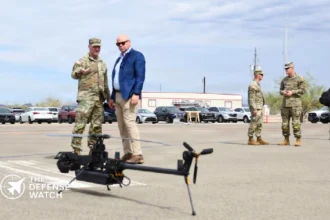
The Department of Defense’s Joint Interagency Task Force 401 announced the release of updated counter-drone guidance on December 8, 2025, providing installation commanders with streamlined authority to detect and mitigate unmanned aerial system threats to military facilities across the United States.
- Pentagon Consolidates Counter-Drone Policy Framework
- Expanding Commander Authority Beyond Installation Perimeters
- Enhanced Interagency Data Sharing Capabilities
- Clear Authority Delegation Structure
- Proactive Defense Posture Requirements
- Addressing the Proliferation Challenge
- Implementation Timeline and Training Requirements
- Integration with Broader Defense Initiatives
- National Capital Region Coordination
- Congressional Mandate Fulfillment
- Addressing Group 1 and Group 2 Threats
- Future Capability Development
- Interagency Coordination Framework
- Long-Term Strategic Implications
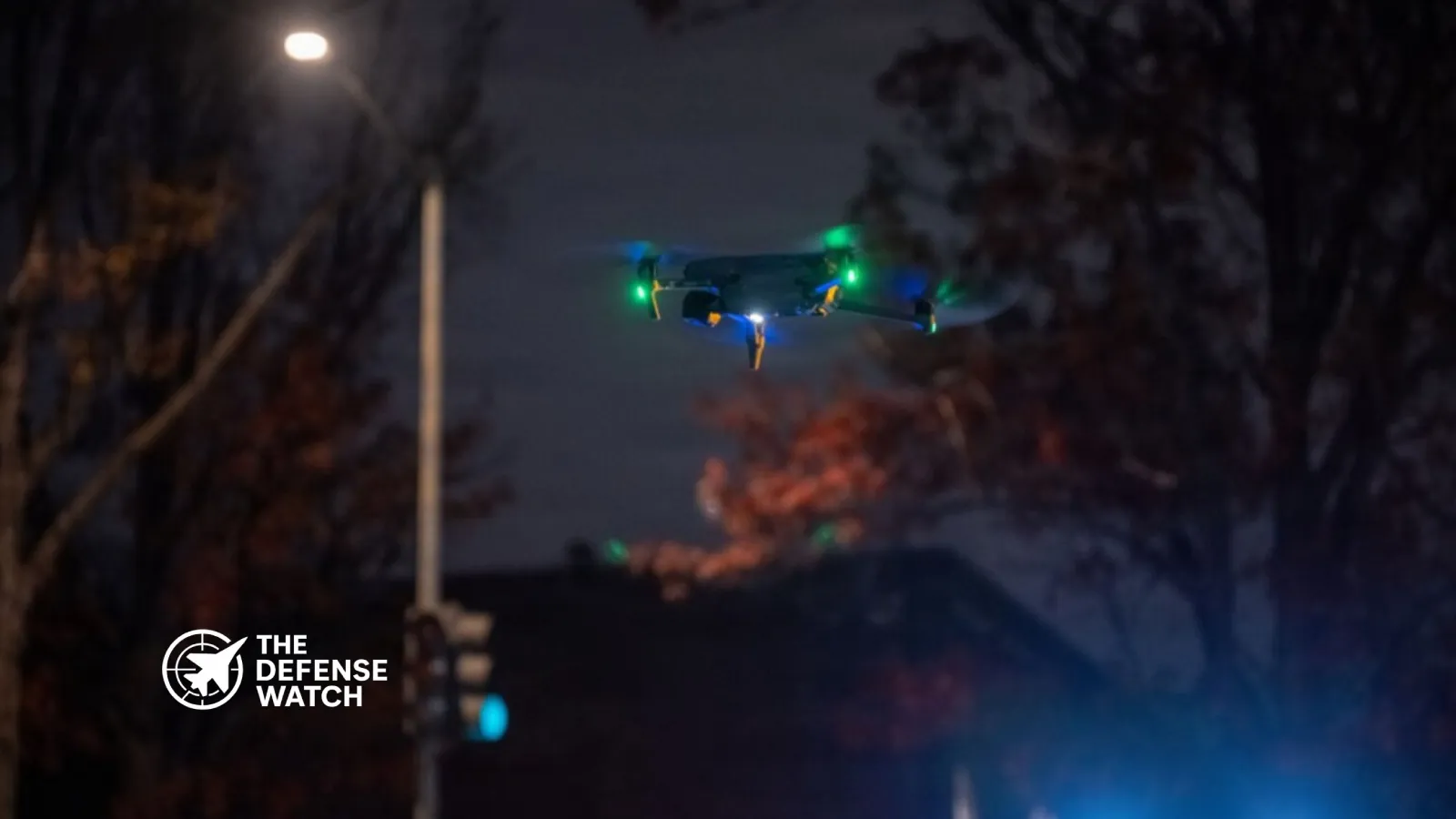
The guidance, signed by the Secretary of Defense, consolidates existing policies for countering unmanned aircraft systems under the authority of 10 U.S. Code Section 130i. The comprehensive framework addresses what military officials describe as a direct and growing threat posed by the proliferation of inexpensive, capable, and weaponizable UAS by both peer competitors and non-state actors.
“Drones are a defining threat for our time,” said Brigadier General Matt Ross, Director of JIATF-401. “Technology is evolving fast and our policies and counter-UAS strategy here at home must adapt to meet this reality.”
Expanding Commander Authority Beyond Installation Perimeters
The updated guidance provides commanders with expanded authority and flexibility to dominate the airspace above their installations. According to defense officials, the policy recognizes that drone threats do not begin and end at installation fence lines.
“Countering drones does not start and stop at the fence line,” Ross explained. With this new guidance, installation commanders are empowered to address threats as they develop, and the guidance makes clear that unauthorized drone flights are a surveillance threat even before they breach an installation perimeter.
The framework empowers installation commanders to take decisive action to protect military facilities, assets, and personnel from the evolving threat landscape. Installation commanders are now directed to issue installation-specific operating procedures within 60 days of the guidance release.
Enhanced Interagency Data Sharing Capabilities
The updated policy incorporates provisions from the Fiscal Year 2026 National Defense Authorization Act, authorizing the sharing of UAS track and sensor data among interagency partners. The guidance specifically enables data sharing with the Department of Homeland Security and the Department of Justice, facilitating a more coordinated whole-of-government approach to counter-drone operations.
The policy also permits the use of trained and certified contractor personnel as counter-UAS operators, addressing workforce capacity challenges in defending military installations. This provision expands the available pool of personnel capable of operating defensive counter-drone systems.
“Hardware alone is not sufficient,” Ross stated. “We need to train service members and work in concert with interagency partners so that we’re all pulling together toward the same mission.”
Clear Authority Delegation Structure
Service Secretaries are now authorized to designate covered facilities or assets based on comprehensive risk assessments. This authority can be delegated to Service Chiefs, ensuring protection is applied where it is needed most across the military enterprise.
The guidance consolidates what had been multiple separate memoranda and directives into a single authoritative document. This streamlining effort addresses longstanding concerns about clarity and consistency in counter-UAS policy implementation across different military installations and service branches.
According to defense officials, the consolidation provides installation commanders with clear decision-making authority regarding when and how to engage drone threats approaching or operating near their installations.
Proactive Defense Posture Requirements
The guidance emphasizes a proactive approach, directing military leaders to assess vulnerabilities, conduct rigorous training drills, and develop robust defensive postures to deter and defeat aerial threats. This represents a shift from reactive measures to anticipatory defense planning.
(adsbygoogle = window.adsbygoogle || []).push({});JIATF-401 stands ready to assist commanders in implementing the new framework and developing installation-specific procedures. The task force, established in August 2025, serves as the Department of Defense’s lead organization for synchronizing counter-small UAS efforts across the department and rapidly delivering joint capabilities.
Addressing the Proliferation Challenge
The proliferation of inexpensive and capable unmanned aerial systems presents unique challenges to military installation security. Commercial drone technology has advanced rapidly, providing potential adversaries with surveillance and reconnaissance capabilities at minimal cost.
Defense officials have noted that adversaries are actively testing U.S. resolve, seeking to exploit perceived gaps in defenses to surveil operations, harass American forces, and undermine homeland security. The updated guidance aims to close those gaps through clearer authorities and standardized procedures.
The policy addresses threats from both peer competitors and non-state actors who have demonstrated increasing sophistication in employing drone technology against U.S. interests domestically and abroad.
Implementation Timeline and Training Requirements
Installation commanders have 60 days from the guidance release date to develop and issue installation-specific operating procedures. The procedures must address local threat assessments, available counter-UAS capabilities, coordination mechanisms with local and federal law enforcement, and rules of engagement.
The guidance mandates that all officers assuming command of military installations in the United States receive pre-briefings on counter-UAS authorities and policies. This requirement ensures continuity and consistent understanding of counter-drone authorities across command changes.
JIATF-401 has committed to providing support materials, training resources, and technical assistance to installation commanders as they implement the new framework. The task force has already conducted site assessments at key installations to identify and address defense gaps.
Integration with Broader Defense Initiatives
The updated guidance supports the Department of Defense’s Replicator 2 initiative, which focuses on rapidly fielding affordable counter-drone capabilities to protect U.S. personnel and facilities. JIATF-401 has developed a prioritized list of asset locations to guide resource allocation under this initiative.
The task force marked its 100th day of operations in December 2025, demonstrating rapid progress in delivering state-of-the-art counter-drone equipment and revamping policy frameworks. Since its establishment, JIATF-401 has delivered counter-UAS capabilities to forces on the southern border and enhanced protections for installations in the National Capital Region.
(adsbygoogle = window.adsbygoogle || []).push({});From day one, our mission has been to move with speed and purpose to keep pace with this evolving threat,” Ross said. “In just over three months, we have demonstrated our ability to rapidly integrate across the department and within the interagency.”
National Capital Region Coordination
In the National Capital Region, JIATF-401 has played an instrumental role in coordinating with interagency partners to improve integrated air defense capabilities. The task force is working to integrate sensors, effectors, and mission command systems into a responsive, interoperable network.
“Our goal is to integrate sensors, effectors, and mission command systems into a responsive, interoperable network that protects service members and American citizens alike,” Ross explained. “Countering drones is not just a battlefield problem—it’s a homeland defense imperative.”
The updated guidance provides the policy foundation for these technical integration efforts, ensuring that legal authorities align with operational capabilities.
Congressional Mandate Fulfillment
The updated guidance fulfills congressional mandates outlined in the FY2025 National Defense Authorization Act, which directed the Secretary of Defense and the C-UAS Task Force to review and consolidate all Department of Defense counter-UAS memoranda and directives within 90 days.
The legislation required providing clarity and an expedited decision-making process for commanders regarding counter-UAS operations at military installations in the United States. The consolidated guidance directly addresses these congressional concerns.
Congress has expressed sustained interest in the Department of Defense’s ability to detect and mitigate UAS threats to military personnel and installations, both domestically and abroad. The FY2026 NDAA further codified JIATF-401’s authority and responsibilities in statute.
Addressing Group 1 and Group 2 Threats
Defense officials have emphasized the particular challenge posed by small drones classified as Group 1 and Group 2 systems. While many defensive systems exist to defeat larger Group 3 drones, protecting against smaller, more agile systems requires different technologies and tactics.
I want to make sure that we have just as robust protection against Group 1 and Group 2 systems that are smaller and much more likely to be seen over a heavily attended gathering, stadium, or watch party,” Ross noted in recent remarks.
The updated guidance provides the policy framework for deploying counter-UAS systems optimized for these smaller threat vectors, which are increasingly accessible to both sophisticated adversaries and opportunistic actors.
Future Capability Development
JIATF-401 continues to engage with venture capitalists, technology startups, and nontraditional defense firms as critical partners in developing next-generation counter-UAS capabilities. The task force is designed to move at the speed of relevance, cutting through traditional acquisition bureaucracy.
“We have just one measure of effectiveness: to deliver state-of-the-art counter-UAS capabilities to our warfighters both at home and abroad,” Ross stated.
(adsbygoogle = window.adsbygoogle || []).push({});The task force recently announced its first Replicator 2 purchase, acquiring DroneHunter systems—reusable, artificial intelligence-driven interceptor drones designed for use in homeland settings where minimizing risk to civilian populations is paramount.
Interagency Coordination Framework
The guidance establishes clear protocols for interagency coordination on counter-drone operations. In the event of a drone incident on U.S. soil, the Department of Homeland Security and local law enforcement would lead the response, with the Department of Defense providing support as requested.
JIATF-401 is working to ensure seamless information sharing and coordinated responses across federal agencies. The task force hosted an interagency meeting at the White House in November 2025 to strengthen cooperation across the U.S. government.
“JIATF-401 is an entirely joint, interagency endeavor dedicated to defeating small UAS,” Ross emphasized. The task force brings together representatives from nearly 50 federal agencies, including DHS, DOJ, FBI, FAA, and others.
Long-Term Strategic Implications
The updated counter-drone guidance represents a significant evolution in how the Department of Defense approaches homeland airspace defense. By providing installation commanders with clear, consolidated authorities, the policy aims to create a more agile and responsive defense posture.
Defense officials have characterized the drone threat as evolving faster than any other contemporary security challenge. The guidance framework is designed to be adaptive, allowing for updates as technology and threat vectors continue to develop.
(adsbygoogle = window.adsbygoogle || []).push({});“Small unmanned aircraft systems are changing the character of modern warfare and homeland defense,” Secretary of the Army Dan Driscoll stated. “Adversaries are exploiting inexpensive and adaptable drone technology faster than our current acquisition system can handle.”
The Department of Defense’s initiative underscores its commitment to continuously adapting amid a rapidly evolving operational landscape, ensuring the Joint Force maintains technological and tactical superiority in contested airspace environments.