Executive Summary:
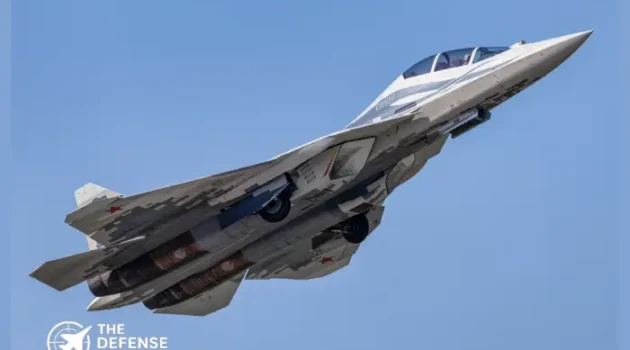
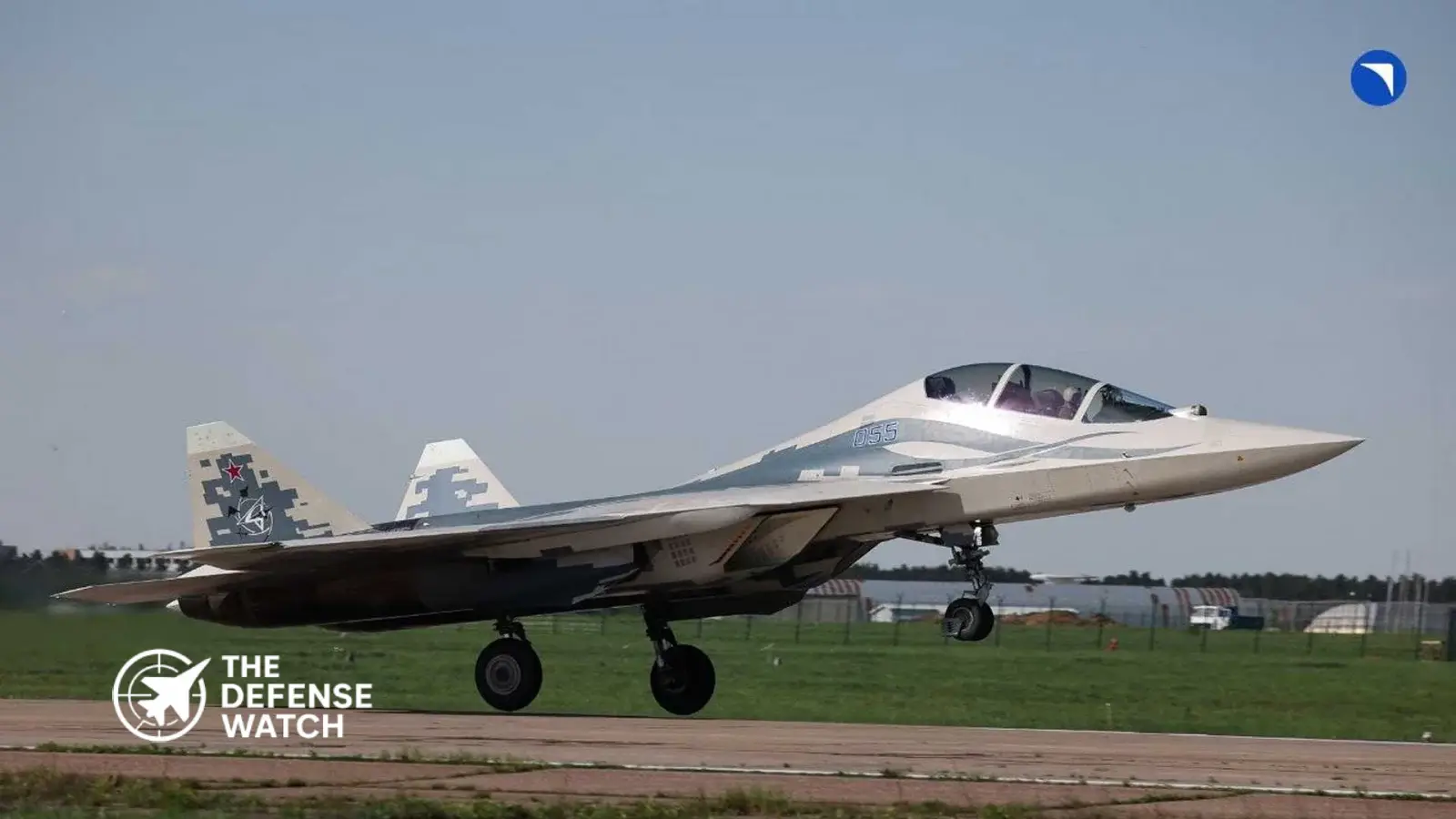
Russia has revealed the Su-57D, a new twin-seat variant of its Su-57 stealth fighter reportedly designed to coordinate unmanned combat aerial systems during future operations. The development reflects Moscow’s increasing focus on manned-unmanned teaming, long-range strike coordination, and next-generation aerial warfare concepts.
Su-57D Twin-Seat Stealth Fighter Marks New Phase In Russian Air Combat Development
The Su-57D twin-seat stealth fighter represents a significant evolution of Russia’s fifth-generation combat aircraft program. The aircraft completed its first flight and is expected to support future drone coordination missions alongside traditional fighter operations.
The new configuration introduces a second cockpit seat to the existing Su-57 platform, a move that could improve mission management during complex operations involving multiple unmanned aerial systems. Russian defense planners have increasingly emphasized manned-unmanned teaming as modern air warfare shifts toward networked combat environments.
The Su-57D appears intended to support that transition.
Russia Expands Focus On Drone-Controlled Air Operations
Russian military modernization efforts have accelerated since the widespread operational use of drones in conflicts across Eastern Europe and the Middle East. Combat experience has demonstrated the growing importance of unmanned systems for reconnaissance, electronic warfare, strike coordination, and decoy missions.
The Su-57D twin-seat stealth fighter may serve as a command-and-control platform capable of directing loyal wingman drones or coordinating multiple unmanned aircraft during combat missions.
Russian state defense industry officials have previously discussed integrating advanced artificial intelligence, sensor fusion, and unmanned teaming technologies into future tactical aviation programs. The addition of a second crew member aligns with approaches already explored by other major aerospace powers.
The United States, for example, is advancing Collaborative Combat Aircraft programs designed to operate alongside crewed fighters such as the F-35 Lightning II and F-22 Raptor.
China has also increased investment in manned-unmanned teaming concepts tied to next-generation air dominance initiatives.
Twin-Seat Design Could Improve Mission Coordination
The original Su-57 was designed primarily as a single-seat stealth multirole fighter focused on air superiority and strike operations. Adding a second operator may reduce pilot workload during missions involving large amounts of sensor data and drone coordination tasks.
Modern combat aircraft increasingly function as airborne command nodes rather than traditional standalone fighters. In these environments, pilots must manage radar systems, electronic warfare suites, targeting data, communication networks, and unmanned assets simultaneously.
A dedicated weapons systems officer or mission operator can improve operational effectiveness during high-intensity engagements.
The Su-57D twin-seat stealth fighter could therefore provide Russia with a platform optimized for future distributed air operations.
While Russian officials have not released full technical details, analysts expect the aircraft to retain many of the baseline Su-57’s characteristics, including low observable shaping, supercruise capability, and advanced avionics.
Su-57 Program Continues Amid Production Challenges
The broader Su-57 program has faced delays and production limitations since its inception. Russia originally intended the aircraft to compete directly with Western fifth-generation fighters, but serial production has progressed more slowly than anticipated.
Sanctions, supply chain restrictions, and the operational demands of the war in Ukraine have complicated procurement timelines for multiple Russian aerospace programs.
Despite these constraints, Moscow continues investing in advanced combat aviation technologies viewed as strategically important for long-term force modernization.
The unveiling of the Su-57D suggests Russia remains committed to evolving the platform beyond its original air superiority role.
Russian industry has also promoted the aircraft for export, although international sales remain limited compared to competing Western and Chinese systems.
Manned-Unmanned Teaming Becoming Central To Air Warfare
The development of the Su-57D reflects a broader global trend reshaping military aviation doctrine. Air forces increasingly see unmanned systems as force multipliers capable of extending operational reach while reducing risks to human pilots.
Future combat aircraft are expected to operate within interconnected ecosystems that combine crewed fighters, autonomous drones, electronic warfare assets, and space-based intelligence systems.
In this environment, stealth fighters may function as tactical commanders directing distributed networks of unmanned platforms.
The Su-57D twin-seat stealth fighter appears designed with that operational model in mind.
Its emergence also highlights how rapidly drone warfare lessons are influencing next-generation aerospace development worldwide.
Strategic Implications For Regional Air Power
Russia’s continued investment in advanced tactical aviation comes as NATO members expand their own fifth-generation fleets and drone integration programs. European states are also accelerating sixth-generation fighter initiatives, including multinational future combat air system projects.
The Su-57D could help Russia maintain relevance in future air combat competition by improving interoperability between crewed and unmanned systems.
However, questions remain regarding production scale, operational readiness, and the maturity of supporting drone technologies tied to the aircraft.
Without large-scale deployment of advanced loyal wingman drones, the Su-57D’s full operational concept may remain limited in the near term.
Still, the program signals an important doctrinal shift within Russian aerospace strategy.