Executive Summary:
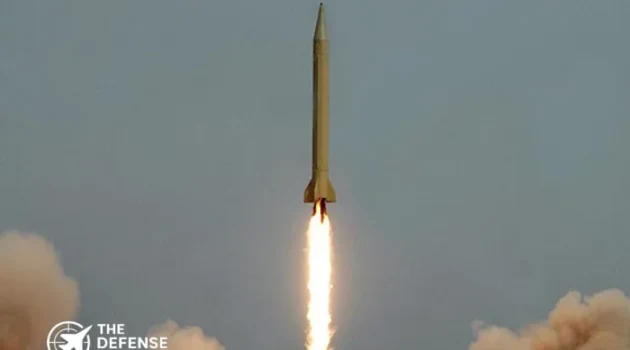
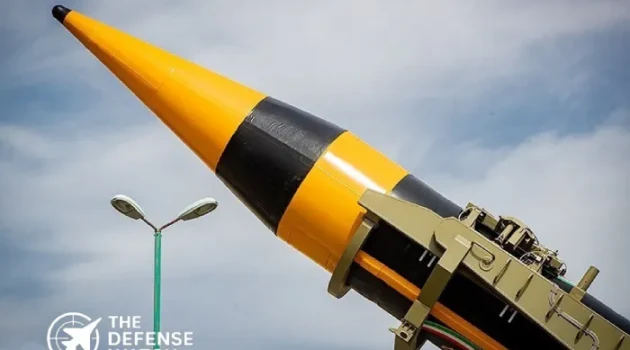
Türkiye has unveiled its first intercontinental ballistic missile, marking a significant milestone in its defense modernization efforts. The move reflects Ankara’s intent to expand long-range strike capabilities and strengthen strategic deterrence amid evolving regional security dynamics.
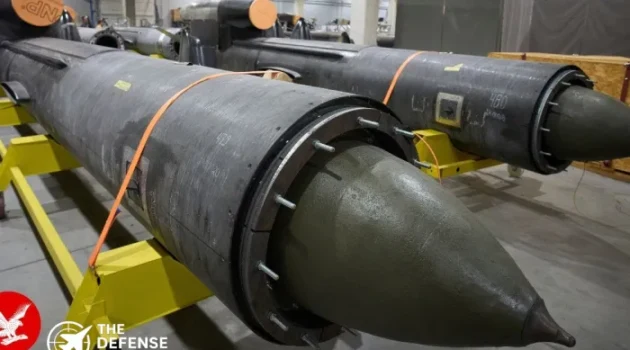
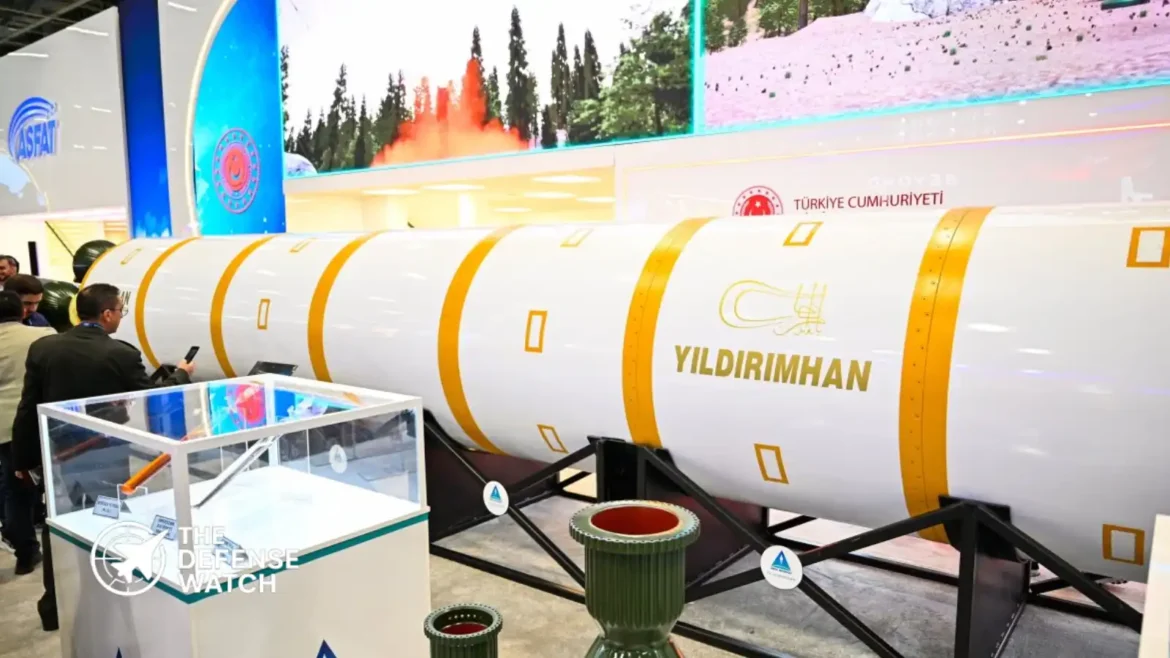
Türkiye’s intercontinental ballistic missile program has entered a new phase following the public unveiling of its first ICBM Named “Yıldırımhan”. The development signals Ankara’s ambition to join a limited group of nations possessing long-range nuclear-capable delivery systems, though no official confirmation of payload type has been disclosed.
The announcement underscores Türkiye’s broader push to achieve greater defense autonomy and extend its strategic reach beyond regional theaters.
Türkiye’s Expanding Missile Capabilities
The newly unveiled system represents a significant step beyond Türkiye’s existing short- and medium-range missile inventory. While technical specifications remain limited, an intercontinental ballistic missile typically implies a range exceeding 5,500 kilometers, enabling potential strike capability across continents.
Türkiye has previously invested in ballistic missile systems such as the Bora and Tayfun programs. The transition toward an ICBM-class platform suggests a deliberate effort to bridge the gap between regional deterrence and global reach.
From an operational standpoint, such a system would enhance Türkiye’s ability to project power, deter adversaries, and reinforce national defense posture. However, the absence of detailed data on propulsion, guidance systems, and payload capacity leaves key questions unanswered.
Strategic Context and Timing
The unveiling comes amid shifting geopolitical dynamics across the Middle East, Eastern Europe, and the broader Eurasian region. Türkiye has increasingly pursued an independent defense strategy, balancing its role within NATO while expanding indigenous military capabilities.
This move can be interpreted as part of Ankara’s long-term strategy to reduce reliance on foreign defense suppliers and to strengthen sovereign deterrence mechanisms. It also aligns with broader investments in missile technology, air defense systems, and space-related capabilities.
In recent years, regional actors have accelerated missile development programs, contributing to a competitive strategic environment. Türkiye’s entry into the intercontinental missile domain may therefore reflect both defensive considerations and a desire to maintain technological parity.
Technical and Operational Considerations
Although official specifications have not been fully disclosed, intercontinental ballistic missiles generally rely on multi-stage propulsion systems and advanced guidance technologies to achieve long-range precision. Survivability features such as mobile launch platforms or hardened silos are also critical components of credible deterrence.
If Türkiye’s system incorporates modern guidance and reentry vehicle technologies, it could significantly enhance accuracy and operational flexibility. However, without verified data, assessments remain preliminary.
Another key factor is integration within a broader command-and-control framework. Effective deployment of an ICBM capability requires secure communication systems, early warning infrastructure, and robust decision-making protocols.
Implications for Regional Security
The introduction of a Türkiye intercontinental ballistic missile capability could influence strategic calculations across multiple regions. Neighboring states and global powers are likely to closely monitor the program’s progress and operational status.
While Türkiye has not indicated any shift in its defense doctrine, the presence of long-range strike systems inherently alters deterrence dynamics. It may prompt increased emphasis on missile defense systems and early warning capabilities among regional actors.
At the same time, Ankara’s position within NATO introduces an additional layer of complexity. The alliance’s collective defense framework traditionally relies on shared capabilities and coordinated deterrence strategies. Türkiye’s independent ICBM development could raise questions about integration, interoperability, and strategic alignment.
Defense Industry and Indigenous Development
The unveiling also highlights the growing maturity of Türkiye’s domestic defense industry. Over the past decade, Ankara has prioritized local production across multiple domains, including unmanned systems, naval platforms, and missile technologies.
State-backed defense firms and research institutions have played a central role in advancing indigenous capabilities. The development of an intercontinental ballistic missile suggests progress in areas such as propulsion engineering, materials science, and systems integration.
This trajectory reflects a broader trend among middle powers seeking to establish self-reliant defense ecosystems. For Türkiye, it reinforces national resilience and reduces vulnerability to external supply chain disruptions.
Analysis: A Strategic Signal Beyond Capability
Beyond the technical milestone, the Türkiye intercontinental ballistic missile reveal serves as a strategic signal. It communicates intent as much as capability.
First, it reinforces Ankara’s aspiration to operate as a major regional power with extended reach. Second, it demonstrates technological progress that may influence defense partnerships and export opportunities. Third, it positions Türkiye within a select group of nations capable of developing long-range missile systems.
However, the effectiveness of this capability will ultimately depend on operational readiness, doctrinal clarity, and integration within broader defense structures.
Without transparency on deployment timelines, testing phases, and operational concepts, the program’s near-term impact remains limited. Still, the long-term implications are substantial.
Conclusion
The unveiling of Türkiye’s intercontinental ballistic missile marks a pivotal moment in the country’s defense modernization journey. It reflects both technological advancement and strategic intent, with potential implications for regional and global security dynamics.
As further details emerge, analysts will assess the system’s true capabilities, deployment plans, and role within Türkiye’s evolving defense doctrine.
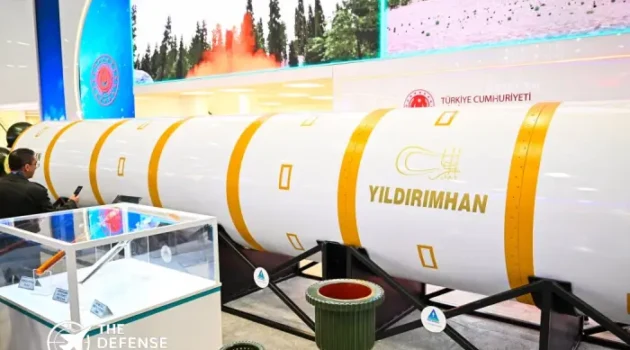
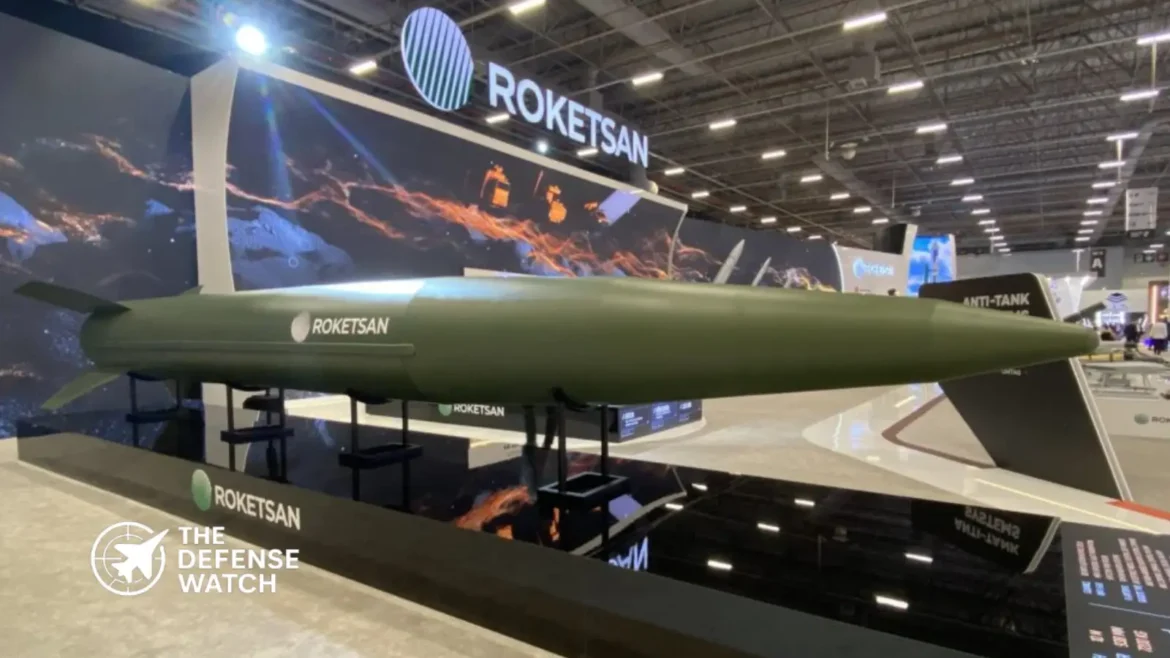
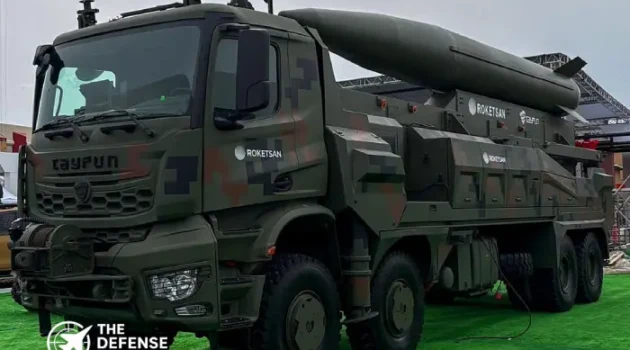
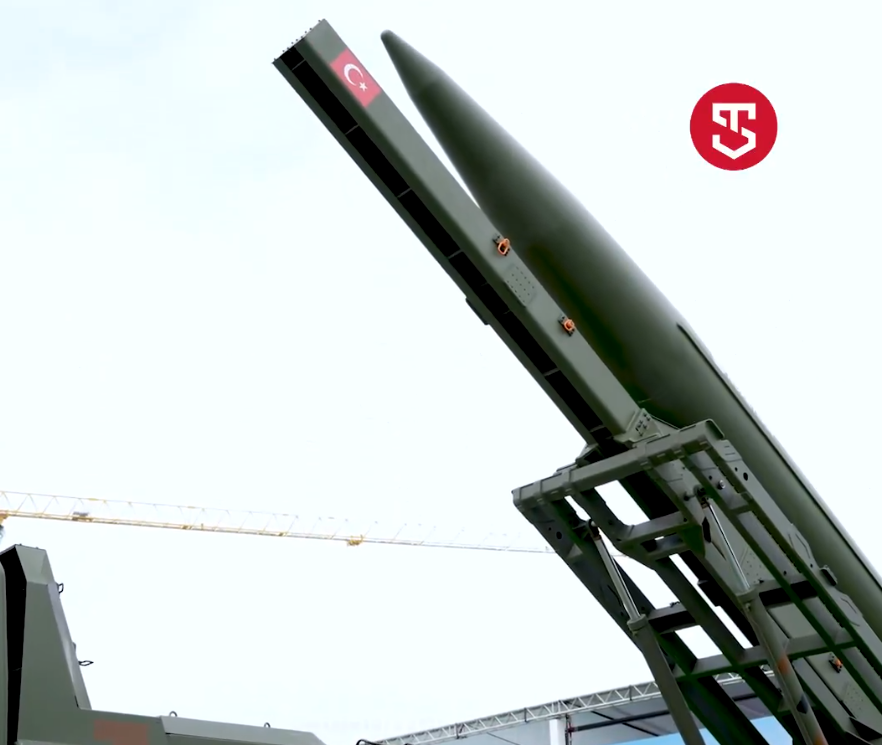
Executive Summary: ROKETSAN has officially debuted the TAYFUN Block 4 ballistic missile and its associated mobile launcher at the SAHA EXPO 2026 in Istanbul. As the latest and most capable iteration of the TAYFUN family, the Block 4 provides the Turkish Armed Forces with a strategic deep-strike capability exceeding 1,000 km and featuring hypersonic terminal velocities.
Strategic Evolution: The TAYFUN Block 4 System
The unveiling of the TAYFUN Block 4 at SAHA 2026 represents a critical milestone in Türkiye’s long-range precision strike roadmap. Developed by ROKETSAN, the Block 4 is not merely an incremental upgrade but a substantial structural and aerodynamic departure from the baseline Block 1 system.
The system was first introduced to the inventory in April 2026, following a series of successful flight tests throughout 2025 that demonstrated its ability to operate within a quasi-ballistic trajectory. This flight profile allows the missile to maneuver within the upper atmosphere, complicating interception by traditional exo-atmospheric and endo-atmospheric air defense systems.

Technical Comparison: Block 4 vs. Legacy Systems
Feature TAYFUN Block 1 TAYFUN Block 4 Comparison Notes Range 560–800 km 1,000–1,500 km Doubles operational reach. Payload ~500 kg 700–1,000 kg Enhanced for hardened targets. Weight 2,300 kg 7,200 kg Significant structural expansion. Speed Mach 5+ Mach 5–10 High-hypersonic terminal phase. Status In Service (2023) Serial Production (2026) Displayed with new TEL. Enhanced Lethality and Mobility
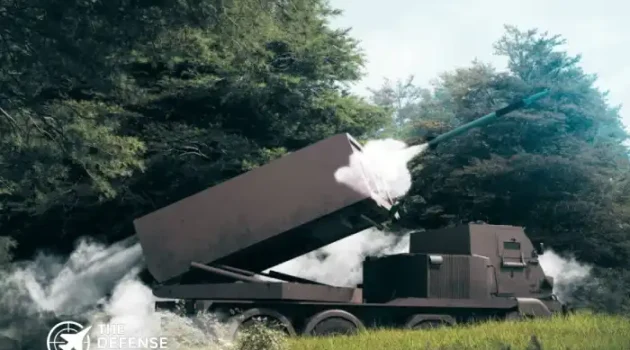
The TAYFUN Block 4 integrates several key technological advancements designed to ensure survivability in contested environments. The system displayed at SAHA includes the VOLAT 8×8 high-mobility transporter-erector-launcher (TEL), which enables rapid “shoot-and-scoot” tactics to avoid counter-battery fire.
- Expanded Dimensions: The missile has grown to 10 meters in length and 938 mm in diameter, allowing for a significantly larger solid-propellant motor.
- Hypersonic Maneuverability: Utilizing a quasi-ballistic flight path, the Block 4 maintains velocities between Mach 5 and Mach 10, reducing the reaction window for adversary Integrated Air Defense Systems (IADS).
- Advanced Guidance: The system utilizes a composite guidance package including GPS/GLONASS-aided INS and an optional TV/IIR seeker for terminal precision, even in electronic warfare (EW) contested environments.
- Specialized Warheads: Beyond standard high-explosives, the Block 4 is designed to carry penetration warheads for bunker-busting missions against hardened command centers.
Strategic Context and Regional Deterrence
The deployment of the TAYFUN Block 4 shifts the regional balance of power, placing critical infrastructure across the Eastern Mediterranean, the Aegean, and parts of Central Europe within Turkish strike range. This indigenous capability addresses the restrictions of the Missile Technology Control Regime (MTCR) by focusing on domestic development, thereby reducing Ankara’s reliance on foreign technology transfers.
Industry analysts suggest that the Block 4’s introduction is a response to the proliferation of sophisticated missile defense shields in the region. By combining hypersonic speed with a maneuverable trajectory, ROKETSAN has provided a “silver bullet” capability intended to penetrate the most dense defensive layers. The serial production phase, which commenced in early 2026, ensures that the Turkish Armed Forces will maintain a credible and persistent deterrent for the next decade.
Executive Summary: The U.S. Air Force is fast-tracking the development of the AGM-181 Long Range Standoff (LRSO) cruise missile. Designed to replace the 40-year-old AGM-86B, the LRSO introduces advanced stealth capabilities and the modernized W80-4 warhead, ensuring the U.S. nuclear triad can penetrate the world’s most sophisticated air defense networks through 2060.
The End of the ALCM Era
Since 1982, the AGM-86B Air-Launched Cruise Missile (ALCM) has been the backbone of the airborne nuclear deterrent. However, as global adversaries deploy advanced Integrated Air Defense Systems (IADS) and stealth-detecting radar, the non-stealthy AGM-86B has become increasingly vulnerable.
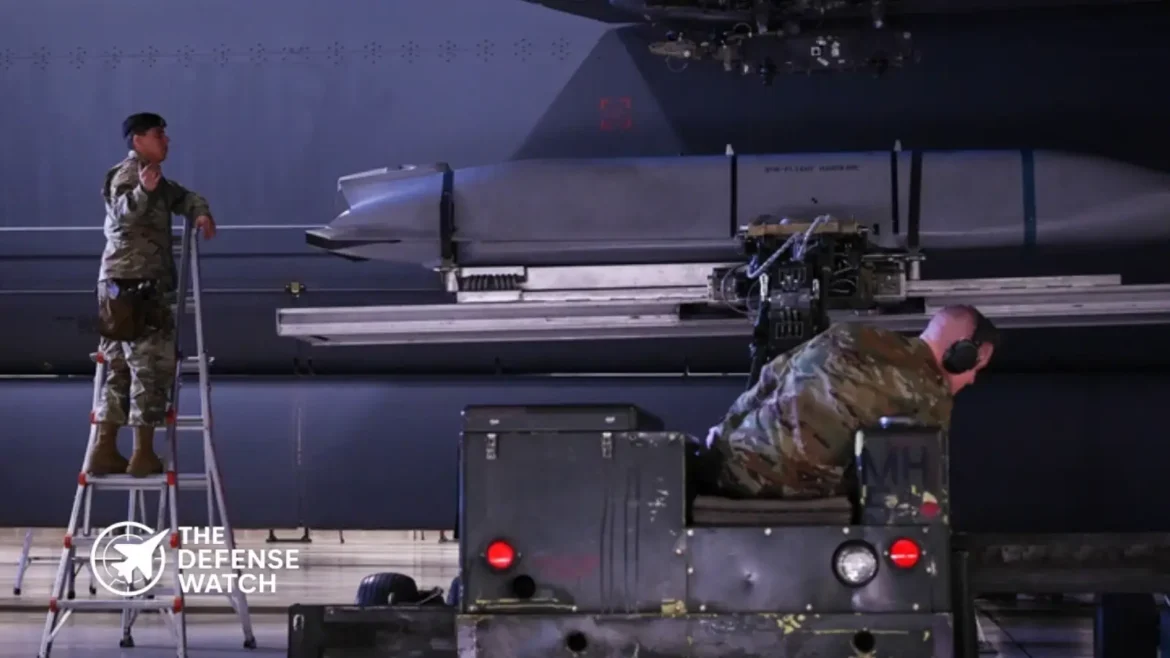
To bridge this gap, the Department of Defense is shifting resources toward the AGM-181 LRSO, a low-observable (stealth) cruise missile developed by Raytheon (RTX).
Technical Comparison: Legacy vs. Next-Gen
The transition from the AGM-86B to the AGM-181 represents a leap from Cold War technology to 21st-century digital warfare.
Quick Specs Table
| Feature | AGM-86B (Legacy ALCM) | AGM-181 (Next-Gen LRSO) |
| Manufacturer | Boeing | Raytheon (RTX) |
| Stealth | Low / Conventional | High (Low-Observable Shaping) |
| Launch Platforms | B-52H Only | B-52J and B-21 Raider |
| Range | ~1,500 Miles | 1,500+ Miles (Classified) |
| Warhead | W80-1 (200 kT) | W80-4 (Dial-a-Yield) |
| Engine | Williams F107-WR-101 | Williams F107-WI-106 |
3 Key Breakthroughs of the LRSO Program
1. Extreme Survivability (A2/AD Penetration)
While the legacy ALCM relies on flying low to “hide” in terrain, the LRSO uses advanced radar-absorbing materials (RAM) and a specialized airframe shape to remain nearly invisible to enemy radar. This allows it to operate deep within “Anti-Access/Area Denial” (A2/AD) zones.
2. The W80-4 Modernized Warhead
The LRSO will carry the W80-4 warhead, a result of a massive Life Extension Program (LEP).
- Precision: Enhanced internal guidance for higher accuracy.
- Yield Flexibility: Features “Dial-a-Yield” settings, allowing for strategic flexibility depending on the mission profile.
3. Multi-Bomber Integration
Unlike its predecessor, which was limited to the aging B-52, the LRSO is being digitally “twinned” for immediate use on:
- The B-52J: The modernized “Stratofortress” with new engines and radar.
- The B-21 Raider: The world’s first 6th-generation stealth bomber.
Program Status: 2026 Milestone Update
As of May 2026, the LRSO program has reached several critical milestones:
- Flight Testing: Recent B-52 test flights in early 2026 have confirmed successful separation and propulsion ignition of the AGM-181 airframe.
- Production Decision: A final “Milestone C” production decision is expected in 2027.
- Deployment: Initial Operational Capability (IOC) remains on track for 2030, coinciding with the first phased retirement of the AGM-86B.
The Bottom Line
The AGM-181 LRSO is not just a new missile; it is a vital insurance policy for the U.S. nuclear triad. By ensuring that even non-stealthy aircraft like the B-52 can launch high-survivability strikes from over a thousand miles away, the U.S. maintains its “Standoff” advantage in an increasingly contested global landscape.
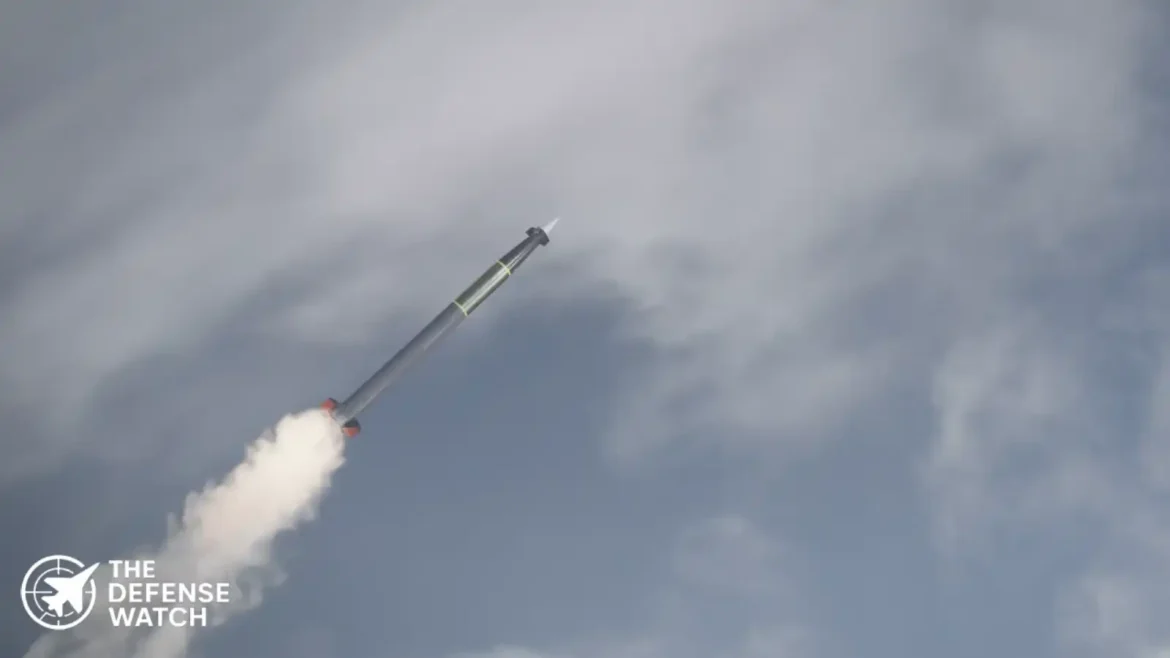
THUNDART Delivers First Live Firing, Advancing France’s Long-Range Strike Competition
The THUNDART next-generation artillery system achieved a landmark milestone on April 14 when MBDA and Safran Electronics & Defense conducted its first successful live firing at the Île du Levant test range, with support from the French Direction Générale de l’Armement Essais Missiles (DGA EM). The demonstration — completed in just 18 months from initial design — validated the propulsion system and guidance architecture, with performance reported to exceed pre-test expectations.
The timing is deliberate. The DGA is weeks away from a procurement decision on the replacement for the Lance-Roquettes Unitaires (LRU), the French Army’s current long-range rocket artillery that becomes obsolete by 2030. THUNDART now enters that competition as the only European-sovereign system to have confirmed, in live testing, a strike range greater than the LRUs it is designed to replace.
The Big Picture: Europe’s Long-Range Fires Deficit
NATO’s eastern flank experience, sharpened by the war in Ukraine, exposed a chronic shortage of long-range precision fires across European armies. While the United States and Russia both field rocket artillery systems capable of striking targets at 70–100+ kilometers, most NATO members in Western Europe operate systems with substantially shorter reach — a gap adversaries have studied and, in some cases, exploited.
France’s LRU, based on the M270 Multiple Launch Rocket System (MLRS) platform firing 227mm rockets, was a Cold War-era capability that has served the French Army for decades. As that system reaches end-of-service, Paris faces a choice shared by Germany, Italy, and other allies: accept a temporary capability regression, accelerate procurement of U.S.-supplied alternatives such as the PrSM (Precision Strike Missile), or invest in a domestically developed solution that preserves strategic autonomy and industrial sovereignty.
For France, strategic autonomy is not a rhetorical preference — it is a defense doctrine. The country maintains an independent nuclear deterrent, builds its own carrier aircraft, and has long resisted over-dependence on American defense platforms. THUNDART reflects that philosophy applied to conventional long-range strike.
What’s Happening: The Test, the Teams, and the Technology
MBDA, the Paris-headquartered European missile consortium, and Safran Electronics & Defense, a major French defense electronics group, jointly developed THUNDART under the broader Frappe Longue Portée Terrestre (FLP-T) — or Long-Range Land Strike — program initiated by the DGA. The two companies mobilized more than 100 employees and moved from the drawing board to a live firing test in 18 months, a development pace that is notable in the context of European defense programs historically measured in years or decades.
The propulsion system was developed by Roxel, a wholly owned MBDA subsidiary, in just over one year — a tight schedule for what amounts to a new rocket motor optimized for range performance. The guidance kit integrated into THUNDART is derived from Safran’s AASM (Armement Air-Sol Modulaire), a modular air-to-ground weapon already in service with the French Air and Space Force on Rafale fighters. The test confirmed the AASM guidance architecture’s robustness under the specific aerodynamic and environmental stresses of a ground-launched rocket, which differ significantly from the air-launch profiles the kit was originally designed for.
“This success represents a key milestone just weeks before the DGA’s decision on the replacement of the Lance-Roquettes Unitaires, which are set to become obsolete by 2030.”
The firing was conducted at the Île du Levant range on the French Mediterranean coast, a facility regularly used for missile and rocket testing by DGA EM. All aspects of the demonstration — design validation, propulsion performance, and guidance integration — were confirmed by the DGA, lending institutional credibility to the industry claims.
Why It Matters: Sovereignty, Speed, and Scalability
Three factors make this test result strategically significant beyond the technical milestone itself.
First, sovereign development. THUNDART uses a fully French supply chain spanning five regions of France. Both MBDA and Safran have emphasized that production security — the ability to surge output without dependence on foreign component suppliers — is a core design requirement. This is not an abstract concern: the war in Ukraine generated sharp demand spikes for artillery ammunition across NATO that stressed supply chains globally and highlighted the risks of industrial interdependence for critical munitions.
Second, development speed. Eighteen months from design concept to live firing is exceptional for a new artillery system. That pace reflects both the decision to leverage existing, mature technologies — the AASM guidance kit, Roxel’s propulsion expertise — and a deliberate organizational effort to accelerate. MBDA’s commitment to invest €2 billion in France between 2026 and 2030, combined with a planned 40% production increase in 2026, signals that this is not a proof-of-concept exercise but a preparation for industrial-scale delivery.
Third, timing. The DGA decision on the LRU replacement is imminent, and THUNDART has now presented France with a genuinely competitive domestic option at exactly the right moment. Had the test failed or been delayed, France would likely have faced pressure to select a foreign solution — most plausibly the U.S.-developed PrSM — to avoid a capability gap.
Strategic Implications: Deterrence, Autonomy, and the European Defense Industrial Base
A successful THUNDART program would give France — and potentially its European partners — a domestically produced long-range precision fires capability that carries meaningful deterrence value against potential adversaries. Long-range precision artillery is not merely a tactical tool; in modern combined-arms warfare, it is a key enabler of deep interdiction, counter-battery fire, and the suppression of adversary logistics and command networks.
From a NATO alliance perspective, a European-developed system that demonstrates range parity or superiority over the retiring LRU strengthens collective deterrence on the eastern flank without requiring additional U.S. platform exports. This has both practical and political dimensions: European governments under fiscal and political pressure to demonstrate defense self-sufficiency can point to THUNDART as evidence that the continent can close its own fires gaps.
The potential 50/50 MBDA-Safran joint venture — currently under consideration — would consolidate the industrial infrastructure and intellectual property necessary for long-term capability development. If established, that JV would also provide a platform for potential export, with several NATO and European partner nations actively seeking LRU-class or similar systems to replace aging Cold War-era rocket artillery.
Safran’s production track record reinforces the supply argument: the company quadrupled AASM output at its Montluçon facility between 2022 and 2025. Applying that industrial experience to THUNDART’s guidance kit component means one of the system’s most technically demanding sub-systems already has a proven, scalable production base.
Competitor View: How Adversaries Will Read This Test
Russia will almost certainly note the demonstration with attention. Moscow has observed NATO’s fires modernization closely and understands that long-range precision artillery erodes the buffer zone advantages that have historically protected Russian operational depth in any hypothetical European conflict. A France that fields a range-superior successor to the LRU, particularly one integrated with the mature AASM precision guidance system, represents a qualitative improvement in NATO’s ground-based strike envelope — one that complicates Russian operational planning in the Baltic, Eastern Europe, and the Black Sea region.
China will assess the broader signal: that European defense industries, when properly incentivized, can compress development timelines dramatically. Beijing’s own defense industry has demonstrated similar acceleration; the THUNDART timeline challenges any assumption that Western defense procurement remains inherently slower or less responsive than Chinese programs.
For European regional actors and potential buyers, the demonstration validates THUNDART as a credible export candidate — assuming the DGA selects it for the FLP-T program and production lines scale as projected. Several Middle Eastern and Asian allies have expressed interest in long-range precision fires systems as their own threat environments evolve.
What To Watch Next: Decision Points and Milestones
The most immediate and consequential development is the DGA’s forthcoming LRU replacement decision. A selection of THUNDART for the FLP-T program would trigger a formal development contract, likely establishing delivery timelines aimed at fielding operational systems before the LRU’s 2030 retirement date. Any delay or program restructuring would reopen the competition and create pressure to accelerate foreign procurement alternatives.
Beyond the primary decision, watch for confirmation of the proposed 50/50 MBDA-Safran joint venture. If formalized, the JV would clarify the governance structure for THUNDART development and signal the depth of both companies’ commitment to long-term program continuity, which matters to DGA program officers evaluating industrial risk.
Subsequent test firings will be critical for demonstrating reproducibility, range envelope consistency, and guidance accuracy under varied environmental and operational conditions. A single successful test, however impressive, does not validate a system for series production — DGA will require a robust test campaign before committing to a full procurement contract.
Finally, any announcement regarding potential European partner interest — whether from Germany’s Bundeswehr (which operates MLRS), Belgium, or other NATO members evaluating similar LRU-class replacements — would significantly alter the economic calculus for the program and expand the industrial rationale for both MBDA and Safran’s planned investment surge.
Capability Gap: What THUNDART Addresses — and What Remains Uncertain
The French Army’s current LRU fires at ranges that, while serviceable in past operational contexts, fall short of the stand-off distances now considered essential in high-intensity, contested-airspace environments. Modern integrated air defenses and long-range adversary counter-battery radar systems mean that artillery platforms must engage targets from greater distances to remain survivable. THUNDART’s claimed range — confirmed to exceed the LRU — directly addresses this operational shortfall.
The integration of the AASM guidance architecture also addresses the precision dimension of the gap. Unguided or poorly guided long-range rockets consume large quantities of expensive munitions to achieve effect; precision guidance enables lower ammunition expenditure, reduced collateral damage risk, and greater operational flexibility in complex environments.
Realistic limitations remain. The system has completed a single firing test. Production timelines are aggressive given the 2030 target. The AASM guidance kit, while proven in air-launch configurations, will require additional validation in multiple firing scenarios to confirm consistency in ground-launch mode across the intended operational range envelope. Cost per round — a critical factor for any nation planning to sustain high-volume fires against a peer adversary — has not yet been disclosed. And the competitive threat from more established U.S. systems like PrSM, which benefits from a larger existing customer base and mature logistics support, has not disappeared from the French procurement conversation.
The Bottom Line:
THUNDART’s successful first firing positions France to replace the retiring LRU with a domestically sovereign, range-superior system — but the real test arrives when the DGA decides whether 18 months of accelerated development is enough to bet Europe’s long-range fires future on a program that has, so far, fired exactly once.

U.S. Air Force Expands JASSM Cruise Missile Procurement
The JASSM cruise missiles program is set for a major expansion after the U.S. Air Force disclosed plans to purchase nearly 4,300 additional weapons through fiscal year 2031, according to budget reporting and defense industry coverage. The move follows recent U.S. combat operations against Iran that reportedly placed heavy demand on long-range precision strike inventories.
KEY FACTS AT A GLANCE- U.S. Air Force plans to acquire nearly 4,300 additional AGM-158 JASSM missiles through fiscal year 2031.
- FY2027 procurement request rises sharply to 821 missiles, up from far lower recent annual levels.
- Program value is projected at roughly $20 billion across the planning period.
- Recent strikes against Iran highlighted how quickly precision munition inventories can be consumed.
- JASSM remains central to U.S. plans for contested theaters including the Indo-Pacific.
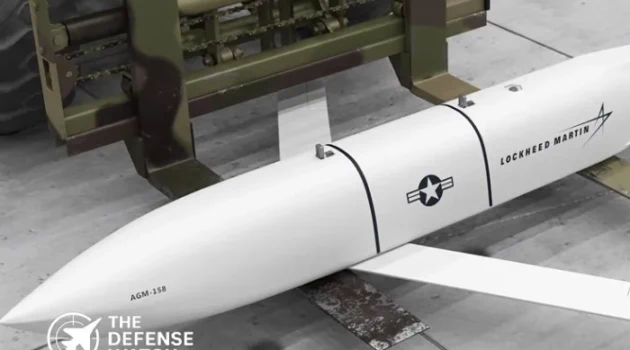
The missile involved is the AGM-158 Joint Air-to-Surface Standoff Missile, commonly known as JASSM. Built by Lockheed Martin, it is designed to strike defended targets from outside enemy air defense range. Its low observable design and precision guidance make it one of the U.S. military’s most important conventional deep-strike weapons.
Why The Pentagon Is Buying More JASSM Missiles Now
The timing matters. Recent reporting indicated the United States drew heavily on JASSM-ER inventories during operations tied to the Iran conflict, including redeployments from other theaters. That raised wider concerns about surge capacity if another crisis emerged in the Indo-Pacific or Europe.
This new procurement plan suggests the Pentagon is shifting from peacetime inventory management toward wartime replenishment logic.
That is strategically significant for three reasons:
- Modern wars consume precision weapons fast
Long-range missiles are often used in opening strikes against radar sites, command centers, air bases, and hardened targets. - Production takes time
Advanced cruise missiles require electronics, propulsion systems, seekers, and skilled labor. Output cannot be doubled overnight. - China contingency planning remains central
U.S. planners continue to view the Pacific as the pacing theater, where standoff strike weapons would be critical.
What Is JASSM And Why It Matters
The baseline AGM-158A has a range of roughly 230 miles, while the extended-range JASSM-ER can exceed 575 miles. The missile carries a 1,000-pound class penetrator warhead and uses GPS, inertial navigation, and terminal seekers for precision attack.
It can be launched by multiple aircraft, including:
- B-1B Lancer
- B-2 Spirit
- B-52H Stratofortress
- F-15E Strike Eagle
- F-35A Lightning II
That broad integration gives commanders flexible launch options across multiple bases and regions.
Industrial Base Challenge Still Remains
Even with more funding, missile production capacity remains a constraint. Expanding output depends on suppliers of rocket motors, microelectronics, guidance components, and final assembly lines.
This is one of the clearest lessons from the Ukraine war and Middle East operations: stockpiles matter, but so does the ability to replace losses quickly.
For Washington, the 4,300-missile buy is not just a weapons order. It is a signal that sustained conflict planning has returned.
Strategic Outlook
The planned JASSM buildup shows the U.S. Air Force expects future conflicts to require larger inventories of survivable, long-range munitions. Whether aimed at deterring Iran, Russia, or China, the message is clear: precision strike capacity is now a core measure of military readiness.
- Modern wars consume precision weapons fast
Germany’s Rheinmetall and Dutch missile firm Destinus are forming a joint venture to industrialize cruise missile and rocket artillery output across Europe — a direct response to inventory shortfalls exposed by the Ukraine war.
¦ KEY FACTS AT A GLANCE- Rheinmetall and Destinus have agreed to form Rheinmetall Destinus Strike Systems, a 51/49 percent joint venture targeting scalable European missile production.
- The new entity will manufacture advanced cruise missiles and ballistic rocket artillery for European and NATO-allied customers, with serial production based inside Rheinmetall’s German industrial facilities (expected in Unterlüß, Lower Saxony).
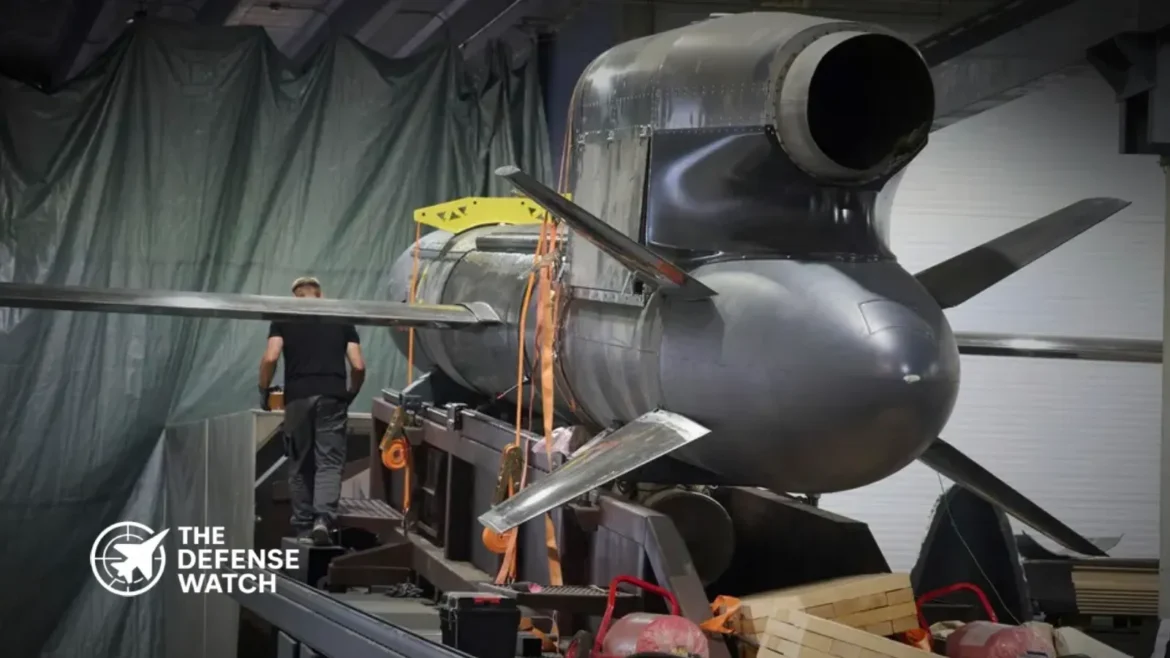
- Destinus contributes system architecture, product design, and combat-proven platforms — including the Ruta cruise missile already operationally validated in Ukraine — while Rheinmetall provides large-scale manufacturing, qualification, and industrial infrastructure.
- The joint venture is expected to be formally established in the second half of 2026, subject to regulatory approvals, and will serve markets across Europe and selected NATO partner countries.
- Both partners highlight surging demand — from thousands to potentially tens of thousands of units annually — positioning the venture as a key industrial-capacity solution to strengthen Europe’s long-range strike capabilities.
Rheinmetall and Destinus Form European Missile Strike Joint Venture
Rheinmetall Destinus Strike Systems, a new joint venture between German defense heavyweight Rheinmetall and Netherlands-based missile developer Destinus, will concentrate on industrializing cruise missile and rocket artillery production across Europe. The announcement, made April 13, 2026, marks one of the most significant European strike-systems partnerships of the post-Ukraine defense expansion era — and signals that NATO’s largest economy is prioritizing missile production at a scale previously unseen in peacetime Europe.
Rheinmetall will hold a 51 percent controlling stake; Destinus retains 49 percent. Pending regulatory approval, the companies expect to formally constitute the entity in the second half of 2026.
The Big Picture: NATO’s Missile Inventory Problem
European NATO members have spent the better part of three years confronting an uncomfortable reality: their missile stockpiles were sized for deterrence, not sustained warfighting. The conflict in Ukraine — now past its fourth year — has demonstrated that modern high-intensity conflict consumes guided munitions at rates that Cold War-era production lines were never designed to meet.
Western governments have responded with rhetoric and budget commitments, but the industrial base has lagged. Production capacity remains the binding constraint. Individual companies can design credible systems; scaling them into reliable industrial output requires capital, infrastructure, supply chains, and qualified manufacturing that take years to assemble. The Rheinmetall-Destinus joint venture is a direct institutional response to that gap.
The venture also reflects a broader pivot in European defense procurement philosophy. For decades, European nations treated missiles as high-value, low-volume precision assets — expensive platforms acquired in small numbers. Ukraine forced a reassessment. Missiles are increasingly framed as tactical consumables whose strategic value depends on volume as much as accuracy.
What’s Happening: Structure and Scope
The joint venture will manufacture, assemble, test, and deliver advanced cruise missile systems alongside ballistic rocket artillery. Destinus — headquartered in the Netherlands — contributes system architecture, product design, and scalable platform development. Critically, the company has deployed systems operationally in Ukraine, giving it a level of live-combat validation that most European missile developers lack.
Rheinmetall brings the complementary industrial side: large-scale manufacturing experience, qualification processes, and physical production capacity inside Germany. The joint venture will establish Germany-based serial production and qualification capabilities within Rheinmetall’s existing industrial facilities, reducing the time and capital required to stand up new production infrastructure from scratch.
“We must expand the industrial base for modern defence systems in Europe. This joint venture reflects this necessity. We are combining Rheinmetall’s production capacities and experience in managing large-scale programs with Destinus’s specific technology and system design.”— Armin Papperger, Chief Executive Officer, Rheinmetall
“Europe is entering a new phase of scaling missile production. Modern conflict is defined by volume and cost-per-effect. The real constraint in Europe today is not demand, but industrial capacity.”— Mikhail Kokorich, Co-Founder and CEO, Destinus
The venture will initially target European customers and selected NATO countries. The companies also indicated that local industrial partnerships in key markets may be pursued to support regional sales and long-term growth — a structure that could ease technology-transfer concerns in prospective customer nations.
Why It Matters: Combat Validation Meets Industrial Scale
What distinguishes this partnership from earlier European defense consolidations is the combination of operational credibility and manufacturing scale. Destinus’s systems have moved beyond laboratory development — they have been used in active combat operations in Ukraine. That is a rare credential in the European defense market, where many missile programs remain in extended development or low-rate initial production.
Rheinmetall, for its part, has spent the past three years aggressively expanding its defense manufacturing footprint. The company has opened or expanded facilities in Germany, Romania, Ukraine, and elsewhere, and has positioned itself as Europe’s primary answer to the question of who can produce defense hardware at scale. Adding missile systems to that footprint is a logical and strategically coherent expansion.
For European defense ministries, the joint venture offers something valuable: a domestically produced, combat-proven, industrially scalable cruise missile with a credible production ramp timeline. That combination — credibility plus capacity plus a European address — addresses procurement and sovereignty concerns simultaneously.
Strategic Implications: Sovereignty, Speed, and Alliance Cohesion
The venture carries implications that extend beyond the two companies involved. First, it reinforces Germany’s emergence as a primary node in European defense industrial capacity. Berlin’s willingness to host serial missile production facilities signals a meaningful shift in German strategic culture — a country that historically constrained its defense exports and industrial ambitions is now actively building the infrastructure to supply allied armed forces with strike systems.
Second, the structure of the deal — with Destinus maintaining its Dutch headquarters and Rheinmetall hosting production in Germany — creates a binational industrial arrangement that may prove easier to scale into multi-country procurement than a purely national program. European defense acquisition has long been fragmented; industrial ventures that bridge national lines can accelerate collective procurement decisions.
Third, the joint venture’s stated ambition to grow from thousands to tens of thousands of units annually represents a serious attempt to match the production logic of peer adversaries. Russia has sustained missile production under sanctions by leveraging its state industrial base. China maintains extensive cruise and ballistic missile production capacity. The Rheinmetall-Destinus venture is one part of Europe’s answer to that industrial asymmetry.
Competitor View: Moscow and Beijing Will Be Watching
From Moscow’s perspective, the venture represents a further hardening of Western European industrial resolve. Russia’s strategic calculus in Ukraine has depended partly on an assumption that Western munitions production would struggle to sustain high-tempo delivery of strike systems. A credible European cruise missile production line — particularly one anchored in Germany and drawing on combat-validated designs — challenges that assumption directly.
Beijing’s defense planners will note the underlying model: a private-public industrial structure capable of rapid scale-up, combining agile technology development with established manufacturing infrastructure. China has invested heavily in its own missile industrial base and watches Western attempts to replicate that model with interest. A successful Rheinmetall-Destinus ramp-up would demonstrate that market-driven defense industrialization can compete with state-directed models in speed and scale.
For Iran — which has supplied missile and drone systems to Russia and maintains its own strike program — European missile production capacity serves as a broader deterrence signal against proxy and direct missile threats in the Middle East and Eastern Europe theaters.
What To Watch Next
The immediate milestone is regulatory approval and formal incorporation of Rheinmetall Destinus Strike Systems, expected in the second half of 2026. Defense analysts should watch whether German export control authorities — which govern arms exports under strict legal frameworks — impose conditions on which NATO countries can receive systems produced under the venture.
The Destinus Ruta Block 2 cruise missile, unveiled earlier in 2026 and derived from a system already used in Ukraine, is the most likely initial production candidate. Watch for qualification timelines at Rheinmetall’s German facilities and whether the venture pursues co-production arrangements with partners in Poland, Romania, or the Baltic states — nations with both strong procurement incentives and active programs to develop domestic defense industrial capacity.
Long-term, the venture’s growth trajectory will depend on whether European defense budgets sustain their current expansion. NATO allies are under increasing pressure — from within the alliance and from Washington — to raise defense spending to three percent of GDP. If that spending materializes, it creates the demand signal needed to justify the large-scale industrial investment both companies are now committing to.
Capability Gap: Production Volume, Not Platform Performance
Europe does not lack missile technology. What it has consistently lacked is industrial capacity to produce proven systems at the volume modern warfare demands. Ukraine consumed in weeks what some European nations had stockpiled over years. Replenishment timelines measured in years are operationally meaningless in a conflict measured in weeks and months.
The Rheinmetall-Destinus joint venture targets precisely this gap. By embedding Destinus’s system designs within Rheinmetall’s existing large-scale manufacturing infrastructure, the venture aims to compress the time between design and serial production — bypassing the years typically required to build new production lines from scratch.
Realistic limitations apply. Regulatory approvals, export licensing, supply chain development, and workforce training all introduce timelines that cannot be eliminated by industrial ambition alone. The venture also enters a competitive market: MBDA, KNDS, and other established European defense groups are pursuing similar production expansion strategies. The joint venture’s Ukraine-validated systems provide a differentiating factor, but competition for European procurement budgets will remain intense.
The Bottom Line
By anchoring combat-proven missile design within Rheinmetall’s industrial-scale manufacturing network, the Rheinmetall Destinus Strike Systems joint venture represents Europe’s most operationally credible step yet toward closing the missile production gap that four years of high-intensity warfare in Ukraine has made impossible to ignore.
Ukraine’s Fire Point Targets $1M Ballistic Missile Kill Cost With New Air Defense System
Ukraine’s Fire Point, maker of the Flamingo cruise missile, is in active talks with European defense companies to launch a new air defense system by 2027 — one that its co-founder says could fundamentally disrupt the economics of ballistic missile defense.
Fire Point co-founder and chief designer Denys Shtilierman told Reuters the company aims to cut the cost of intercepting a ballistic missile to below $1 million — a benchmark that, if achieved, would represent a significant departure from current Western air defense cost structures.
¦ KEY FACTS AT A GLANCE- Ukraine’s Fire Point — maker of the Flamingo cruise missile — is developing a new low-cost air defense system targeting a sub-$1 million cost per ballistic missile intercept.
- The system will use Fire Point’s FP-7 short-range ballistic missile as its interceptor; a first live intercept attempt is planned for late 2027.
- A Middle Eastern conglomerate — widely identified in Ukrainian media as Emirati defense firm Edge Group — has proposed a $760 million acquisition of a 30% stake in Fire Point, valuing the company at $2.5 billion.
- Fire Point is also developing two supersonic ballistic missiles: the FP-7 (300 km range) and the FP-9 (850 km range, 800 kg warhead) — the latter placing Moscow within reach.
- The company currently produces hundreds of long-range strike drones daily and three Flamingo cruise missiles per day, with export capacity of up to 2,500 drones monthly pending Ukrainian government approval.
The Big Picture
Western air defense architecture faces a compounding supply crisis. Patriot missiles are in increasingly short supply amid extensive deployment in the Gulf against Iranian attacks, and Europe’s only anti-ballistic system, the Italo-French SAMP/T, is produced in relatively small numbers.
That scarcity has created a strategic opening. Nations seeking to protect their airspace — particularly smaller NATO partners, Indo-Pacific allies, and Gulf states — are actively searching for credible, affordable alternatives to a U.S. system whose production cannot currently meet global demand.
Fire Point’s emergence as a serious contender in this space is not accidental. Years of know-how gained on the battlefield fighting Russian forces have made Ukraine a leading innovator in low-cost defense tech. With the outbreak of war in the Gulf, Kyiv has leveraged that expertise to sign security agreements with governments across the region.
What’s Happening
Fire Point — founded after Moscow’s 2022 invasion — is Ukraine’s biggest maker of the long-range drones used in the majority of strikes deep inside Russia. The company has since expanded well beyond drone production.
Its FP-5 long-range cruise missile, commonly known as the Flamingo, has been used to hit Russian military facilities and arms factories, including a ballistic missile plant nearly 1,400 kilometers inside Russian territory.
Now, Shtilierman says Fire Point is targeting the intercept mission. The Patriot system — manufactured by Raytheon and Lockheed Martin — often requires two or three air defense missiles, each costing several million dollars, to bring down a ballistic projectile.
“If we can decrease it to less than $1 million, it will be a game changer in air defense solutions,” Shtilierman said. We plan to intercept the first ballistic missile at the end of 2027.
Shtilierman declined to name the European companies involved in the discussions but said Fire Point is “deeply interested” in collaboration on radar, missile target-seeking, and communications systems — areas where it lacks expertise. He noted that European companies including Weibel, Hensoldt, SAAB, and Thales have capable radar solutions.
Why It Matters
The cost asymmetry in modern air defense has emerged as one of the defining vulnerabilities of Western military posture. Adversaries have learned to exploit it directly: Russia, Iran, and their proxies fire salvos of inexpensive ballistic and cruise missiles, forcing defenders to expend interceptors worth multiples more than the incoming rounds.
If Fire Point can demonstrate a reliable intercept at under $1 million per kill, it addresses one of the most critical tactical and economic imbalances in contemporary warfare. Even a system with somewhat lower kill probability than the Patriot could justify deployment purely on cost-exchange-ratio grounds.
Fabian Hoffmann, a missile expert and senior researcher at the Norwegian Defence University College, acknowledged Fire Point’s 2027 target was “ambitious.” However, he said that beyond Ukraine’s own military needs, there would be strong demand from governments even if its kill rates per missile were less effective than the Patriot’s.
That analysis carries considerable weight. In markets where Patriot is unavailable or unaffordable, a lower-cost system with a lower — but not negligible — intercept probability still provides meaningful deterrence value.
The Offensive Arsenal Expanding in Parallel
Fire Point is not limiting its ambitions to defense. Shtilierman said the company is now in the final stages of developing two supersonic ballistic missiles.
The smaller FP-7, with a range of around 300 kilometers, will have its first military deployment “in the close future,” Shtilierman described it as similar to Lockheed Martin’s ATACMS short-range ballistic system.
The larger FP-9, capable of carrying an 800 kg warhead up to 850 kilometers, is about to enter testing and would place Moscow within range of Ukraine’s ballistic arsenal.
Shtilierman said strikes on Moscow — which is ringed by some of the world’s most formidable air defenses — would cause a “mass shift in the Russian mind and the mind of top guys in Russia.
Separately, Hoffmann noted that while Russia has experience successfully downing ATACMS, more widespread use of ballistic missiles could stretch Russian air defenses, already degraded by Ukrainian strikes.
Strategic Implications
Fire Point’s trajectory reveals a broader strategic shift: Ukraine is transitioning from a nation consuming Western defense capabilities to one producing and exporting them.
Many Ukrainian defense firms are now seeking to export their excess capacity and cash in on a global boom in military spending. While the government recently loosened wartime export restrictions, each proposed deal is still subject to stringent checks and state approval.
This matters for NATO allies. A credible, low-cost Ukrainian air defense system could fill capability gaps in Eastern European nations that cannot afford Patriot batteries, while simultaneously reducing their dependence on U.S. systems that Washington may need to retain for other theaters.
The potential UAE investment adds another dimension. Ukraine’s anti-monopoly authority has until around October to decide on the proposed $760 million acquisition of a 30% stake in Fire Point by the Middle Eastern investor. Ukrainian media have identified the suitor as Emirati defense firm Edge Group.
The investment would be the first step in a project to build a space launch terminal in the UAE, with the aim of eventually establishing a constellation of low-orbit European satellites. That represents a significant expansion of Fire Point’s strategic footprint — from a battlefield supplier to a multi-domain technology enterprise.
Competitor View
Russia’s military planners will be watching Fire Point’s ballistic missile development with close attention. The FP-9’s 850-kilometer range directly threatens Russian territory and command infrastructure in ways that current Ukrainian drone strikes — while disruptive — do not replicate with the same speed and penetration probability of a ballistic trajectory.
From Moscow’s perspective, the weaponization of Ukrainian industrial capacity represents a compounding problem. Every month the war continues, Ukraine’s defense-industrial base gains experience, scales production, and attracts foreign capital. The proposed Emirati investment, if approved, would substantially accelerate that trajectory.
For Iran, a Ukrainian air defense system exported to Gulf states could directly complicate the ballistic missile attack doctrine Tehran has relied upon in the current Gulf conflict. A low-cost intercept solution positioned in the UAE or Saudi Arabia would reduce the cost-exchange advantage Iran has partially exploited against Patriot-equipped defenders.
What To Watch Next
Several near-term milestones will determine whether Fire Point’s air defense ambitions materialize on schedule.
Ukraine’s anti-monopoly authority is expected to rule on the Edge Group investment by October 2026. Approval would unlock substantial capital and open Gulf export channels. Rejection — or prolonged delay — could constrain the company’s ability to fund radar integration with European partners.
Fire Point will increase production of the Flamingo when a new in-house engine goes into mass production in October and a rocket fuel plant in Denmark comes online later this year — pending two final approvals from Danish authorities.
The FP-7’s first military deployment — expected “in the close future” — will serve as a technical proof point for the broader air defense system concept, since the same missile is intended to function as the interceptor in the new system.
Capability Gap
The core gap Fire Point is targeting is straightforward: the world does not have enough affordable ballistic missile interceptors.
Ukraine and many other Western-allied nations rely heavily on the U.S.-made Patriot system to stop ballistic missiles. But Patriot battery production is constrained by U.S. industrial capacity, and the interceptor missiles themselves remain expensive and prioritized for NATO’s most exposed frontlines and critical Gulf deployments.
The realistic limitations of Fire Point’s approach remain significant. Developing a guidance and seeker package capable of engaging a ballistic missile in terminal phase — particularly against maneuvering warheads — is a technically demanding challenge that Ukraine has not previously solved at scale. Radar integration with European partners will be essential, and those partnerships have not yet been formalized.
The 2027 intercept demonstration target, while ambitious, is also a minimum viable proof of concept — not a fielded operational system. Full production, export certification, and integration with customer fire control systems would extend timelines considerably beyond that initial demonstration.
The Bottom Line
Fire Point’s drive toward a sub-$1 million ballistic missile intercept solution directly addresses one of the most consequential economic imbalances in modern air warfare — and if successful, it will reshape the global market for affordable missile defense at a moment when demand far outpaces Western supply.
U.S. Tomahawk Missile Stockpile Faces Pressure After Record Expenditure in Iran Campaign
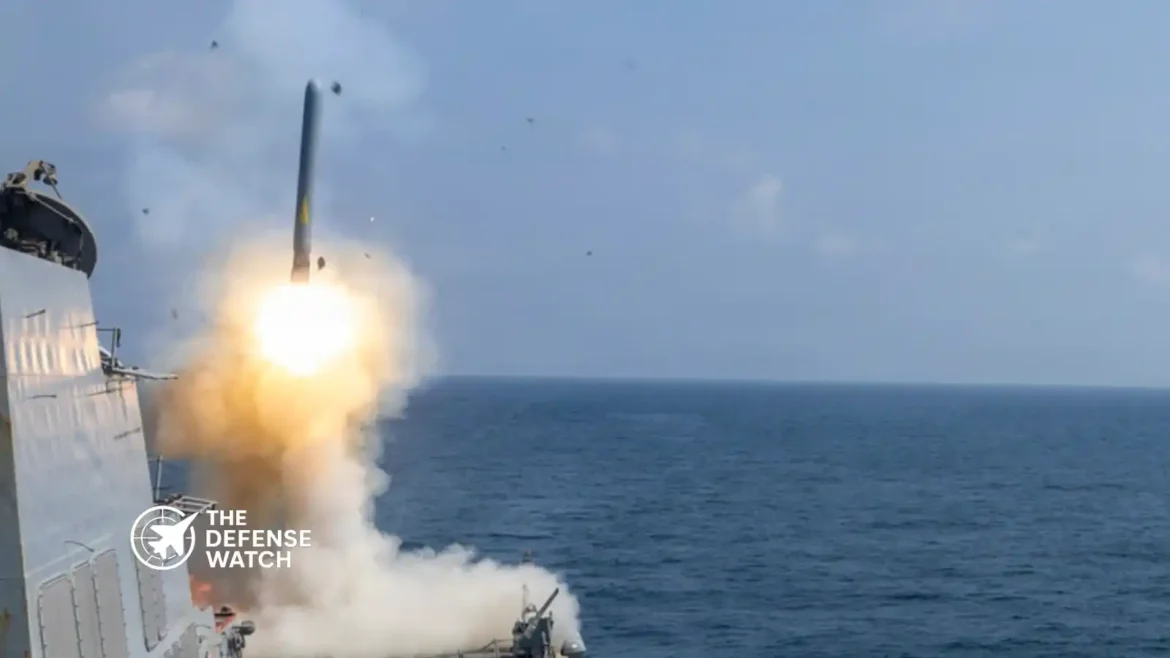
The United States has fired at least 850 Tomahawk long-range cruise missiles in just over one month of Operation Epic Fury, the joint U.S.-Israeli military campaign against Iran — a figure that marks the highest single-campaign expenditure of the weapon in its four-decade operational history. The burn rate has prompted serious concern among Pentagon planners and defense analysts, not primarily over the current conflict, but over what depletion means for U.S. deterrence commitments elsewhere — most critically in the Indo-Pacific.
¦ KEY FACTS AT A GLANCE- The U.S. has launched at least 850 Tomahawk cruise missiles in just over one month of Operation Epic Fury, the joint U.S.-Israeli campaign against Iran — the highest expenditure rate in any single conflict in the missile’s operational history.
- The Center for Strategic and International Studies (CSIS) estimates the U.S. retains roughly 3,000 Tomahawks, meaning the current campaign has consumed approximately 28% of the total estimated inventory.
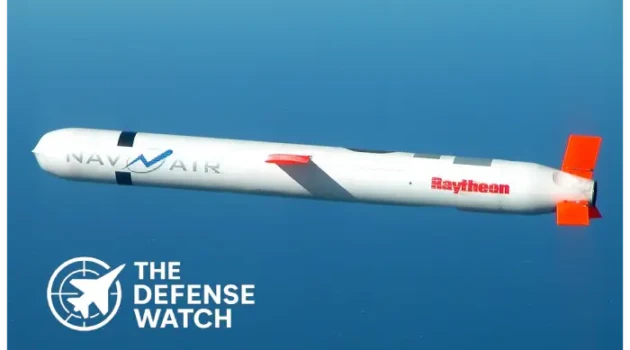
- Each Tomahawk Block V costs approximately $3.5 million and carries a 1,000-pound warhead with a range exceeding 1,000 miles — making it one of the most capable and expensive conventional strike weapons in the U.S. arsenal.
- Raytheon secured a contract in February 2026 to build thousands of additional missiles, including Tomahawks, but analysts estimate it will take two to three years to replenish current expenditures at existing production rates.
- The Maritime Strike Tomahawk (MST) variant, capable of engaging surface ships, has reportedly been employed in Operation Epic Fury and represents a critical capability for any future conflict in the Indo-Pacific.
The Big Picture
The Tomahawk Land Attack Missile has served as the backbone of U.S. long-range conventional strike capability since the 1991 Gulf War. Its combination of standoff range, precision, and launch flexibility — from surface ships and submarines — has made it the weapon of choice for opening salvos against defended targets.
The missile has been upgraded continuously over time, with the Block V being the current operational version. That iterative modernization has kept the Tomahawk relevant across decades of conflict, but it has not solved the fundamental problem of industrial production capacity. Building a Tomahawk is not like producing small arms or even artillery rounds. It requires precision manufacturing, sophisticated guidance systems, and a supply chain that cannot be surged overnight.
The Iran campaign has forced that structural constraint into the open at a strategically inconvenient moment.
What’s Happening
The Washington Post reported that the U.S. launched at least 850 Tomahawks in the first month of Operation Epic Fury, a rate far exceeding the missile’s use in any previous conflict, according to a CSIS assessment by analysts Mark Cancian and Chris Park.
While the Department of Defense does not publicly disclose precise Tomahawk inventory figures, CSIS estimates the U.S. retains approximately 3,000 missiles. That estimate, if accurate, means the Iran campaign has already consumed roughly one-quarter to one-third of the total U.S. cruise missile stockpile in approximately 30 days of combat.
Tomahawks were employed heavily during the early stages of Epic Fury, until the United States and Israel had suppressed what remained of Iran’s air defense network. Once air superiority was established, the rate of Tomahawk use declined — not to zero, but significantly — as shorter-range, cheaper munitions became viable.
The cost differential is stark. A Tomahawk costs approximately $3.5 million per unit and carries a range of 1,000 miles. A JDAM — a precision guidance kit fitted to an unguided bomb — costs around $80,000 and delivers comparable accuracy and explosive effect at a range of roughly 20 miles. Once the threat environment permits, the operational calculus shifts decisively toward cheaper alternatives.
Why It Matters
The immediate operational concern is manageable. According to CSIS analyst Mark Cancian, the U.S. has sufficient Tomahawks and other precision munitions to sustain Operation Epic Fury. The more serious issue is the second and third-order effect on global deterrence posture.
The strategic concern centers on the effect of stockpile depletion on other theaters, particularly Ukraine and the Western Pacific, where a potential conflict with China looms as the primary pacing threat. Defense strategists warn that degraded inventories weaken the U.S. ability to deter — or fight — a conflict in the Indo-Pacific, where standoff precision strike is not a supporting capability but a central pillar of warfighting strategy.

Image : U.S. Central Command The Tomahawk’s role in a Taiwan contingency is not hypothetical. U.S. war planners have long relied on the missile’s ability to hold Chinese naval and ground forces at risk from beyond the reach of China’s formidable anti-access/area denial (A2/AD) defenses. Burning through that inventory against Iran — even in a justified and necessary campaign — directly degrades the depth of that deterrent.
Strategic Implications
The Maritime Strike Tomahawk, a relatively new variant capable of engaging moving surface targets, represents a particularly valuable asset in any Indo-Pacific conflict scenario. In the event of a Chinese invasion of Taiwan, the ability to strike naval vessels at standoff range would be operationally significant. Reports suggest this variant has seen employment in Operation Epic Fury, which, while providing real-world validation of the system, simultaneously draws down an inventory that took years to build.
The parallel Patriot missile situation reinforces the broader concern. CSIS estimated the U.S. entered the Iran conflict with approximately 4,000 Patriot interceptors. After roughly one month of combat, approximately 1,000 have been expended — about one quarter of the total inventory — with the U.S. producing around 600 Patriots annually, split equally between domestic and allied requirements.
The combined drawdown of Tomahawks and Patriots across a single theater engagement illustrates a systemic vulnerability: the U.S. defense industrial base, despite years of effort, has not achieved the production surge capacity required to sustain simultaneous high-intensity operations in multiple theaters. This is not a new problem — it has been documented in DoD reports and congressional testimony for years — but Operation Epic Fury is now providing the most consequential real-world stress test that vulnerability has ever faced.
Competitor View
China’s military planners will draw careful conclusions from Operation Epic Fury’s opening phase. The expenditure of 850-plus Tomahawks in approximately 30 days — well above any historical precedent — provides Beijing with invaluable empirical data on U.S. sustained strike capacity, consumption rates, and the industrial constraints limiting rapid replenishment.
Chinese strategists have long studied U.S. precision strike dependencies. The People’s Liberation Army Rocket Force (PLARF) has developed its own extensive land-attack and anti-ship cruise missile arsenal partly to offset U.S. standoff advantages and partly to impose a cost-exchange calculus that favors attrition of American stockpiles. Seeing that calculus play out in real time — even in a different theater — will inform Chinese assessments of how long the U.S. could sustain high-intensity operations in a Taiwan contingency.
Russia and Iran’s other strategic partners will similarly note the constraints revealed by Epic Fury, potentially calculating that a protracted conflict could erode U.S. conventional strike depth faster than the American defense industry can reconstitute it.
What To Watch Next
Raytheon secured a contract in February 2026 to produce thousands of additional missiles, including Tomahawks. Defense Secretary Hegseth has conducted an “Arsenal of Freedom” tour of defense manufacturing facilities, emphasizing the need to accelerate production rates. The effort reflects bipartisan recognition of the stockpile problem, with groundwork laid during the Biden administration and continued under the current Pentagon leadership.
According to Cancian, replacing the 850 to 1,000 Tomahawks already expended in Epic Fury will require two to three years at current production rates. That timeline assumes no further major escalation and no additional high-intensity campaigns drawing on the same stockpile — assumptions that are far from guaranteed given the current geopolitical environment.
Congressional appropriators will face growing pressure to fund accelerated production contracts. The key decision point is whether Congress will authorize multi-year procurement agreements that provide Raytheon with sufficient long-term demand signal to invest in production line expansion. Without such commitments, manufacturers cannot justify the capital expenditure required to meaningfully increase output.
Capability Gap
The Tomahawk stockpile situation exposes a structural gap between U.S. operational demand in sustained high-intensity conflict and the industrial throughput required to match that demand. The missile’s 1,000-mile standoff range is effectively irreplaceable in contested environments where aircraft cannot safely operate — a scenario that applies directly to early-phase operations against advanced adversaries.
No currently fielded U.S. munition replicates the Tomahawk’s combination of range, payload, precision, and in-flight retargeting capability at comparable cost efficiency relative to its operational effect. The Joint Air-to-Surface Standoff Missile (JASSM) family provides some complementary capability but is air-launched and faces its own inventory constraints.
The deeper problem is structural: the U.S. military spent decades optimizing for technological overmatch and relatively low-volume precision strike, without building the industrial surge capacity required for prolonged peer or near-peer conflict. Operation Epic Fury is not that conflict, but it is demonstrating, in real time, what the industrial shortfall looks like under conditions far less demanding than a full-scale Taiwan contingency would impose.
The Bottom Line
The Tomahawk stockpile pressure revealed by Operation Epic Fury is not simply a logistics challenge — it is a strategic warning that the U.S. defense industrial base must be restructured for sustained high-intensity warfare before, not after, a crisis in the Indo-Pacific forces the issue.
Pentagon Bolsters PAC-3 Seeker Production With New Boeing Framework
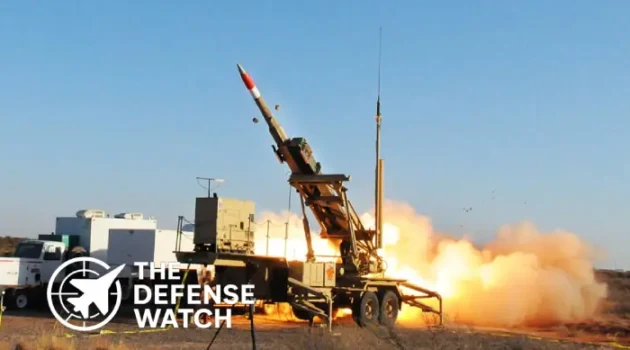
The Pentagon and Boeing agreed on a framework to triple PAC-3 seeker production capacity, a key step in expanding the supply chain for Patriot Advanced Capability-3 Missile Segment Enhancement interceptors and reinforcing U.S. air defense production lines.
¦ KEY FACTS AT A GLANCE- The Pentagon and Boeing agreed on a seven year framework to triple PAC 3 MSE seeker production capacity.
- Boeing will expand output at its Huntsville, Alabama production facility.
- The move supports increased Patriot interceptor production for U.S. and allied forces.
- Boeing invested over 200 million dollars in production expansion since 2024.
- Tripled seeker output removes a key bottleneck in missile defense manufacturing.
The Big Picture
The PAC-3 system forms a central layer of U.S. and allied air and missile defense, designed to intercept ballistic missiles, hypersonic threats, cruise missiles, and hostile aircraft. The interceptors rely on a guidance seeker built by Boeing to acquire, track, and engage targets with high precision. The new seven-year framework builds on existing multiyear deals aimed at scaling production of both the seeker and the complete PAC-3 interceptor round, an effort that has gained urgency amid sustained operational use and global demand.
This agreement aligns with Defense Department initiatives to reinforce domestic defense manufacturing under what officials describe as an “Arsenal of Freedom” strategy, emphasizing rapid scaling, supply chain resilience, and direct engagement with critical suppliers rather than traditional prime-only contract routes.
What’s Happening
The Defense Department entered into a seven-year framework agreement with Boeing to triple production capacity for the PAC-3 MSE seeker, the component that enables Patriot interceptors to detect and engage threats. Work will begin immediately at Boeing’s production site in Huntsville, Alabama, where the company has already invested more than $200 million since 2024 to expand facilities and readiness.
Lockheed Martin remains the prime contractor for the PAC-3 interceptor round. A parallel agreement signed earlier this year aims to boost annual production of PAC-3 interceptors from roughly 600 to about 2,000 units by the end of the decade.
Officials note the framework will enable Boeing to scale output more rapidly and provide a basis for negotiating a formal multiyear production contract later in 2026.
Why It Matters
Air and missile defense interceptors such as the PAC-3 MSE are among the most costly and complex munitions in the U.S. arsenal. Ensuring a steady, scalable supply chain for the seekers that power these interceptors matters for both readiness and cost-effectiveness. Historical production bottlenecks at the seeker level have constrained overall interceptor output, even as demand rises due to heightened global security challenges.
Expanding seeker production capacity addresses a key operational chokepoint in Patriot supply chains, enabling the Army and allied partners to sustain higher production rates without interruption. The Pentagon’s approach reflects a shift away from prime-centric procurement toward direct partnerships with essential subsystem suppliers.
Strategic Implications
For U.S. military planners, boosting PAC-3 seeker capacity supports broader efforts to rebuild and expand missile defense stockpiles that were drawn down by recent crises and high operational tempo. A more resilient production base reduces reliance on small inventories and helps deter adversaries by signaling the ability to sustain long-term defense operations.
Allied nations that operate Patriot systems are likely to benefit from expanded production, improving collective air defense coverage in Europe, the Middle East, and the Indo-Pacific. A more robust supply chain also strengthens cooperation through Foreign Military Sales and shared defense planning.
Competitor View
Competitor states such as Russia and China closely monitor U.S. moves to expand air and missile defense production. A sustained increase in PAC-3 outputs complicates potential adversary planning by bolstering deterrent capabilities and reducing vulnerabilities associated with interceptor shortages. At the same time, competitors are investing in advanced offensive capabilities, including long-range strike and hypersonic weapons, which will continue to pressure defenders to innovate.
What To Watch Next
Observers should track the Pentagon’s negotiation toward a formal multiyear contract with Boeing, expected later in 2026. Congressional appropriations will influence the pace and scale of production beyond the framework. Continued coordination between Boeing and Lockheed Martin to synchronize seeker and interceptor assembly lines will also be key to meeting planned output goals.
Capability Gap
This effort seeks to close a long-standing supply chain gap in missile defense manufacturing. Historically, seeker shortages have limited the ability to scale interceptors proportionally to demand, a challenge that became acute with increased operational use in recent conflicts. Tripling seeker production capacity aims to align guidance component supply with interceptor assembly goals.
The Bottom Line
By tripling PAC-3 seeker production capacity, the Pentagon and Boeing are strengthening the U.S. air defense industrial base and enhancing long-term readiness to counter advanced aerial threats.
Can Iranian Missiles Reach the United States? Separating Fact from Fear
The question has surfaced repeatedly in congressional hearings, intelligence briefings, and cable news debates: can Iranian missiles reach the United States? As tensions between Washington and Tehran have fluctuated across multiple administrations, the concern has moved from the margins of defense policy into mainstream strategic discussion. The short answer, based on current verified capabilities, is no — Iran’s existing missile inventory does not have the range to strike the continental United States. But the longer answer demands a much closer look at where Iran’s program stands today, how fast it is advancing, and what U.S. defense planners are actually watching.
▌ KEY FACTS AT A GLANCE- Iran’s most advanced ballistic missile, the Shahab-3 derivative and Khorramshahr series, carries a maximum estimated range of roughly 2,000 km — far short of reaching American soil.
- No confirmed Iranian missile currently possesses intercontinental ballistic missile (ICBM) capability, which requires a minimum range of approximately 5,500 km.
- Iran’s space launch vehicles, including the Qaem-100 and Qaem-110, use solid-fuel technology that could theoretically be adapted for longer-range ballistic missiles.
- U.S. intelligence agencies assess that Iran could develop an ICBM capability within several years if it chooses to prioritize that program.
- Iran launched over 180 ballistic missiles at Israel in October 2024, demonstrating significant operational capacity at regional ranges.
Understanding What Iran Currently Fields
Iran operates the largest and most diverse ballistic missile arsenal in the Middle East, according to assessments from the Defense Intelligence Agency and the Congressional Research Service. Its inventory spans short-range, medium-range, and what Tehran classifies as intermediate-range systems — yet none cross the threshold required to threaten American soil directly.
The Shahab-3, Iran’s foundational medium-range ballistic missile (MRBM) derived from the North Korean Nodong design, carries an estimated range of approximately 1,300 km. Its successor variants, including the Ghadr-1 and Emad, push that figure toward 1,800 to 2,000 km, placing targets such as Israel, Saudi Arabia, and U.S. military installations across the Gulf well within reach.
Iran’s Khorramshahr series — a liquid-fueled missile reportedly capable of delivering multiple warheads — represents one of the more concerning regional-range systems in Tehran’s arsenal. Estimates place its range at roughly 2,000 km with a payload of approximately 1,800 kg. More recently, Iran has displayed the Fattah, claimed by Iranian officials to be a hypersonic glide vehicle, though independent analysts remain skeptical of the most extreme performance claims made at its 2023 unveiling.
None of these systems approach the 5,500 km minimum threshold that defines an intercontinental ballistic missile under standard arms control definitions. The distance from Tehran to Washington, D.C., is approximately 10,800 km — more than five times the range of Iran’s longest-confirmed operational missile.
The Space Launch Vehicle Wildcard
Where the analysis becomes more technically nuanced is in Iran’s civilian space program, which has served as both a genuine scientific endeavor and a highly controversial testbed for ballistic missile technologies.
Iran’s Qaem-100 rocket, which successfully placed a satellite into orbit in early 2023, uses solid-fuel motor stages — a significant technical milestone. Solid-fuel propulsion is faster to prepare, harder to detect before launch, and more suitable for military applications than the liquid-fuel systems that have historically dominated Iran’s arsenal. The Qaem-110 motors used in that program are directly relevant to the potential development of longer-range ballistic missiles.
Analysts at the Middlebury Institute of International Studies and the Missile Defense Advocacy Alliance have pointed out that the same propulsion technology needed to reach orbit can — with modifications to trajectory and warhead design — be redirected to achieve intercontinental range. The physics are not theoretical. They are a known engineering pathway.
The critical distinction, however, is intent and timeline. Developing a functional, survivable ICBM capable of delivering a warhead accurately at intercontinental distances is not a matter of months. It requires substantial additional investment in reentry vehicle technology, guidance systems, warhead miniaturization, and testing — all of which would be observable to U.S. intelligence assets.
What U.S. Intelligence Has Said
Successive U.S. intelligence assessments have maintained a consistent position: Iran does not currently possess an ICBM and has not made a formal decision to develop one. The 2024 Annual Threat Assessment from the Office of the Director of National Intelligence noted that while Iran continues to advance its missile program, its stated rationale has focused on deterrence within the regional context — targeting Israel, Gulf states, and U.S. forward-deployed forces in the Middle East and Europe.
That said, the same assessments have repeatedly flagged the dual-use concern embedded in Iran’s space launch activities. In congressional testimony in 2023, then-Defense Intelligence Agency Director Lt. Gen. Scott Berrier stated that Iran’s space program “provides Tehran with the means to advance technologies applicable to long-range ballistic missiles, including ICBMs.
The implication is clear: Iran may not be building an ICBM today, but it is acquiring and testing the component technologies that would make one possible if leadership in Tehran chose to accelerate in that direction.
The October 2024 Strike: A Demonstration of Operational Scale
One data point that significantly reframed the regional threat picture came in October 2024, when Iran launched approximately 180 to 200 ballistic missiles at Israel in what Tehran described as retaliation for Israeli operations against Hezbollah and the killing of Hamas political leader Ismail Haniyeh. The strike — the largest direct ballistic missile attack ever launched by Iran — demonstrated that the Islamic Revolutionary Guard Corps (IRGC) Aerospace Force possesses not only the missiles but the logistics, launch coordination, and operational will to execute a large-scale salvo.
While Israeli and U.S. missile defenses intercepted the majority of incoming missiles, the sheer volume of the attack exposed important questions about defense saturation thresholds. For U.S. defense planners, the October 2024 strike was less a warning about missiles reaching America and more a demonstration of Iran’s regional operational capacity at scale.
The Diego Garcia Strike: Iran’s Self-Imposed Range Limit Collapses
The most consequential single data point of 2026 — one that fundamentally reframes the entire range debate — arrived on March 20, 2026. Iran carried out a limited long-range ballistic missile attack against Diego Garcia, the joint U.S.-UK military base in the Indian Ocean. The base is located approximately 2,500 miles — or roughly 4,000 kilometers — from Iran. Neither missile struck the base: one suffered an in-flight failure, while the other was intercepted by a U.S. warship.
The strategic implications, however, far outweigh the operational outcome. Just two weeks before the strike, Iranian Foreign Minister Abbas Araghchi had told NBC News that Tehran had intentionally kept its missile ranges below 2,000 km, saying the country did not want to be perceived as a threat to anyone outside the region. The Diego Garcia attempt, at nearly double that stated ceiling, rendered that assurance obsolete overnight.
According to SIPRI Associate Senior Researcher Dr. Markus Schiller, the leading candidate for the system used is the Khorramshahr missile, which could theoretically cover roughly 3,800 km to Diego Garcia carrying a very light warhead and drawing on propellant reserves for extended range. However, Israeli Chief of General Staff General Eyal Zamir described the weapon as a two-stage intercontinental ballistic missile — a characterization that, if accurate, would likely rule out the single-stage Khorramshahr and point instead toward a derivative of one of Iran’s space launch vehicles.
Zamir warned publicly that missiles of this range place the capitals of Europe — Berlin, Paris, and Rome — within direct threat range. Analysts at the Foundation for Defense of Democracies and the Washington Institute for Near East Policy described the strike as evidence that Tehran’s capabilities now extend far beyond previously stated limits, marking a shift from regional containment to a posture with global reach.
Iran denied responsibility, with its Foreign Ministry characterizing the allegations as an Israeli disinformation campaign. NATO Secretary-General Mark Rutte also stated that the alliance could not confirm Israel’s claim that the projectiles were Iranian intercontinental ballistic missiles. The identity of the system therefore remains officially unverified — but the geopolitical weight of the incident does not hinge on attribution alone. Iran had been developing intercontinental-range systems reoriented as space launch vehicles after a self-declared 2,000-kilometer range ceiling was imposed, preserving the technical capability while remaining nominally compliant with the political constraint — until the targeting decision itself removed the constraint.
For U.S. defense planners, the Diego Garcia incident closes a chapter. The question was never purely whether Iran could reach beyond 2,000 km under the right conditions — it was whether it would. On March 20, 2026, that question received a definitive operational answer. A 2025 Defense Intelligence Agency assessment had projected that Iran could develop a militarily viable ICBM by 2035 should Tehran decide to pursue the capability. CNN The events of March now suggest that timeline may warrant urgent revision.
Analyst Perspective: The Real Threat Is Not the Homeland — Yet
From a pure capability standpoint, the threat that Iran’s missile program poses to the United States today is not a homeland strike scenario. It is a forward presence threat.
The U.S. maintains tens of thousands of military personnel across bases in Qatar, Bahrain, Kuwait, the UAE, and elsewhere in the region — all of which fall within range of Iran’s existing missile arsenal. The Al Udeid Air Base in Qatar, home to U.S. Central Command’s forward headquarters and a primary hub for regional air operations, sits roughly 1,700 km from Tehran. That is well within the operational range of multiple Iranian systems.
This is where the actual deterrence calculus plays out. Iran does not need an ICBM to threaten American interests — it needs only to sustain a credible threat to the infrastructure, personnel, and partners through which the United States projects power in the Middle East. In that narrower but practically significant sense, Iran’s missile capability is already a direct threat to U.S. security interests, even if it is nowhere near capable of reaching American cities.
The question of ICBM development becomes a longer-horizon concern — one that U.S. missile defense planners, the Missile Defense Agency, and Space Command continue to monitor but do not classify as an imminent threat.
Where Does Iran’s Program Go From Here?
Several factors will shape whether Iran’s missile program evolves toward intercontinental ambitions over the coming decade.
Nuclear negotiations remain a critical variable. If Iran concludes that a nuclear deterrent — paired with a delivery system that can threaten the United States directly — is the only reliable guarantee of regime survival, the strategic incentive to develop an ICBM increases dramatically. Conversely, a credible diplomatic framework that addresses Iran’s security concerns could constrain the program.
Technology transfer from North Korea has been a persistent concern for U.S. and allied intelligence agencies. Pyongyang has demonstrated functional ICBM capability with the Hwasong-17 and Hwasong-18 systems. The degree to which that knowledge has been or could be shared with Tehran is a question that does not have a fully transparent public answer.
Domestic sanctions and economic pressure have historically slowed Iran’s defense industrial base, but they have not stopped it. The IRGC Aerospace Force has demonstrated a consistent ability to develop and field new systems despite resource constraints.
Technical Comparison: MRBM vs. ICBM
Feature Medium-Range (MRBM) Intercontinental (ICBM) Range Capacity 1,000 km – 3,000 km Over 5,500 km Primary Target Regional (e.g., Israel, Riyadh, Diego Garcia) Global (e.g., Washington D.C., London) Propulsion Often single or two-stage Multi-stage (3+ stages) Re-entry Speed Mach 8 – Mach 12 Mach 20+ (extremely high heat) Iranian Example Shahab-3 / Fattah-1 Simorgh (Satellite Launch / ICBM tech) What’s Next? The 24–36 Month Window That Concerns Pentagon Planners
The failed Diego Garcia strike should not be read as a demonstration of Iranian weakness — it should be read as a proof-of-concept test, one that came closer to rewriting the strategic map than any Iranian missile launch in history. The more unsettling question for U.S. and allied defense planners is not what Iran attempted on March 20, 2026, but what a modestly more mature version of that same program could achieve within the next two to three years.
The technical pathway is not theoretical. Iran has demonstrated solid-fuel multi-stage propulsion through its space launch program, shown a willingness to exceed its own declared range ceiling under operational pressure, and now possesses real-world intercept data on how U.S. naval missile defense systems respond to a long-range salvo. If Iran successfully integrates a third propulsion stage and improves heat-shielding technology capable of surviving the extreme thermal stress of high-velocity atmospheric re-entry, the engineering distance from 4,000 km to true ICBM range — approximately 10,000 km — could potentially be covered within 24 to 36 months. That window would place the program inside a single U.S. presidential term and well ahead of the 2035 estimate the Defense Intelligence Agency published just last year.
Three variables will determine whether that window closes or accelerates. First, the degree to which ongoing U.S. and Israeli strikes under Operation Epic Fury have genuinely degraded Iran’s missile production infrastructure — as opposed to temporarily disrupting it. Second, whether Russian technical assistance, already flagged by U.S. intelligence as actively shaping Iran’s targeting intelligence during the current conflict, extends to propulsion and re-entry vehicle engineering. Third, whether Iran’s post-Khamenei leadership — operating without the self-imposed 2,000 km ceiling that defined the program’s public posture for nearly a decade — decides that a credible intercontinental deterrent is now the only reliable guarantee of regime survival.
None of those variables currently point definitively toward an Iranian ICBM within three years. But none of them rule it out either. What the Diego Garcia incident made unmistakably clear is that the conversation about whether Iranian missiles can reach the United States has moved — permanently and irreversibly — from the realm of long-range hypothetical into the domain of near-term operational planning.
Conclusion: Not Today, But Watch the Trajectory
Can Iranian missiles reach the United States today? No — not by any verified, operational system currently in Iran’s inventory. The distance is too great, and the required technologies for an ICBM remain beyond what Iran has publicly tested or deployed.
But the conversation should not end there. The trajectory of Iran’s space launch program, the dual-use nature of its solid-fuel propulsion development, and the strategic pressures that could drive Tehran toward longer-range ambitions all warrant sustained attention. The threat to U.S. personnel, partners, and forward bases in the Middle East is real and immediate. The threat to the American homeland remains a future-tense concern — but one that defense planners would be imprudent to dismiss.
FAQs
Does Iran have missiles that can hit the United States?No. Iran’s current operational ballistic missiles have a maximum confirmed range of approximately 2,000 km, far short of the roughly 10,800 km needed to reach the U.S. mainland.
Could Iran develop an ICBM in the future?U.S. intelligence agencies assess that Iran has the foundational technologies — particularly from its space launch program — to pursue ICBM development, but has not made a confirmed decision to do so. A functional ICBM would likely require several years of additional development and testing.
What is the longest-range missile Iran currently operates?The Khorramshahr-4 (also called Kheibar) is among Iran’s longest-range operational systems, with an estimated range of approximately 2,000 km and a reported payload capacity of around 1,500 kg.
Can Iran’s missiles reach U.S. military bases in the Middle East?Yes. Multiple Iranian ballistic missile systems can reach U.S. installations across the Gulf region, including Al Udeid Air Base in Qatar and other forward operating locations.
What role does Iran’s space program play in its missile development?Iran’s space launch vehicles use solid-fuel propulsion technology that is directly applicable to long-range ballistic missile development. U.S. defense officials have repeatedly flagged the dual-use nature of these programs.