

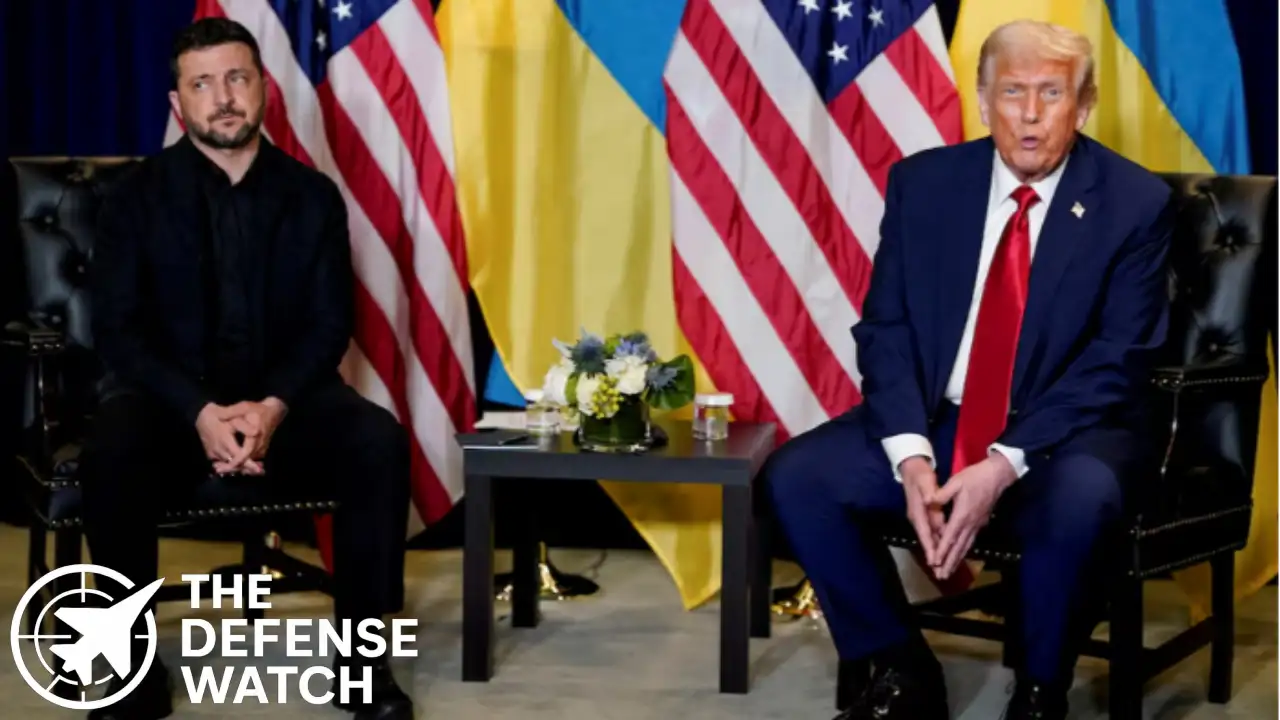
Ukraine Sets Sights on U.S. Arms and Drone Deal Talks
Ukraine has announced plans for a visit to the United States in the coming weeks to negotiate large-scale arms procurements and a drone production agreement with U.S. participation, according to Ukrainian President Volodymyr Zelenskiy.
During his recent U.S. trip tied to the U.N. General Assembly, Zelenskiy shared that Kyiv has compiled a “Mega Deal” request of approximately $90 billion in U.S. weapons. Concurrently, Ukraine is pushing a “Drone Deal,” under which U.S. firms would purchase drones produced in Ukraine, bolstering domestic production capacity.
Zelenskiy emphasized that technical working groups have begun initial work on the drone component. He also reiterated that Ukraine currently operates a Patriot missile defense system acquired from Israel and expects delivery of two additional systems this autumn.
Air defense continues to be a top priority, with Russia recently escalating drone and missile barrages. Ukraine has responded by launching drone strikes against Russian energy infrastructure—signaling a strategy of retaliation that blurs offense and defense.
Background: Ukraine’s Drone Ecosystem & Defense Gaps
Since Russia’s full-scale invasion in 2022, Ukraine has rapidly built a domestic drone industry. Hundreds of small- and medium-scale firms reportedly produce millions of drones for reconnaissance and strike roles. Nonetheless, that decentralized ecosystem lacks the capital to scale to wartime industrial levels alone.
Ukraine has depended heavily on Western military support for heavy systems—air defense, artillery, and missiles—and has limited capacity to supply those itself. A high-end arms deal with the U.S. aims to fill strategic gaps.
Recent months have seen intensifying Russian drone and missile attacks on Ukrainian cities and infrastructure, pressuring Kyiv to fortify its defenses. The addition of Patriot systems—and the promise of more—is part of that effort.
What Ukraine Intends: Mega Deal + Drone Deal
- Mega Deal (≈ $90 billion): A sweeping request by Ukraine for U.S. weaponry. While the precise mix is not yet public, it may include missiles, air-defense systems, long-range fires, and support systems.
- Drone Deal: A strategic pivot toward cooperation in drone manufacturing—U.S. firms would source UAVs directly from Ukrainian developers. Zelenskiy described ongoing technical working groups addressing that deal.
- Air defense emphasis: Ukraine is already fielding one Patriot system, with plans to receive two more this fall. That signals Ukraine’s continued focus on protecting cities and critical sites.
Analysis: Implications for U.S. Defense, Global Strategy, and Tech Trends
1. U.S. defense industrial base leverage
If the Mega Deal and drone collaboration proceed, American defense firms could gain new contracts and partnerships—potentially integrating Ukrainian drone tech into U.S. supply chains. That can stimulate U.S. OEMs (original equipment manufacturers) especially in unmanned systems, counter-UAV, propulsion, and sensor domains.
2. Scaling asymmetric warfare capabilities
Ukraine’s push to export drone production models reflects a broader shift: war is increasingly mediated through unmanned systems. The U.S. may gain access to low-cost, agile drone systems tested in combat, which can inform future procurement and doctrine.
3. Strategic signaling to Russia and allies
A robust U.S.–Ukraine deal would send a signal that American support is enduring. That may deter further escalation. Conversely, Russia may double down on countermeasures—cyber, EW (electronic warfare), missile suppression, etc.
4. Alliance burden-sharing and industrial diplomacy
By anchoring Ukraine’s procurement with U.S. industry, Washington would more deeply entwine Kyiv’s defense posture with U.S. strategic interests—a classic model of defense diplomacy. It also raises questions of how other allies (European, NATO) will coordinate or compete in supplying Ukraine.
5. Risks and constraints
- Congressional hurdle: U.S. Congress must approve major defense funding. A $90 billion request may face political headwinds.
- Execution risk: Ukrainian industry scale-up is not trivial—export controls, quality assurance, supply chain security, and integration standards pose hurdles.
- Escalation risk: Russia could see such deals as escalation and respond with intensified attacks, possibly targeting missile production sites or supply lines.
Forward Outlook
If Washington approves the Mega Deal and partners on the Drone Deal, we may see a transformation in how Ukraine—and by extension U.S. allies—mobilize drone warfare at scale. Embedded manufacturing, co-production, and battlefield-proven systems may become the new model.
Over the next few months, key developments to watch will include:
- U.S. budget and congressional approval of major defense assistance packages
- Detailed procurement lists and technology transfer terms
- Capability demonstrations or pilot production runs under the Drone Deal
- Russian counterresponses, particularly in cyber or escalation domains
For U.S. defense planners, the Ukraine–U.S. deal could become a template: leveraging war-tested foreign systems, co-developing with conflict-zone innovators, and anchoring allies’ security via industrial integration.

19 comments
[…] a U.S. defense perspective, the F-35 holds the edge in stealth, sensors, and combat readiness, while the Su-57 […]
[…] a U.S. defense perspective, the F-35 clearly outpaces the Rafale in terms of future-proof technology and […]
[…] U.S. defense contractors, Rafale and Typhoon compete in markets where the F-35 is politically sensitive or too […]
[…] its foundation. That interim guidance, completed earlier in 2025, already signals a reordering of U.S. defense […]
[…] Major news organizations including The New York Times, The Washington Post, CNN, and The Atlantic have voiced public opposition, characterizing the new policy as an overreach that may chill critical reporting. […]
[…] The ongoing negotiations and production acceleration effort for the B-21 stand at the intersection of three major strategic realities for U.S. defense: […]
[…] is positioning itself with a frontline combat-air fleet that rivals many regional neighbors. For U.S. defense watchers, the development underscores the importance of allied air-power evolution, competitive […]
[…] the U.S. defense community, the cancellation sends a clear message: Washington remains wary of negotiations that […]
[…] the Defense Trade and Technology Initiative (DTTI) — a long-standing effort to transfer advanced U.S. defense technology to India while strengthening India’s domestic defense […]
[…] announcement comes amid growing competition among U.S. defense contractors to deliver cost-effective, AI-enabled aircraft that can expand the Air Force’s combat […]
[…] acknowledged that Patriot systems are costly and that large-scale procurement could take years to fulfill. He suggested that European allies might temporarily transfer their […]
[…] industry partners to clarify implementation details. Congress will also likely assess how the system aligns with existing procurement laws, budget approval processes, and oversight […]
[…] benefits, and revised shift and overtime structures. According to IAM representatives, the deal was accepted by a majority vote after weeks of negotiations and two failed earlier […]
[…] a “new generation” of the SAMP/T missile interceptor, largely comparable to the U.S.-made Patriot system, which will be available in […]
[…] Patriot system has experienced unprecedented global demand since Russia’s full-scale invasion of Ukraine in […]
[…] has been marketing the Tejas LCA to several international customers. A high-profile crash at a major global airshow could damage its reputation, potentially undermining confidence among potential buyers and […]
[…] Spare and repair parts for Patriot systems […]
[…] make the Giraffe 1X particularly effective against asymmetric threats, including commercial and military drones, which have become a growing concern for regional […]
[…] analysis indicates Patriot systems were placed on M983 Heavy Expanded Mobility Tactical Trucks (HEMTT) rather than semi-static launch […]