• Home
  • About
  • Defense Systems
  • Manufacturer
  • Comparisons
  • Compare 
  • Tools
TheDefenseWatch.com
  • Aerospace & Aviation
  • Military & Ordnance
  • Naval & Maritime
  • Cyber & Space Defense
  • Policy & Strategy
  • Global News
  • Tools Library
    • Smart Calculator
    • Drone Flight Time Calculator
    • Drone Range Calculator
    • Counter-Drone Jammer Effective Range Calculator
    • Counter-Battery Radar Detection Calculator
    • Artillery Fire Correction Calculator
    • Thermal Camera Detection Range Calculator
    • Missile Range & Time-of-Flight Calculator
    • Radar Detection Range Calculator
    • FPV Strike Drone Payload vs Range Calculator
    • Loitering Munition Endurance Calculator
    • Sniper Ballistic Drop & Windage Calculator
    • Bullet Drop Calculator
    • U.S. Army Combat Fitness Test (ACFT) Calculator
    • Military Pension Calculator
    • Military Retirement Calculator
    • Military Pension Calculator
    • Large Number Calculator
Font ResizerAa

TheDefenseWatch.com

The Defense Watch | U.S. & Global Defense News, Analysis & Military Updates

Search
  • Home
  • About
  • Defense Systems
  • Manufacturer
  • Comparisons
  • Compare 
  • Tools

Stay Updated

Get the latest update

Subscribe

Explore

  • Drone
  • Fighter Jets & Military Aircraft
  • Hypersonic Weapons
  • Aircraft Carriers
  • Strategic History & Missions
  • Tools Library
Home » US Deploys 500km PrSM Ballistic Missile In First Combat Strike On Iran, U.S. Central Command Confirms
Artillery & Missile SystemsMilitary & Ordnance

US Deploys 500km PrSM Ballistic Missile In First Combat Strike On Iran, U.S. Central Command Confirms

Daniel Mercer / Defense & Aerospace Analyst
Last updated: September 12, 2026 5:30 am
Daniel Mercer / Defense & Aerospace Analyst
Share
6 Min Read
PrSM ballistic missile combat use
Image: dvidshub
SHARE
■ KEY FACTS AT A GLANCE
  • ► The US used the 500km Precision Strike Missile in its first confirmed combat operation against Iranian targets.
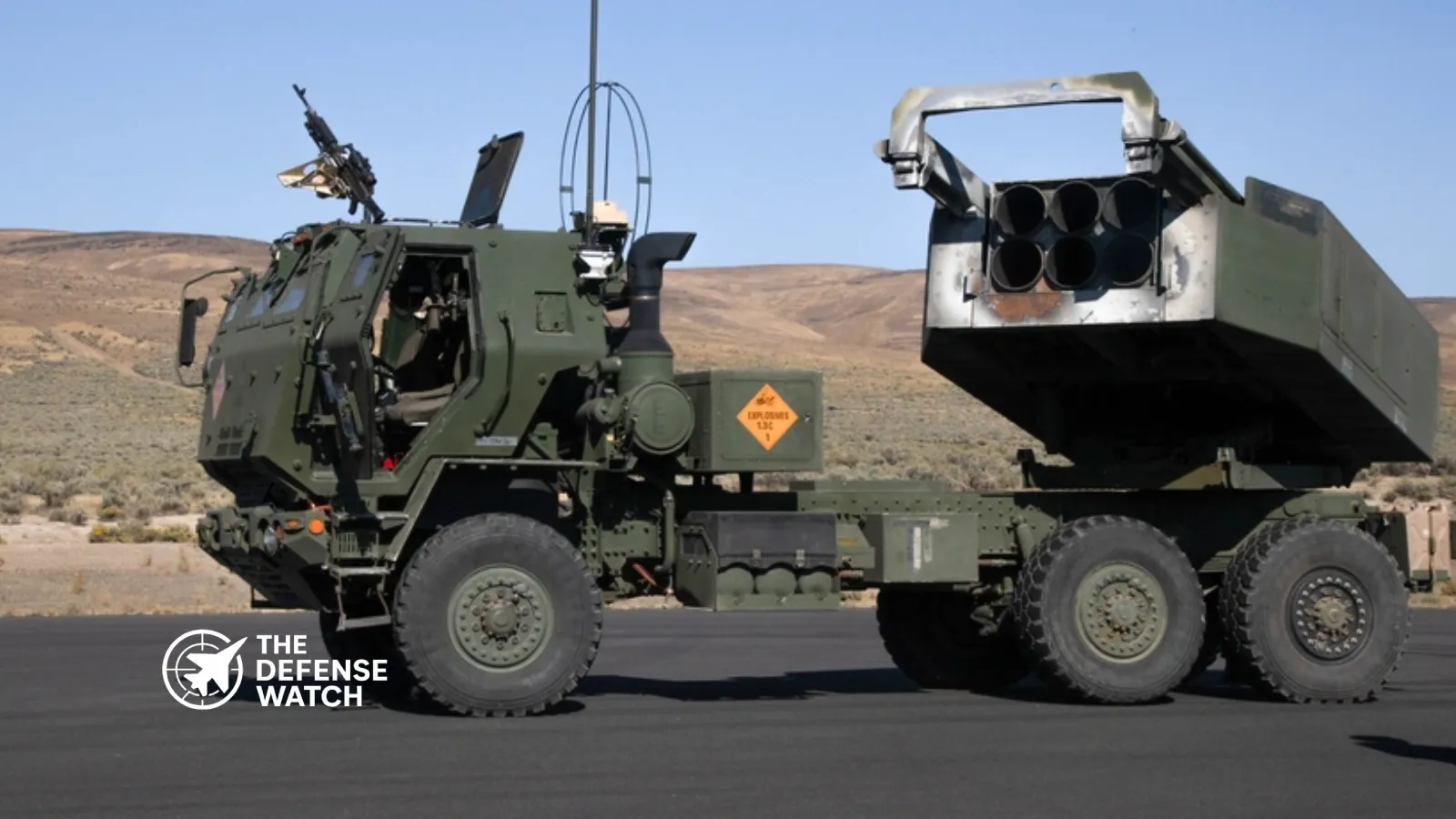
  • ► The PrSM was launched from an M142 HIMARS platform operated by US Army forces.
  • ► The strike reportedly targeted high value Iranian military infrastructure.
  • ► PrSM replaces the ATACMS system and extends US Army deep strike reach beyond 300km.
  • ► The combat debut signals a shift in how the US Army employs long range precision fires in regional conflicts.

US Deploys 500km PrSM Ballistic Missile In First Combat Strike On Iran

The 500km PrSM ballistic missile was used in combat for the first time during a US strike on Iranian targets, marking a major milestone for the US Army long range fires modernization program.

Contents
  • US Deploys 500km PrSM Ballistic Missile In First Combat Strike On Iran
    • A New Phase For US Army Long Range Fires
    • Operational And Strategic Implications
    • Replacement Of ATACMS
    • Regional Escalation Risks
    • What Comes Next

U.S. Central Command, the strike involved the Precision Strike Missile, or PrSM, launched from an M142 High Mobility Artillery Rocket System. The operation represents the first confirmed battlefield employment of the new missile, which is designed to replace the aging ATACMS inventory.

A New Phase For US Army Long Range Fires

The Precision Strike Missile is a next generation surface to surface ballistic missile developed by Lockheed Martin for the US Army. It is designed to engage high value targets at ranges of up to 500 kilometers under current configurations, with future increments expected to extend that range further.

PrSM is compatible with both the M142 HIMARS and the M270 Multiple Launch Rocket System. Unlike ATACMS, which carries one missile per pod, PrSM allows two missiles per launcher pod, effectively doubling the firepower available from existing platforms.

- Advertisement -
  • M142 HIMARS

    M142 HIMARS

    • Caliber & Firepower: 227 mm Rockets / ATACMS Missile
    • Maximum Effective Range: 80 km (GMLRS) / 300 km (ATACMS)
    • Mobility / Platform Type: Truck-mounted (6×6 FMTV)
    • Fire Control & Targeting System: Digital FCS with GPS/INS Guidance
    • View Details →
    8.0

    The reported use of the 500km PrSM ballistic missile in a strike on Iran suggests the US Army is now confident in its operational readiness under real combat conditions. That decision carries technical and strategic weight.

    Operational And Strategic Implications

    The deployment of the 500km PrSM ballistic missile changes the geometry of land based strike operations in the Middle East. With a 500km reach, US Army units can hold a broader range of fixed and mobile targets at risk without repositioning forward elements.

    In a regional scenario involving Iran, this extended range allows US forces to strike command nodes, logistics hubs, air defense systems, and missile infrastructure from greater standoff distances. That reduces exposure to counterbattery fire and ballistic missile retaliation.

    The PrSM also improves accuracy and survivability compared to older systems. Open source defense assessments indicate the missile incorporates improved guidance and anti access resilience features, though full specifications remain classified.

    • Precision Strike Missile (PrSM)

      Precision Strike Missile (PrSM)

      • Guidance System: GPS and INS
      • Maximum Speed: Supersonic
      • Launch Compatibility: HIMARS and M270 MLRS
      • Warhead Technology: Unitary high explosive
      • View Details →
      8.0

      The combat debut sends a signal beyond the immediate theater. It demonstrates that the Army long range precision fires program, a top modernization priority, has moved from testing and limited fielding into active operational use.

      Replacement Of ATACMS

      PrSM is intended to fully replace the MGM 140 Army Tactical Missile System, which entered service in the 1990s. ATACMS has seen combat in Iraq, Afghanistan, and Syria, but its range and payload limits have constrained future use against more advanced adversaries.

      By contrast, the 500km PrSM ballistic missile restores overmatch in deep fires while complying with post INF Treaty realities. After the collapse of the Intermediate Range Nuclear Forces Treaty in 2019, the United States was no longer bound by the 500km cap, though initial PrSM variants are reported to operate within that threshold.

      The missile forms part of the Army broader Long Range Precision Fires portfolio, which also includes hypersonic weapons development and extended range cannon artillery.

      Regional Escalation Risks

      The use of the 500km PrSM ballistic missile in a strike on Iran carries geopolitical consequences. Iran has invested heavily in layered air defense systems and its own ballistic missile arsenal. A confirmed US employment of PrSM could influence Iranian force posture and regional deterrence calculations.

      At the same time, the operational use of PrSM underscores how the US Army is adapting to high intensity conflict environments rather than counterinsurgency operations that dominated the past two decades.

      • Precision Strike Missile (PrSM)

        Precision Strike Missile (PrSM)

        • Guidance System: GPS and INS
        • Maximum Speed: Supersonic
        • Launch Compatibility: HIMARS and M270 MLRS
        • Warhead Technology: Unitary high explosive
        • View Details →
        8.0

        From a force design perspective, it also reinforces the relevance of ground based fires in joint campaigns traditionally dominated by airpower and naval strike assets.

        What Comes Next

        Future increments of PrSM are expected to include multi mode seekers capable of engaging moving maritime targets, potentially expanding the missile role into anti ship missions. That would align with US efforts to counter anti access strategies in contested theaters.

        For now, the first combat use of the 500km PrSM ballistic missile marks a clear turning point. It confirms the system has transitioned from development and limited operational capability into active combat employment.

        The move will likely accelerate allied interest in long range precision fires, particularly among NATO and Indo Pacific partners already operating HIMARS platforms.

TAGGED:Ballistic missile deploymentIran strikeLong Range FiresPrSM missileUS Army
Share This Article
Facebook Copy Link Print
ByDaniel Mercer / Defense & Aerospace Analyst
Follow:
Daniel Mercer is a defense and aerospace analyst at TheDefenseWatch.com covering military aviation, aerospace technology, unmanned systems, air warfare, and defense procurement. His reporting uses official documents, government and military statements, company announcements, and other public sources.
Leave a Comment

Leave a Reply Cancel reply

Your email address will not be published. Required fields are marked *

Latest Defense Systems

  • John F. Kennedy Aircraft Carrier John F. Kennedy Aircraft Carrier
  • Voyager Tanker Voyager Tanker
  • YU-20 Tanker YU-20 Tanker
  • China KJ-500 Aircraft China KJ-500 Aircraft
  • SPY-6 Radar SPY-6 Radar
  • Boeing VC-25B Presidential Aircraft Boeing VC-25B Presidential Aircraft
  • SM-3 Block IB Missile SM-3 Block IB Missile
  • USS Abraham Lincoln Aircraft Carrier USS Abraham Lincoln Aircraft Carrier
  • M142 HIMARS M142 HIMARS

Recent Compares

  • Tejas vs Gripen: Key Differences and Capabilities Tejas vs Gripen: Key Differences and Capabilities View Comparison →
  • Tejas vs MiG-21 Bison: How India Replaced Its Iconic Supersonic Fighter Tejas vs MiG-21 Bison: How India Replaced Its Iconic Supersonic Fighter View Comparison →
  • F-35 vs F-16: Stealth, Sensors and Combat Roles F-35 vs F-16: Stealth, Sensors and Combat Roles View Comparison →
  • Tejas Fighter Jet vs F-16 Fighting Falcon: Capability Compared Tejas Fighter Jet vs F-16 Fighting Falcon: Capability Compared View Comparison →
  • Rafale Fighter Jet vs F-16 Fighting Falcon : Which Fighter Has the Edge? Rafale Fighter Jet vs F-16 Fighting Falcon : Which Fighter Has the Edge? View Comparison →
  • Su-57 Fighter Jet vs J-20 Fighter Jet: Stealth and Air Combat Compared Su-57 Fighter Jet vs J-20 Fighter Jet: Stealth and Air Combat Compared View Comparison →
  • Mirage 2000 vs Tejas Mk1A: Legacy Combat Power vs Indigenous Modernization Mirage 2000 vs Tejas Mk1A: Legacy Combat Power vs Indigenous Modernization View Comparison →
  • Rafale Fighter Jet vs F-22 Raptor: Which Air Dominance Fighter Has the Edge? Rafale Fighter Jet vs F-22 Raptor: Which Air Dominance Fighter Has the Edge? View Comparison →
  • Tejas Fighter Jet vs. Rafale Fighter Jet: India’s Indigenous Fighter Meets France’s Proven Multirole Combat Aircraft Tejas Fighter Jet vs. Rafale Fighter Jet: India’s Indigenous Fighter Meets France’s Proven Multirole Combat Aircraft View Comparison →
  • F-22 Raptor vs. F-35 Joint Strike Fighter: Which Fifth Generation Fighter Has the Edge? F-22 Raptor vs. F-35 Joint Strike Fighter: Which Fifth Generation Fighter Has the Edge? View Comparison →

Recent Posts

  • US Rejects Automatic Body Camera Activation for ICE Officers
  • Iron Dome Architect Develops New Counter-Swarm Drone Defense System
  • U.S. Navy Conducts First F-35C Landing on USS John F. Kennedy
  • Huntington Ingalls Wins $56.2 Million Contract for Foreign Nuclear Submarine Support
  • US Forces Disable Cargo Ship Attempting to Evade Iran Blockade

You Might Also Like

US Israel JLTV sale
Military & OrdnanceTanks & Armored Vehicles

US Clears Nearly $2 Billion Foreign Military Sale of JLTVs to Israel

September 13, 2026
SOLGW MK1 assault rifle
Military & OrdnanceSmall Arms & Infantry Weapons

U.S. Picks SOLGW MK1 as Next‑Generation 5.56mm Assault Rifle for Special Forces

September 8, 2026
Indra SQUALL cruise missile
Artillery & Missile SystemsMilitary & Ordnance

Indra Unveils SQUALL Cruise Missile With 300-Kilometer-Plus Range

September 16, 2026
L3Harris Advanced Manufacturing Facility-South in Huntsville, Alabama, expanded to support increased missile and defense manufacturing production.
Artillery & Missile SystemsMilitary & Ordnance

L3Harris Expands Huntsville Manufacturing Capacity To Accelerate U.S. Missile Production

September 7, 2026

Logo

Copyright © 2026 TheDefenseWatch.com

Helpful Links

  • Home
  • About Us
  • Privacy Policy
  • Terms of Use / Disclaimer
  • U.S. Privacy Notice – CCPA Compliance

Defense Systems

  • Defense Systems
  • Comparisons 
  • Manufacturer
  • Tactical Calculators

Popuplar

Which 5 Air Forces Possess the Costliest Fighter Jet Fleets in the World
Evolving Strategic Value: Carrier Strike Groups in the Indo-Pacific’s Future Security Architecture
Autonomous Weapon Systems Spark U.S. Ethics Debate Amid Rapid Military AI Integration

We report on developments involving military forces, governments, defense companies, research organizations, and security institutions around the world. 

Welcome Back!

Sign in to your account

Username or Email Address
Password

Lost your password?