Germany’s Rheinmetall and Dutch missile firm Destinus are forming a joint venture to industrialize cruise missile and rocket artillery output across Europe — a direct response to inventory shortfalls exposed by the Ukraine war.
- Rheinmetall and Destinus Form European Missile Strike Joint Venture
- The Big Picture: NATO’s Missile Inventory Problem
- What’s Happening: Structure and Scope
- Why It Matters: Combat Validation Meets Industrial Scale
- Strategic Implications: Sovereignty, Speed, and Alliance Cohesion
- Competitor View: Moscow and Beijing Will Be Watching
- What To Watch Next
- Capability Gap: Production Volume, Not Platform Performance
- The Bottom Line
- Rheinmetall and Destinus have agreed to form Rheinmetall Destinus Strike Systems, a 51/49 percent joint venture targeting scalable European missile production.
- The new entity will manufacture advanced cruise missiles and ballistic rocket artillery for European and NATO-allied customers, with serial production based inside Rheinmetall’s German industrial facilities (expected in Unterlüß, Lower Saxony).
- Destinus contributes system architecture, product design, and combat-proven platforms — including the Ruta cruise missile already operationally validated in Ukraine — while Rheinmetall provides large-scale manufacturing, qualification, and industrial infrastructure.
- The joint venture is expected to be formally established in the second half of 2026, subject to regulatory approvals, and will serve markets across Europe and selected NATO partner countries.
- Both partners highlight surging demand — from thousands to potentially tens of thousands of units annually — positioning the venture as a key industrial-capacity solution to strengthen Europe’s long-range strike capabilities.
Rheinmetall and Destinus Form European Missile Strike Joint Venture
Rheinmetall Destinus Strike Systems, a new joint venture between German defense heavyweight Rheinmetall and Netherlands-based missile developer Destinus, will concentrate on industrializing cruise missile and rocket artillery production across Europe. The announcement, made April 13, 2026, marks one of the most significant European strike-systems partnerships of the post-Ukraine defense expansion era — and signals that NATO’s largest economy is prioritizing missile production at a scale previously unseen in peacetime Europe.
Rheinmetall will hold a 51 percent controlling stake; Destinus retains 49 percent. Pending regulatory approval, the companies expect to formally constitute the entity in the second half of 2026.
The Big Picture: NATO’s Missile Inventory Problem
European NATO members have spent the better part of three years confronting an uncomfortable reality: their missile stockpiles were sized for deterrence, not sustained warfighting. The conflict in Ukraine — now past its fourth year — has demonstrated that modern high-intensity conflict consumes guided munitions at rates that Cold War-era production lines were never designed to meet.
Western governments have responded with rhetoric and budget commitments, but the industrial base has lagged. Production capacity remains the binding constraint. Individual companies can design credible systems; scaling them into reliable industrial output requires capital, infrastructure, supply chains, and qualified manufacturing that take years to assemble. The Rheinmetall-Destinus joint venture is a direct institutional response to that gap.
The venture also reflects a broader pivot in European defense procurement philosophy. For decades, European nations treated missiles as high-value, low-volume precision assets — expensive platforms acquired in small numbers. Ukraine forced a reassessment. Missiles are increasingly framed as tactical consumables whose strategic value depends on volume as much as accuracy.
What’s Happening: Structure and Scope
The joint venture will manufacture, assemble, test, and deliver advanced cruise missile systems alongside ballistic rocket artillery. Destinus — headquartered in the Netherlands — contributes system architecture, product design, and scalable platform development. Critically, the company has deployed systems operationally in Ukraine, giving it a level of live-combat validation that most European missile developers lack.
Rheinmetall brings the complementary industrial side: large-scale manufacturing experience, qualification processes, and physical production capacity inside Germany. The joint venture will establish Germany-based serial production and qualification capabilities within Rheinmetall’s existing industrial facilities, reducing the time and capital required to stand up new production infrastructure from scratch.
“We must expand the industrial base for modern defence systems in Europe. This joint venture reflects this necessity. We are combining Rheinmetall’s production capacities and experience in managing large-scale programs with Destinus’s specific technology and system design.”— Armin Papperger, Chief Executive Officer, Rheinmetall
“Europe is entering a new phase of scaling missile production. Modern conflict is defined by volume and cost-per-effect. The real constraint in Europe today is not demand, but industrial capacity.”— Mikhail Kokorich, Co-Founder and CEO, Destinus
The venture will initially target European customers and selected NATO countries. The companies also indicated that local industrial partnerships in key markets may be pursued to support regional sales and long-term growth — a structure that could ease technology-transfer concerns in prospective customer nations.
Why It Matters: Combat Validation Meets Industrial Scale
What distinguishes this partnership from earlier European defense consolidations is the combination of operational credibility and manufacturing scale. Destinus’s systems have moved beyond laboratory development — they have been used in active combat operations in Ukraine. That is a rare credential in the European defense market, where many missile programs remain in extended development or low-rate initial production.
Rheinmetall, for its part, has spent the past three years aggressively expanding its defense manufacturing footprint. The company has opened or expanded facilities in Germany, Romania, Ukraine, and elsewhere, and has positioned itself as Europe’s primary answer to the question of who can produce defense hardware at scale. Adding missile systems to that footprint is a logical and strategically coherent expansion.
For European defense ministries, the joint venture offers something valuable: a domestically produced, combat-proven, industrially scalable cruise missile with a credible production ramp timeline. That combination — credibility plus capacity plus a European address — addresses procurement and sovereignty concerns simultaneously.
Strategic Implications: Sovereignty, Speed, and Alliance Cohesion
The venture carries implications that extend beyond the two companies involved. First, it reinforces Germany’s emergence as a primary node in European defense industrial capacity. Berlin’s willingness to host serial missile production facilities signals a meaningful shift in German strategic culture — a country that historically constrained its defense exports and industrial ambitions is now actively building the infrastructure to supply allied armed forces with strike systems.
Second, the structure of the deal — with Destinus maintaining its Dutch headquarters and Rheinmetall hosting production in Germany — creates a binational industrial arrangement that may prove easier to scale into multi-country procurement than a purely national program. European defense acquisition has long been fragmented; industrial ventures that bridge national lines can accelerate collective procurement decisions.
Third, the joint venture’s stated ambition to grow from thousands to tens of thousands of units annually represents a serious attempt to match the production logic of peer adversaries. Russia has sustained missile production under sanctions by leveraging its state industrial base. China maintains extensive cruise and ballistic missile production capacity. The Rheinmetall-Destinus venture is one part of Europe’s answer to that industrial asymmetry.
Competitor View: Moscow and Beijing Will Be Watching
From Moscow’s perspective, the venture represents a further hardening of Western European industrial resolve. Russia’s strategic calculus in Ukraine has depended partly on an assumption that Western munitions production would struggle to sustain high-tempo delivery of strike systems. A credible European cruise missile production line — particularly one anchored in Germany and drawing on combat-validated designs — challenges that assumption directly.
Beijing’s defense planners will note the underlying model: a private-public industrial structure capable of rapid scale-up, combining agile technology development with established manufacturing infrastructure. China has invested heavily in its own missile industrial base and watches Western attempts to replicate that model with interest. A successful Rheinmetall-Destinus ramp-up would demonstrate that market-driven defense industrialization can compete with state-directed models in speed and scale.
For Iran — which has supplied missile and drone systems to Russia and maintains its own strike program — European missile production capacity serves as a broader deterrence signal against proxy and direct missile threats in the Middle East and Eastern Europe theaters.
What To Watch Next
The immediate milestone is regulatory approval and formal incorporation of Rheinmetall Destinus Strike Systems, expected in the second half of 2026. Defense analysts should watch whether German export control authorities — which govern arms exports under strict legal frameworks — impose conditions on which NATO countries can receive systems produced under the venture.
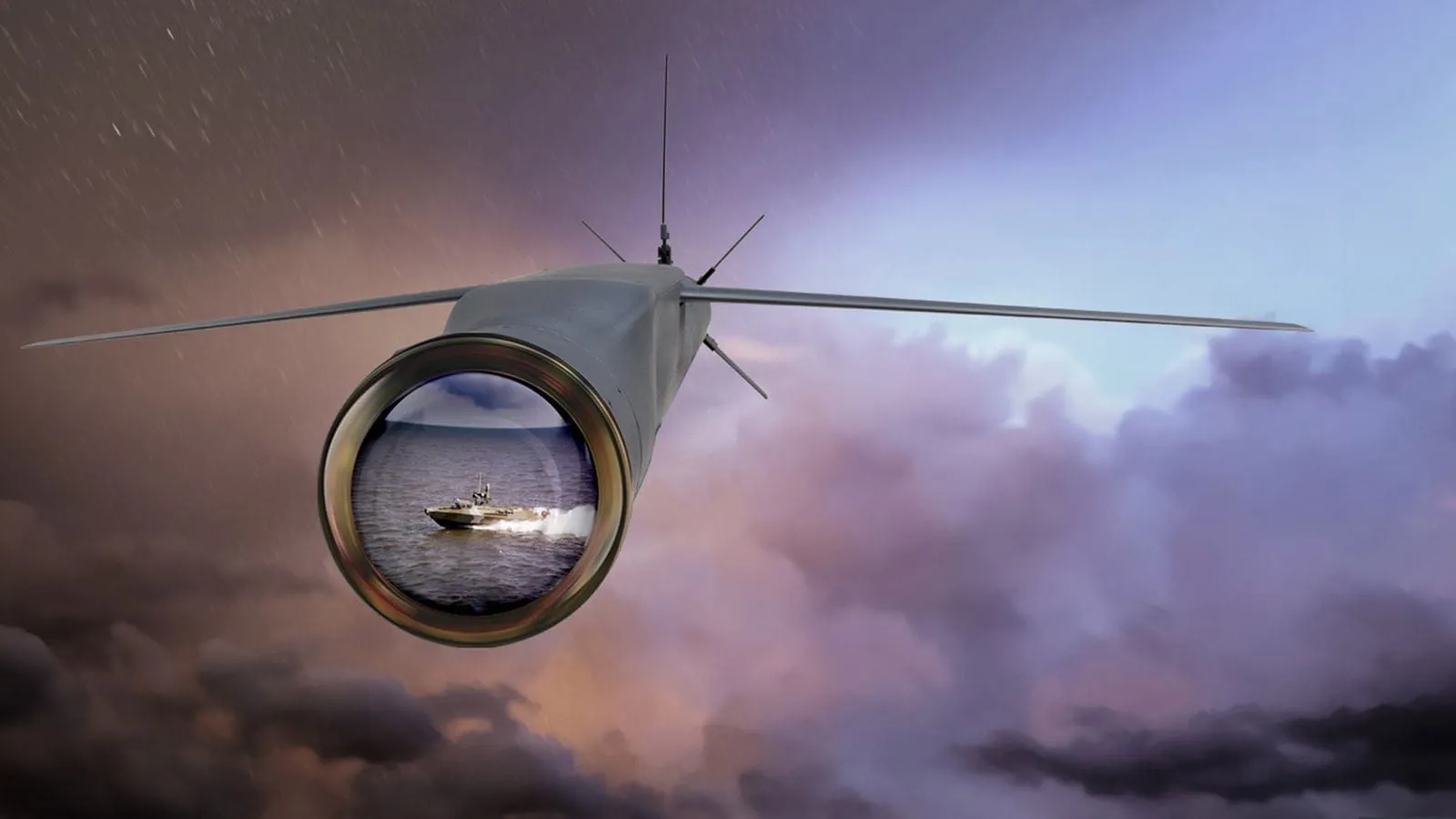
The Destinus Ruta Block 2 cruise missile, unveiled earlier in 2026 and derived from a system already used in Ukraine, is the most likely initial production candidate. Watch for qualification timelines at Rheinmetall’s German facilities and whether the venture pursues co-production arrangements with partners in Poland, Romania, or the Baltic states — nations with both strong procurement incentives and active programs to develop domestic defense industrial capacity.
Long-term, the venture’s growth trajectory will depend on whether European defense budgets sustain their current expansion. NATO allies are under increasing pressure — from within the alliance and from Washington — to raise defense spending to three percent of GDP. If that spending materializes, it creates the demand signal needed to justify the large-scale industrial investment both companies are now committing to.
Capability Gap: Production Volume, Not Platform Performance
Europe does not lack missile technology. What it has consistently lacked is industrial capacity to produce proven systems at the volume modern warfare demands. Ukraine consumed in weeks what some European nations had stockpiled over years. Replenishment timelines measured in years are operationally meaningless in a conflict measured in weeks and months.
The Rheinmetall-Destinus joint venture targets precisely this gap. By embedding Destinus’s system designs within Rheinmetall’s existing large-scale manufacturing infrastructure, the venture aims to compress the time between design and serial production — bypassing the years typically required to build new production lines from scratch.
Realistic limitations apply. Regulatory approvals, export licensing, supply chain development, and workforce training all introduce timelines that cannot be eliminated by industrial ambition alone. The venture also enters a competitive market: MBDA, KNDS, and other established European defense groups are pursuing similar production expansion strategies. The joint venture’s Ukraine-validated systems provide a differentiating factor, but competition for European procurement budgets will remain intense.
The Bottom Line
By anchoring combat-proven missile design within Rheinmetall’s industrial-scale manufacturing network, the Rheinmetall Destinus Strike Systems joint venture represents Europe’s most operationally credible step yet toward closing the missile production gap that four years of high-intensity warfare in Ukraine has made impossible to ignore.