
- Home
- Defense Systems
- Missiles & Precision Weapons
- S-125 Missile System
S-125 Missile System
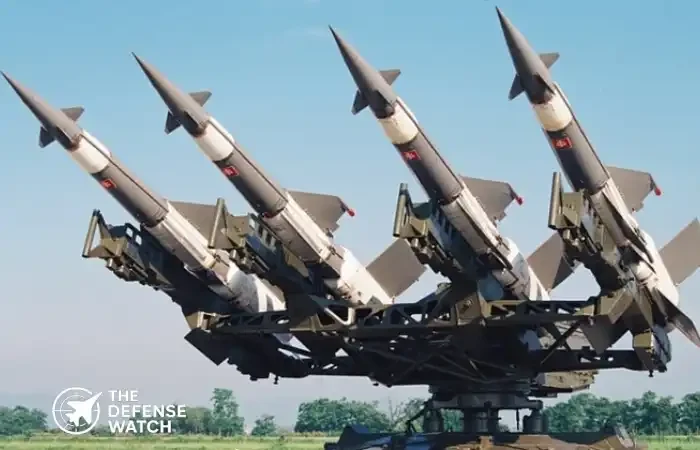
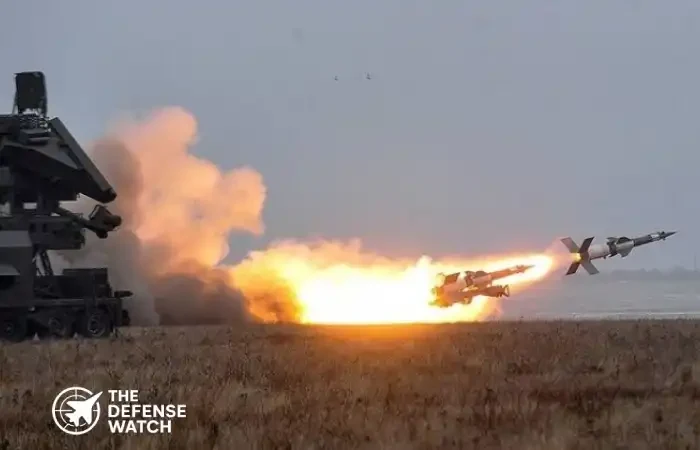
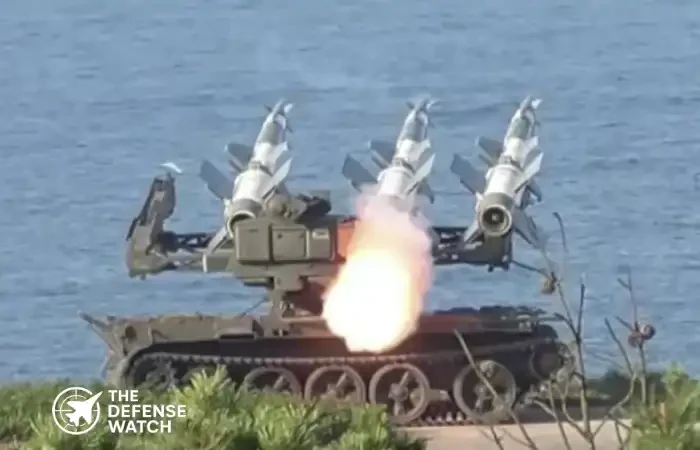
Defense Systems Full Specifications
1. General Information
| Name / Designation | S-125 Neva / Pechora (NATO: SA-3 Goa) |
| Type / Role | Short-to-Medium Range Surface-to-Air Missile System |
| Country of Origin | Soviet Union |
| Manufacturer | Almaz Central Design Bureau (JSC Defense Systems for Pechora-M) |
| Service Entry / Year Introduced | 1961 |
| Operational Status | Active (Mainly via modernized variants) |
2. Performance & Range
| Range | 3.5 km to 35 km (Variant dependent) |
| Speed | Mach 3.0 to Mach 3.5 |
| Ceiling / Altitude Limit | 20 m minimum to 18,000 m maximum |
| Accuracy (CEP) | Highly dependent on radar variant and command link quality |
| Warhead Type | High Explosive Fragmentation (Frag-HE) |
3. Guidance & Targeting
| Guidance System | Radio Command to Line-of-Sight (CLOS) |
| Targeting Mode | Command-guided (Manual / Automatic tracking backup) |
| Launch Platform Compatibility | Ground Launcher (Stationary 5P73 or mobile wheeled chassis) |
| Seeker Type | None (Missile utilizes onboard command antenna receivers) |
4. Physical Characteristics
| Length | 6.09 m (V-601 / 5V27) |
| Diameter | 0.375 m (Main body) |
| Wingspan | 2.2 m |
| Launch Weight | 953 kg |
| Propulsion | Two-stage Solid-fuel Rocket (Booster and Sustainer) |
5. Warhead & Payload
| Warhead Weight | 60 kg to 72 kg |
| Explosive Type | High-Explosive Fragmentation (4,500 pre-formed fragments) |
| Detonation Mechanism | Radio Proximity Fuse / Impact Backup |
| Payload Options | Conventional Frag-HE |
6. Operational Use & Capabilities
| Operational Range Type | Short-to-Medium Range |
| Deployment Platform | Ground Static or Mobile Trucks |
| Target Types | Fighter Jets, Bomber Aircraft, Cruise Missiles, Helicopters |
| Combat Proven | Yes (Yom Kippur War, Gulf War, Kosovo War, Ukraine) |
| Users / Operators | Russia, Ukraine, India, Egypt, Syria, Vietnam, and others |
PROS
- Low-Altitude Capability: Excellent at intercepting low-flying targets that avoid high-altitude air defense systems.
- Solid Propellant Reliability: Solid-fuel motors eliminate dangerous liquid-fuel handling, speeding up maintenance cycles.
- Proven Combat Record: Highly effective combat-tested record, including the historic downing of a stealth combat jet.
- Cost-Effective Modernization: Legacy systems are easily upgraded with modern digital receivers and software-defined radars.
- Electronic Countermeasures Resistance: More resilient against electronic jamming and radar countermeasures than its predecessors.
CONS
- Single-Target Track Limitation: Legacy SNR-125 radar cabins can only engage one target at a time per radar station.
- Semi-Mobile Restrictions: Initial baseline configurations require stationary emplacements or lengthy setup and breakdown times.
- Obsolete Analogue Base: Base models rely on outdated vacuum tubes and transistors, requiring specialized components if un-upgraded.
- Limited Engagement Range: Short operational range compared to newer regional air defense systems like the S-300 or Patriot.
- Radio Command Vulnerability: Command-guided architecture requires continuous radar illumination, exposing the radar site to anti-radiation missiles.
S-125 Neva/Pechora Surface-to-Air Missile System
The S-125 Neva/Pechora (NATO reporting name: SA-3 Goa) is a historic, Soviet-designed surface-to-air missile (SAM) system developed to supplement the high-altitude S-75 Dvina. Designed by the Almaz Central Design Bureau, it serves as a shorter-range, low-to-medium altitude air defense solution optimized to counter maneuverable combat aircraft, cruise missiles, and helicopters. While legacy platforms relied entirely on fixed or semi-mobile configurations, modernized export variants like the Pechora-2M are manufactured by firms such as JSC Defense Systems and feature truck-mounted, highly mobile launchers.
Range, Speed, and Cost
The performance metrics of the S-125 vary depending on the missile variant used. The standard V-601 (5V27) missile achieves a top speed between Mach 3.0 and Mach 3.5. It delivers an operational engagement range up to 35 kilometers (approximately 22 miles) and an interception altitude limit of 18,000 meters. On the secondary market or via modern defense modernization contracts, an upgraded battery upgrade package typically commands a cost of 15 to 20 million USD, providing an affordable alternative to procuring entirely new, modern air defense networks.
Technology and Armament
The S-125 incorporates a two-stage solid-fuel rocket design consisting of a high-power booster stage and a solid-propellant sustainer motor. Its core armament carries a 60 to 70-kilogram fragmentation high-explosive (Frag-HE) warhead designed to shatter targets via radio-frequency command-to-line-of-sight (CLOS) radar guidance and a radio proximity fuse mechanism. Fire control relies on the SNR-125 “Low Blow” tracking and guidance radar tracking system alongside target acquisition units like the P-15 “Flat Face” radar, which offers robust electronics protection against radar counter-measures. Though older, the system remains famous for shooting down a U.S. F-117 Nighthawk stealth fighter over Yugoslavia in 1999, proving its lethality when integrated with skilled operators.
Disclaimer Note
The information provided on TheDefenseWatch.com is for general informational purposes only. While we strive to ensure the accuracy, completeness, and timeliness of our content regarding defense and aerospace products, technologies, and specifications, we cannot guarantee that all information is 100% accurate or up-to-date due to the evolving nature of military technology and classified data.TheDefenseWatch.com does not warrant the reliability, suitability, or availability of the information for any specific purpose. Users are advised to consult official sources, such as manufacturers, government publications, or defense agencies, for precise and verified data before making decisions based on our content.We are not affiliated with any defense manufacturers, governments, or military organizations mentioned. Opinions, reviews, and ratings reflect expert analysis but are subjective and should not be considered endorsements. TheDefenseWatch.com is not responsible for any errors, omissions, or consequences arising from the use of this website’s content.External links are provided for convenience and do not imply endorsement. TheDefenseWatch.com reserves the right to update or modify content without prior notice. By using this website, you agree to our Privacy & Cookies Policy.
More Defense Systems from Almaz-Antey Corporation


New Arrivals

Popular Comparisons
-
 J-10C vs JF-17 Thunder: Which Fighter Is More Capable?
View Comparison →
J-10C vs JF-17 Thunder: Which Fighter Is More Capable?
View Comparison → -
Tejas vs Gripen: Key Differences and Capabilities
View Comparison →
-
Tejas vs MiG-21 Bison: How India Replaced Its Iconic Supersonic Fighter
View Comparison →
-
F-35 vs F-16: Stealth, Sensors and Combat Roles
View Comparison →
-
Tejas Fighter Jet vs F-16 Fighting Falcon: Capability Compared
View Comparison →
-
Rafale Fighter Jet vs F-16 Fighting Falcon : Which Fighter Has the Edge?
View Comparison →
-
Su-57 Fighter Jet vs J-20 Fighter Jet: Stealth and Air Combat Compared
View Comparison →
-
Mirage 2000 vs Tejas Mk1A: Legacy Combat Power vs Indigenous Modernization
View Comparison →
-
Rafale Fighter Jet vs F-22 Raptor: Which Air Dominance Fighter Has the Edge?
View Comparison →
-
Tejas Fighter Jet vs. Rafale Fighter Jet: India’s Indigenous Fighter Meets France’s Proven Multirole Combat Aircraft
View Comparison →


- Pratt & Whitney Begins $100 Million Polish Expansion for F-35 Engine Parts

- Northrop Grumman Wins $43.9 Million Contract for Trident II Rocket Motor Facilities
- Ukraine Drone Strikes Disrupt Russian Data Centers, Raising Questions About AI Infrastructure Security
- Lockheed Martin Wins $114.6 Million Contract to Redesign F-35 Navigation Systems
- Project Agincourt Pushes Pentagon to Speed Up Autonomous Weapons Fielding
- Northrop Grumman Factory Expansion Aims to Increase B-21 Raider Production
- France Orders Four More SAMP/T NG Air Defense Systems
- France and UAE Revive Rafale F5 Fighter Development Partnership
- P-800 Oniks Missile: Range, Speed and BrahMos Comparison
- Ukrainian Drone Unit Caused 70% of Simulated U.S. Brigade Casualties in Germany Exercise


Fighter Jets
-
 F-100 Super Sabre
-
North American F-86 Sabre
-
Northrop YF-23 Fighter
-
Rafale F5 Fighter
-
SU-57 Felon Stealth Fighter
-
Boeing F/A-XX Fighter
-
JF-17 Thunder Fighter Jet
-
F-47 Fighter Jet
-
MIG-31 Fighter Jet
-
J-10CE Fighter Jet
-
Chengdu J-10 Fighter Jet
-
Chengdu J-10C Fighter Jet
-
Gripen E Fighter Jet
-
Tejas Mk1A Fighter Jet
-
Tejas Mk‑2 Fighter Jet
-
F-16V Viper Block 70 Fighter Jet
-
F-15EX Eagle II Fighter
-
F-15E Strike Eagle Fighter
-
F/A-18E/F Super Hornet Fighter Jet
-
Saab Gripen F Fighter Jet
-
JAS 39E/F Gripen Fighter Jet
-
JAS 39 Gripen Fighter Jet
-
F-35A Lightning II Fighter Jet
-
F/A-18F Super Hornet







Recent Compares
-
J-10C vs JF-17 Thunder: Which Fighter Is More Capable?
View Comparison →
-
Tejas vs Gripen: Key Differences and Capabilities
View Comparison →
-
Tejas vs MiG-21 Bison: How India Replaced Its Iconic Supersonic Fighter
View Comparison →
-
F-35 vs F-16: Stealth, Sensors and Combat Roles
View Comparison →
-
Tejas Fighter Jet vs F-16 Fighting Falcon: Capability Compared
View Comparison →
Latest Defense Systems
10 Compares Defense Systems
-
J-10C vs JF-17 Thunder: Which Fighter Is More Capable?
View Comparison →
-
Tejas vs Gripen: Key Differences and Capabilities
View Comparison →
-
Tejas vs MiG-21 Bison: How India Replaced Its Iconic Supersonic Fighter
View Comparison →
-
F-35 vs F-16: Stealth, Sensors and Combat Roles
View Comparison →
-
Tejas Fighter Jet vs F-16 Fighting Falcon: Capability Compared
View Comparison →
-
Rafale Fighter Jet vs F-16 Fighting Falcon : Which Fighter Has the Edge?
View Comparison →
-
Su-57 Fighter Jet vs J-20 Fighter Jet: Stealth and Air Combat Compared
View Comparison →
-
Mirage 2000 vs Tejas Mk1A: Legacy Combat Power vs Indigenous Modernization
View Comparison →
-
Rafale Fighter Jet vs F-22 Raptor: Which Air Dominance Fighter Has the Edge?
View Comparison →
-
Tejas Fighter Jet vs. Rafale Fighter Jet: India’s Indigenous Fighter Meets France’s Proven Multirole Combat Aircraft
View Comparison →
- Pratt & Whitney Begins $100 Million Polish Expansion for F-35 Engine Parts
- Northrop Grumman Wins $43.9 Million Contract for Trident II Rocket Motor Facilities
- Ukraine Drone Strikes Disrupt Russian Data Centers, Raising Questions About AI Infrastructure Security
- Lockheed Martin Wins $114.6 Million Contract to Redesign F-35 Navigation Systems
- Project Agincourt Pushes Pentagon to Speed Up Autonomous Weapons Fielding