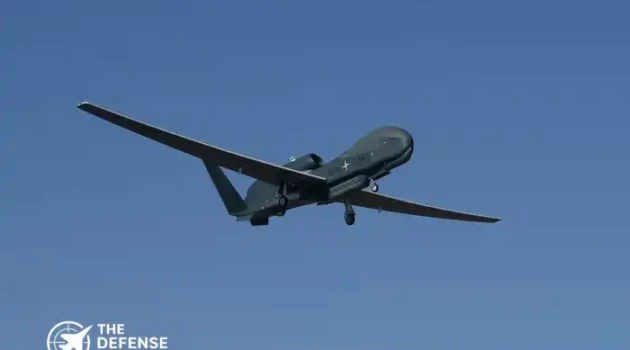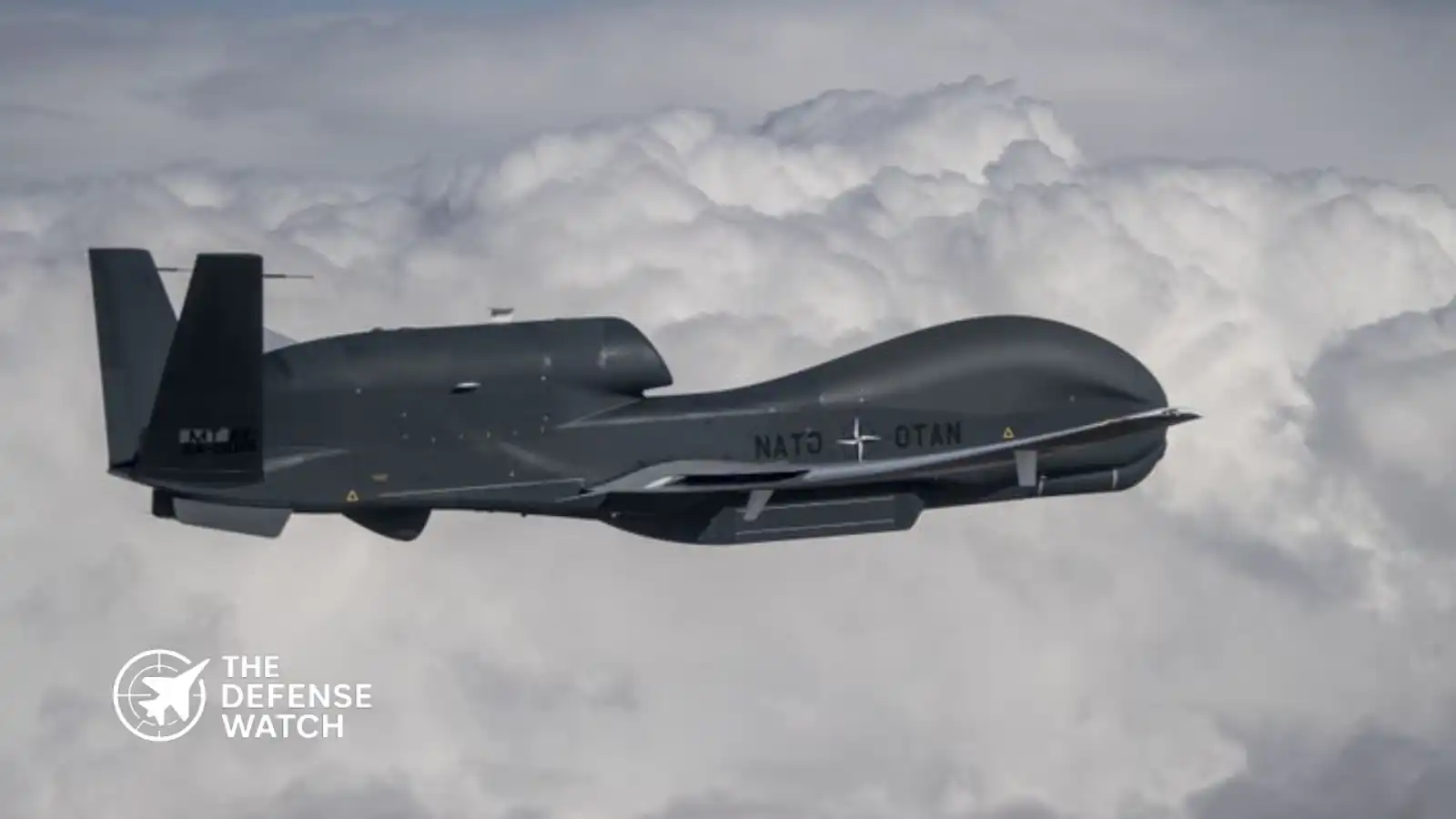
The deployment marks a significant step in NATO’s effort to expand persistent intelligence, surveillance, and reconnaissance coverage across the High North.
(adsbygoogle = window.adsbygoogle || []).push({});Executive Summary:
NATO’s Intelligence, Surveillance, and Reconnaissance Force has conducted its first RQ-4D Phoenix operations from Norway under the Agile Combat Employment concept. The deployment expands NATO’s Arctic surveillance reach and strengthens alliance readiness in the High North amid growing strategic competition.
NATO ISR Force Conducts First RQ-4D Phoenix Operations From Norway
NATO RQ-4D Phoenix operations in Norway mark a new phase in the alliance’s intelligence, surveillance, and reconnaissance posture across Northern Europe and the Arctic region. The NATO Intelligence, Surveillance, and Reconnaissance Force (NISRF) confirmed that its RQ-4D Phoenix remotely piloted aircraft successfully completed its first operational activities from Norwegian territory under the Agile Combat Employment (ACE) framework.
The operations were carried out from a forward operating location in Norway, extending the reach of NATO’s Alliance Ground Surveillance (AGS) system beyond its primary operating base at Sigonella Air Base in Italy. According to NATO officials, the deployment tested the alliance’s ability to rapidly disperse and sustain ISR assets across multiple operating environments.
The RQ-4D Phoenix is NATO’s version of the Northrop Grumman RQ-4 Global Hawk high altitude, long endurance unmanned aircraft. Designed for persistent ISR missions, the platform can operate at altitudes exceeding 50,000 feet and remain airborne for more than 30 hours, enabling wide area surveillance across large operational theaters.
Arctic And High North Surveillance Gains Priority
The decision to conduct NATO RQ-4D Phoenix operations from Norway reflects the growing strategic importance of the Arctic and High North. NATO members have increasingly focused on northern security concerns as Russia continues military modernization efforts in the Arctic region and expands activity around the Barents Sea and North Atlantic.
Norway’s geographic location provides NATO with direct access to critical northern maritime routes and air corridors. Operating the RQ-4D Phoenix from Norwegian territory improves response times and surveillance persistence over Arctic areas that are becoming increasingly contested.
The deployment also supports NATO’s broader shift toward distributed operations. Under the Agile Combat Employment concept, forces are trained to operate from dispersed and austere locations rather than relying solely on large fixed bases that may be vulnerable during conflict.
NATO stated that the exercise demonstrated the ability of the alliance’s ISR force to relocate aircraft, personnel, and support infrastructure while maintaining operational effectiveness. The concept is intended to improve survivability, operational flexibility, and mission continuity during high intensity operations.
RQ-4D Phoenix Strengthens NATO ISR Architecture
The NATO RQ-4D Phoenix fleet forms the airborne component of the Alliance Ground Surveillance program, which combines unmanned aircraft, ground control stations, and data processing systems into a unified ISR architecture.
The aircraft uses advanced radar sensors capable of tracking moving targets and collecting wide area imagery in all weather conditions. Data gathered by the drone can be distributed to NATO commanders and member states in near real time, supporting strategic awareness and operational planning.
NATO’s AGS program achieved initial operational capability in 2021 and has since expanded mission integration across alliance commands. The latest Norway deployment highlights how the alliance is adapting the system for distributed and expeditionary operations.
From an operational perspective, the Arctic environment presents unique challenges for ISR platforms, including extreme weather, long distances, and limited infrastructure. Successfully conducting RQ-4D Phoenix operations from Norway demonstrates growing confidence in NATO’s ability to sustain persistent ISR coverage under demanding northern conditions.
Strategic Message To Allies And Adversaries
The deployment also carries geopolitical significance. NATO has increased military cooperation and surveillance activities in Northern Europe following heightened tensions with Russia since the start of the war in Ukraine.
Persistent ISR coverage is central to NATO’s deterrence strategy because it improves situational awareness and reduces the risk of strategic surprise. By demonstrating that the RQ-4D Phoenix can operate from dispersed northern locations, NATO signals that its ISR network can remain active even during contested operations.
The move aligns with broader allied investments in Arctic defense infrastructure, maritime patrol capabilities, and integrated air and missile defense systems across the region.
(adsbygoogle = window.adsbygoogle || []).push({});Military analysts also view the deployment as part of NATO’s ongoing effort to integrate unmanned systems more deeply into operational planning. High altitude ISR drones such as the RQ-4D Phoenix provide long endurance coverage without placing aircrews at risk, making them increasingly valuable for monitoring large and remote operational areas.
Growing Importance Of Agile Combat Employment
The Norway deployment underscores how Agile Combat Employment is becoming a central operational concept for NATO air forces. Originally emphasized by the U.S. Air Force for operations in contested environments, ACE focuses on mobility, decentralization, and rapid repositioning of assets.
For NATO, applying ACE principles to ISR operations could significantly complicate adversary targeting and improve resilience during future conflicts. Instead of concentrating critical ISR platforms at a single base, NATO can disperse operations across multiple allied territories.
This flexibility may become increasingly important as modern long range missile threats continue to expand across Europe and the Arctic theater.
The NATO RQ-4D Phoenix operations in Norway therefore represent more than a routine deployment. They illustrate how the alliance is adapting its ISR force structure, operational concepts, and Arctic posture to address evolving strategic realities in Europe’s northern flank.