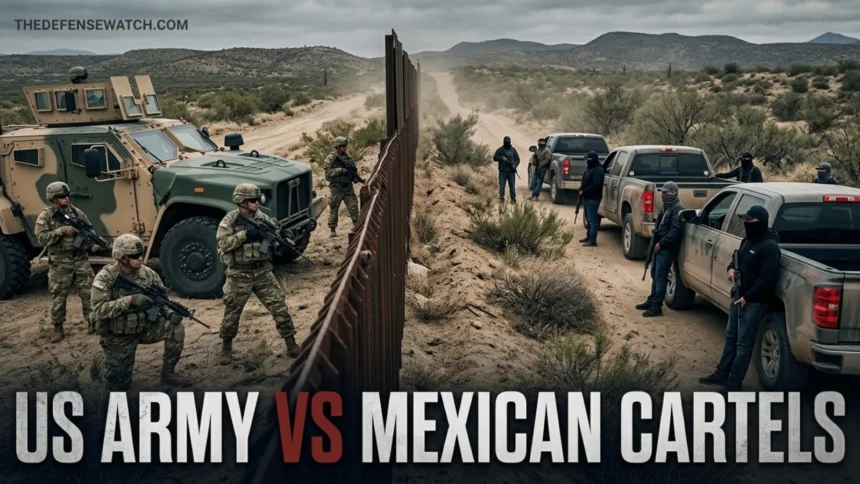
The United States Army has overwhelming advantages over Mexican drug cartels in conventional military capabilities, including armored warfare, aviation, intelligence, logistics, communications and sustained firepower. However, comparing the two is more complicated than measuring soldiers, weapons or equipment.
Mexico’s major criminal organizations are not conventional military forces. Groups such as the Jalisco New Generation Cartel (CJNG) and Sinaloa Cartel operate through decentralized networks of armed personnel, local cells, financial intermediaries, corrupt contacts and international trafficking connections. Their strength comes from criminal revenue, intelligence networks, intimidation and their ability to adapt to security operations.
The distinction matters because the US Army is designed to fight organized military forces, conduct expeditionary operations and sustain combat across multiple domains. Cartels generally seek to protect criminal markets, control trafficking routes, weaken government authority in selected areas and avoid prolonged engagements against superior military forces.
This means the US Army would hold an enormous advantage in a conventional military confrontation. But that advantage would not automatically translate into eliminating cartel organizations or ending drug trafficking.
The comparison also requires an important distinction: the US Army is a branch of the United States Armed Forces, while Mexican cartels are non-state criminal organizations. Mexico’s military, police and National Guard are separate actors in this security environment.
1. Understanding the Forces Being Compared
The United States Army
The United States Army is the principal land warfare service of the United States Armed Forces.
Its responsibilities include:
- Conventional land warfare.
- Armored and mechanized operations.
- Air assault and airborne operations.
- Long-range artillery and precision fires.
- Air and missile defense.
- Intelligence, surveillance and reconnaissance.
- Special operations support.
- Overseas deployments and joint military operations.
The Army operates alongside the US Navy, Air Force, Marine Corps and Space Force. Its capabilities are supported by national intelligence agencies, strategic transportation networks and a large defense industrial base.
It is therefore important not to attribute every American military capability to the Army alone. Strategic bombers, naval cruise missiles and many national intelligence assets belong to other organizations.
Mexican Drug Cartels
Mexican cartels are criminal organizations whose primary objectives are financial and territorial rather than conventional military conquest.
Two of the most influential organizations are:
- Jalisco New Generation Cartel (CJNG): Known for its aggressive territorial expansion, heavily armed personnel and use of improvised military-style equipment.
- Sinaloa Cartel: A major international trafficking network with multiple factions, extensive criminal connections and access to substantial financial resources.
The US Office of the Director of National Intelligence’s May 2026 Sinaloa Cartel assessment describes the organization as factional, with several competing leadership networks rather than one unified chain of command. It estimates membership in the thousands but does not provide a reliable total personnel figure.
Other organizations and regional criminal groups also operate across Mexico. Their capabilities differ considerably, and they should not be treated as one unified cartel army.
The central distinction: The US Army maintains formal command structures, standardized training and military logistics. Cartels depend on criminal networks, local armed groups and informal command arrangements.
2. Personnel and Organizational Strength
The US Army has a much larger and more structured personnel base than any individual Mexican cartel.
A Congressional Research Service force-structure reference, using Defense Manpower Data Center figures from August 31, 2026, reports approximately 455,397 active-component Army personnel, 171,321 Army Reserve personnel and 329,506 Army National Guard personnel.
These components have different readiness, mobilization and command arrangements. They should not be treated as an immediately deployable force of equal availability.
By contrast, cartel membership is difficult to establish. Criminal organizations use temporary gunmen, local enforcers, independent contractors, corrupt officials and logistical associates. Many people involved in their operations are not full-time armed members.
The US intelligence assessment of the Sinaloa Cartel estimates its membership in the thousands, while public reporting does not establish a dependable, comparable total for CJNG.
| Category | US Army | Mexican cartels |
|---|---|---|
| Personnel | Hundreds of thousands across components | Membership figures uncertain |
| Organization | Formal military hierarchy | Decentralized criminal networks |
| Recruitment | Military enlistment and commissioning | Criminal recruitment and local networks |
| Training | Standardized military training | Variable weapons and tactical training |
| Command | Formal command structure | Fragmented leadership and regional cells |
| Reserves | Army Reserve and National Guard | No formal military reserve |
| Mission | National defense and land warfare | Criminal revenue and territorial influence |
| Accountability | Military law and civilian oversight | Criminal command structures |
The personnel comparison strongly favors the US Army, but the number of cartel members is not a reliable measure of their ability to influence local communities or maintain criminal operations.
3. Weapons and Military Equipment
Cartels do not possess the standardized inventories of a national military. Their weapons are acquired through illicit trafficking, black-market networks, theft and other criminal supply channels.
Nevertheless, some Mexican criminal organizations have acquired weapons capable of threatening police officers, military patrols and lightly protected vehicles.
US Army weapons and equipment
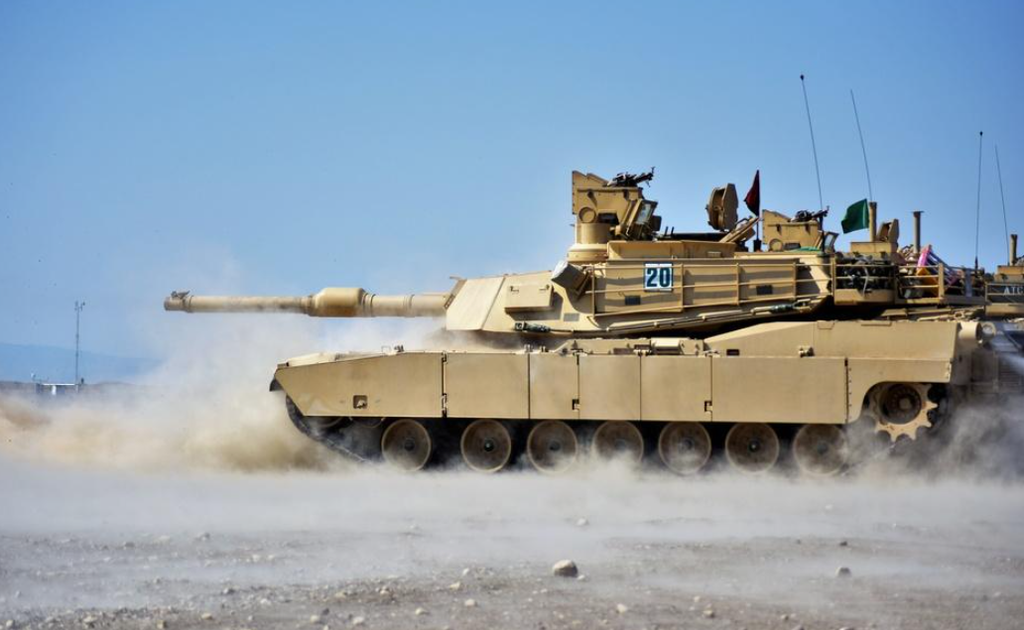
The US Army operates a broad range of conventional combat systems, including:
- M1 Abrams main battle tanks.
- M2 Bradley infantry fighting vehicles.
- Stryker armored fighting vehicles.
- M109 Paladin self-propelled howitzers.
- M142 HIMARS rocket artillery.
- AH-64 Apache attack helicopters.
- UH-60 Black Hawk utility helicopters.
- Patriot air defense systems.
- Tactical reconnaissance and surveillance drones.
These systems provide capabilities that extend well beyond small-arms firepower. They support armored maneuver, indirect fire, protected mobility, air defense and coordinated battlefield operations.
Their effectiveness depends on trained crews, maintenance, ammunition, communications and supporting units.
Mexican cartel weapons
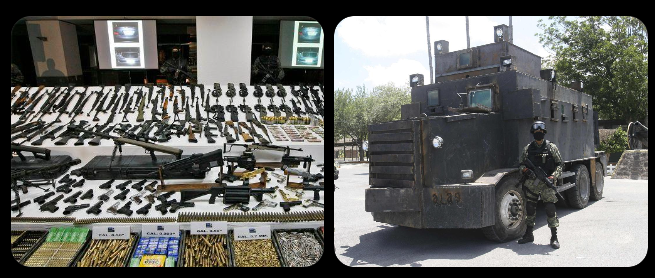
Cartel arsenals vary by organization and region. Documented weapons and equipment include:
- AK-pattern and AR-pattern rifles.
- Fully automatic machine guns.
- .50-caliber rifles.
- Heavy machine guns.
- Grenade launchers.
- Rocket-propelled grenade launchers.
- Improvised armored vehicles.
- Commercial drones.
- Explosives and improvised explosive devices.
A September 2026 Government Accountability Office report, Firearms Trafficking to Mexico: Better Data and Performance Monitoring Would Help Agencies Direct Resources to Counter Cartels, identifies AR-15, AK-47 and .50-caliber firearms among weapons sought by Mexican transnational criminal organizations. It also describes the conversion of some semiautomatic firearms to fully automatic configurations.
The report identifies straw purchasers and intermediaries as important channels through which weapons reach criminal organizations.
The International Committee of the Red Cross has also documented the use of improvised armored vehicles, landmines, grenades, rocket-propelled weapons and weaponized drones by some criminal armed groups in Mexico.
However, possession of individual military-style weapons does not give a cartel the combined-arms capabilities of a conventional army.
Weapons comparison
| Capability | US Army | Mexican cartels |
|---|---|---|
| Main battle tanks | Operational fleet | No verified conventional tank fleet |
| Armored vehicles | Standardized military vehicles | Improvised armored vehicles |
| Heavy machine guns | Standardized military inventory | Documented in cartel arsenals |
| Rocket artillery | HIMARS and other systems | No comparable operational rocket artillery force established |
| Attack helicopters | AH-64 Apache | No comparable verified attack helicopter fleet |
| Armed drones | Military UAS systems | Commercial and improvised weaponized drones |
| Air defense | Integrated military systems | No comparable integrated air defense network established |
| Precision weapons | Military-guided munitions | Limited and irregular capabilities |
The difference is not simply the sophistication of individual weapons. It is the ability to combine sensors, communications, firepower and trained personnel into a coordinated military system.
4. Drones, Surveillance and Electronic Warfare
Uncrewed aerial systems have become an increasingly important part of Mexico’s criminal security environment.
Cartels use commercial drones for reconnaissance, surveillance and, in some cases, attacks involving improvised explosive payloads. These systems are relatively inexpensive and can be acquired without the procurement infrastructure required by a conventional military.
Cartel drone capabilities
The Sinaloa Cartel and other criminal groups have used drones to monitor security-force movements and protect trafficking operations.
Some groups have also adopted weaponized commercial drones. However, their systems should not be equated with the sophisticated military drone fleets, integrated reconnaissance networks or long-range strike capabilities operated by modern armed forces.
US Army counter-drone capabilities
The US Army has access to military radar, electronic warfare equipment, interceptor systems, surveillance platforms and other counter-uncrewed aircraft technologies.
A particularly relevant development occurred in October 2026.
According to Reuters, US Northern Command’s September Falcon Peak exercise in Arizona evaluated radar systems, interceptor drones, autonomous gun systems and other technologies intended to detect and defeat small unmanned aircraft.
US military officials reported 378 drone incursions during the preceding 30 days. They also said the military had brought down 11 cartel drones using laser systems deployed along the southern border in August 2026.
These developments demonstrate that cartel drone activity is relevant to US military training and border security planning.
However, counter-drone systems designed for battlefield environments must still be evaluated against the different conditions of border security, including civilian airspace, identification challenges and legal restrictions.
5. Training, Tactics and Operational Doctrine
One of the biggest differences between the US Army and Mexican cartels is how they prepare and organize armed personnel.
US Army training and doctrine
The US Army uses standardized training programs covering infantry operations, armored warfare, reconnaissance, communications, engineering, medical support and combined-arms operations.
Its doctrine emphasizes coordination between different military units.
For example, an armored formation can receive support from artillery, aviation, engineers, intelligence units and air defense elements. These capabilities are designed to operate together through established command systems.
The Army also conducts exercises to improve readiness, interoperability and deployment capabilities.
Cartel tactics
Cartels generally avoid the requirements of conventional warfare.
Their activities include:
- Ambushes against rival organizations and government forces.
- Armed territorial intimidation.
- Surveillance using commercial drones.
- Improvised armored vehicle operations.
- Attacks involving explosives and improvised explosive devices.
- Recruitment of local armed personnel.
- Corruption and intimidation of government officials.
- Protection of trafficking routes and criminal infrastructure.
Some criminal groups have developed military-style tactics, particularly in regions where they compete for territorial control.
The International Committee of the Red Cross has documented how certain criminal armed groups in Mexico have adopted advanced weapons, improvised explosives, trenches, armored vehicles and coordinated armed operations.
Nevertheless, their tactics remain fundamentally different from the US Army’s doctrine.
Cartels generally have no requirement to capture and hold territory through conventional military operations, defeat an opposing army or maintain a continuous front line.
Their objective is to preserve criminal activity and economic influence while limiting the risks posed by government forces and competing organizations.
6. Intelligence, Communications and Command Systems
The US Army possesses a substantial advantage in intelligence collection, communications and command infrastructure.
It can draw on military intelligence organizations, surveillance aircraft, satellites, ground sensors and information-sharing arrangements with other government agencies.
These capabilities help commanders develop a broader understanding of military activity and coordinate operations across different units.
Cartels also maintain intelligence networks, but their methods are different.
They may rely on local informants, surveillance of police movements, communications monitoring, bribery and relationships with individuals inside government institutions.
The ODNI’s May 2026 assessment of the Sinaloa Cartel describes shared smuggling routes, corrupt contacts and money-laundering networks among its factions, despite the absence of a unified command structure.
This creates an important operational distinction.
The US Army has superior formal intelligence and command capabilities, but it cannot automatically identify every cartel member, financial intermediary, corrupt official or local facilitator.
Understanding criminal networks requires investigations, financial intelligence, law enforcement cooperation and evidence collection, not simply military surveillance.
7. Logistics and Financial Resources
Logistics is one of the US Army’s greatest advantages.
The Army can draw on a national defense industrial base, military depots, transportation networks, maintenance facilities and established supply systems.
It can support armored vehicles, helicopters, artillery, communications equipment and other systems through organized procurement and sustainment arrangements.
Cartels have no equivalent military logistics structure.
However, their financial resources can be substantial.
The ODNI assesses that the Sinaloa Cartel generates billions of dollars annually through drug trafficking and other criminal activities. It also maintains international relationships supporting illicit chemical procurement, trafficking and money laundering.
This financial structure allows criminal organizations to acquire vehicles, firearms, communications equipment and other resources without maintaining a conventional defense industry.
| Logistics factor | US Army | Mexican cartels |
|---|---|---|
| Funding | Federal defense appropriations | Criminal revenue |
| Procurement | Formal defense contracts | Illicit markets and intermediaries |
| Maintenance | Military depots and contractors | Informal repair networks |
| Fuel | Organized military supply | Commercial and illicit sources |
| Ammunition | Military procurement and stockpiles | Criminal supply networks |
| Transportation | Strategic and tactical military networks | Commercial and clandestine networks |
| Industrial support | Established defense manufacturers | No comparable defense industry |
| Long-term sustainment | Formal military infrastructure | Revenue-dependent criminal networks |
The US Army has a decisive advantage in conventional military sustainment.
But cartel operations are generally less dependent on maintaining large fleets of complex military equipment. Their decentralized structures can also make it difficult to eliminate an entire organization through the destruction of a limited number of facilities or vehicles.
8. The Role of Mexico’s Military and National Guard
A comparison between the US Army and Mexican cartels should not overlook Mexico’s own security forces.
The Mexican Army, Navy and National Guard are the primary government institutions involved in confronting armed criminal organizations within Mexico.
The Mexican military has extensive experience conducting internal security operations, arresting cartel leaders, protecting infrastructure and responding to armed attacks.
The National Guard also performs public security responsibilities.
These forces operate under Mexico’s national institutions and legal framework. They are not subordinate to the US Army.
The Mexican military faces a difficult operating environment because it must address armed criminal organizations while protecting civilians, maintaining public security and operating within the country’s legal system.
A 2025 analysis from Florida International University’s Jack D. Gordon Institute describes how cartel use of improvised explosive devices and weaponized drones has influenced Mexican military priorities, including vehicle protection and counter-drone systems. It also identifies challenges in integrating Mexico’s radar and air surveillance capabilities.
This makes Mexico’s security forces central to any realistic assessment of counter-cartel operations.
9. US-Mexico Security Cooperation and Legal Constraints
The United States and Mexico have a long history of cooperation against drug trafficking and organized crime.
Their cooperation has included intelligence sharing, law enforcement investigations, training, equipment assistance, border security and efforts to disrupt criminal financing.
The Mérida Initiative, launched in 2008, was an important part of this relationship. Congressional Research Service records show that Congress appropriated approximately $3.6 billion for bilateral security cooperation between fiscal years 2008 and 2023.
However, cooperation has experienced political disagreements, particularly over sovereignty, intelligence sharing and the role of US personnel in Mexico.
US law also provides a framework for military support to civilian counterdrug agencies.
Under 10 U.S.C. Section 284, the Department of Defense may provide specified counterdrug and counter-transnational-organized-crime support to eligible US and foreign law enforcement agencies, subject to statutory requirements.
This does not mean that the US Army has unrestricted authority to conduct combat operations inside Mexico.
Mexico’s sovereignty and the requirement for an appropriate legal basis remain central considerations.
The Congressional Research Service reported in December 2025 that Mexican President Claudia Sheinbaum had increased counternarcotics cooperation with Washington while rejecting unilateral US military operations inside Mexico.
The distinction between military support, bilateral operations and unilateral intervention is essential.
A US Army unit supporting surveillance from American territory is operating in a different legal and political environment from a US combat formation conducting operations inside Mexican territory.
10. What Would Happen in Different Operational Environments?
The US Army and Mexican cartels are not designed to perform the same military missions. Their relative capabilities therefore depend on the type of confrontation being considered.
The following assessments are broad strategic comparisons, not predictions of specific battles.
Conventional military confrontation
US Army advantage
The US Army would have an overwhelming advantage in conventional military capabilities.
Its armored formations, aviation, artillery, intelligence systems, communications and logistics are beyond the capabilities of any individual Mexican cartel.
Cartels lack the force structure, equipment and industrial support necessary to compete with a modern conventional army.
Urban security environment
US Army advantage in conventional combat
The US Army has greater firepower, protection, surveillance and organized military training.
However, urban security operations are not simply conventional battles.
Cartel members may operate within civilian populations, use criminal informants and exploit local relationships. Distinguishing armed members from civilians and collecting evidence against criminal networks require law enforcement capabilities.
Military superiority alone does not solve these problems.
Rural and mountainous regions
US Army advantage in military capability
The US Army has superior aviation, communications, surveillance and logistical capabilities.
However, difficult terrain, limited infrastructure and civilian proximity can complicate prolonged security operations.
Criminal organizations with local knowledge and established networks may retain an advantage in familiarity with particular communities and areas.
Border surveillance and counter-drone operations
US military advantage
The US military has more advanced radar, surveillance and counter-drone technology.
The 2026 Falcon Peak exercise illustrates the military’s effort to improve its ability to identify and counter small drones operating near the southern border.
Cartels can still exploit inexpensive commercial drones and rapidly change their surveillance practices, creating an ongoing security challenge.
Long-term counter-cartel operations
No automatic military winner
This is where the comparison becomes most complicated.
The US Army could defeat cartel formations in conventional engagements, but eliminating criminal organizations requires a much broader government effort.
Long-term success depends on:
- Financial investigations and asset seizures.
- Intelligence-led law enforcement.
- Judicial and prosecutorial capacity.
- Border security and weapons-trafficking enforcement.
- Anti-corruption measures.
- International cooperation.
- Local government effectiveness.
- Reducing the ability of criminal organizations to recruit and replace personnel.
A military campaign could disrupt particular criminal groups without eliminating the economic and institutional conditions that allow organized crime to survive.
11. Strengths and Limitations of Both Sides
US Army strengths
- Much greater conventional firepower.
- Advanced armored and mechanized forces.
- Superior military aviation.
- Extensive intelligence and surveillance capabilities.
- Integrated command and communications systems.
- Large military logistics and maintenance networks.
- Access to a major defense industrial base.
- Extensive experience in joint and expeditionary operations.
US Army limitations in counter-cartel missions
- Conventional military doctrine does not replace criminal investigations.
- Operating inside Mexico raises sovereignty and legal questions.
- Cartel networks are decentralized and can reorganize.
- Civilian protection and identification challenges complicate operations.
- Destroying armed groups does not necessarily eliminate trafficking markets.
- Long-term results depend on Mexican institutional cooperation.
Mexican cartel strengths
- Access to substantial criminal revenue.
- Local intelligence and informant networks.
- Experience operating in selected Mexican regions.
- Access to illicit firearms and ammunition.
- Ability to use intimidation and corruption.
- Decentralized criminal networks.
- Adaptability in surveillance and trafficking methods.
Mexican cartel limitations
- No comparable conventional military force structure.
- Limited heavy equipment and aviation.
- No verified integrated air defense network comparable to a national military.
- No comparable military logistics system.
- No standardized professional military training across organizations.
- Internal rivalries and leadership disputes.
- Dependence on illicit revenue and trafficking networks.
These strengths and limitations are not shared equally by every cartel. CJNG, Sinaloa and smaller regional organizations have different resources, structures and capabilities.
12. Who Has the Advantage, US Army or Mexican Cartels?
The US Army has an overwhelming advantage in conventional military power. Its personnel, armored vehicles, aviation, artillery, intelligence capabilities, communications and logistics exceed anything available to individual Mexican cartels.
There is little ambiguity about the outcome of a conventional military comparison.
However, the ability to defeat an armed group in a direct engagement is different from the ability to dismantle its criminal organization.
Cartels operate through financial networks, trafficking routes, local facilitators, corrupt relationships and decentralized armed groups. Even when security forces capture senior leaders or destroy important criminal infrastructure, other members may reorganize and continue operations.
The Sinaloa Cartel’s internal divisions illustrate this problem. Its factions have continued competing for influence despite pressure from Mexican and US authorities.
The US Army could provide substantial military capabilities in a counter-cartel campaign, but sustainable results would depend on intelligence, law enforcement, financial investigations, Mexican government cooperation and stronger criminal justice institutions.
The overall assessment is clear: the US Army is vastly superior in military capability, while Mexican cartels present a different type of security challenge that conventional military superiority cannot resolve by itself.
Frequently Asked Questions
Yes, the US Army has overwhelming conventional military superiority over Mexican cartels. However, defeating armed cartel formations would not automatically dismantle their financial, criminal and trafficking networks.
No. Some cartels possess military-style weapons, improvised armored vehicles, explosives and weaponized drones. However, they lack the standardized force structure, heavy equipment, aviation, integrated logistics and command systems of a national military.
The CJNG and Sinaloa Cartel are among Mexico’s most influential and heavily armed criminal organizations. Their capabilities vary by region and faction. Publicly available evidence does not establish a reliable ranking of their overall armed strength.
Cartels have used improvised armored vehicles, sometimes called monstruos. However, there is no verified evidence that major Mexican cartels operate conventional main battle tank fleets or military attack helicopter fleets comparable to those of a national army.
Yes. Authorities have documented cartel access to fully automatic firearms, .50-caliber weapons, grenade launchers, explosives and other military-style equipment. However, owning these weapons does not provide the training or combined-arms capabilities of a conventional military.
US military involvement inside Mexico raises significant sovereignty, legal and diplomatic questions. Military assistance and intelligence cooperation are different from unilateral combat operations. Mexico has rejected unilateral US military intervention on its territory.
Enjoying our coverage?
Make The Defense Watch a preferred source on Google to see more of our geopolitical and defense insights when relevant to you.