• Home
  • About
  • Defense Systems
  • Manufacturer
  • Comparisons
  • Compare 
  • Tools
TheDefenseWatch.com
  • Aerospace & Aviation
  • Military & Ordnance
  • Naval & Maritime
  • Cyber & Space Defense
  • Policy & Strategy
  • Global News
  • Tools Library
    • Smart Calculator
    • Drone Flight Time Calculator
    • Drone Range Calculator
    • Counter-Drone Jammer Effective Range Calculator
    • Counter-Battery Radar Detection Calculator
    • Artillery Fire Correction Calculator
    • Thermal Camera Detection Range Calculator
    • Missile Range & Time-of-Flight Calculator
    • Radar Detection Range Calculator
    • FPV Strike Drone Payload vs Range Calculator
    • Loitering Munition Endurance Calculator
    • Sniper Ballistic Drop & Windage Calculator
    • Bullet Drop Calculator
    • U.S. Army Combat Fitness Test (ACFT) Calculator
    • Military Pension Calculator
    • Military Retirement Calculator
    • Military Pension Calculator
    • Large Number Calculator
Font ResizerAa

TheDefenseWatch.com

The Defense Watch | U.S. & Global Defense News, Analysis & Military Updates

Search
  • Home
  • About
  • Defense Systems
  • Manufacturer
  • Comparisons
  • Compare 
  • Tools

Stay Updated

Get the latest update

Subscribe

Explore

  • Drone
  • Fighter Jets & Military Aircraft
  • Hypersonic Weapons
  • Aircraft Carriers
  • Strategic History & Missions
  • Tools Library
Home » Army Trains Patriot Crews for Nighttime Missile Reloads
Artillery & Missile SystemsMilitary & Ordnance

Army Trains Patriot Crews for Nighttime Missile Reloads

Samuel Drake | Defense Analyst
Last updated: October 28, 2026 1:41 am
Samuel Drake | Defense Analyst
Share
3 Min Read
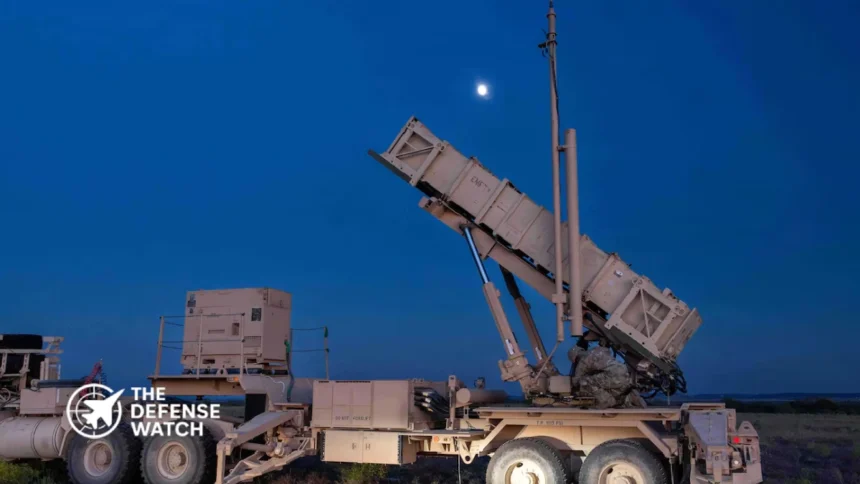
US Army Patriot missile reload training
Army Spc. Ronnie Quezada, assigned to Delta Battery, 1st Battalion, 62nd Air Defense Artillery Regiment, 69th Air Defense Artillery Brigade, inspects a Patriot M903 launching station before nighttime missile reload training at Fort Hood, Texas, Oct. 23, 2026. Image : DoW
SHARE

US Army air defense personnel are practicing a critical part of Patriot missile operations that can determine how quickly a battery returns to service after launching its interceptors: reloading its launchers under limited visibility.

Contents
  • Reloading Is Part of the Patriot Combat Mission
  • How the Nighttime Reload Drill Worked
  • Why Nighttime Training Matters for Air Defense
  • The Wider Challenge of Sustaining Patriot Batteries
  • What the Exercise Demonstrates

Soldiers assigned to Delta Battery, 1st Battalion, 62nd Air Defense Artillery Regiment, 69th Air Defense Artillery Brigade, conducted nighttime reload training at Fort Hood, Texas, on October 23. The exercise formed part of a battalion mission readiness exercise that began October 19, according to the US Department of War.

The drill focused on safely removing and replacing training missile canisters on the Patriot M903 launching station. Crews had to coordinate the movement of heavy equipment, maintain clear communications and position the canisters accurately despite working in darkness.

The exercise did not involve a reported live missile launch. Its focus was on the ground operations required to maintain the availability of a Patriot air defense battery.

- Advertisement -

Reloading Is Part of the Patriot Combat Mission

The Patriot system is a ground-based air and missile defense platform designed to counter selected airborne threats, including aircraft and certain types of missiles. Its operational effectiveness depends not only on its radar, command systems and interceptors, but also on the personnel and equipment needed to keep the battery functioning.
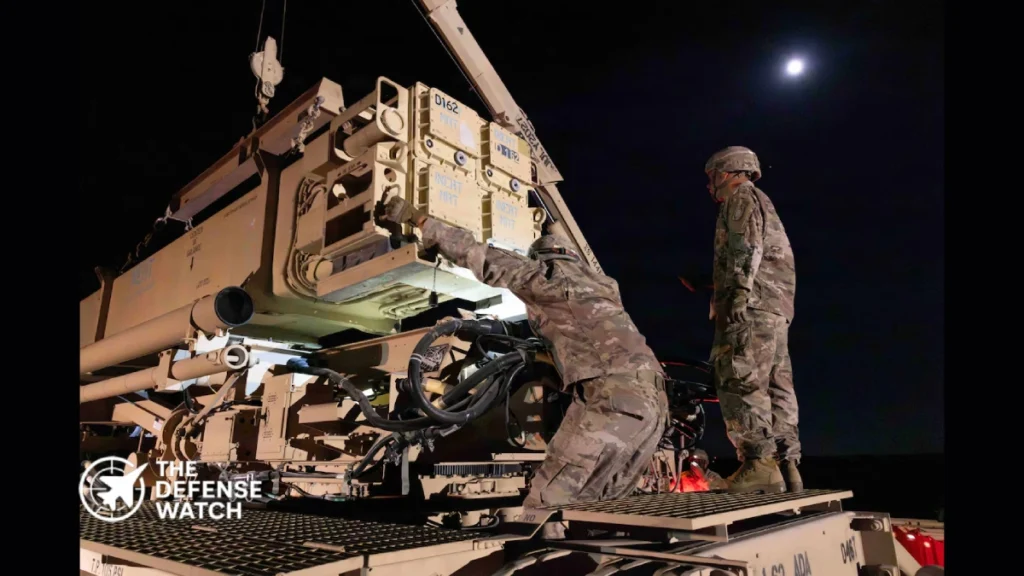
US Army Patriot missile reload training
Army Spc. Michael Morales, left, and Army Sgt. Kolby Bagley, both assigned to Delta Battery, 1st Battalion, 62nd Air Defense Artillery Regiment, 69th Air Defense Artillery Brigade, work together to position a training missile canister onto a Patriot M903 launching station during nighttime missile reload training at Fort Hood, Texas, Oct. 23, 2026. The training tests soldiers’ ability to safely remove and replace training missile canisters while strengthening crew coordination. Image : DoW

A launcher that has expended its available interceptors must be reloaded before it can resume engagements with additional targets. The time required to restore that capability depends on several factors, including ammunition availability, equipment readiness, crew proficiency and the conditions at the launch site.

For that reason, reload training is more than a routine maintenance task. It tests whether a unit can coordinate its personnel and support vehicles to restore launcher availability safely and efficiently.

The Army’s October exercise addressed this requirement under nighttime conditions, when visibility and the coordination of equipment movements become more difficult.

How the Nighttime Reload Drill Worked

According to the official account, the soldiers used a modified M985 heavy expanded mobility tactical truck equipped with a heavy-duty crane.

The crew worked together to remove training missile canisters from the Patriot launcher and replace them. Personnel had to lift, position and secure the canisters while monitoring the movement of the crane, launcher and soldiers working nearby.

Headlamps provided local illumination, but the restricted visibility still required careful communication between the equipment operators and the ground crew.

Army Sgt. Kolby Bagley served as the reload team’s signal person, helping coordinate equipment movements. His role illustrates the importance of communication between personnel operating lifting equipment and those guiding the load into position.

- Advertisement -

Delta Battery’s leadership also used the exercise to give junior leaders greater responsibility for carrying out the training. First Sgt. Pattrick Harris said leaders established the standards and provided the resources, while allowing the soldiers to execute the task.

Battery commander Capt. Grace Ko said crews must be able to keep Patriot systems operational, rather than simply establish them at a firing position.

The Army did not publish a measured reload time, a comparison with daytime performance or a quantified improvement in launcher availability. The available information therefore does not establish how much faster the crews completed the task or whether they achieved a specific readiness benchmark.

Why Nighttime Training Matters for Air Defense

Patriot batteries must be prepared to operate in conditions that may differ substantially from those encountered during routine training. Darkness can complicate equipment handling, vehicle movements and coordination among personnel, particularly when a task requires a crane to position heavy missile canisters close to a launcher.
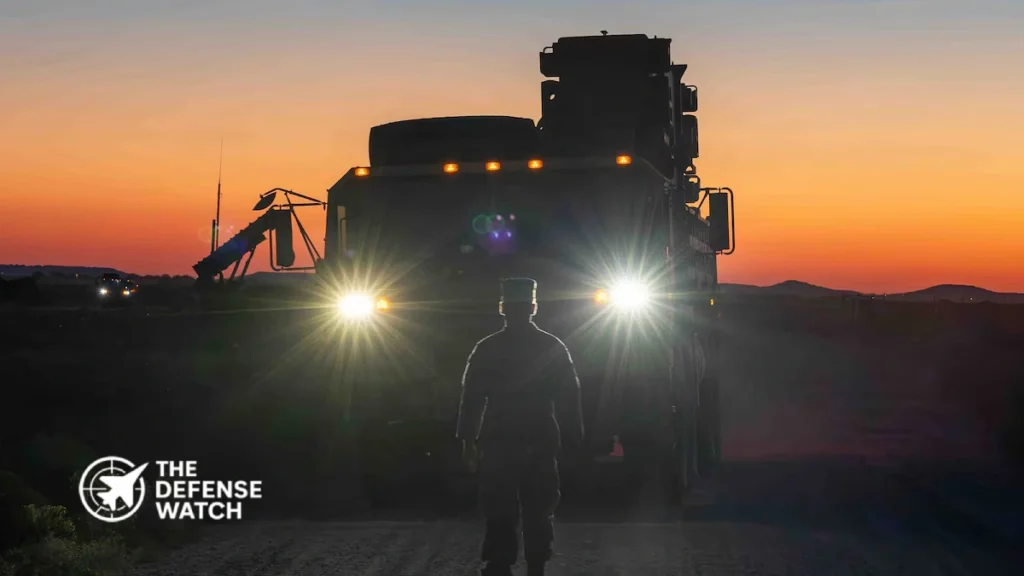
US Army Patriot missile reload training
Army Spc. Michael Morales, assigned to Delta Battery, 1st Battalion, 62nd Air Defense Artillery Regiment, 69th Air Defense Artillery Brigade, guides an M985 guided missile transporter toward a Patriot M903 launching station in preparation for nighttime missile reload training at Fort Hood, Texas, Oct. 23, 2026. Image : DoW

Repeated practice helps crews develop consistent procedures and identify coordination problems before they encounter more demanding operational conditions.

The issue is particularly relevant to air defense units because their mission may require sustained operations rather than a single engagement. After interceptors are expended, the battery’s ability to restore its launchers becomes one part of its overall capacity to continue defending an assigned area.

Reload proficiency is only one element of that process. A battery also needs an adequate supply of interceptors, functioning launchers, reliable command and control, available transport equipment and personnel capable of maintaining operations.

Nighttime training cannot, by itself, resolve shortages of missiles or transportation assets. Nor does successful completion of a training event demonstrate how quickly a battery could reload under enemy fire or while moving between positions.

Those questions require evidence from more demanding evaluations and operational reporting.

The Wider Challenge of Sustaining Patriot Batteries

The Patriot system is used by the United States and several allied countries. Its role in air and missile defense has also made interceptor availability, resupply and maintenance important considerations for operators seeking to sustain their defensive coverage.

The launcher reload process is a visible part of a larger support system that includes missile storage and transportation, equipment maintenance, crew training and the movement of supplies to operational units.

For Army planners, the challenge is to ensure that these supporting activities can keep pace with the operational demands placed on the batteries. A launcher may be technically functional, but its availability for another engagement still depends on whether the unit can replenish its ammunition and maintain the rest of its equipment.

Training at the battery level helps test the personnel and procedures responsible for those tasks. However, broader readiness also depends on support arrangements beyond the individual launcher crew.

The Fort Hood exercise was part of a wider mission readiness event involving firing batteries, headquarters personnel and supporting elements. According to the Army, the exercise evaluated the unit’s ability to establish, operate and sustain Patriot air defense systems in the field.

The service did not disclose the exercise’s overall assessment results or provide a timeline for further training milestones.

What the Exercise Demonstrates

The October 23 drill provides a documented example of the Army training Patriot crews to reload launchers in darkness while coordinating heavy equipment and ground personnel.

Its significance is practical rather than technological. The event did not introduce a new interceptor, modify the Patriot system or establish a new operational capability. Instead, it addressed a task that supports the continued availability of an existing air defense system.

For units responsible for defending against airborne threats, the ability to restore launcher readiness is an important part of sustaining operations. How effectively that requirement can be met in the field depends on trained personnel, suitable equipment, available ammunition and the wider logistics network supporting the battery.

The Army’s account confirms that Delta Battery practiced nighttime reload procedures at Fort Hood. It does not establish a new reload standard, a specific improvement in performance or the battery’s readiness to operate under combat conditions.


TAGGED:Air DefenseMilitary TrainingPatriot Missile SystemUS Army
Share This Article
Facebook Copy Link Print
BySamuel Drake | Defense Analyst
Follow:
Samuel Drake is a defense analyst at TheDefenseWatch.com covering naval warfare, military ordnance, maritime technology, fleet modernization, and defense procurement. His reporting focuses on documented capabilities, procurement programs, and military technology.

Latest Defense Systems

  • XQ-67A Drone XQ-67A Drone
  • B-25 Mitchell Bomber B-25 Mitchell Bomber
  • F-100 Super Sabre F-100 Super Sabre
  • North American F-86 Sabre North American F-86 Sabre
  • North American XB-70 Valkyrie North American XB-70 Valkyrie
  • Northrop YF-23 Fighter Northrop YF-23 Fighter
  • P-51 Mustang Fighter Aircraft P-51 Mustang Fighter Aircraft
  • Rafale F5 Fighter Rafale F5 Fighter
  • Tomahawk Block V Missile Tomahawk Block V Missile

Recent Compares

  • J-10C vs JF-17 Thunder: Which Fighter Is More Capable? J-10C vs JF-17 Thunder: Which Fighter Is More Capable? View Comparison →
  • Tejas vs Gripen: Key Differences and Capabilities Tejas vs Gripen: Key Differences and Capabilities View Comparison →
  • Tejas vs MiG-21 Bison: How India Replaced Its Iconic Supersonic Fighter Tejas vs MiG-21 Bison: How India Replaced Its Iconic Supersonic Fighter View Comparison →
  • F-35 vs F-16: Stealth, Sensors and Combat Roles F-35 vs F-16: Stealth, Sensors and Combat Roles View Comparison →
  • Tejas Fighter Jet vs F-16 Fighting Falcon: Capability Compared Tejas Fighter Jet vs F-16 Fighting Falcon: Capability Compared View Comparison →
  • Rafale Fighter Jet vs F-16 Fighting Falcon : Which Fighter Has the Edge? Rafale Fighter Jet vs F-16 Fighting Falcon : Which Fighter Has the Edge? View Comparison →
  • Su-57 Fighter Jet vs J-20 Fighter Jet: Stealth and Air Combat Compared Su-57 Fighter Jet vs J-20 Fighter Jet: Stealth and Air Combat Compared View Comparison →
  • Mirage 2000 vs Tejas Mk1A: Legacy Combat Power vs Indigenous Modernization Mirage 2000 vs Tejas Mk1A: Legacy Combat Power vs Indigenous Modernization View Comparison →
  • Rafale Fighter Jet vs F-22 Raptor: Which Air Dominance Fighter Has the Edge? Rafale Fighter Jet vs F-22 Raptor: Which Air Dominance Fighter Has the Edge? View Comparison →
  • Tejas Fighter Jet vs. Rafale Fighter Jet: India’s Indigenous Fighter Meets France’s Proven Multirole Combat Aircraft Tejas Fighter Jet vs. Rafale Fighter Jet: India’s Indigenous Fighter Meets France’s Proven Multirole Combat Aircraft View Comparison →

Recent Posts

  • U.S. Air Force Tests XQ-67A Drone Systems for Dispersed Combat Operations
  • Lockheed Martin Wins $9.76 Million Contract for Canadian CH-148 Cyclone Electronic Warfare Software
  • Lockheed Martin Wins $13.3 Million F-35 Engine Upgrade Contract Modification
  • Army Trains Patriot Crews for Nighttime Missile Reloads
  • Hegseth Reinstates Air Force Brigadier General Forced to Retire Over COVID-19 Vaccine Mandate

You Might Also Like

M1 Abrams breach capability
Military & OrdnanceTanks & Armored Vehicles

U.S. Army Expands M1 Abrams Breach Capability With M1074 Joint Assault Bridges

September 12, 2026
Leidos hypersonic weapons production concept supporting U.S. Army and Navy modernization programs
Defense ContractsHypersonic Weapons

Leidos Secures $2.7 Billion Deal For U.S. Hypersonic Weapons Production

September 7, 2026
Germany Puma IFV upgrade
Military & OrdnanceTanks & Armored Vehicles

Germany to Arm Puma IFVs With SPIKE LR Missiles in Major Upgrade

September 9, 2026
9mm ammunition
Conventional Weapons & ModernizationMilitary & Ordnance

9mm Ammunition: Why Militaries Still Use the 9×19mm Cartridge

September 8, 2026

Logo

Copyright © 2026 TheDefenseWatch.com

Helpful Links

  • Home
  • About Us
  • Privacy Policy
  • Terms of Use / Disclaimer
  • U.S. Privacy Notice – CCPA Compliance

Defense Systems

  • Defense Systems
  • Comparisons 
  • Manufacturer
  • Tactical Calculators

Popuplar

Which 5 Air Forces Possess the Costliest Fighter Jet Fleets in the World
Evolving Strategic Value: Carrier Strike Groups in the Indo-Pacific’s Future Security Architecture
Autonomous Weapon Systems Spark U.S. Ethics Debate Amid Rapid Military AI Integration

We report on developments involving military forces, governments, defense companies, research organizations, and security institutions around the world. 

Welcome Back!

Sign in to your account

Username or Email Address
Password

Lost your password?