Lockheed Martin has received a $13.259 million U.S. Navy contract modification to continue integrating the F135 engine core upgrade into the F-35 Lightning II program and advance work on an upgraded power and thermal management system.
The modification adds 50,000 labor hours to an existing delivery order and establishes a revised contractual arrangement for work that previously proceeded under an undefinitized contract action. The effort covers the U.S. Air Force, Marine Corps, Navy and F-35 Cooperative Program Partners.
According to the contract announcement, work is scheduled to continue through April 2027. No funds will be obligated when the modification is awarded.
The award provides additional engineering and integration capacity for two related modernization efforts affecting the F-35’s propulsion and onboard power management architecture.
Two F-35 Modernization Efforts Continue
The contract modification covers two distinct but related activities: integration of the F135 engine core upgrade and the transition of the power thermal management upgrade into preliminary design.
F135 engine core upgrade integration
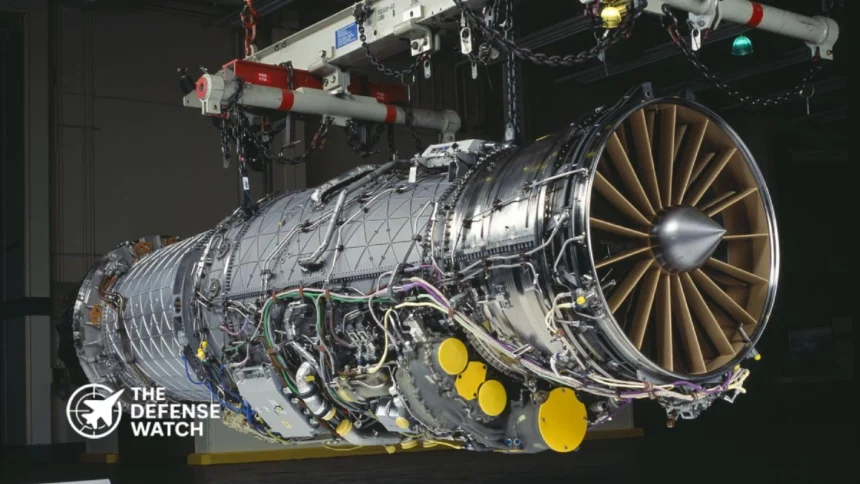
The F135, manufactured by Pratt & Whitney, powers all three variants of the F-35: the conventional takeoff and landing F-35A, the short takeoff and vertical landing F-35B, and the carrier-capable F-35C.
The engine core upgrade is intended to address the propulsion system’s evolving performance and operational requirements as the aircraft receives additional capabilities.
The F-35’s planned modernization requires coordination between the aircraft’s propulsion system and its expanding onboard systems. Engine integration work therefore involves more than developing an improved engine core. The upgraded propulsion configuration must also be assessed within the wider aircraft architecture.
The latest modification continues Lockheed Martin’s integration work. It does not, by itself, confirm that the upgraded engine has completed testing, received approval for operational use or entered production.
Power and thermal management moves toward preliminary design
The second element concerns the transition of the power thermal management upgrade into the preliminary design phase.
Modern combat aircraft must supply electrical power to onboard equipment while managing the heat generated by propulsion, avionics and mission systems. As aircraft capabilities expand, these demands can create additional engineering challenges.
For the F-35, power and thermal management are relevant to accommodating modernization requirements without compromising the integration of existing aircraft systems.
Moving an upgrade into preliminary design is an engineering milestone, not a declaration that the system is ready for installation across the fleet. It establishes a more structured stage for developing and assessing the proposed design before subsequent development and qualification activities.
The Navy’s announcement does not disclose the upgrade’s detailed technical specifications, expected performance improvements or a date for fleet-wide implementation.
Contract Details and Work Locations
The modification is valued at $13,259,000 and was awarded to Lockheed Martin Corp. in Fort Worth, Texas.
It modifies delivery order N0001925F0120 under basic ordering agreement N0001924G0010. The action definitizes the previously established undefinitized contract action and adds 50,000 labor hours to the ongoing effort.
The work is distributed across U.S. and British locations, reflecting the multinational industrial network supporting the F-35 program.
| Work location | Share of work |
|---|---|
| Fort Worth, Texas | 47% |
| Torrance, California | 13% |
| El Segundo, California | 6% |
| Blackburn, Great Britain | 6% |
| Cheltenham, Great Britain | 6% |
| Haltom City, Texas | 4% |
| South Bend, Indiana | 4% |
| Windsor Locks, Connecticut | 4% |
| West Hartford, Connecticut | 4% |
| Rockford, Illinois | 4% |
| Orlando, Florida | 2% |
The work is expected to be completed in April 2027. Naval Air Systems Command, based in Patuxent River, Maryland, is responsible for the contract.
The modification was not competitively procured. The announcement does not provide a separate explanation of the procurement decision.
Importantly, the $13.259 million figure represents the value of this modification, not the total cost of the F135 engine core upgrade or the broader F-35 modernization program.
How the Award Fits Into the Wider F135 Upgrade Program
The modification is part of a larger effort to modernize the F-35’s propulsion system while supporting the aircraft’s growing demands for electrical power and thermal management.
In December 2024, the Department of Defense announced an initial Lockheed Martin delivery order with a potential value of up to $107.04 million for F135-related research and development. That earlier order covered trade studies, assessments of potential power and thermal management solutions, and Block 4 engine integration work. It was scheduled for completion in December 2026.
The wider engine upgrade effort also involves Pratt & Whitney, the F135 manufacturer. In August 2026, the Department of Defense announced a separate $240.75 million modification for Pratt & Whitney to continue engineering work on the F135 engine core upgrade, address operational issues and support the transition toward engineering and manufacturing development.
These awards cover different responsibilities. Pratt & Whitney’s work focuses on the propulsion system, while Lockheed Martin’s role includes integrating engine and power management changes into the aircraft.
That distinction matters because an engine improvement must work within the F-35’s overall design. Progress in engine development does not automatically establish that the aircraft integration effort has reached the same stage.
The available contract information also does not establish that the latest Lockheed Martin modification changes the overall F135 upgrade schedule.
Why the Work Matters for the F-35 Fleet
The F-35 program combines three aircraft variants, several U.S. military services and international partners. Modernization therefore requires coordination across different operating environments and aircraft configurations.
The F135 engine core upgrade and power thermal management work address related engineering demands, but the contract does not specify which performance improvements will result from this particular modification.
The immediate outcome is contractual and technical: Lockheed Martin receives additional labor hours to continue integration work, while the power thermal management effort advances into preliminary design.
The absence of funds obligated at the time of award also requires careful interpretation. It does not mean the work is free or that the modification has no contractual value. It means funding is not being obligated at the time of this particular award action.
For now, the April 2027 completion date provides the clearest published milestone for the work covered by the modification. Further details about testing, qualification, installation schedules and operational benefits have not been established by the announcement.